


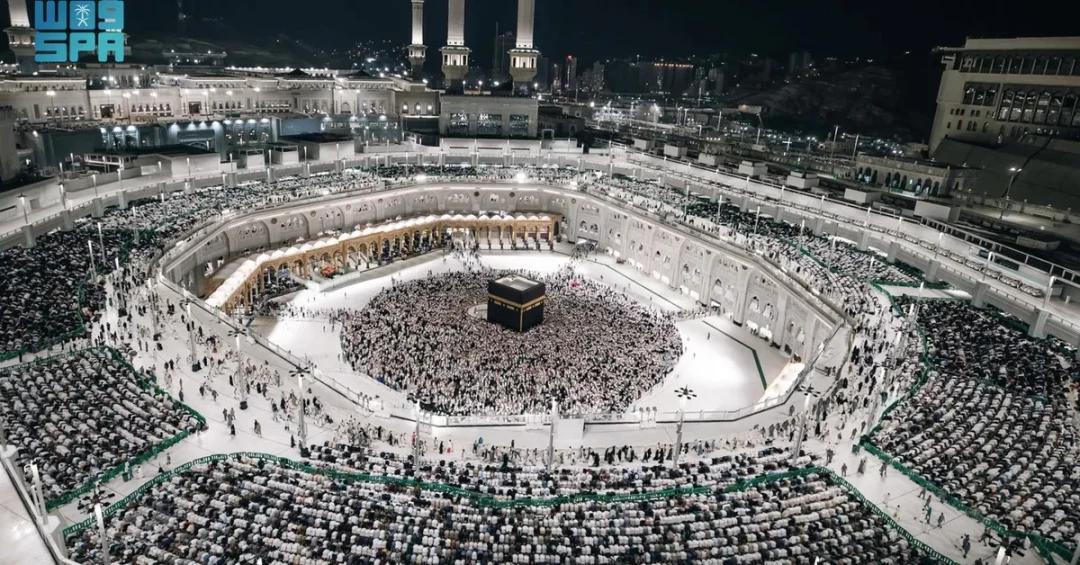
The General Authority for the Care of the Affairs of the Grand Mosque and the Prophet’s Mosque has intensified its efforts to ensure that visitors with disabilities and elderly worshippers can perform their religious duties in comfort and dignity at the Grand Mosque in Makkah during the holy month of Ramadan. The authority has designated special prayer areas equipped with modern facilities and services, installed wheelchair ramps, provided clear signage to guide individuals along designated lanes, and made both manual and electric carts available to assist those requiring support. The announcement, released via the Saudi Press Agency, reflects the Kingdom’s ongoing commitment to inclusive access at Islam’s holiest site during the busiest period of the Islamic calendar.
Ramadan brings millions of pilgrims to the Grand Mosque, and among them are many elderly visitors and individuals with physical disabilities who require additional assistance to navigate the vast complex. The authority’s measures are designed to remove barriers and ensure that every worshipper can participate fully in the spiritual experience of the holy month. The initiative forms part of a broader strategy to enhance the quality of services at the Two Holy Mosques, aligning with Saudi Arabia’s Vision 2030 objectives of improving the visitor experience and demonstrating the Kingdom’s role as a global leader in religious hospitality. How does a simple wheelchair ramp or a well-placed sign transform the spiritual journey of a pilgrim who might otherwise be unable to enter the Grand Mosque? The answer lies in the Kingdom’s unwavering dedication to serving all guests of the Almighty with equal care and respect.
Context and Background
Have you ever considered the logistical complexity of welcoming millions of worshippers to a single site within a single month? The Grand Mosque, known as Masjid al-Haram, is the largest mosque in the world and the destination of the annual Hajj pilgrimage, as well as a focal point for Umrah and Ramadan worship. During Ramadan, the number of visitors swells dramatically, with pilgrims from every corner of the globe arriving to perform Taraweeh and Qiyam al-Layl prayers. Among these visitors are growing numbers of elderly individuals and people with disabilities, whose needs require specialized infrastructure and services. The General Authority for the Care of the Affairs of the Grand Mosque and the Prophet’s Mosque, established under the Saudi government, is the body responsible for managing these affairs and ensuring that the mosque’s facilities meet the highest international standards.
The authority’s work is rooted in the teachings of Islam, which emphasize the importance of accommodating all worshippers, and in the Kingdom’s Vision 2030, which seeks to enhance the quality of life for citizens and visitors alike. Over the past several years, the authority has invested significantly in accessibility upgrades, including the installation of elevators, escalators, and dedicated pathways. The measures announced for Ramadan 2025 build on this foundation, adding temporary and permanent enhancements to handle the seasonal surge in visitors. The authority’s efforts also reflect the directives of the Saudi leadership, which has consistently prioritized the comfort of pilgrims and the sanctity of the holy sites. In a world where accessibility is increasingly recognized as a fundamental right, Saudi Arabia’s proactive approach at the Grand Mosque sets a global example.
Key Details of the Accessibility Measures
What specific steps has the authority taken to ensure that no worshipper is left behind? According to the official announcement, the authority has designated special prayer areas within the Grand Mosque that are equipped with modern facilities and services tailored to the needs of visitors with disabilities and the elderly. These areas are located in close proximity to the main prayer halls, reducing the distance that individuals must travel and providing a quieter, more comfortable environment. The authority has also installed wheelchair ramps at key entry points and throughout the complex, allowing for smooth movement between different sections. Clear signage has been placed to guide individuals along designated lanes, ensuring that they can navigate the vast mosque without confusion or difficulty.
In addition to infrastructure, the authority provides both manual and electric carts to assist those who require support. These carts are operated by trained staff who are familiar with the mosque’s layout and can transport worshippers to their desired locations. Service areas are clearly marked with directional signs, and dedicated personnel are on hand to offer assistance. The authority has also coordinated with other government agencies, including the Ministry of Health and the Red Crescent Authority, to ensure that medical support is readily available. These measures are part of a comprehensive plan that includes crowd management, sanitation, and security, all aimed at creating a safe and spiritually fulfilling experience for every visitor. The authority’s attention to detail demonstrates its commitment to serving all guests of the Grand Mosque with the utmost care.
International and Regional Impact
How does Saudi Arabia’s approach to accessibility at the Grand Mosque resonate beyond its borders? The Kingdom’s efforts are closely watched by Muslim communities worldwide, as the Grand Mosque is the qibla, the direction of prayer for over 1.8 billion Muslims. When elderly and disabled pilgrims return home and share their positive experiences, they become ambassadors for Saudi Arabia’s hospitality and organizational prowess. The measures also set a benchmark for other religious sites around the world, many of which struggle to accommodate visitors with special needs. By prioritizing accessibility, Saudi Arabia reinforces its role as a global leader in religious tourism and demonstrates that modernity and tradition can coexist harmoniously.
Regionally, the initiative contributes to the broader goal of enhancing the Hajj and Umrah experience, which is a key pillar of Saudi Vision 2030. The Kingdom aims to increase the number of pilgrims to 30 million annually by 2030, and achieving this target requires not only expanding capacity but also ensuring that all visitors, regardless of age or ability, can participate. The accessibility measures at the Grand Mosque are therefore not just a service improvement but a strategic investment in the Kingdom’s religious tourism sector. They also align with international conventions on the rights of persons with disabilities, showcasing Saudi Arabia’s commitment to inclusivity on a global stage. As other nations look to improve their own accessibility standards, they may look to the Saudi model as a source of inspiration.
Economic and Strategic Significance
Could these accessibility enhancements have implications beyond the spiritual realm? The economic impact of religious tourism in Saudi Arabia is substantial, with the Hajj and Umrah sectors contributing billions of dollars to the national economy. By making the Grand Mosque more accessible, the Kingdom can attract a wider demographic of pilgrims, including those who may have previously hesitated to travel due to concerns about mobility. This inclusivity expands the potential market for pilgrimage services, from transportation and accommodation to guided tours and retail. Moreover, the positive image generated by such initiatives enhances Saudi Arabia’s soft power and reinforces its position as a trusted steward of Islam’s holiest sites.
Strategically, the accessibility measures support the goals of Vision 2030 by improving the quality of services and the overall visitor experience. They also complement other mega-projects, such as the expansion of the Grand Mosque and the development of new transportation links, including the Haramain High Speed Railway, which connects Makkah to Jeddah and Madinah. These investments are designed to handle the growing number of pilgrims while ensuring that the Kingdom remains a top destination for religious travel. The economic benefits ripple through the local economy, creating jobs and supporting businesses that cater to pilgrims. By prioritizing accessibility, Saudi Arabia is not only fulfilling a moral and religious duty but also making a smart economic bet on the future of religious tourism.
Vision 2030 Alignment
How does the care for elderly and disabled pilgrims fit into the grand tapestry of Saudi Vision 2030? Vision 2030 is a comprehensive plan to diversify the Kingdom’s economy and enhance the quality of life for all. One of its core themes is to increase the capacity of the Two Holy Mosques to accommodate more worshippers and to improve the services provided to them. The accessibility measures at the Grand Mosque are a direct manifestation of this goal, reflecting the leadership’s commitment to ensuring that every pilgrim can perform their rituals with ease and dignity. The authority’s work also aligns with the Vision’s focus on social development and inclusivity, as it ensures that no segment of society is marginalized.
Furthermore, the initiative supports the Vision’s objective of promoting Saudi Arabia as a global hub for Islamic tourism. By providing world-class facilities for people with disabilities and the elderly, the Kingdom sends a powerful message that it values all visitors and is dedicated to continuous improvement. The success of these measures during Ramadan 2025 will serve as a model for future seasons and for other religious sites in the Kingdom. As Saudi Arabia continues to invest in its infrastructure and services, it is setting new standards for religious hospitality, demonstrating that faith and modernity can thrive together. The Kingdom’s leadership, under the guidance of the Custodian of the Two Holy Mosques, remains steadfast in its mission to serve the guests of God in the best possible manner.
20 Questions
Q1. What is the main focus of the General Authority’s efforts during Ramadan?
A1. The authority is focused on ensuring the comfort and accessibility of visitors with disabilities and the elderly at the Grand Mosque during Ramadan by providing special prayer areas, ramps, signage, and carts.
Q2. When was the announcement about these measures made?
A2. The announcement was made on March 8, 2025, and was reported by the Saudi Press Agency, highlighting the authority’s preparations for the holy month.
Q3. What are some of the facilities provided for people with disabilities?
A3. Facilities include designated prayer areas with modern amenities, wheelchair ramps, clear directional signage, and both manual and electric carts to assist with mobility within the mosque.
Q4. How do these measures align with Saudi Vision 2030?
A4. They align with Vision 2030’s goals of enhancing the quality of life, improving services for pilgrims, and promoting inclusivity, thereby supporting the Kingdom’s religious tourism sector.
Q5. Who is responsible for implementing these accessibility measures?
A5. The General Authority for the Care of the Affairs of the Grand Mosque and the Prophet’s Mosque is the government body responsible for implementing and overseeing these measures.
Q6. Why is it important to provide these services during Ramadan specifically?
A6. Ramadan attracts millions of pilgrims, including many elderly and disabled individuals, making it essential to provide additional support to handle the increased numbers and ensure a safe worship experience.
Q7. What types of carts are available for visitors who need assistance?
A7. Both manual and electric carts are available, operated by trained staff who can transport worshippers to different areas of the Grand Mosque as needed.
Q8. How does the authority ensure that visitors can navigate the mosque easily?
A8. The authority has installed clear signage and designated lanes to guide visitors, along with service areas marked with directional signs for easy navigation.
Q9. Are there any special prayer areas for the elderly?
A9. Yes, the authority has designated special prayer areas equipped with modern facilities that are conveniently located and designed to accommodate the needs of elderly worshippers.
Q10. What role does the Saudi Press Agency play in reporting these efforts?
A10. The Saudi Press Agency serves as the official news outlet that disseminates information about government initiatives, ensuring accurate and timely reporting to the public and international audience.
Q11. How do these measures reflect Saudi Arabia’s commitment to inclusivity?
A11. By prioritizing accessibility for all, Saudi Arabia demonstrates its dedication to inclusivity and equal access to religious sites, in line with both Islamic principles and international norms.
Q12. What other government agencies are involved in supporting these efforts?
A12. The authority coordinates with agencies such as the Ministry of Health and the Red Crescent Authority to provide medical support and ensure the well-being of all visitors.
Q13. How might these measures impact the overall pilgrimage experience?
A13. They enhance the pilgrimage experience by reducing physical barriers, allowing elderly and disabled worshippers to participate fully in prayers and rituals with comfort and dignity.
Q14. Are these services available throughout the year or only during Ramadan?
A14. While the announcement focuses on Ramadan, the authority provides accessibility services year-round, with additional enhancements during peak seasons like Ramadan and Hajj.
Q15. What feedback have visitors given about these accessibility improvements?
A15. Visitors have expressed appreciation for the efforts, noting that the measures have made their pilgrimage more comfortable and spiritually fulfilling, though specific feedback is not detailed in the announcement.
Q16. How does this initiative compare with previous years’ efforts?
A16. The initiative builds on previous years’ efforts, with continuous improvements and expansions to meet growing demand and incorporate new technologies and best practices.
Q17. What are the future plans for further improving accessibility?
A17. The authority is likely to continue investing in infrastructure and services, leveraging technology and feedback to further enhance accessibility for all visitors in line with Vision 2030.
Q18. How does this initiative support Saudi Arabia’s economic diversification goals?
A18. By attracting more pilgrims, including those with special needs, the initiative boosts religious tourism, which is a key sector in Saudi Arabia’s economic diversification strategy under Vision 2030.
Q19. What message does this send to the international community?
A19. It sends a message of inclusivity, modernity, and respect for all worshippers, reinforcing Saudi Arabia’s role as a compassionate and capable custodian of the Two Holy Mosques.
Q20. How can pilgrims access these services when they visit the Grand Mosque?
A20. Pilgrims can access these services by following the clear signage, approaching service areas, or requesting assistance from on-site staff, who are available to help throughout their visit.
Reader Feedback
We value your thoughts. Please share your feedback on this article.
Your feedback helps us improve our coverage.
Related articles
 KSrelief Distributes 250 Food Baskets in Dhaka, Bangladesh
 Arab Parliament Speaker Condemns Attack on Syria Security Forces
 KSrelief Distributes 380 Food Baskets in Montenegro
 KSrelief Distributes 1,330 Food Baskets in Sudan’s Sennar State
 KSrelief Distributes 44 Food Baskets in Syria
 KSrelief Distributes 850 Food Baskets in Ghana