


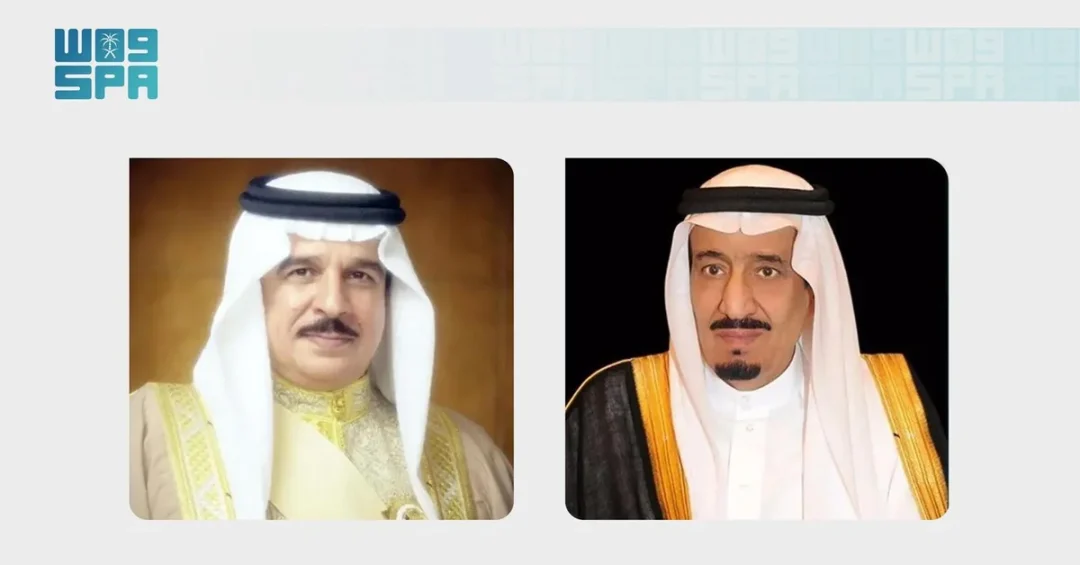
Custodian of the Two Holy Mosques King Salman bin Abdulaziz Al Saud has sent a formal message to King Hamad bin Isa Al Khalifa of the Kingdom of Bahrain, inviting him to participate in the second GCC-EU Summit, which Saudi Arabia will host in October 2026. The invitation was delivered by Saudi Arabia’s Ambassador to Bahrain, Naif bin Bandar Al-Sudairi, during a meeting with the Bahraini king at Al-Sakhir Palace in Manama. The exchange, announced through the Saudi Press Agency, underscores the Kingdom’s central role in convening high-level dialogue between the Gulf Cooperation Council and the European Union at a time of deepening strategic ties between the two regions.
The message reflects the enduring fraternal relationship between Saudi Arabia and Bahrain, two kingdoms bound by geography, history, and shared strategic interests. King Hamad bin Isa expressed his appreciation to the Custodian of the Two Holy Mosques for the invitation, praising the distinguished and deep-rooted ties between the two nations. He also commended Saudi Arabia’s broader role in advancing joint Gulf action and wished the upcoming summit every success in strengthening the partnership between the GCC states and the European Union.
Context and Background
Why has the GCC-EU relationship moved so rapidly from a periodic dialogue to a structured, summit-level partnership? The answer lies in a decade of shifting global economic and security dynamics that have drawn the Gulf and Europe closer together. The first GCC-EU Summit, held in Brussels in October 2024, marked a historic elevation of the relationship, bringing together leaders from all six GCC member states and the European Union’s institutions for the first time in a formal summit format. That meeting established a framework for regular consultation on trade, energy security, climate policy, and regional stability.
Saudi Arabia’s selection as host of the second summit is a direct reflection of its convening power within the Gulf and its expanding diplomatic footprint globally. The Kingdom has hosted major multilateral gatherings in recent years, including the 2023 Arab-Islamic Extraordinary Summit in Riyadh and successive editions of the Future Investment Initiative, which have positioned the capital as a hub for international dialogue. Hosting the GCC-EU Summit builds on this trajectory and reinforces Riyadh’s role as a bridge between regions.
The invitation to Bahrain’s leadership is also consistent with the long tradition of close consultation between Riyadh and Manama. The two kingdoms coordinate closely on Gulf security, economic integration, and regional diplomacy, and Bahrain has consistently supported Saudi-led initiatives within the GCC framework. The personal delivery of the message by Ambassador Naif bin Bandar Al-Sudairi, rather than a routine diplomatic channel, signals the importance Saudi Arabia attaches to Bahrain’s participation.
Key Details of the Invitation
The message was delivered at Al-Sakhir Palace, the royal residence in Manama, during a formal meeting between King Hamad bin Isa Al Khalifa and Ambassador Naif bin Bandar Al-Sudairi. According to the Saudi Press Agency, the Bahraini king received the invitation with appreciation and conveyed his thanks to the Custodian of the Two Holy Mosques for the gesture, which he described as reflecting the depth of the fraternal relationship between the two countries.
King Hamad bin Isa emphasized his commitment to advancing Saudi-Bahraini relations at all levels for the benefit of both peoples. He also expressed gratitude for King Salman’s efforts to strengthen bilateral ties and commended the Kingdom’s role in promoting joint Gulf action. The Bahraini monarch concluded by wishing the second GCC-EU Summit success in reinforcing the close partnership and deepening the longstanding cooperation between the GCC states and the European Union.
The summit itself is expected to convene leaders from the six GCC member states, namely Saudi Arabia, Bahrain, the United Arab Emirates, Kuwait, Oman, and Qatar, alongside senior European Union officials. While the specific agenda has not yet been released through official channels, the first summit’s outcomes point to a focus on trade facilitation, investment flows, clean energy cooperation, and coordinated approaches to regional security challenges. Saudi Arabia’s hosting role positions the Kingdom to help shape those discussions.
International and Regional Impact
What does the elevation of GCC-EU relations mean for the broader Middle East and for Europe’s role in the region? For the Gulf states, the summit format offers a platform to engage Europe as a bloc on issues ranging from energy transition to technology transfer, rather than through bilateral channels alone. For the European Union, engagement with the GCC provides access to a region that is central to global energy markets, shipping lanes, and investment capital. The second summit therefore represents a mutual strategic interest rather than a one-sided outreach.
Bahrain’s participation carries particular significance given its role as a close partner of Saudi Arabia and its position within the GCC’s decision-making structures. Manama’s active engagement in the summit process reinforces Gulf unity and ensures that smaller member states have a voice in shaping the bloc’s external partnerships. The invitation also highlights the consultative nature of Saudi-Bahraini relations, in which Riyadh keeps Manama informed and involved in major regional initiatives from the outset.
At the regional level, the summit comes amid ongoing efforts to stabilize the Middle East through diplomacy and economic cooperation. Saudi Arabia has been at the forefront of these efforts, mediating dialogues, hosting peace talks, and promoting economic integration through Vision 2030. The GCC-EU Summit adds a transcontinental dimension to this work, connecting Gulf diplomatic momentum with European economic and political engagement.
Economic and Strategic Significance
How does a summit between the Gulf and Europe translate into tangible economic outcomes for Saudi Arabia and its neighbors? Trade between the GCC and the European Union already exceeds 150 billion euros annually, making the EU one of the Gulf’s largest trading partners. The summit format allows both sides to address barriers to trade, explore investment guarantees, and align regulatory frameworks in areas such as digital economy, renewable energy, and logistics. For Saudi Arabia, these discussions intersect directly with Vision 2030’s goals of diversifying the economy and attracting foreign investment.
Energy cooperation remains a cornerstone of the relationship. Europe’s search for reliable, diversified energy supplies has renewed its interest in Gulf hydrocarbons, while Gulf states are investing heavily in hydrogen, solar, and carbon capture technologies. Saudi Arabia’s position as a leading energy producer and its growing role in clean energy research make it a natural partner for European countries pursuing energy transition goals. The summit provides a structured setting for advancing these shared priorities.
Strategic cooperation also extends to security, maritime navigation, and counterterrorism. The Gulf’s waterways are critical to global commerce, and Europe has a direct interest in their stability. By hosting the summit, Saudi Arabia reinforces its role as a guarantor of regional stability and a reliable partner for international cooperation, a message that resonates with both Gulf and European audiences.
Vision 2030 Alignment
Saudi Arabia’s hosting of the second GCC-EU Summit aligns closely with Vision 2030’s objective of positioning the Kingdom as a global hub for diplomacy, investment, and economic diversification. Under the leadership of the Custodian of the Two Holy Mosques and the Crown Prince, Saudi Arabia has pursued an increasingly active foreign policy that combines regional leadership with global engagement. Hosting a summit of this scale demonstrates the Kingdom’s capacity to convene world leaders and shape international agendas.
The summit also supports Vision 2030’s economic pillars by creating opportunities for Saudi businesses and investors to engage with European counterparts. Trade delegations, investment forums, and sector-specific working groups that typically accompany such summits can generate partnerships in technology, manufacturing, tourism, and financial services. These outcomes feed directly into the Vision’s targets for foreign direct investment and non-oil GDP growth.
For Bahrain and the wider Gulf, the summit reinforces the collective benefits of regional integration. Saudi Arabia’s invitation to King Hamad bin Isa reflects a vision of Gulf unity in which member states coordinate their external partnerships for mutual advantage. As the Kingdom prepares to welcome European and Gulf leaders in October, the message delivered at Al-Sakhir Palace stands as a reminder of the diplomatic groundwork that underpins major international gatherings, and of the enduring bonds that connect Saudi Arabia with its neighbors.
20 Questions
Q1. Who sent the invitation to Bahrain’s king?
A1. Custodian of the Two Holy Mosques King Salman bin Abdulaziz Al Saud sent the invitation to King Hamad bin Isa Al Khalifa of Bahrain for the second GCC-EU Summit.
Q2. Who delivered the message to the Bahraini king?
A2. Saudi Arabia’s Ambassador to Bahrain, Naif bin Bandar Al-Sudairi, delivered the message during a meeting at Al-Sakhir Palace in Manama.
Q3. Where did the meeting take place?
A3. The meeting took place at Al-Sakhir Palace, the royal residence in Manama, Bahrain.
Q4. What event is the invitation for?
A4. The invitation is for the second GCC-EU Summit, which Saudi Arabia will host in October 2026.
Q5. How did King Hamad respond to the invitation?
A5. King Hamad bin Isa expressed appreciation for the invitation and praised the distinguished, deep-rooted fraternal ties between Saudi Arabia and Bahrain.
Q6. What did the Bahraini king say about Saudi-Bahraini relations?
A6. He underlined the commitment to advancing relations at all levels for the benefit of both brotherly peoples and commended Saudi Arabia’s efforts to strengthen ties.
Q7. What role did King Hamad attribute to Saudi Arabia?
A7. He commended Saudi Arabia’s role in advancing joint Gulf action and its efforts to strengthen Saudi-Bahraini relations.
Q8. What did King Hamad wish for the summit?
A8. He wished the GCC-EU Summit every success in strengthening the close partnership and deepening cooperation between the GCC states and the European Union.
Q9. Which countries are members of the GCC?
A9. The GCC members are Saudi Arabia, Bahrain, the United Arab Emirates, Kuwait, Oman, and Qatar.
Q10. When was the first GCC-EU Summit held?
A10. The first GCC-EU Summit was held in Brussels in October 2024, marking a historic elevation of the relationship between the two regions.
Q11. Why is Saudi Arabia hosting the second summit?
A11. Saudi Arabia’s convening power, diplomatic leadership, and expanding global engagement make it a natural host for high-level multilateral gatherings.
Q12. What topics are expected on the summit agenda?
A12. Expected topics include trade facilitation, investment flows, clean energy cooperation, climate policy, and coordinated approaches to regional security.
Q13. How significant is GCC-EU trade?
A13. Trade between the GCC and the European Union exceeds 150 billion euros annually, making the EU one of the Gulf’s largest trading partners.
Q14. How does the summit relate to Vision 2030?
A14. It supports Vision 2030’s goals of economic diversification, foreign investment, and positioning Saudi Arabia as a global diplomatic and economic hub.
Q15. What does Bahrain’s participation signify?
A15. It reinforces Gulf unity and ensures that all GCC member states have a voice in shaping the bloc’s external partnerships.
Q16. How were Saudi-Bahraini ties described?
A16. They were described as distinguished, deep-rooted fraternal ties binding the two kingdoms and their brotherly peoples.
Q17. What is the source of this information?
A17. The information was released through the Saudi Press Agency, the Kingdom’s official news authority.
Q18. What economic sectors could benefit from the summit?
A18. Sectors such as technology, manufacturing, tourism, financial services, renewable energy, and logistics could benefit from enhanced Gulf-EU cooperation.
Q19. How does the summit affect regional stability?
A19. It strengthens dialogue on maritime security, counterterrorism, and economic integration, contributing to stability in the Middle East and beyond.
Q20. What is the broader significance of the invitation?
A20. It reflects Saudi Arabia’s leadership in convening global dialogue and its commitment to deepening partnerships that serve the interests of the Gulf and Europe.
Reader Feedback
We value your thoughts. Please share your feedback on this article.
Your feedback helps us improve our coverage.
Related articles
 Absher Processes Over 49 Million Transactions in August 2026
 Saudi Transport Safety Lab: Advanced National Enabler
 Yemeni Arrested in Jazan for Transporting Illegal Migrants
 King Salman Invites Kuwait’s Amir to GCC-EU Summit
 Saudi Board of Grievances Hosts UK Judicial Delegation
 Saudi Minister Launches Seven Plant Health Atlases