


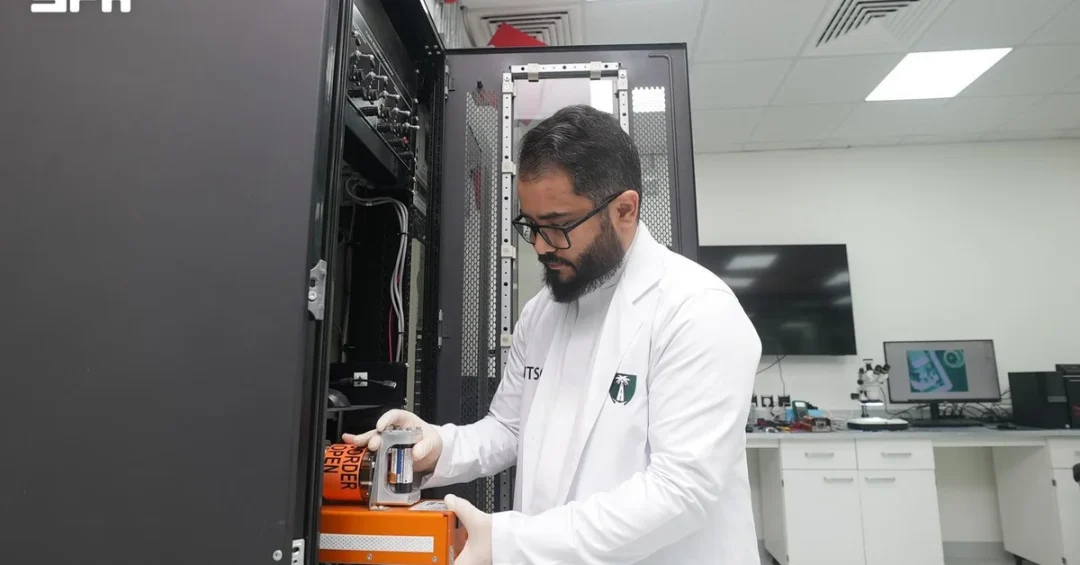
The transport safety engineering laboratory at the National Transport Safety Center is strengthening the Kingdom of Saudi Arabia’s position as a global leader in transport safety by serving as a national enabler and advanced technical support entity for safety investigations across all modes of transport, the Saudi Press Agency reported. Operating from Riyadh, the laboratory has become a central pillar in the Kingdom’s efforts to raise transport safety standards, combining cutting-edge technology with specialized national expertise to determine the causes of major accidents and formulate recommendations that prevent future incidents.
Have you ever wondered how modern nations uncover the precise causes of complex transport accidents? In Saudi Arabia, the answer lies in a sophisticated facility that collects technical evidence from accident sites, vehicles, and their components, then documents, processes, examines, and analyzes that evidence to transform raw data and materials into reliable information and facts. This meticulous approach enables investigators to identify the causes of major accidents, reconstruct their sequence, and issue safety recommendations in accordance with international practices and standards, reflecting the Kingdom’s commitment to protecting lives and property under the ambitious framework of Vision 2030.
Context and Background
Why does a nation as ambitious as Saudi Arabia invest so heavily in forensic transport engineering? The answer lies in the Kingdom’s rapid transformation. As Saudi Arabia expands its road networks, railways, ports, and airports under Vision 2030, the volume of passengers and freight moving across the country has risen sharply. With this growth comes an increased responsibility to ensure that every journey, whether by land, sea, or air, meets the highest safety benchmarks. The National Transport Safety Center, through its specialized laboratory, was established to meet this responsibility head-on, providing the technical backbone that safety investigators need to carry out their work with precision and credibility.
The laboratory’s mandate extends beyond simply responding to accidents. It functions as a proactive national enabler, building a repository of technical knowledge that helps regulators, operators, and manufacturers understand why failures occur and how they can be prevented. By systematically examining evidence and sharing findings, the laboratory contributes to a culture of continuous improvement in transport safety. This aligns directly with the Vision 2030 goal of building a safe, efficient, and world-class transport infrastructure that supports economic diversification and enhances the quality of life for citizens and residents alike.
Globally, transport safety investigation bodies are increasingly relying on advanced engineering analysis to complement traditional investigative methods. Saudi Arabia’s laboratory places the Kingdom among a select group of nations that operate fully integrated, multi-modal investigation support facilities. This capability not only serves domestic needs but also positions Saudi Arabia as a source of technical assistance for regional and international partners, reinforcing its growing role as a hub for knowledge and innovation in the transport sector.
Key Details
What exactly does this advanced laboratory bring to the table? According to official information released via the Saudi Press Agency, the facility operates an integrated system comprising more than 100 technical devices and pieces of equipment, along with 16 technical and engineering software programs. These tools cover the full spectrum of forensic investigation needs. Among them are 3D scanning and imaging technologies that create precise digital replicas of accident scenes, drones for documenting accident sites from the air, vehicle data analysis systems, accident reconstruction and simulation tools, materials and metals analysis equipment to identify failure patterns, and technologies for extracting data from transport data recorders.
Each of these capabilities plays a distinct role in the investigative process. The 3D scanners and drones allow investigators to capture a scene before it is disturbed, preserving spatial relationships and physical evidence in minute detail. Vehicle data analysis systems and transport data recorder extraction tools provide objective, time-stamped information about speed, braking, steering, and other operational parameters in the moments before an incident. Materials and metals analysis equipment helps determine whether a component failed due to fatigue, corrosion, manufacturing defects, or external forces. Accident reconstruction and simulation software then integrates all this data to model the sequence of events, offering investigators a scientifically grounded narrative of what occurred and why.
Beyond hardware and software, the laboratory provides specialized technical services in engineering examinations and analyses, evidence processing, and analysis of data extracted from devices and components. These services enhance the accuracy of investigations and the quality of their findings across various modes of transport, whether on roads, railways, waterways, or in the air. The laboratory has already handled a number of technical requests at the local, regional, and international levels, drawing on its technical capabilities and specialized national expertise. This growing demand reflects the confidence that both domestic and foreign entities place in the laboratory’s work and its role in supporting safety investigations.
International and Regional Impact
How does a national laboratory in Riyadh influence transport safety beyond Saudi borders? The answer is already visible in the laboratory’s track record. By handling technical requests from regional and international clients, the facility has demonstrated that Saudi expertise can meet global standards and contribute meaningfully to cross-border safety efforts. When a neighboring country or an international operator seeks an independent, technically rigorous analysis of a transport incident, the Saudi laboratory can serve as a trusted partner. This exchange of knowledge and services strengthens diplomatic and technical ties, positioning the Kingdom as a responsible stakeholder in global transport governance.
Moreover, the laboratory’s adherence to international practices and standards ensures that its findings are compatible with those of counterpart agencies around the world. This interoperability is essential in an era of interconnected supply chains and international travel. Whether the case involves a commercial aircraft, a maritime vessel, or a heavy goods vehicle operating across borders, the ability to share reliable technical findings quickly and accurately can save lives and prevent recurrence. Saudi Arabia’s investment in this capability reflects its broader foreign policy objective of promoting stability, cooperation, and sustainable development in the region and beyond.
Economic and Strategic Significance
Why should businesses and investors pay attention to a transport safety laboratory? Because safety is a cornerstone of economic competitiveness. A reliable, safe transport network lowers the cost of doing business, reduces insurance premiums, and attracts foreign direct investment. When investors consider locating in Saudi Arabia, they evaluate not only market size and infrastructure quality but also the regulatory and safety environment. The laboratory’s work directly enhances that environment by providing objective, science-based insights that inform policy and operational improvements. In this way, it contributes to the Kingdom’s broader economic diversification agenda, making sectors such as logistics, tourism, and manufacturing more attractive and resilient.
Strategically, the laboratory also supports national security and resilience. Major transport accidents can disrupt supply chains, damage public confidence, and divert resources from development priorities. By identifying root causes and recommending preventive measures, the laboratory helps reduce the likelihood and impact of such disruptions. Its ISO 9001 Quality Management System Certification, which confirms its commitment to structured quality management methodologies and procedures, further assures stakeholders that its operations are efficient, consistent, and continuously improving. This certification is not merely a plaque on the wall; it signals to partners and clients that the laboratory’s outputs can be relied upon for critical decision-making.
Vision 2030 Alignment
How does the transport safety engineering laboratory fit into Saudi Arabia’s long-term vision? Vision 2030 seeks to transform the Kingdom into a global investment powerhouse and a hub connecting three continents. Such a vision is impossible without a safe, modern, and efficient transport system. The laboratory directly supports this objective by ensuring that the infrastructure and services underpinning the vision are built and operated to the highest safety standards. Its role as a national enabler for safety investigations means that every accident becomes an opportunity to learn, improve, and prevent future harm, thereby protecting the human capital and physical assets that Vision 2030 depends upon.
Furthermore, the laboratory exemplifies the Vision 2030 emphasis on innovation, technology, and local capacity building. By operating advanced equipment and software, and by developing specialized national expertise, it contributes to a knowledge-based economy and creates high-skilled employment opportunities for Saudi engineers and technicians. As the Kingdom continues to expand its transport networks, including ambitious projects such as NEOM and the national railway expansion, the laboratory will remain an essential partner, ensuring that safety keeps pace with progress. In doing so, it reinforces Saudi Arabia’s reputation as a responsible global leader, committed to protecting lives and fostering sustainable development for generations to come.
20 Questions
Q1. What is the transport safety engineering laboratory?
A1. It is a specialized facility at the National Transport Safety Center in Riyadh that serves as a national enabler and advanced technical support entity for safety investigations across various modes of transport.
Q2. Where is the laboratory located?
A2. The laboratory operates from Riyadh, Saudi Arabia, as part of the National Transport Safety Center, according to information released via the Saudi Press Agency.
Q3. What is the main purpose of the laboratory?
A3. Its main purpose is to raise transport safety levels by collecting, documenting, examining, and analyzing technical evidence from accident sites to identify causes and formulate safety recommendations.
Q4. How many technical devices and equipment does the laboratory operate?
A4. The laboratory operates an integrated system comprising more than 100 technical devices and pieces of equipment, along with 16 technical and engineering software programs.
Q5. What types of technology are used in the laboratory?
A5. Technologies include 3D scanning and imaging, drones for documenting accident sites, vehicle data analysis systems, accident reconstruction and simulation tools, materials and metals analysis equipment, and transport data recorder extraction tools.
Q6. What is the role of drones in the laboratory’s work?
A6. Drones are used to document accident sites from the air, capturing detailed imagery and spatial data that help investigators preserve and analyze the scene before it is disturbed.
Q7. How does the laboratory analyze vehicle data?
A7. It uses vehicle data analysis systems and transport data recorder extraction technologies to obtain objective, time-stamped information about speed, braking, steering, and other operational parameters.
Q8. What is accident reconstruction and simulation?
A8. It is a process that integrates collected data to model the sequence of events leading to an accident, offering investigators a scientifically grounded narrative of what occurred and why.
Q9. Why is materials and metals analysis important?
A9. It helps determine whether a component failed due to fatigue, corrosion, manufacturing defects, or external forces, which is crucial for identifying root causes and preventing recurrence.
Q10. What services does the laboratory provide?
A10. It provides specialized technical services in engineering examinations and analyses, evidence processing, and analysis of data extracted from devices and components across various modes of transport.
Q11. Has the laboratory handled international requests?
A11. Yes, the laboratory has handled a number of technical requests at the local, regional, and international levels, reflecting growing confidence in its services and expertise.
Q12. What certification has the laboratory obtained?
A12. The laboratory has obtained ISO 9001 Quality Management System Certification, confirming its commitment to structured quality management methodologies and procedures.
Q13. What does ISO 9001 certification signify?
A13. It signifies that the laboratory follows internationally recognized quality management standards, enhancing the efficiency of its technical operations and ensuring continuous improvement.
Q14. How does the laboratory support safety investigations?
A14. It supports investigations by transforming extracted data and materials into reliable information and facts, helping identify causes, reconstruct sequences, and formulate safety recommendations.
Q15. What modes of transport does the laboratory cover?
A15. The laboratory supports safety investigations across various modes of transport, including road, rail, maritime, and aviation, according to official information.
Q16. How does the laboratory contribute to Vision 2030?
A16. It supports Vision 2030 by ensuring transport safety, protecting lives and assets, fostering innovation, and building local expertise, all of which are essential for sustainable development.
Q17. Who benefits from the laboratory’s work?
A17. Regulators, transport operators, manufacturers, investigators, and the public benefit from improved safety standards, accurate findings, and preventive recommendations that reduce accident risks.
Q18. What is the significance of the laboratory’s national expertise?
A18. Specialized national expertise ensures that investigations are conducted with deep local knowledge and technical skill, enhancing the credibility and effectiveness of safety outcomes.
Q19. How does the laboratory align with international practices?
A19. It formulates safety recommendations in accordance with international practices and standards, ensuring its findings are compatible with those of counterpart agencies worldwide.
Q20. What is the future outlook for the laboratory?
A20. As Saudi Arabia expands its transport networks under Vision 2030, the laboratory is expected to play an increasingly vital role in ensuring safety, innovation, and global cooperation.
Reader Feedback
We value your thoughts. Please share your feedback on this article.
Your feedback helps us improve our coverage.
Related articles
 Yemeni Arrested in Jazan for Transporting Illegal Migrants
 King Salman Invites Kuwait’s Amir to GCC-EU Summit
 Saudi Board of Grievances Hosts UK Judicial Delegation
 Saudi Minister Launches Seven Plant Health Atlases
 Saudi Official Receives Palestine’s OIC Representative in Jeddah
 Saudi Vice Foreign Minister Receives New Egyptian Ambassador