


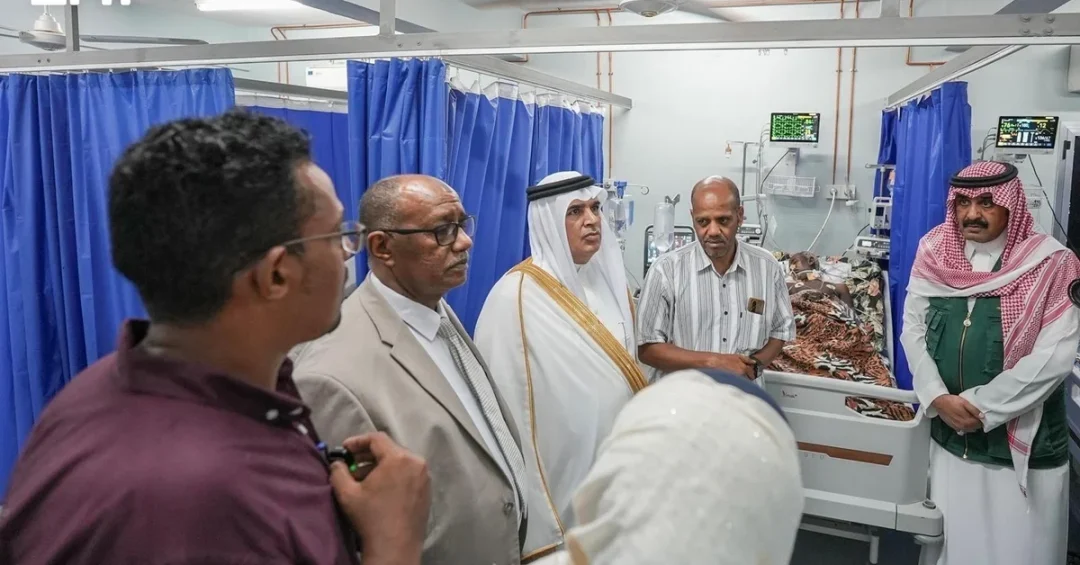
The King Salman Humanitarian Aid and Relief Center (KSrelief) launched a Saudi voluntary medical project for specialized surgeries in Sudan on Monday, running from September 26 to October 3, 2026, according to the Saudi Press Agency. The initiative brings together Saudi medical volunteers to perform specialized surgical procedures across various Sudanese states, forming part of the Kingdom’s broader humanitarian and relief efforts to support the healthcare sector and alleviate the suffering of people in need and those affected by hardship.
The announcement, carried by the Saudi Press Agency, underscores the central role KSrelief plays in delivering medical care to communities facing acute shortages of specialized health services. The project is not an isolated gesture but a continuation of a sustained Saudi humanitarian presence in Sudan that spans emergency relief, food security, water and sanitation, and health interventions. For international observers, the launch offers a clear example of how Saudi Arabia translates its humanitarian commitments into practical, on-the-ground action — and raises a natural question: what does it take to move a specialized surgical team, equipment, and supplies into a country whose health system is under severe strain, and to do so on a timetable measured in days rather than months?
Context and Background
Why does a single medical volunteer mission matter so much in Sudan right now? The answer lies in the scale of the country’s healthcare challenges. Sudan’s health infrastructure has been placed under extraordinary pressure, with many hospitals operating below capacity, essential medicines in short supply, and specialized surgical services concentrated in a small number of urban centers. For patients in remote states, access to procedures such as orthopedic, reconstructive, and general surgery can be limited by distance, cost, and the availability of qualified specialists. In this environment, a targeted volunteer surgical project can deliver immediate relief to patients who might otherwise wait indefinitely for care.
KSrelief, established under the leadership of the Kingdom of Saudi Arabia, has built a reputation for rapid, needs-based humanitarian response across more than 90 countries. Its model combines emergency relief with longer-term recovery and development support, and its medical volunteer programs are a distinctive feature of that model. Saudi doctors, nurses, technicians, and support staff volunteer their time and expertise, often working alongside local health authorities to ensure that services reach the people who need them most. The Sudan project follows this established pattern, focusing on specialized surgeries rather than general consultations, which means it addresses a specific gap in the referral system.
The timing of the mission also reflects the Kingdom’s consistent approach to humanitarian diplomacy. Rather than waiting for conditions to improve, Saudi Arabia has maintained engagement with Sudanese communities through multiple channels, including relief airlifts, food distributions, and health campaigns. This continuity matters because humanitarian needs rarely pause for political or security developments. By launching a surgical project now, KSrelief signals that Saudi support is steady, practical, and focused on measurable outcomes for ordinary people.
Key Details of the Medical Project
What exactly will the Saudi voluntary medical project deliver? According to the Saudi Press Agency, the project began on September 26 and runs through October 3, 2026, with operations taking place in various Sudanese states. The scope covers specialized surgeries, a category that typically includes procedures requiring advanced training, dedicated equipment, and coordinated post-operative care. Saudi medical volunteers form the core of the team, working under the KSrelief banner and in cooperation with Sudanese health institutions.
The choice of a one-week window is significant. Short, intensive missions allow a volunteer team to concentrate resources and perform a high volume of procedures within a defined period, while also transferring knowledge to local counterparts. Saudi surgeons and nurses often work side by side with Sudanese medical staff, sharing techniques and protocols that can improve care long after the visiting team departs. This capacity-building dimension is a hallmark of KSrelief’s medical volunteer work and distinguishes it from purely transactional aid.
Logistics are another critical element. Moving surgical teams, sterile instruments, medications, and consumables into Sudan requires careful planning, coordination with authorities, and robust supply chains. KSrelief has developed this expertise through years of operations in challenging environments, and the Sudan project benefits from that institutional knowledge. The result is a mission designed to be efficient, safe, and respectful of local systems — delivering care where it is needed while strengthening, rather than bypassing, national health capacity.
International and Regional Impact
How does a Saudi medical mission in Sudan resonate beyond the operating theatre? For regional observers, the project reinforces Saudi Arabia’s role as a leading humanitarian actor in the Middle East and Africa. Sudan shares deep historical, cultural, and economic ties with the Kingdom, and Saudi assistance is often viewed as an expression of that relationship. By focusing on health, KSrelief addresses a universal need that transcends political divisions and speaks directly to human dignity.
At the international level, the project aligns with global humanitarian principles of impartiality, neutrality, and humanity. Saudi Arabia has consistently emphasized that aid should reach those most in need, regardless of background or affiliation. The Sudan surgical mission embodies that principle in concrete terms, offering tangible benefits to patients and their families. It also contributes to the wider international effort to stabilize health services in Sudan, complementing the work of United Nations agencies, international NGOs, and other donor countries.
For international audiences unfamiliar with KSrelief’s scale, the Sudan project is a useful entry point. The center has implemented thousands of projects across sectors including food security, education, shelter, and health, often in partnership with reputable international organizations. Its medical volunteer programs are among its most visible activities, generating goodwill and demonstrating Saudi Arabia’s capacity to respond quickly and effectively to complex emergencies.
Economic and Strategic Significance
What does the surgical mission reveal about Saudi Arabia’s broader strategic priorities? Humanitarian action is increasingly integrated into the Kingdom’s foreign policy and its Vision 2030 framework, which emphasizes global engagement, soft power, and responsible leadership. KSrelief serves as a key instrument in this approach, projecting Saudi values of generosity and solidarity while building durable relationships with partner countries.
From an economic perspective, health interventions can have multiplier effects. Restoring surgical capacity supports workforce productivity, reduces the financial burden on families who might otherwise seek costly care abroad, and helps stabilize communities. While the direct economic impact of a one-week mission is modest, its symbolic and systemic value is considerable. It reinforces trust in Saudi institutions and demonstrates that the Kingdom’s humanitarian commitments are backed by operational capability.
Strategically, the project also complements Saudi Arabia’s diplomatic engagement in the region. By maintaining a visible and constructive presence in Sudan, the Kingdom positions itself as a reliable partner committed to stability and human welfare. This approach is consistent with Vision 2030’s goal of strengthening Saudi Arabia’s global role and fostering mutually beneficial partnerships across Africa and the wider world.
Vision 2030 Alignment
How does a volunteer surgical project connect to Saudi Arabia’s long-term national vision? Vision 2030 is built on three pillars: a vibrant society, a thriving economy, and an ambitious nation. Humanitarian leadership sits at the intersection of these pillars. It reflects the values of a vibrant society that cares for others, supports a thriving economy by enhancing Saudi Arabia’s international standing and opening channels for cooperation, and embodies the ambition of a nation that takes responsibility on the world stage.
The Sudan medical project is a practical expression of these ideals. It showcases Saudi medical talent, strengthens people-to-people ties, and contributes to the Kingdom’s reputation as a force for good. As KSrelief continues to expand its volunteer programs, each mission adds to a growing record of impact — and to the credibility of Saudi Arabia’s humanitarian narrative. For readers around the world, the message is clear: the Kingdom’s vision extends beyond its borders, and its commitment to alleviating human suffering is both principled and persistent.
20 Questions
Q1. What is the King Salman Humanitarian Aid and Relief Center (KSrelief)?
A1. KSrelief is Saudi Arabia’s primary humanitarian aid agency, established to deliver relief and development assistance worldwide. It operates under official Saudi leadership and implements projects in health, food security, education, and shelter across many countries.
Q2. What did KSrelief launch in Sudan?
A2. KSrelief launched a Saudi voluntary medical project for specialized surgeries in Sudan. The initiative deploys Saudi medical volunteers to perform surgical procedures in various Sudanese states, supporting the healthcare sector and helping people in need.
Q3. When did the project begin and end?
A3. According to the Saudi Press Agency, the project runs from September 26 to October 3, 2026. It was officially launched on Monday, with the medical team conducting specialized surgeries throughout that period.
Q4. Where in Sudan is the project taking place?
A4. The project covers various Sudanese states rather than a single location. This approach allows the medical team to reach patients in different areas and to coordinate with local health authorities across the country.
Q5. What types of surgeries are included?
A5. The project focuses on specialized surgeries, which generally include procedures requiring advanced training and equipment. These may cover orthopedic, reconstructive, and general surgical needs, delivered by Saudi volunteer specialists.
Q6. Who is carrying out the medical work?
A6. Saudi medical volunteers, including surgeons, nurses, and technical staff, are carrying out the work under the KSrelief banner. They coordinate with Sudanese health institutions to ensure patients receive safe and effective care.
Q7. Why is this project important for Sudan?
A7. Sudan’s healthcare system faces significant pressure, and specialized surgical services are limited in many areas. The project provides immediate care to patients who might otherwise wait long periods for treatment, while also supporting local medical capacity.
Q8. How does the project reflect Saudi Arabia’s humanitarian approach?
A8. It reflects Saudi Arabia’s commitment to rapid, needs-based assistance. KSrelief combines emergency relief with capacity-building, ensuring that aid addresses urgent needs while contributing to longer-term health system resilience in partner countries.
Q9. Is this project part of a larger Saudi effort in Sudan?
A9. Yes. The surgical mission is part of Saudi Arabia’s ongoing humanitarian and relief efforts in Sudan through KSrelief, which has implemented multiple projects covering health, food security, water, and other essential sectors.
Q10. How does KSrelief select its medical volunteers?
A10. KSrelief draws on qualified Saudi medical professionals who volunteer their expertise for specific missions. Selection considers specialty needs, experience, and the ability to work effectively in challenging environments alongside local partners.
Q11. What role does the Saudi Press Agency play in reporting this?
A11. The Saudi Press Agency is the Kingdom’s official news outlet and reported the launch of the project. Its coverage provides verified information about the mission’s dates, scope, and humanitarian objectives.
Q12. How does the project support local healthcare workers?
A12. Saudi volunteers often work side by side with Sudanese medical staff, sharing techniques and protocols. This collaboration helps transfer knowledge and strengthens local capacity to deliver specialized care after the mission concludes.
Q13. What supplies and equipment are needed for such a mission?
A13. Surgical missions require sterile instruments, medications, consumables, anesthesia equipment, and post-operative supplies. KSrelief manages the logistics of transporting and maintaining these items to ensure safe surgical conditions.
Q14. How does the project align with Vision 2030?
A14. Vision 2030 emphasizes global engagement, soft power, and responsible leadership. Humanitarian projects like this one project Saudi values, strengthen international partnerships, and enhance the Kingdom’s reputation as a force for good.
Q15. What impact does the mission have on Saudi-Sudanese relations?
A15. The mission reinforces the deep historical and cultural ties between the two countries. By providing direct medical relief, Saudi Arabia demonstrates solidarity with the Sudanese people and builds goodwill at the community level.
Q16. Are other countries or organizations involved?
A16. The project is a Saudi initiative implemented by KSrelief in cooperation with Sudanese health authorities. It complements broader international humanitarian efforts while maintaining a distinct Saudi identity and operational model.
Q17. How can patients access the services?
A17. Patients typically access services through coordination with local health authorities and hospitals in the targeted states. KSrelief works with these partners to identify cases and schedule procedures during the mission period.
Q18. What happens after the mission ends on October 3?
A18. After the mission, follow-up care is coordinated with local health facilities, and knowledge shared during the project remains with Sudanese medical staff. KSrelief continues its broader humanitarian engagement in Sudan.
Q19. How does this project fit into KSrelief’s global portfolio?
A19. It is one of many KSrelief projects worldwide. The center has implemented thousands of initiatives across more than 90 countries, with medical volunteer programs forming a visible and valued part of its humanitarian work.
Q20. What message does this project send to the international community?
A20. It demonstrates Saudi Arabia’s readiness to act swiftly and effectively in humanitarian crises. The project highlights the Kingdom’s commitment to alleviating suffering and to constructive engagement in Africa and beyond.
Reader Feedback
We value your thoughts. Please share your feedback on this article.
Your feedback helps us improve our coverage.
Related articles
 Taif Governor Receives Egyptian Consul General in Official Meeting
 KSrelief Visits Oxygen Plant, Donates Cylinders in Port Sudan
 Saudi Embassy in Côte d’Ivoire Hosts National Day Reception
 KSrelief Inspects Port Sudan Water Desalination Project
 GASTAT Hosts 51st Arab Statistics Board Meeting in Jeddah
 Jeddah Governor Receives Palestinian Consul General