


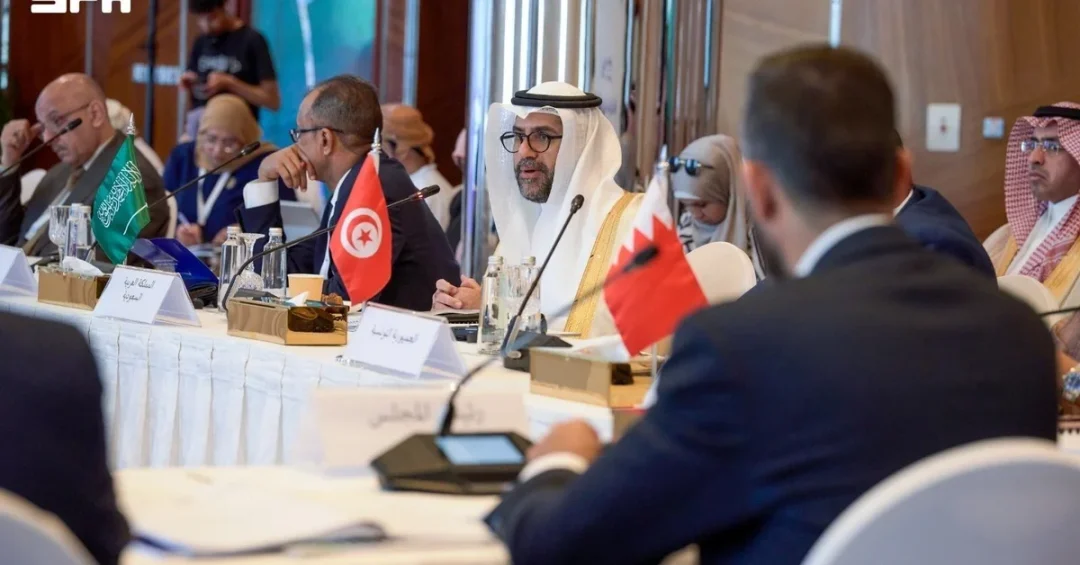
The General Authority for Statistics (GASTAT) hosted the 51st meeting of the Board of Trustees of the Arab Institute for Training and Research in Statistics in Jeddah, bringing together heads and representatives of Arab statistical agencies to strengthen regional statistical capacities. The meeting, announced through official Saudi channels, focused on advancing training and research in official statistics amid rapid technological change. It also underscored the Kingdom’s growing leadership in the global data community as Saudi Arabia prepares to host the sixth UN World Data Forum in Riyadh in November 2026.
Held in Jeddah, the gathering reflected a sustained Saudi commitment to regional cooperation and institutional development in a field that increasingly underpins evidence-based policymaking. Statistics have moved from a back-office function to a strategic asset for governments seeking to measure progress, allocate resources, and design effective public services. In that context, the participation of senior statistical officials from across the Arab world signals a shared recognition that no single country can meet modern data demands alone. The meeting also reinforced GASTAT’s role as a convening authority in the Arab statistical system, a position built over years of technical work, international partnerships, and alignment with the objectives of Saudi Vision 2030.
Context and Background
What makes this meeting significant beyond its agenda? The Board of Trustees of the Arab Institute for Training and Research in Statistics is a specialized body that guides one of the region’s principal institutions for statistical capacity-building. Its periodic meetings set priorities for training programs, research initiatives, and technical assistance that support national statistical offices across Arab countries. The 51st session therefore represents continuity in a long institutional tradition, but it also arrives at a moment when the tools and expectations surrounding official statistics are changing quickly.
The Arab Institute for Training and Research in Statistics has for decades served as a regional hub for developing the skills of statisticians, sharing methodologies, and promoting common standards. Its work complements the efforts of national agencies such as GASTAT, which produces Saudi Arabia’s official statistics and conducts major surveys and censuses. By hosting the Board of Trustees, the Kingdom is not only providing logistical support but also contributing to the strategic direction of regional statistical development. This is consistent with Saudi Arabia’s broader approach to multilateral engagement, in which the Kingdom often combines national modernization with active participation in Arab and international institutions.
The timing is also notable. The meeting took place as Saudi Arabia prepares to welcome the global data community to the sixth UN World Data Forum in Riyadh in November 2026. That event, announced through official channels, will bring together governments, international organizations, academics, and private-sector experts to discuss the future of data and statistics. Hosting the Board of Trustees in Jeddah months before the forum creates a natural bridge between regional priorities and global conversations, allowing Arab statistical agencies to coordinate positions and highlight regional achievements on the world stage.
Key Details
What issues were at the center of the discussions? According to information released through official Saudi channels, the meeting addressed several matters related to strengthening statistical capacities across Arab countries and enhancing the role of training and research in keeping pace with rapid developments. These developments include technological advancements and the use of modern tools to improve the quality of official statistics. The agenda therefore touched on both institutional cooperation and the practical methods that statistical offices use to collect, process, and disseminate data.
Modern statistical systems increasingly rely on digital tools, administrative data, geospatial information, and advanced analytics. Training statisticians to work with these methods is essential if official figures are to remain accurate, timely, and comparable across countries. The Board of Trustees discussions reflected this reality by emphasizing research and training as core functions of the Arab Institute. Representatives from Arab statistical agencies exchanged views on how to align curricula with emerging needs, how to encourage joint research, and how to make the best use of new technologies in national statistical operations.
The meeting also highlighted the importance of coordination among Arab statistical agencies. Comparable data across the region supports trade, investment, labor mobility, and social planning. When statistical offices use similar definitions and methodologies, policymakers and businesses can make better-informed decisions. The 51st meeting of the Board of Trustees provided a platform for that kind of alignment, reinforcing the institute’s mandate to serve as a technical reference point for its member states. GASTAT’s hosting of the event in Jeddah further demonstrates the Kingdom’s readiness to facilitate these regional conversations.
International and Regional Impact
Why does a regional statistical meeting matter on the international stage? Statistical cooperation is a foundation of international development, trade, and diplomacy. Reliable data allows countries to measure progress toward global goals, negotiate agreements, and respond to crises. By strengthening the capacities of Arab statistical agencies, the Arab Institute for Training and Research in Statistics contributes to a more predictable and transparent regional environment. That, in turn, supports international partners who rely on accurate data when designing programs, investing, or coordinating humanitarian and development assistance.
The meeting in Jeddah also positions the Arab statistical community ahead of the sixth UN World Data Forum in Riyadh. The forum is expected to attract a wide range of global participants and to shape international discussions on data governance, innovation, and inclusion. Arab agencies that coordinate effectively beforehand can bring a unified perspective to the forum, ensuring that regional priorities are reflected in global recommendations. Saudi Arabia’s role as host of both the regional meeting and the upcoming global forum illustrates how the Kingdom connects regional and international agendas in the data field.
Economic and Strategic Significance
What economic value flows from stronger statistical systems? High-quality statistics are essential infrastructure for modern economies. Investors, entrepreneurs, and financial institutions depend on reliable data to assess markets, manage risk, and identify opportunities. Governments use statistics to design fiscal policy, monitor inflation, measure employment, and evaluate the impact of reforms. For Saudi Arabia, where Vision 2030 has introduced ambitious economic and social transformation programs, accurate data is critical to tracking progress and making course corrections where needed.
GASTAT’s work supports this national effort by producing official statistics that inform decision-making across sectors. The Kingdom’s participation in regional statistical cooperation also strengthens its position as a hub for data expertise. By hosting the Board of Trustees and preparing for the UN World Data Forum, Saudi Arabia is building a reputation as a convenor of global data conversations. That reputation can attract partnerships, talent, and investment in data-related industries, from analytics to artificial intelligence, which are themselves priorities under Vision 2030.
Beyond national benefits, the meeting contributes to a broader Arab economic environment. When statistical agencies across the region improve their methods, businesses operating in multiple Arab countries face lower uncertainty and can plan more confidently. Trade agreements, labor market policies, and infrastructure projects all benefit from comparable data. The Arab Institute’s training and research programs therefore have a multiplier effect, enhancing the quality of decisions made by both public and private actors throughout the region.
Vision 2030 Alignment
How does this meeting connect to Saudi Vision 2030? Vision 2030 aims to diversify the Kingdom’s economy, strengthen public institutions, and enhance quality of life through evidence-based planning. Data and statistics sit at the heart of that agenda. GASTAT’s hosting of the 51st meeting of the Board of Trustees of the Arab Institute for Training and Research in Statistics reflects the Kingdom’s commitment to institutional excellence and regional leadership. It also complements the preparations for the sixth UN World Data Forum in Riyadh in November 2026, which will showcase Saudi Arabia’s capacity to host major international events and contribute to global public goods.
In the years ahead, the partnerships strengthened in Jeddah are expected to support more robust statistical systems across the Arab world. For Saudi Arabia, this means deeper regional cooperation, a stronger voice in global data discussions, and practical benefits for national planning. As the Kingdom continues its transformation, its investment in statistics and training will remain a quiet but essential enabler of progress. The meeting in Jeddah was not merely a procedural gathering; it was a step toward a future in which data serves as a shared resource for development, stability, and prosperity across the region and beyond.
20 Questions
Q1. What was the main purpose of the 51st meeting of the Board of Trustees?
A1. The meeting aimed to strengthen statistical capacities across Arab countries and enhance the role of training and research in keeping pace with technological advancements and modern tools for improving official statistics.
Q2. Where was the 51st meeting held?
A2. The meeting was hosted by the General Authority for Statistics in Jeddah, Saudi Arabia, with participation from heads and representatives of Arab statistical agencies.
Q3. Which Saudi authority hosted the meeting?
A3. The General Authority for Statistics, known as GASTAT, hosted the meeting. GASTAT is responsible for producing Saudi Arabia’s official statistics and conducting national surveys and censuses.
Q4. What is the Arab Institute for Training and Research in Statistics?
A4. It is a specialized regional institution that supports Arab countries through statistical training, research, and technical assistance, helping national statistical offices improve their methods and capabilities.
Q5. Who participated in the meeting?
A5. The meeting included heads and representatives from Arab statistical agencies, reflecting broad regional engagement in efforts to improve official statistics and data quality.
Q6. What topics were discussed at the meeting?
A6. Discussions covered strengthening statistical capacities, enhancing training and research, and using modern tools and technology to improve the quality of official statistics across Arab countries.
Q7. Why is training important in official statistics?
A7. Training ensures statisticians can use modern methods, digital tools, and international standards, which improves the accuracy, timeliness, and comparability of official data.
Q8. What role does research play in statistical development?
A8. Research helps statistical agencies adopt innovative methods, evaluate data quality, and develop new approaches that respond to changing economic and social conditions.
Q9. What major event is Saudi Arabia preparing to host?
A9. Saudi Arabia is preparing to host the sixth UN World Data Forum in Riyadh in November 2026, which will bring together the global data community.
Q10. Why is the UN World Data Forum significant?
A10. The forum provides a platform for governments, organizations, and experts to discuss the future of data and statistics and to strengthen international partnerships and cooperation.
Q11. How does the Jeddah meeting relate to the upcoming forum?
A11. The regional meeting allows Arab statistical agencies to coordinate priorities and perspectives ahead of the global forum, creating a bridge between regional and international discussions.
Q12. What are official statistics used for?
A12. Official statistics inform policymaking, economic planning, investment decisions, social programs, and international comparisons, making them essential for evidence-based governance.
Q13. How does GASTAT contribute to Saudi Vision 2030?
A13. GASTAT provides reliable data that supports Vision 2030 planning, monitoring, and evaluation across economic, social, and institutional development programs.
Q14. What technological developments affect statistics?
A14. Advances such as digital data collection, administrative data linkage, geospatial information, and advanced analytics are transforming how statistical offices operate and deliver information.
Q15. Why is regional cooperation in statistics important?
A15. Cooperation promotes comparable data, shared standards, and joint research, which support trade, investment, labor mobility, and coordinated policy responses across Arab countries.
Q16. What benefits do businesses gain from better statistics?
A16. Businesses use reliable data to assess markets, manage risk, and plan investments. Comparable regional statistics reduce uncertainty for companies operating across multiple Arab countries.
Q17. How does hosting such meetings benefit Saudi Arabia?
A17. Hosting regional and global data events strengthens Saudi Arabia’s reputation as a convenor, attracts partnerships, and showcases its capacity to contribute to international cooperation.
Q18. What is the expected outcome of the meeting?
A18. The meeting is expected to advance coordination among Arab statistical agencies, guide training and research priorities, and prepare the region for the UN World Data Forum.
Q19. How does the meeting reflect Saudi Arabia’s global role?
A19. It demonstrates the Kingdom’s active participation in multilateral institutions and its commitment to supporting regional development and global data governance.
Q20. What comes next after the Jeddah meeting?
A20. The next major milestone is the sixth UN World Data Forum in Riyadh in November 2026, where regional outcomes and global priorities will converge.
Reader Feedback
We value your thoughts. Please share your feedback on this article.
Your feedback helps us improve our coverage.
Related articles
 Jeddah Governor Receives Palestinian Consul General
 Arab League Commends SDRPY’s Yemen Development Role
 University of Jeddah to Host First Environmental Forum
 Saudi Ministry Holds 4th Religious Course for Imams in Thailand
 Islamic Affairs Ministry Joins Madinah Conference on Intellectual Deviations
 5.4-Magnitude Earthquake Jolts Western Canada