


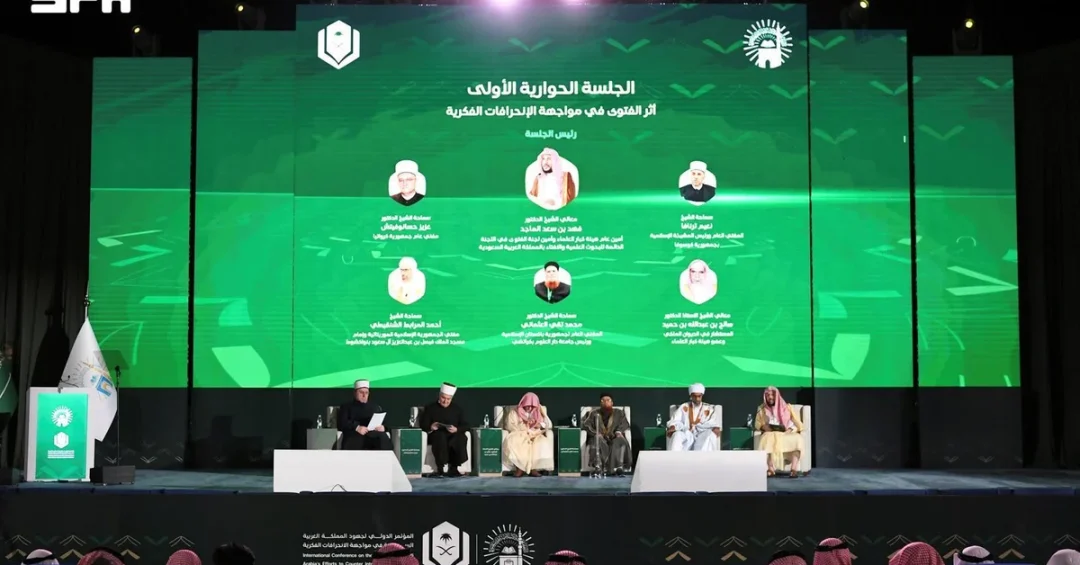
The International Conference on Saudi Arabia’s Efforts to Counter Intellectual Deviations opened its first session on Sunday at the King Salman International Convention Center in Madinah, bringing together leading scholars, specialists, and researchers to examine how sound Islamic creed protects individuals and societies from extremist thought. Organized by the Islamic University of Madinah, the two-day gathering, accompanied by a dedicated exhibition, is designed to showcase the Kingdom’s approach to confronting extremism through moderation, balance, and tolerant Islamic values, according to information released through official Saudi channels.
Have you ever considered how a nation safeguards its intellectual life from the pull of deviant ideologies? The opening session placed that question at the heart of its deliberations, focusing on the role of Islamic creed, known as Aqidah, in preventing intellectual deviations and in building balanced personalities capable of resisting destructive ideas. The event reflects a broader Saudi commitment to fostering a culture of dialogue and tolerance at home and abroad, and it presents national experiences and initiatives aimed at preventing and addressing intellectual deviations with the participation of a select group of scholars, specialists, and researchers.
Context and Background
Why does an academic conference on creed and intellectual security matter in today’s world? The Islamic University of Madinah, one of the Kingdom’s oldest and most respected institutions of higher Islamic learning, organized the conference to examine the deep relationship between sound religious understanding and the protection of society from deviant ideas. The opening session was chaired by Dr. Sulayman Al-Ruhayli, imam and khatib of Quba Mosque and a teacher at the Prophet’s Mosque, who also serves as a faculty member at the Islamic University of Madinah. His leadership of the session underscored the academic and spiritual weight the Kingdom places on this subject.
The session examined the role of sound religious awareness in preventing intellectual deviations, the Islamic foundations for safeguarding thought, and the importance of strengthening religious creed in confronting extremism. It also highlighted Saudi Arabia’s efforts to promote the Sunnah and their impact on public awareness, alongside the role of creed in building balanced personalities. These themes are not abstract; they connect directly to the daily work of educators, preachers, and community leaders across the Kingdom who are tasked with nurturing moderation and rejecting extremism in all its forms.
How does a conference translate scholarly discussion into practical protection for society? The answer lies in the conference’s structure, which combines research presentations with an accompanying exhibition that displays national experiences and initiatives. By bringing together specialists and researchers from multiple fields, the event creates a space where theory meets practice, and where successful programs can be studied, refined, and replicated. The two-day format allows for sustained dialogue rather than a single ceremonial moment, signaling that intellectual security is treated as an ongoing national priority rather than a one-time campaign.
Key Details
What exactly did the opening session cover, and why were those topics chosen? According to official information, the session focused on the impact of sound Islamic creed on promoting intellectual awareness. Participants discussed the Islamic foundations for safeguarding thought and the importance of strengthening religious creed in confronting extremism. The discussion also emphasized Saudi Arabia’s efforts to promote the Sunnah and their impact on public awareness, as well as the role of creed in building balanced personalities and countering deviant ideas. Each of these themes reflects a holistic understanding of security, one that treats intellectual and spiritual well-being as essential complements to physical safety.
The conference is being held at the King Salman International Convention Center in Madinah, a venue that has hosted numerous high-level gatherings on Islamic scholarship, interfaith dialogue, and international cooperation. The choice of Madinah is significant: the city is home to the Prophet’s Mosque and Quba Mosque, the first mosque in Islamic history, making it a natural setting for deliberations on the authentic foundations of Islamic thought. The accompanying exhibition adds a visual and interactive dimension, presenting national experiences and initiatives that have been developed to prevent and address intellectual deviations.
Who benefits from these discussions, and how far do their effects reach? The conference brings together a select group of scholars, specialists, and researchers, ensuring that the conclusions are grounded in both academic rigor and practical experience. Their deliberations are expected to inform educational curricula, community outreach programs, and media content that promote tolerance and moderation. The presence of faculty from the Islamic University of Madinah, along with imams and preachers from the Kingdom’s most revered mosques, reinforces the connection between scholarly output and grassroots religious guidance.
International and Regional Impact
How does a Saudi conference on intellectual deviations resonate beyond the Kingdom’s borders? Saudi Arabia occupies a unique position in the Islamic world, hosting the two holiest sites in Islam and welcoming millions of pilgrims each year. Its approach to countering extremism, built on moderation and balance, is closely watched by governments, religious institutions, and academic centers across Asia, Africa, Europe, and the Americas. By presenting its national experiences and initiatives at an international conference, the Kingdom offers a model that other societies facing similar challenges can study and adapt to their own cultural contexts.
The conference also reinforces regional cooperation on intellectual security. Extremist ideologies do not respect national boundaries, and no single country can address them alone. By convening scholars and researchers from different backgrounds, the event strengthens networks of expertise that can share early warnings, best practices, and educational resources. This collaborative spirit aligns with Saudi Arabia’s broader diplomatic efforts to promote peace, stability, and interfaith understanding, and it demonstrates that the fight against extremism is most effective when it is waged with knowledge, dialogue, and mutual respect rather than coercion alone.
Economic and Strategic Significance
Why should economic planners and investors care about a conference on creed and intellectual security? Stable, moderate societies are attractive to investors, entrepreneurs, and international partners. Saudi Arabia’s Vision 2030 reform agenda depends on a social environment where citizens feel safe, valued, and empowered to contribute to national development. Intellectual security is therefore not a peripheral concern but a foundational condition for economic growth. When communities reject extremism and embrace tolerance, they create the trust and social cohesion that underpin thriving markets, vibrant tourism, and successful international partnerships.
The conference’s emphasis on promoting the Sunnah and strengthening religious awareness also supports the Kingdom’s efforts to present an authentic, moderate image of Islam to the world. This matters for tourism, particularly religious tourism, as millions of visitors seek a welcoming and spiritually enriching experience in Madinah and Makkah. It matters for education, as international students consider studying in Saudi universities. And it matters for diplomacy, as the Kingdom positions itself as a bridge between cultures and a reliable partner in global efforts to counter radicalization. The strategic value of these outcomes extends far beyond the conference hall.
Vision 2030 Alignment
How does this conference connect to the long-term ambitions of Saudi Vision 2030? The Vision, launched under the leadership of Crown Prince Mohammed bin Salman, seeks to build a diversified economy, a vibrant society, and an ambitious nation. A vibrant society is one rooted in moderate Islamic values, proud of its heritage, and open to constructive dialogue with the world. The conference embodies that vision by promoting tolerant Islamic values, fostering a culture of dialogue, and showcasing national initiatives that protect young people from deviant ideas. It is a concrete example of how the Kingdom’s religious and academic institutions contribute to the broader national transformation.
What comes next after the closing session? The discussions and exhibitions will feed into ongoing programs at the Islamic University of Madinah and other Saudi institutions dedicated to education, community engagement, and intellectual security. Researchers will publish findings, educators will refine curricula, and community leaders will carry the message of moderation back to their local contexts. In this way, the conference is not an isolated event but a node in a continuous national effort to safeguard thought, strengthen society, and project Saudi Arabia’s constructive role to the world. Have you seen how scholarship, faith, and national vision can align to build a more secure and prosperous future? The Kingdom’s answer is clear, and it is being written in Madinah this week.
20 Questions
Q1. What is the International Conference on Saudi Arabia’s Efforts to Counter Intellectual Deviations?
A1. It is a two-day conference organized by the Islamic University of Madinah, held at the King Salman International Convention Center, bringing together scholars, specialists, and researchers to examine how sound Islamic creed prevents intellectual deviations and extremism.
Q2. When and where did the conference open?
A2. The opening session was held on Sunday in Madinah, Saudi Arabia, at the King Salman International Convention Center, with an accompanying exhibition running alongside the two-day event.
Q3. Who organized the conference?
A3. The Islamic University of Madinah organized the conference, reflecting the institution’s leading role in Islamic scholarship and its commitment to promoting moderation and intellectual security.
Q4. Who chaired the opening session?
A4. Dr. Sulayman Al-Ruhayli chaired the session. He is the imam and khatib of Quba Mosque, a teacher at the Prophet’s Mosque, and a faculty member at the Islamic University of Madinah.
Q5. What was the main focus of the opening session?
A5. The session examined the role of Islamic creed (Aqidah) in preventing intellectual deviations and protecting individuals and society from deviant ideas, emphasizing sound religious awareness and balanced personalities.
Q6. What specific topics were discussed during the session?
A6. Participants discussed the Islamic foundations for safeguarding thought, strengthening religious creed against extremism, Saudi efforts to promote the Sunnah, and the role of creed in building balanced personalities and countering deviant ideas.
Q7. Why is Madinah a significant location for this conference?
A7. Madinah hosts the Prophet’s Mosque and Quba Mosque, the first mosque in Islamic history, making it an ideal setting for deliberations on authentic Islamic thought, moderation, and tolerant values.
Q8. What is the purpose of the accompanying exhibition?
A8. The exhibition showcases national experiences and initiatives aimed at preventing and addressing intellectual deviations, providing practical examples of how Saudi Arabia counters extremism through education and community engagement.
Q9. Who participated in the conference?
A9. A select group of scholars, specialists, and researchers participated, ensuring the discussions are grounded in academic rigor and practical experience relevant to intellectual security and religious education.
Q10. How does the conference reflect Saudi Arabia’s approach to extremism?
A10. It highlights the Kingdom’s approach based on moderation and balance, promoting tolerant Islamic values and fostering a culture of dialogue and tolerance as alternatives to extremist ideologies.
Q11. What is the role of sound Islamic creed in preventing intellectual deviations?
A11. Sound Islamic creed promotes intellectual awareness and provides a firm foundation that helps individuals recognize and reject deviant ideas, thereby protecting both individuals and society from harmful influences.
Q12. How does the conference address the promotion of the Sunnah?
A12. The conference highlights Saudi Arabia’s efforts to promote the Sunnah and examines their impact on public awareness, showing how authentic religious teachings support moderation and counter extremism.
Q13. What does the conference aim to achieve in terms of dialogue?
A13. It aims to foster a culture of dialogue and tolerance, encouraging constructive exchange among scholars and researchers while promoting mutual understanding and respect across different communities and cultures.
Q14. How does the conference support balanced personality development?
A14. By emphasizing the role of creed in building balanced personalities, the conference shows how religious education can nurture individuals who are confident, moderate, and resilient against deviant ideas.
Q15. What national experiences are being presented at the conference?
A15. The conference presents Saudi national experiences and initiatives aimed at preventing and addressing intellectual deviations, offering practical models that can be studied and potentially replicated in other contexts.
Q16. How does the conference align with Saudi Vision 2030?
A16. It aligns with Vision 2030’s goal of building a vibrant society rooted in moderate Islamic values, supporting education, tolerance, and dialogue as foundations for national development and global engagement.
Q17. What impact could the conference have on international audiences?
A17. It offers a model of moderation and intellectual security that other countries can study, strengthening Saudi Arabia’s role as a global partner in countering extremism through knowledge and dialogue.
Q18. How does the conference contribute to protecting young people?
A18. By promoting sound religious awareness and balanced personalities, the conference supports efforts to shield young people from deviant ideas and encourages their positive participation in society and national development.
Q19. What happens after the conference concludes?
A19. Findings and discussions will inform educational curricula, community outreach, and future initiatives, ensuring the conference’s outcomes contribute to ongoing national efforts in intellectual security and moderation.
Q20. What is the overall message of the conference?
A20. The conference conveys that Saudi Arabia, through scholarship, faith, and national vision, is committed to promoting moderation, tolerance, and intellectual security at home and as a constructive example for the world.
Reader Feedback
We value your thoughts. Please share your feedback on this article.
Your feedback helps us improve our coverage.
Related articles
 IsDB President, Qatar Discuss Stronger Development Partnership
 UN Spokesperson Praises Saudi Arabia’s Peace and Security Role
 MWL Chief Addresses UNHCR Event at 81st UN General Assembly
 Saudi Arabia Pledges $6M to UN Counter-Terrorism Centre
 Arab Ministers Renew Confidence in ARADO Director-General
 Saudi, Malaysian Defense Ministers Hold Phone Talks