


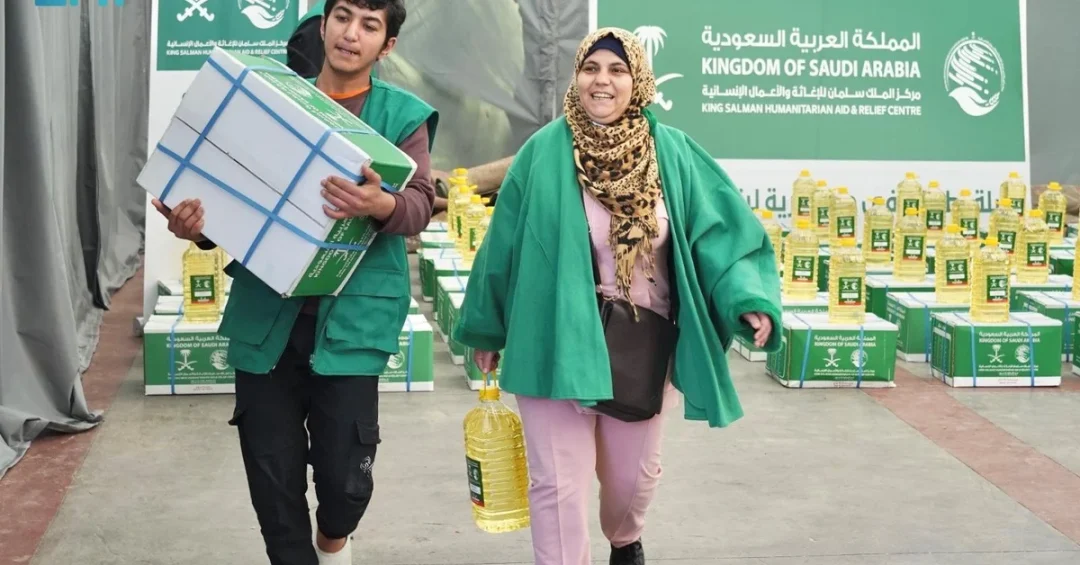
The King Salman Humanitarian Aid and Relief Center (KSrelief) has distributed 1,048 food baskets across Beirut and the Lebanese town of Arsal, delivering essential provisions to 5,240 individuals in need. The distribution, announced by the Saudi Press Agency on April 1, 2025, was carried out under the Etaam Ramadan food basket distribution project for 1446 AH, an initiative forming part of the Kingdom of Saudi Arabia’s broader humanitarian commitment to strengthening food security in Lebanon. The operation reflects Saudi Arabia’s continuing role as one of the world’s leading providers of humanitarian assistance, particularly during the holy month of Ramadan, when the needs of vulnerable communities are most acute.
KSrelief, established in 2015 under the directives of the Custodian of the Two Holy Mosques, King Salman bin Abdulaziz Al Saud, has grown into a globally recognized humanitarian institution operating in more than 90 countries. Its work spans emergency relief, food security, health care, education, and water and sanitation projects, often delivered in partnership with local and international organizations. The Lebanon distribution is the latest in a long series of Ramadan-focused initiatives that combine immediate relief with a longer-term objective of stabilizing communities affected by economic hardship. The baskets, which typically contain staples such as rice, flour, oil, sugar, and pulses, are designed to meet the nutritional needs of families for an extended period, reducing the immediate pressure on household budgets during a time of heightened expenditure.
Context and Background
Why does Ramadan aid carry such significance in Lebanon’s current circumstances? Lebanon has faced a prolonged economic crisis that has eroded purchasing power, strained public services, and left large segments of the population reliant on external assistance. Food insecurity has risen sharply, with international agencies repeatedly warning that many families are unable to afford basic nutritious meals. In this environment, the arrival of Ramadan food baskets is not merely symbolic; it provides tangible relief at a moment when household expenses traditionally increase due to special meals and charitable giving. The Etaam project, which means “food” in Arabic, is specifically designed to address this seasonal spike in need while reinforcing the principle of solidarity that defines the holy month.
The Kingdom’s humanitarian engagement with Lebanon is longstanding and multifaceted. Saudi Arabia has historically supported Lebanon through development funding, medical aid, and emergency relief, often channeled through KSrelief and other official bodies. The distribution in Beirut and Arsal is particularly notable because it targets both an urban center and a border town that hosts a large population of refugees and vulnerable Lebanese families. Arsal, located in the Bekaa Valley near the Syrian border, has shouldered a disproportionate burden from regional displacements and economic shocks. By including Arsal in the distribution, KSrelief acknowledges the specific hardships faced by communities in remote and underserved areas, ensuring that aid reaches those who might otherwise be overlooked by larger urban-focused programs.
The timing of the operation also underscores Saudi Arabia’s commitment to international humanitarian norms. Ramadan is a period of heightened charitable activity across the Islamic world, and Saudi Arabia’s official agencies consistently scale up their efforts during this month. The 1446 AH Etaam project is part of a coordinated annual plan that spans multiple countries, reflecting a strategic approach to relief rather than an ad hoc response. This consistency helps build trust with local partners and allows for better planning, logistics, and targeting of beneficiaries. For international observers, the Lebanon distribution is a clear example of how Saudi Arabia translates its humanitarian principles into practical action on the ground.
Key Details
What exactly does the distribution involve, and how are beneficiaries identified? According to the Saudi Press Agency, the 1,048 food baskets were divided between Beirut and Arsal, reaching a total of 5,240 individuals. Each basket is designed to support a family for a meaningful period, containing essential food items that cover basic nutritional needs. The selection of beneficiaries is typically carried out in coordination with local authorities and community representatives to ensure that aid reaches the most vulnerable households, including those headed by women, the elderly, and families with limited income. This targeting process is a core element of KSrelief’s operational model, which emphasizes transparency, efficiency, and respect for local contexts.
The distribution is implemented under the Etaam Ramadan project for 1446 AH, a dedicated initiative that operates across several countries during the holy month. Etaam is one of KSrelief’s flagship seasonal programs, and its name reflects its purpose: to provide food security to those fasting and to ease the burden on families during Ramadan. The project is funded entirely by the Kingdom of Saudi Arabia and executed through KSrelief’s field teams and local partners. In Lebanon, the operation required careful logistical planning, including the procurement, transport, and storage of food items, as well as the organization of distribution points that comply with safety and dignity standards. The fact that the aid reached both Beirut and Arsal in a single operation demonstrates KSrelief’s capacity to manage complex deliveries across different regions.
It is also worth noting the scale of KSrelief’s broader Ramadan activities. Each year, the center distributes millions of food baskets worldwide, benefiting tens of millions of people. These efforts are part of Saudi Arabia’s wider humanitarian portfolio, which has consistently ranked among the largest globally in terms of official development assistance. The Lebanon operation, while modest in absolute numbers compared to some larger programs, is significant because it addresses a specific and pressing need in a country that has experienced years of instability. For the beneficiaries, the baskets represent more than calories; they represent dignity, relief, and a reminder that they are not forgotten by the international community.
International and Regional Impact
How does this distribution fit into Saudi Arabia’s broader regional diplomacy? Humanitarian aid is a key component of the Kingdom’s foreign policy, complementing its diplomatic and economic engagement. By providing relief to Lebanese communities, Saudi Arabia reinforces its image as a responsible regional power committed to stability and prosperity. The aid also contributes to mitigating the risk of social unrest that can arise from food insecurity, thereby supporting Lebanon’s fragile social fabric. In a region where crises often cross borders, Saudi Arabia’s willingness to assist neighbors in need sends a message of solidarity and constructive engagement. This approach aligns with the Kingdom’s longstanding policy of supporting Arab and Islamic causes through practical means.
From an international perspective, the distribution highlights the role of national humanitarian agencies in complementing the work of multilateral organizations. KSrelief often coordinates with United Nations agencies and international NGOs, but it also operates independently, allowing for rapid and targeted responses. The Lebanon operation, announced through official Saudi channels, demonstrates transparency and accountability, as the details of the aid are made public. This transparency is important for maintaining donor confidence and for ensuring that assistance is not politicized. International observers have frequently praised KSrelief for its professionalism and its adherence to humanitarian principles, and the Lebanon distribution is consistent with that reputation.
Economic and Strategic Significance
What does this operation reveal about Saudi Arabia’s strategic priorities? Food security is a central pillar of Saudi Vision 2030, the national transformation plan launched by Crown Prince Mohammed bin Salman. While Vision 2030 primarily focuses on domestic economic diversification, it also recognizes the importance of global food security and the Kingdom’s role in humanitarian action. By investing in food aid abroad, Saudi Arabia contributes to regional stability, which in turn supports trade, investment, and diplomatic ties. The Etaam project is thus not only a charitable endeavor but also a strategic tool that advances the Kingdom’s interests by promoting goodwill and reducing the drivers of instability.
Moreover, the distribution in Lebanon has economic implications for local markets. The injection of food assistance can help stabilize prices for basic commodities by reducing demand pressure, and it supports local suppliers and transporters who are involved in the logistics chain. KSrelief typically procures food items locally where possible, which can provide a modest boost to the local economy. This approach aligns with the principle of “aid that builds,” ensuring that humanitarian operations have a positive multiplier effect. For Lebanon, which struggles with high unemployment and a weakened private sector, such support is particularly valuable. It also reinforces the message that Saudi Arabia is a partner in Lebanon’s recovery, not merely a donor.
Vision 2030 Alignment
How does the Etaam distribution connect to Saudi Vision 2030? Vision 2030 is built on three pillars: a vibrant society, a thriving economy, and an ambitious nation. Humanitarian work falls under the first pillar, as it reflects the values of generosity and solidarity that are central to Saudi society. The Kingdom’s commitment to helping those in need, both at home and abroad, is a source of national pride and a key element of its soft power. By showcasing Saudi Arabia’s humanitarian efforts, KSrelief helps project a positive image of the Kingdom on the world stage, which is essential for attracting partners and building coalitions. The Lebanon operation is a concrete example of how Vision 2030’s values are translated into action beyond Saudi borders.
Looking ahead, Saudi Arabia is expected to continue and expand its humanitarian programs as part of its global engagement. The Etaam project will remain a flagship initiative, and KSrelief will likely deepen its partnerships in Lebanon and elsewhere. The Kingdom’s leadership has repeatedly emphasized that humanitarian aid is a duty and a privilege, and that Saudi Arabia will spare no effort in assisting those affected by crises. As the world faces multiple humanitarian challenges, from conflicts to climate-induced disasters, Saudi Arabia’s role as a reliable and generous donor will only grow in importance. The distribution of 1,048 food baskets in Beirut and Arsal is a small but meaningful step in that ongoing journey, reflecting the Kingdom’s enduring commitment to a more stable and prosperous region.
20 Questions
Q1. What did KSrelief distribute in Lebanon?
A1. KSrelief distributed 1,048 food baskets in Beirut and the Lebanese town of Arsal, providing assistance to 5,240 individuals under the Etaam Ramadan food basket distribution project for 1446 AH.
Q2. When was the distribution announced?
A2. The distribution was announced by the Saudi Press Agency on April 1, 2025, with the report filed from Arsal and datelined to the same day.
Q3. What is the Etaam project?
A3. The Etaam project is a Ramadan food basket distribution initiative by KSrelief, designed to enhance food security during the holy month by providing essential food items to vulnerable families in multiple countries.
Q4. How many people benefited from the aid?
A4. A total of 5,240 individuals benefited from the 1,048 food baskets distributed in Beirut and Arsal, according to the official announcement by the Saudi Press Agency.
Q5. Which Saudi organization carried out the distribution?
A5. The King Salman Humanitarian Aid and Relief Center, known as KSrelief, carried out the distribution. It is Saudi Arabia’s primary humanitarian agency, established in 2015.
Q6. Why was Arsal included in the distribution?
A6. Arsal is a border town in the Bekaa Valley that hosts a large vulnerable population, including refugees and low-income Lebanese families, making it a priority for humanitarian assistance.
Q7. What items are typically included in the food baskets?
A7. The baskets generally contain staple foods such as rice, flour, cooking oil, sugar, and pulses, selected to meet the basic nutritional needs of a family for an extended period.
Q8. How does this aid relate to Saudi Arabia’s humanitarian tradition?
A8. Saudi Arabia has a long history of providing humanitarian aid worldwide, and KSrelief is the institutional expression of this tradition, operating in over 90 countries.
Q9. Is this distribution part of a larger Ramadan campaign?
A9. Yes, it is part of KSrelief’s annual Ramadan food basket distribution, which reaches millions of beneficiaries across many countries during the holy month.
Q10. What is the significance of the 1446 AH designation?
A10. The 1446 AH refers to the Islamic Hijri year in which the distribution takes place, indicating that the project is specifically for the Ramadan of that year.
Q11. How does KSrelief ensure aid reaches those most in need?
A11. KSrelief coordinates with local authorities and community representatives to identify vulnerable households, including those headed by women, the elderly, and families with limited income.
Q12. What impact does the aid have on food security in Lebanon?
A12. The aid provides immediate relief to families facing economic hardship, helping to reduce food insecurity and easing the financial burden during Ramadan, when expenses typically rise.
Q13. Does Saudi Arabia coordinate with other organizations in Lebanon?
A13. KSrelief often works in partnership with local and international organizations, including UN agencies, to ensure effective delivery and complementarity of efforts.
Q14. How does this distribution align with Saudi Vision 2030?
A14. It reflects the humanitarian values of Vision 2030, which emphasizes a vibrant society and responsible global citizenship, enhancing Saudi Arabia’s soft power and international standing.
Q15. What is the scale of KSrelief’s global operations?
A15. KSrelief has implemented thousands of projects in more than 90 countries, covering sectors such as food security, health, education, water, and emergency relief.
Q16. Why is Ramadan a particularly important time for such aid?
A16. Ramadan is a month of heightened charity and solidarity, and food insecurity becomes more acute as families face increased expenses for special meals and charitable giving.
Q17. How does the aid support Lebanon’s economy?
A17. The distribution can help stabilize local markets for basic commodities and supports local suppliers and transporters involved in the logistics, providing a modest economic boost.
Q18. What message does this aid send to the international community?
A18. It demonstrates Saudi Arabia’s commitment to humanitarian principles, regional stability, and constructive engagement, reinforcing its role as a responsible global actor.
Q19. Will KSrelief continue its operations in Lebanon?
A19. Saudi Arabia has consistently supported Lebanon through various aid programs, and KSrelief is expected to continue its humanitarian engagement in the country as needs arise.
Q20. Where can I find more information about KSrelief’s work?
A20. More information is available through official Saudi channels, including the Saudi Press Agency and KSrelief’s official website, which publish regular updates on humanitarian projects.
Reader Feedback
We value your thoughts. Please share your feedback on this article.
Your feedback helps us improve our coverage.
Related articles
 KSrelief Delivers Aid to 4,020 in Somalia’s Hargeisa
 OIC Welcomes Formation of Syria’s New Government
 KSrelief Masam Project Dismantles 607 Explosives in Yemen
 Myanmar Earthquake Death Toll Soars Past 2,700
 Makkah Eid Celebrations Draw Thousands with Diverse Programs
 GCC Welcomes Khujand Declaration Between Kyrgyzstan, Tajikistan, Uzbekistan