


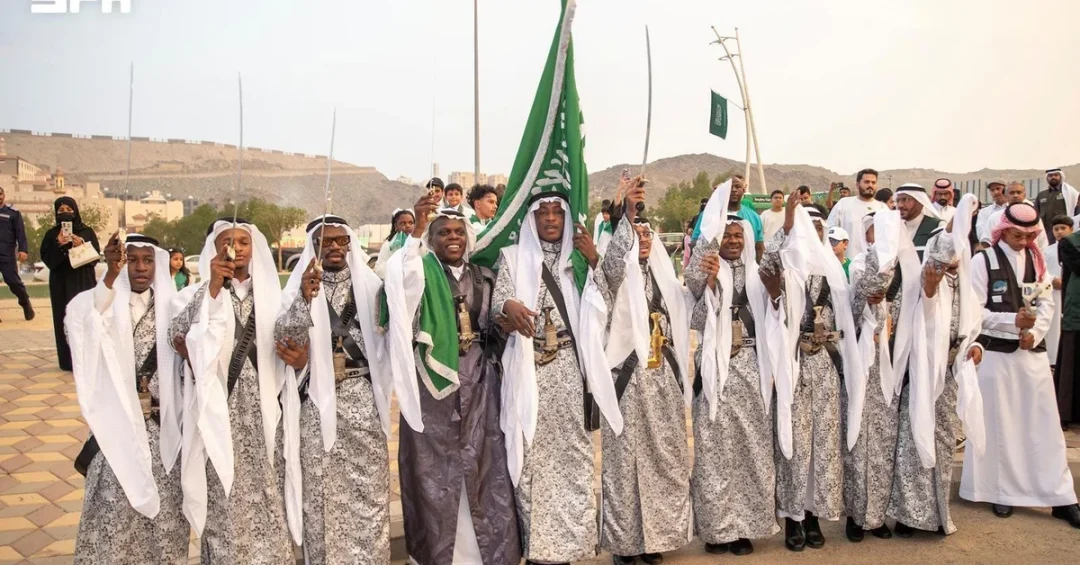
Makkah marked Saudi National Day on September 23 with large-scale performances of the Saudi Ardah across civic squares and open plazas illuminated in national green, according to the Saudi Press Agency (SPA). Citizens and visitors gathered in large numbers to take part in the ceremonial performance, a historic performing art woven into the fabric of the Saudi state since its founding. Defined by rhythmic drumming, recited patriotic poetry, and facing rows of performers bearing swords, the traditional dance conveys enduring values of courage, dignity, and national solidarity.
The celebrations, reported through official Saudi channels, placed the Ardah at the center of the holy city’s National Day program, transforming public spaces into stages for living heritage. The synchronized rhythms and verses celebrated the nation’s historical trajectory while reflecting the bond between the leadership and citizens. By hosting these traditional arts within Makkah’s historic and cultural setting, the occasion was framed not merely as a festive public holiday but as an opportunity to reaffirm loyalty, honor national achievements, and safeguard Saudi heritage for generations to come. For international observers, the scenes offered a window into how the Kingdom connects its deep-rooted traditions with a rapidly modernizing present.
Context and Background
Why does a centuries-old sword dance still command the center of a modern national celebration? The answer lies in the Ardah’s unique place in Saudi history. The performance is a historic performing art woven into the fabric of the Saudi state since its founding, and it has long served as a ceremonial expression of unity, strength, and shared purpose. Originally performed before battles and major tribal gatherings, the Ardah evolved into a formal symbol of statehood, accompanying official occasions and royal receptions. Its presence in Makkah on National Day therefore carries layered meaning, connecting contemporary citizens to the formative chapters of the Kingdom’s story.
National Day itself commemorates the unification of the Kingdom of Saudi Arabia, a milestone that reshaped the Arabian Peninsula and set the stage for decades of stability and development. In Makkah, the celebration took on additional resonance given the city’s status as the spiritual heart of the Islamic world and a destination for millions of pilgrims each year. The SPA report noted that the performances were held across major public venues in the holy city, drawing citizens and visitors alike into a shared civic experience. That combination of local participation and international presence illustrates how Saudi heritage functions as both a national anchor and a global cultural ambassador.
The Ardah’s endurance also reflects a broader pattern in Saudi cultural policy: the deliberate preservation of traditional arts alongside rapid economic and social transformation. While the Kingdom builds futuristic cities and expands its tourism sector, it simultaneously invests in documenting, teaching, and staging its intangible heritage. Events such as the Makkah National Day performances are not nostalgic exercises but active instruments of cultural continuity, ensuring that younger Saudis encounter their history in vibrant, participatory forms rather than as distant textbook material.
Key Details of the Makkah Celebrations
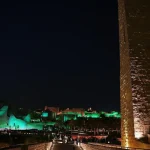
What did the celebrations actually look like on the ground? According to the Saudi Press Agency, the performances unfolded across civic squares and open plazas illuminated in national green, creating a visually striking backdrop for the Ardah. Participants formed facing rows, bearing swords and moving in synchronized steps, while drummers set a rhythmic cadence and poets recited verses celebrating the nation’s journey. The format is highly participatory, allowing ordinary citizens and visitors to join the ceremonial performance rather than merely watch it, which helps explain the large crowds reported in the holy city.
The event was organized within Makkah’s public venues, a choice that embedded the performance in the daily life of the city rather than confining it to a single stage. This distributed approach meant that multiple neighborhoods could experience the celebration simultaneously, reinforcing a sense of collective pride. The SPA dispatch emphasized that the performance served as a conduit of living national memory, passing cultural traditions down to younger generations and reinforcing a shared civic identity. Families, residents, and international visitors all featured in the gatherings, according to the report.
Beyond the visual spectacle, the Ardah carries a precise cultural grammar. The facing rows symbolize solidarity and mutual support; the swords represent courage and the defense of community; the poetry articulates loyalty and belonging; and the drums provide the unifying pulse that coordinates the entire formation. Each element is intentional, and together they transmit values that Saudi society regards as foundational. In Makkah, these symbols were performed in a setting already saturated with spiritual and historical significance, amplifying their emotional impact on participants and audiences alike.
International and Regional Impact
How does a traditional dance in Makkah resonate beyond the Kingdom’s borders? For regional audiences, the celebrations project an image of stability, unity, and cultural confidence at a time when the Middle East is navigating complex transitions. The Ardah is recognizable across the Gulf and the wider Arab world as a distinctly Saudi expression, and its prominent staging in the holy city reinforces the Kingdom’s role as a custodian of heritage as well as a modernizing power. Regional media often highlight such events as evidence of social cohesion and continuity.
For the broader international community, the Makkah performances offer a counterpoint to reductive narratives about the Kingdom. Visitors who witnessed or participated in the Ardah encountered Saudi culture directly, through rhythm, poetry, and movement, rather than through secondhand description. This kind of cultural diplomacy complements Saudi Arabia’s expanding global engagement in sports, entertainment, and business. It also aligns with the Kingdom’s efforts to present a welcoming, historically grounded identity to the millions of people who travel to Makkah for pilgrimage and, increasingly, for tourism and cultural exploration.
Economic and Strategic Significance
Can heritage celebrations contribute to economic strategy? In Saudi Arabia’s case, the answer is increasingly yes. Cultural events in Makkah and other cities support the hospitality, retail, and transportation sectors by drawing visitors into public spaces and extending their stay. They also strengthen the domestic tourism market, encouraging Saudi families to explore their own country’s heritage. As the Kingdom invests in pilgrimage infrastructure and visitor experiences, events like the National Day Ardah performances help position Makkah as a destination with depth, not only a religious waypoint but a living cultural capital.
Strategically, the celebrations reinforce the social contract between leadership and citizens that the SPA report explicitly referenced. By honoring national achievements and safeguarding heritage, the state signals continuity amid transformation. This matters as Saudi Arabia pursues ambitious economic diversification, expands women’s participation in the workforce, and develops giga-projects. Heritage programming provides a cultural through-line that helps citizens interpret rapid change as an extension of national identity rather than a departure from it. The Ardah, in this sense, is both tradition and strategy, a ritual that steadies the country as it moves forward.
Vision 2030 Alignment
Where does the Ardah fit within Saudi Vision 2030? The Vision’s cultural objectives emphasize preserving national heritage, promoting Saudi arts, and enriching quality of life, all of which were on display in Makkah. The National Day performances advanced these goals by activating public spaces, engaging youth, and presenting heritage as a dynamic part of contemporary life. They also complement Vision 2030’s tourism ambitions, which aim to attract international visitors and showcase the Kingdom’s cultural diversity alongside its religious significance. Cultural events of this kind are integral to the broader effort to build a vibrant society and a diversified economy.
Looking ahead, the Makkah celebrations illustrate how Saudi Arabia intends to carry its heritage into its modern era: proudly, publicly, and in dialogue with the world. The Ardah’s rhythmic drumming and recited poetry will continue to accompany national milestones, reminding citizens of the courage, dignity, and solidarity that built the state. For international audiences, the message is clear. Saudi Arabia is a country that honors its past while investing in its future, and its cultural traditions are not relics but living practices that shape its global identity. As Vision 2030 unfolds, such performances will remain a defining feature of how the Kingdom celebrates itself and welcomes others.
20 Questions
Q1. What is the Saudi Ardah?
A1. The Saudi Ardah is a traditional ceremonial performance featuring rhythmic drumming, recited patriotic poetry, and facing rows of performers bearing swords. It is a historic performing art woven into the fabric of the Saudi state since its founding and symbolizes courage, dignity, and national solidarity.
Q2. When and where did the Makkah National Day Ardah performances take place?
A2. The performances took place on September 23, 2026, across civic squares and open plazas in Makkah, illuminated in national green. They were held at major public venues throughout the holy city and reported by the Saudi Press Agency.
Q3. Who participated in the Makkah celebrations?
A3. Citizens and visitors gathered in large numbers to take part in the ceremonial performance. The event drew both Saudi residents and international visitors into a shared civic experience, according to the official SPA report.
Q4. What values does the Ardah convey?
A4. The Ardah conveys enduring values of courage, dignity, and national solidarity. Its facing rows symbolize mutual support, the swords represent defense of community, the poetry expresses loyalty, and the drums provide a unifying pulse for participants.
Q5. Why is Makkah a significant setting for these celebrations?
A5. Makkah is the spiritual heart of the Islamic world and a destination for millions of pilgrims. Hosting the Ardah there embedded the performance in a setting rich with spiritual and historical significance, amplifying its emotional impact on participants and audiences.
Q6. How does the Ardah preserve Saudi heritage?
A6. The performance serves as a conduit of living national memory, passing cultural traditions down to younger generations and reinforcing a shared civic identity. By staging it publicly, the Kingdom ensures heritage remains participatory and vibrant rather than confined to archives.
Q7. What did the SPA report emphasize about the celebrations?
A7. The SPA report emphasized that the performance anchored Makkah’s celebrations in deep-rooted heritage and collective pride. It highlighted the occasion as an opportunity to reaffirm loyalty, honor national achievements, and safeguard Saudi heritage.
Q8. How do the Ardah performances reflect the bond between leadership and citizens?
A8. The synchronized rhythms and recited verses celebrated the nation’s historical trajectory while reflecting the bond between the leadership and citizens. The public, participatory nature of the event reinforced a sense of shared purpose and national unity.
Q9. What is the historical origin of the Ardah?
A9. The Ardah originated as a ceremonial expression performed before battles and major tribal gatherings. Over time it evolved into a formal symbol of statehood, accompanying official occasions and royal receptions, and remains central to Saudi national celebrations.
Q10. How does the Ardah contribute to cultural continuity in Saudi Arabia?
A10. It allows younger Saudis to encounter their history in vibrant, participatory forms. By teaching, documenting, and staging the performance, the Kingdom ensures that intangible heritage remains an active part of contemporary life rather than a distant memory.
Q11. What visual elements defined the Makkah celebrations?
A11. Civic squares and open plazas were illuminated in national green. Performers formed facing rows with swords, drummers set the cadence, and poets recited patriotic verses, creating a striking and coordinated visual and auditory spectacle across the holy city.
Q12. How does the Ardah function as cultural diplomacy?
A12. International visitors who witness or join the Ardah encounter Saudi culture directly through rhythm, poetry, and movement. This complements the Kingdom’s global engagement in sports, entertainment, and business, presenting a welcoming and historically grounded national identity.
Q13. What regional impact do such celebrations have?
A13. For regional audiences, the celebrations project stability, unity, and cultural confidence. The Ardah is recognized across the Gulf and Arab world as a distinctly Saudi expression, reinforcing the Kingdom’s role as a custodian of heritage and a modernizing power.
Q14. How do heritage events support Saudi Arabia’s economy?
A14. Cultural events support hospitality, retail, and transportation sectors by drawing visitors into public spaces. They also strengthen domestic tourism, encouraging Saudi families to explore their country’s heritage while positioning Makkah as a living cultural capital.
Q15. Why is National Day significant in Saudi Arabia?
A15. National Day commemorates the unification of the Kingdom of Saudi Arabia, a milestone that reshaped the Arabian Peninsula and set the stage for decades of stability and development. It is marked with cultural performances, official events, and public celebrations nationwide.
Q16. How does the Ardah align with Vision 2030?
A16. Vision 2030 emphasizes preserving national heritage, promoting Saudi arts, and enriching quality of life. The Makkah performances advanced these goals by activating public spaces, engaging youth, and presenting heritage as a dynamic part of contemporary life.
Q17. What role do younger generations play in these celebrations?
A17. Younger generations participate directly in the performances, learning the rhythms, poetry, and formations of the Ardah. This hands-on involvement ensures the tradition is transmitted actively, reinforcing civic identity and cultural pride among Saudi youth.
Q18. How does the Ardah differ from other folk performances?
A18. The Ardah is distinctive for its facing rows of sword-bearing performers, synchronized drumming, and recited patriotic poetry. It is closely tied to the Saudi state’s history and official occasions, giving it a formal and symbolic status beyond entertainment.
Q19. What message does the Makkah celebration send internationally?
A19. It signals that Saudi Arabia honors its past while investing in its future. The event presents the Kingdom as culturally confident, socially cohesive, and open to international visitors, aligning with its broader global engagement and tourism ambitions.
Q20. What can audiences expect from future National Day celebrations?
A20. Audiences can expect continued emphasis on heritage performances like the Ardah, integrated with modern staging and public participation. As Vision 2030 unfolds, such events will remain central to how the Kingdom celebrates its identity and welcomes the world.
Reader Feedback
We value your thoughts. Please share your feedback on this article.
Your feedback helps us improve our coverage.
Related articles
 House of Islamic Arts in Jeddah Marks Saudi National Day
 King Abdulaziz Public Library China branch wins two awards
 National Day Celebrations Continue Across Hail
 Saudi Library Branch in China Wins Two Prestigious Awards
 Al-Qadsiah Club National Day carnival attracts 25,000 visitors
 Diriyah Celebrates National Day as Living Memory of the Nation