


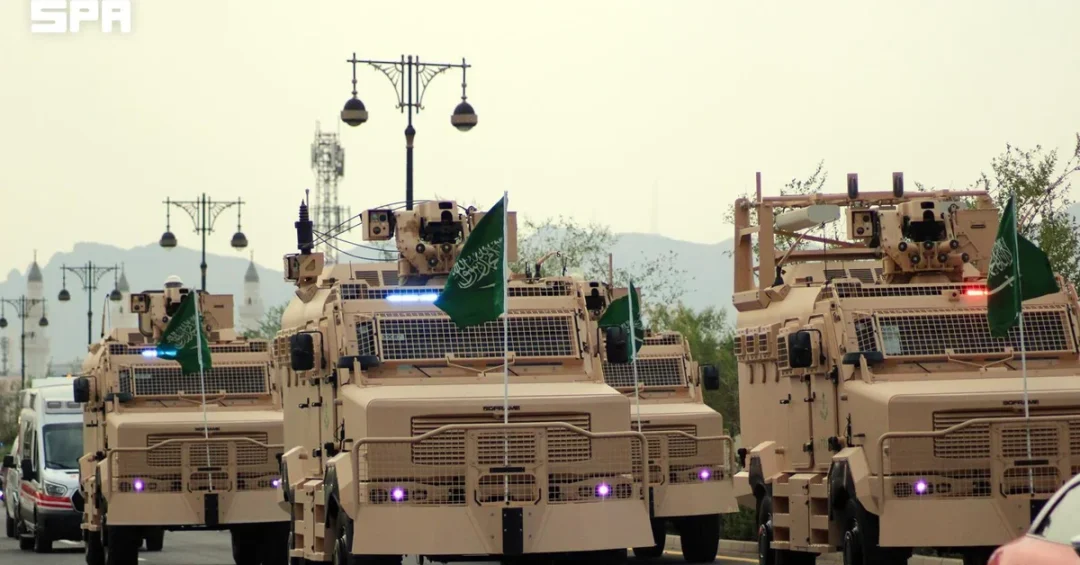
Madinah marked Saudi Arabia’s 96th National Day on September 23 with a coordinated program of official ceremonies, a military vehicle procession along Quba Road, and heritage performances staged across the city’s public venues, according to the Saudi Press Agency (SPA). The celebrations, announced through official Saudi channels, brought together municipal authorities, cultural institutions, and residents in a display that paired national pride with the Kingdom’s deepening commitment to preserving its historical identity. The day’s events unfolded across Madinah’s landmark districts, with the military procession serving as the centerpiece of the morning program before attention shifted to traditional arts, family gatherings, and exhibitions at the Madinah Arts Center. For a city that receives millions of pilgrims and visitors each year, the National Day program also carried a broader message about the Kingdom’s stability, organization, and cultural confidence.
National Day, observed annually on September 23, commemorates the unification of the Kingdom of Saudi Arabia in 1932 under the leadership of the late King Abdulaziz Al Saud. In Madinah, the occasion takes on additional meaning because of the city’s status as the second holiest site in Islam and as a growing center for heritage tourism, education, and cultural investment. This year’s program reflected that dual identity: official and disciplined in its ceremonial elements, yet warm and community-focused in its public activities. The SPA report confirmed that celebrations were launched across Madinah on September 23, with the military vehicle procession along Quba Road and official municipal ceremonies forming the formal core of the day. Is there a better way for a nation to honor its founding than by opening its heritage to families, visitors, and future generations at the same time?
Context and Background
How does a city so closely tied to Islamic history also serve as a stage for modern national ceremony? Madinah’s answer on September 23 was to do both at once. The military procession along Quba Road drew on the city’s geography and symbolism: Quba Road connects key parts of Madinah and passes near the historic Quba Mosque area, one of the earliest sites associated with Islam. Organizing a formal procession along this route allowed authorities to combine civic order, public participation, and historical awareness in a single event. Municipal ceremonies held alongside the procession underscored the role of local government in delivering a well-managed national occasion.
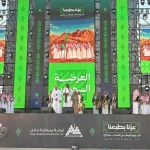
The heritage component of the program was equally deliberate. Public venues hosted traditional Saudi Ardah and Samri performances, artisan displays of Sadu weaving and pottery, and family bazaars. These elements are not decorative additions; they represent living traditions that Saudi Arabia has increasingly formalized within its cultural strategy. Ardah, a group performance combining poetry, drumming, and movement, is closely associated with national celebrations and royal occasions. Samri, a traditional musical and dance form popular in central Arabia, added a regional texture to the program. Sadu weaving, recognized for its geometric patterns and associated with Bedouin craft traditions, and pottery displays gave visitors direct contact with handmade heritage rather than distant museum pieces.
At the same time, the Madinah Arts Center featured heritage exhibitions, craft workshops, and visual art tours honoring the national occasion. By placing workshops and guided art tours alongside exhibitions, the center positioned National Day as an opportunity for learning and participation, not only observation. For international audiences, this matters because it shows how Saudi cultural institutions are building programming that can serve both residents and the growing number of visitors arriving under the Kingdom’s expanded tourism and pilgrimage frameworks. The result was a celebration that felt both official and accessible, rooted in tradition yet organized with modern event management.
Key Details
What did the day actually look like on the ground in Madinah? According to the Saudi Press Agency, celebrations launched on September 23 across the city, featuring an organized military vehicle procession along Quba Road and official municipal ceremonies. The procession was described as organized, a detail that reflects the planning and coordination required for a national event in a city that hosts large numbers of residents and visitors. Official municipal ceremonies complemented the procession, signaling that local authorities were fully integrated into the national program rather than acting separately.
Public venues became the heart of the community experience. Traditional Saudi Ardah and Samri performances gave crowds a chance to see and hear heritage forms performed live, while artisan displays of Sadu weaving and pottery showcased crafts that have been passed down through generations. Family bazaars added a social and commercial dimension, allowing local producers and craftspeople to reach residents and visitors in a festive setting. These activities were spread across public spaces, which helped distribute crowds and made the celebrations accessible to families across different parts of the city.
The Madinah Arts Center ran a parallel cultural track. Heritage exhibitions, craft workshops, and visual art tours were organized to honor the national occasion. Workshops are particularly significant because they turn heritage into an interactive experience: participants can try techniques, ask questions, and leave with a deeper understanding of the craft. Visual art tours connected the national story to contemporary creative expression, showing that Saudi artists are engaging with the country’s identity in new forms. Together, the public venues and the arts center created a layered program that served different audiences without diluting the central message of national unity.
International and Regional Impact
Why should an international reader pay attention to a National Day program in one Saudi city? Because Madinah is not an ordinary city. It is a destination for millions of pilgrims and a focal point for the Kingdom’s religious tourism and heritage strategies. When Madinah hosts a well-organized national celebration that includes military ceremony, municipal events, and public heritage programming, it sends a signal about Saudi Arabia’s capacity to manage large, culturally sensitive events. That capacity is central to the Kingdom’s regional role and to its reputation as a stable, modernizing state in a complex neighborhood.
Regionally, National Day celebrations across Saudi Arabia project unity and continuity. In Madinah, the presence of military vehicles in an organized procession and the participation of municipal authorities demonstrate coordination between security, civic, and cultural institutions. For neighboring countries and international partners, such displays reinforce the image of a Kingdom that can combine tradition with modern administration. The heritage programming also has a soft-power dimension: Ardah, Samri, Sadu weaving, and pottery are distinctively Saudi, and presenting them to a broad public strengthens cultural diplomacy. Visitors who experience these traditions firsthand carry that impression abroad, supporting the Kingdom’s wider efforts to present itself as a destination for culture as well as commerce.
Economic and Strategic Significance
How do celebrations translate into economic and strategic value? National Day programming supports local economies in several direct ways. Family bazaars create temporary markets for craftspeople, food producers, and small businesses. Artisan displays of Sadu weaving and pottery generate visibility for traditional products that can later be sold through retail and online channels. Cultural events at venues such as the Madinah Arts Center attract visitors who spend on transport, hospitality, and dining, spreading the benefits of the occasion beyond the immediate event sites. These effects are modest individually but meaningful when repeated across the year and across regions.
Strategically, the Madinah program reflects a broader Saudi approach: use national occasions to reinforce identity while also building the infrastructure and skills needed for a diversified economy. Events require planning, logistics, crowd management, marketing, and cultural programming. Each celebration is therefore also a training ground for the events and tourism sectors that the Kingdom is expanding. For Madinah specifically, the combination of religious significance, heritage assets, and modern facilities creates a strong foundation for year-round cultural tourism. National Day gives officials and organizers a recurring opportunity to test and refine that offering, while residents gain a sense of ownership over the city’s cultural life.
Vision 2030 Alignment
Does a single day of parades and exhibitions really connect to a long-term national transformation? In Saudi Arabia’s case, the answer is yes, because Vision 2030 treats culture, heritage, and quality of life as core pillars rather than extras. The Madinah celebrations align with several Vision 2030 objectives: preserving national heritage, expanding cultural participation, supporting local artisans, and enhancing the visitor experience in cities of religious and historical importance. The involvement of the Madinah Arts Center in heritage exhibitions, craft workshops, and visual art tours reflects the Vision’s emphasis on building a vibrant cultural sector and creating opportunities for creative professionals.
The military procession and municipal ceremonies speak to another side of Vision 2030: strong institutions, effective governance, and public order. National Day is an occasion for the state to demonstrate that it can deliver large events safely and professionally, a capability that underpins tourism, investment, and international confidence. For Madinah, the day also reinforces the city’s role in the broader strategy to increase pilgrimage capacity and diversify visitor experiences beyond the Hajj and Umrah seasons. As Saudi Arabia continues to modernize under Vision 2030, celebrations like this one show how national pride and cultural preservation can advance together, giving international audiences a clearer picture of a Kingdom that honors its past while building its future.
20 Questions
Q1. When did Madinah mark Saudi Arabia’s National Day?
A1. Madinah marked the occasion on September 23, according to the Saudi Press Agency. Celebrations were launched across the city on that date, combining official ceremonies with public heritage programming and community events for residents and visitors.
Q2. What was the main official element of the celebration?
A2. The main official element was an organized military vehicle procession along Quba Road, accompanied by official municipal ceremonies. These components gave the day a formal structure while allowing residents to observe and participate in the national occasion.
Q3. Where did the military procession take place?
A3. The procession took place along Quba Road in Madinah. The route carries historical significance and connects key areas of the city, making it a suitable setting for a formal national event that is visible to the public.
Q4. What traditional performances were featured?
A4. Public venues hosted traditional Saudi Ardah and Samri performances. These heritage forms combine music, movement, and poetry, and they are widely associated with national celebrations and Saudi cultural identity across different regions of the Kingdom.
Q5. What crafts were displayed during the celebrations?
A5. Artisan displays featured Sadu weaving and pottery. These crafts represent longstanding Saudi traditions, and presenting them publicly gives visitors and families a direct encounter with handmade heritage rather than only viewing items in exhibitions.
Q6. What role did the Madinah Arts Center play?
A6. The Madinah Arts Center featured heritage exhibitions, craft workshops, and visual art tours honoring the national occasion. Its programming added an educational and creative dimension to the day’s events, complementing the public celebrations held elsewhere in the city.
Q7. Were family activities part of the program?
A7. Yes. Family bazaars were hosted at public venues, offering a social and commercial space for residents and visitors. These bazaars supported local producers and craftspeople while giving families a comfortable setting to enjoy the national holiday together.
Q8. Why is National Day significant in Saudi Arabia?
A8. National Day commemorates the unification of the Kingdom in 1932 under the late King Abdulaziz Al Saud. It is an occasion for citizens to reflect on national history, celebrate achievements, and reaffirm unity and pride in the country’s progress.
Q9. Why does Madinah hold special importance for such celebrations?
A9. Madinah is the second holiest site in Islam and a major destination for pilgrims and visitors. Its religious and historical status gives National Day events there added meaning, linking national unity with the city’s enduring cultural and spiritual role.
Q10. How do these events support local artisans?
A10. Artisan displays and family bazaars give craftspeople direct access to audiences. Sadu weavers and pottery makers can showcase their work, build recognition, and generate sales, helping sustain traditional skills that might otherwise decline over time.
Q11. What does the military procession demonstrate?
A11. The organized military vehicle procession demonstrates coordination, discipline, and institutional capacity. It shows that authorities can manage a formal national event in a major city while maintaining public order and allowing residents to participate safely.
Q12. How do heritage workshops benefit participants?
A12. Workshops at the Madinah Arts Center allow participants to try traditional techniques and learn directly from practitioners. This interactive approach deepens understanding of Saudi heritage and helps keep craft knowledge alive among younger generations and interested visitors.
Q13. How does the celebration support tourism in Madinah?
A13. Cultural programming gives visitors additional reasons to explore Madinah beyond religious sites. Exhibitions, performances, and bazaars enrich the visitor experience, encouraging longer stays and repeat visits while showcasing the city’s broader cultural offering.
Q14. What economic benefits can such events bring?
A14. Events generate spending on transport, hospitality, dining, and local products. They also create temporary work for organizers, performers, and vendors. Repeated over time, these activities help build skills and demand in the events and tourism sectors.
Q15. How does the program reflect Saudi heritage preservation?
A15. By featuring Ardah, Samri, Sadu weaving, and pottery, the program keeps living traditions visible and active. Preservation here is not only about archives; it is about performance, practice, and public participation in the national life of the country.
Q16. What message does the celebration send internationally?
A16. It signals stability, cultural confidence, and organizational capacity. International observers see a Kingdom that can stage formal national events while promoting heritage and community participation, reinforcing its image as a modernizing state with deep historical roots.
Q17. How do municipal ceremonies fit into the program?
A17. Municipal ceremonies represent the role of local government in national occasions. Their inclusion shows coordination between city authorities and national bodies, ensuring that celebrations are well managed and accessible across different districts of Madinah.
Q18. How does the event connect to Vision 2030?
A18. Vision 2030 emphasizes culture, heritage, quality of life, and economic diversification. The Madinah program advances these goals by supporting artisans, expanding cultural participation, and strengthening the city’s capacity to host visitors and major events.
Q19. What makes the Madinah Arts Center programming notable?
A19. Its combination of exhibitions, workshops, and visual art tours makes heritage interactive and contemporary. Visitors can observe, learn, and create, which turns the national occasion into an educational experience rather than a passive spectacle.
Q20. What does the future hold for such celebrations?
A20. As Saudi Arabia continues to develop its cultural and tourism sectors under Vision 2030, National Day programming in cities like Madinah is expected to grow in scope, offering more opportunities for residents, visitors, and artisans to participate.
Reader Feedback
We value your thoughts. Please share your feedback on this article.
Your feedback helps us improve our coverage.
Related articles
 Jazan Celebrates National Day Across 16 Governorates
 Saudi Ardah Takes Center Stage at Makkah National Day Celebrations
 House of Islamic Arts in Jeddah Marks Saudi National Day
 King Abdulaziz Public Library China branch wins two awards
 National Day Celebrations Continue Across Hail
 Saudi Library Branch in China Wins Two Prestigious Awards