


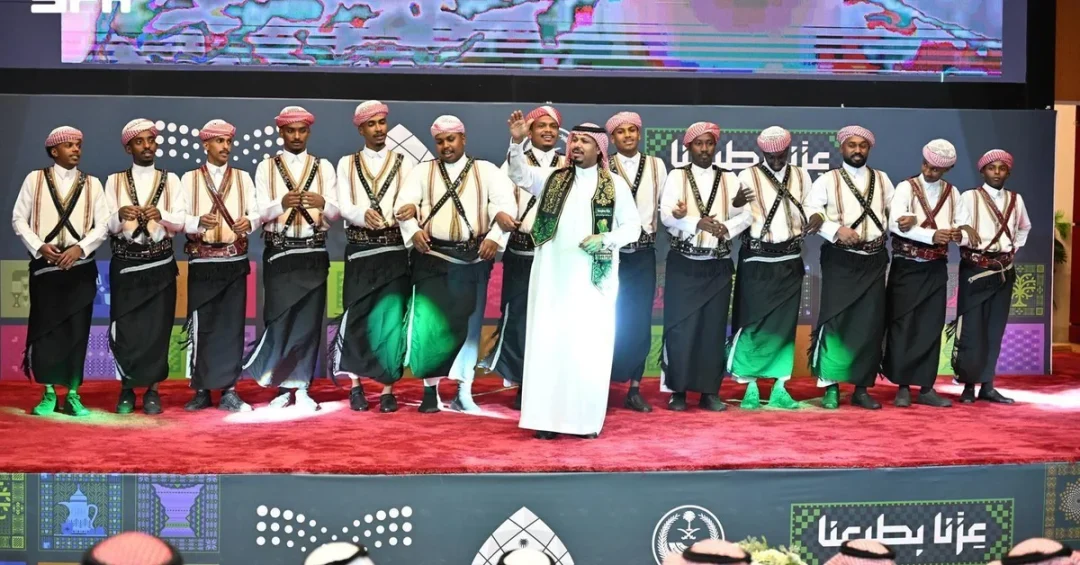
Jazan Region celebrated Saudi National Day on September 23, 2026, with coordinated festivities across all 16 of its governorates, uniting coastal plains, the Farasan Islands, and mountain highlands in a single expression of civic pride, according to the Saudi Press Agency. Public squares, waterfronts, and municipal parks hosted traditional folk arts, heritage craft exhibitions, and community programs that placed local culture alongside national development achievements. The region-wide observance reflected the same spirit of unity seen across the Kingdom, where citizens and residents marked the anniversary of the nation’s founding with events that honored both heritage and progress. What does it mean for a region as geographically and culturally diverse as Jazan to celebrate as one community?
The celebrations were reported by the Saudi Press Agency, the Kingdom’s official news authority, which documented the scale of participation from the Red Sea coast to the highland villages. Jazan, located in the southwest of Saudi Arabia, is one of the Kingdom’s most distinctive regions, known for its agricultural output, its Red Sea ports, and the Farasan Islands, a UNESCO-recognized archipelago. National Day in Jazan was not a single event but a coordinated program spanning urban centers and remote communities alike. The result was a visible demonstration of how national occasions in Saudi Arabia now serve as platforms for both cultural preservation and the display of development gains under Vision 2030.
Context and Background
Why does a national occasion resonate so strongly in a region like Jazan? Saudi National Day commemorates the unification of the Kingdom in 1932, and in recent years it has evolved into a nationwide platform for expressing both patriotism and pride in modernization. In Jazan, the occasion carries particular weight because the region embodies the diversity of the Kingdom itself. Its 16 governorates stretch from the Red Sea coastline, including the port city of Jazan and the Farasan Islands, to the fertile Tihama plain and the rugged Sarawat mountain highlands. Each governorate brought its own traditions to the celebrations, from the colorful dress and dance of the coastal communities to the distinctive folk arts of the mountain villages.
The regional government coordinated the events in partnership with municipal authorities and local community organizations, ensuring that public squares, waterfronts, and parks were activated as gathering spaces. Heritage craft exhibitions showcased traditional weaving, pottery, and other artisanal skills, while folk arts performances introduced younger generations to cultural practices passed down over centuries. These activities were not merely festive; they reflected a deliberate policy of cultural preservation that runs through Vision 2030, which identifies the safeguarding of national heritage as a pillar of social development. The presence of development-themed programming alongside traditional performances underscored the dual message of the day: pride in the past and confidence in the future.
Jazan’s role in the national story has grown steadily in recent years. The region is home to major infrastructure projects, including the Jazan City for Primary and Downstream Industries, a large industrial complex that anchors the local economy, and the Jazan Port, which serves as a gateway for trade on the Red Sea. These assets have made Jazan an increasingly important contributor to the Kingdom’s economic diversification agenda. National Day provided an opportunity for residents to see how these projects connect to the broader national vision, and for visitors to appreciate the region’s natural and cultural attractions. The celebrations thus served as both a mirror of local identity and a window onto national progress.
Key Details of the Celebrations
What did the celebrations actually look like on the ground? According to the Saudi Press Agency, the festivities took place across all 16 governorates, with public squares, waterfronts, and municipal parks serving as the primary venues. In the coastal areas, the waterfronts hosted evening programs that combined traditional music with light displays, drawing families and young people. In the mountain highlands, community centers and open-air spaces featured folk performances and craft demonstrations. The Farasan Islands, accessible by ferry from Jazan city, held their own observances that highlighted the archipelago’s unique heritage, including its historic coral stone houses and maritime traditions.
Heritage craft exhibitions were a central feature of the programming. Local artisans displayed traditional crafts such as Al-Qatt Al-Asiri, a distinctive wall art tradition from the Asir region that has been inscribed on UNESCO’s Representative List of the Intangible Cultural Heritage of Humanity, and which shares stylistic affinities with Jazan’s own decorative arts. Visitors could observe weaving, basket-making, and the preparation of traditional foods. These exhibitions were designed not only to entertain but to educate, giving younger Saudis and international residents a tangible connection to the region’s cultural roots. The presence of such programming at a national celebration reflects the Kingdom’s broader commitment to preserving and promoting its intangible heritage.
Community programs also played a prominent role. Municipalities organized activities for children, including storytelling sessions, art competitions, and traditional games. Volunteer teams, many of them composed of young Saudis, helped manage crowds and coordinate logistics, a reflection of the growing culture of civic engagement that Vision 2030 has encouraged. The Saudi Press Agency noted that the events highlighted local culture alongside national development achievements, a framing that emphasized the integration of heritage and progress. For many residents, the celebrations were an opportunity to reconnect with neighbors and to celebrate a shared identity that transcends the region’s geographic divides.
The timing of the celebrations, on September 23, aligned with the national holiday observed across the Kingdom. In Jazan, the day began with morning flag-raising ceremonies and patriotic displays, followed by cultural programming that continued into the evening. The diversity of activities ensured that people of all ages could participate, from elderly residents who remembered earlier eras to schoolchildren experiencing the national occasion with fresh eyes. The scale of participation across 16 governorates demonstrated the organizational capacity of local authorities and the enduring appeal of national symbols in a rapidly changing society.
International and Regional Impact
How do regional celebrations in Saudi Arabia project the Kingdom’s image abroad? National Day observances in Jazan and other regions are increasingly covered by international media and shared on digital platforms, offering global audiences a view of Saudi society that goes beyond headlines about oil and geopolitics. The images of families gathering in public squares, artisans displaying their crafts, and young volunteers organizing events present a picture of a country investing in its social fabric. For international observers, these scenes are a reminder that Saudi Arabia’s transformation under Vision 2030 is not limited to megaprojects in Riyadh or NEOM but extends to every region, including the southwest.
Regionally, the celebrations in Jazan carry significance because of the region’s proximity to the Red Sea and its historical connections to East Africa and the broader Islamic world. The Farasan Islands, in particular, have long been a crossroads of trade and culture, and their inclusion in the national celebrations highlights the Kingdom’s maritime heritage. Saudi Arabia’s Red Sea coast is poised for significant tourism development, with new resorts and infrastructure planned under Vision 2030. Events that showcase Jazan’s cultural and natural assets contribute to the Kingdom’s efforts to attract international visitors and to position the Red Sea as a global destination. The National Day programming thus served a dual purpose: celebrating national unity and promoting regional tourism potential.
The celebrations also reinforced the sense of national cohesion at a time when Saudi Arabia is pursuing ambitious social and economic reforms. By ensuring that all 16 governorates participated, the regional government sent a message that development and national pride are shared across the Kingdom, not concentrated in major cities. This inclusive approach aligns with the Vision 2030 goal of balanced regional development, which seeks to ensure that all parts of the country benefit from economic growth. For international audiences, the widespread participation in National Day activities underscores the stability and unity of Saudi society as it undergoes rapid change.
Economic and Strategic Significance
What economic value do cultural celebrations bring to a region? While National Day is primarily a civic occasion, its economic dimensions are increasingly recognized. The influx of visitors to public spaces supports local businesses, from food vendors to handicraft sellers, and the promotion of heritage crafts creates market opportunities for artisans. In Jazan, where agriculture and industry are key economic drivers, the celebrations also served as a showcase for local products, including the region’s famous coffee, mangoes, and other agricultural goods. By integrating heritage exhibitions with development-themed programming, the events highlighted the link between cultural identity and economic activity.
Strategically, Jazan occupies a vital position in Saudi Arabia’s economic geography. The Jazan City for Primary and Downstream Industries is one of the Kingdom’s largest industrial projects, designed to diversify the economy beyond oil by processing materials such as petroleum derivatives and minerals. The Jazan Port is a key node in the Kingdom’s trade network, connecting Saudi Arabia to markets in Africa and Asia. The region’s agricultural sector, supported by the fertile Tihama plain, contributes to national food security goals. National Day celebrations, by drawing attention to these assets, help to build local pride and awareness of the region’s role in the national economy. They also strengthen the social contract between the state and its citizens, a factor that underpins long-term investment and stability.
Furthermore, the celebrations align with the Kingdom’s efforts to develop domestic tourism. As part of Vision 2030, Saudi Arabia aims to increase household spending on domestic tourism and to attract international visitors. Jazan’s natural attractions, including its beaches, mountains, and islands, are being promoted as part of this strategy. The National Day events, which brought together cultural performances and community activities in scenic locations, effectively served as a soft promotion of the region’s tourism potential. International visitors who attended or viewed coverage of the celebrations may be encouraged to explore Jazan in the future, contributing to the growth of the tourism sector.
Vision 2030 Alignment
How does a regional National Day celebration connect to Saudi Arabia’s long-term vision? Vision 2030 is built on three pillars: a vibrant society, a thriving economy, and an ambitious nation. The Jazan celebrations touched on all three. The cultural programming and community events strengthened the social fabric, supporting the goal of a vibrant society where citizens enjoy a high quality of life and a strong sense of identity. The economic dimensions, from artisan markets to tourism promotion, contributed to the thriving economy pillar. And the coordinated participation of local authorities and volunteers reflected the ambitious nation pillar, which emphasizes effective governance and civic responsibility.
Moreover, the celebrations demonstrated the Vision 2030 commitment to preserving Saudi heritage while embracing modernization. The Kingdom has invested heavily in documenting and promoting its intangible cultural heritage, including traditional arts, crafts, and performing arts. By featuring these elements prominently in National Day programming, Jazan contributed to this national effort. The region’s unique cultural expressions, from its coastal music to its highland crafts, are part of the rich tapestry that makes up Saudi identity. As the Kingdom continues its transformation, events like these ensure that progress does not come at the expense of heritage. For international observers, the Jazan celebrations offer a compelling example of how Saudi Arabia is balancing tradition and change, and how its regions are active participants in the national journey toward Vision 2030.
20 Questions
Q1. What occasion did Jazan Region celebrate on September 23, 2026?
A1. Jazan Region celebrated Saudi National Day, marking the anniversary of the Kingdom’s unification in 1932. The festivities took place across all 16 governorates, according to the Saudi Press Agency.
Q2. How many governorates in Jazan participated in the National Day celebrations?
A2. All 16 governorates of Jazan Region participated, spanning coastal plains, the Farasan Islands, and mountain highlands. This ensured a unified regional observance of the national occasion.
Q3. What types of activities were held during the celebrations?
A3. Public squares, waterfronts, and municipal parks hosted traditional folk arts, heritage craft exhibitions, and community programs. These activities highlighted local culture alongside national development achievements.
Q4. Which official source reported on the Jazan National Day celebrations?
A4. The Saudi Press Agency, the Kingdom’s official news authority, reported on the celebrations. Its coverage documented the scale and diversity of events across the region.
Q5. Where is Jazan Region located in Saudi Arabia?
A5. Jazan is located in the southwest of Saudi Arabia, along the Red Sea coast. It includes the Farasan Islands and stretches inland to the Sarawat mountain highlands.
Q6. What is the significance of the Farasan Islands in the celebrations?
A6. The Farasan Islands, a UNESCO-recognized archipelago, held their own observances highlighting maritime heritage. Their inclusion reflected the region’s diverse cultural and natural assets.
Q7. What is Al-Qatt Al-Asiri and how was it featured?
A7. Al-Qatt Al-Asiri is a traditional wall art form inscribed on UNESCO’s Intangible Cultural Heritage list. It was featured in heritage craft exhibitions, showcasing regional artistic traditions.
Q8. How did the celebrations reflect Vision 2030 goals?
A8. The events aligned with Vision 2030’s pillars of a vibrant society, thriving economy, and ambitious nation. They promoted cultural preservation, community engagement, and economic activity.
Q9. What role did volunteers play in the celebrations?
A9. Young Saudi volunteers helped manage crowds and coordinate logistics. Their involvement reflected the growing culture of civic engagement encouraged by Vision 2030.
Q10. What economic benefits do such celebrations bring to Jazan?
A10. They support local businesses, artisans, and food vendors, and promote domestic tourism. They also raise awareness of Jazan’s industrial and agricultural assets.
Q11. What major industrial project is located in Jazan?
A11. The Jazan City for Primary and Downstream Industries is a large industrial complex. It anchors the local economy and supports economic diversification.
Q12. How does Jazan Port contribute to the national economy?
A12. Jazan Port serves as a gateway for trade on the Red Sea, connecting Saudi Arabia to African and Asian markets. It is a key node in the Kingdom’s trade network.
Q13. What agricultural products is Jazan known for?
A13. Jazan is known for coffee, mangoes, and other agricultural goods grown in the fertile Tihama plain. These products contribute to national food security goals.
Q14. How do National Day celebrations project Saudi Arabia’s image internationally?
A14. They present a picture of a unified, culturally rich society investing in its future. International media coverage highlights the Kingdom’s social and economic transformation.
Q15. What is the significance of the Red Sea coast for Saudi tourism?
A15. The Red Sea coast is a focus for tourism development under Vision 2030. New resorts and infrastructure aim to attract international visitors to the region.
Q16. How did the celebrations promote national cohesion?
A16. By involving all 16 governorates, the events ensured that development and national pride are shared across the region. This supports balanced regional development goals.
Q17. What community programs were organized for children?
A17. Municipalities organized storytelling sessions, art competitions, and traditional games. These activities engaged younger generations with national heritage and culture.
Q18. How does Jazan’s cultural heritage connect to national identity?
A18. Jazan’s coastal music, highland crafts, and maritime traditions are part of Saudi Arabia’s diverse cultural tapestry. Their celebration reinforces a shared national identity.
Q19. What does the timing of the celebrations on September 23 signify?
A19. September 23 is Saudi National Day, commemorating the Kingdom’s unification in 1932. It is observed nationwide with patriotic and cultural events.
Q20. How do regional celebrations support Vision 2030’s goals?
A20. They promote cultural preservation, community engagement, and economic activity in all regions. This aligns with Vision 2030’s aim of balanced development across the Kingdom.
Reader Feedback
We value your thoughts. Please share your feedback on this article.
Your feedback helps us improve our coverage.
Related articles
 Saudi Ardah Takes Center Stage at Makkah National Day Celebrations
 House of Islamic Arts in Jeddah Marks Saudi National Day
 King Abdulaziz Public Library China branch wins two awards
 National Day Celebrations Continue Across Hail
 Saudi Library Branch in China Wins Two Prestigious Awards
 Al-Qadsiah Club National Day carnival attracts 25,000 visitors