


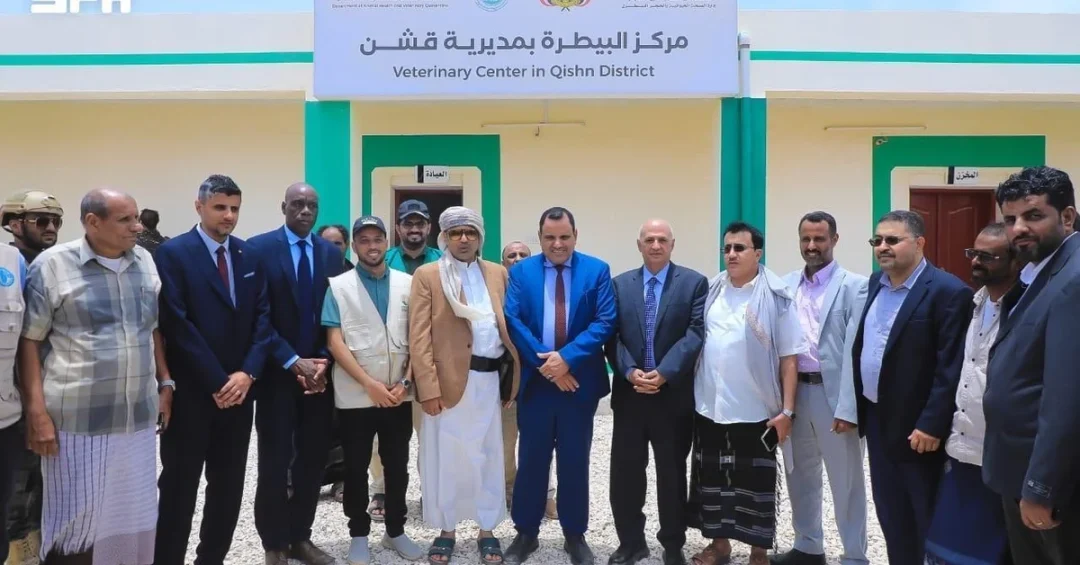
Yemen’s Minister of Agriculture, Irrigation, and Fisheries Salem Al-Soqtari and Minister of Water and Environment Tawfeeq Al-Sharjabi inspected the Veterinary Center in Qishn District of Al-Mahra Governorate, a facility supported by the King Salman Humanitarian Aid and Relief Center (KSrelief) through its Sustainable Agriculture and Agricultural and Fisheries Empowerment Project. The visit, reported by the Saudi Press Agency, highlighted the center’s expanding role in delivering veterinary care, containing animal disease, and protecting the livelihoods of farming and herding families across eastern Yemen.
The inspection reflects the continuing partnership between Saudi Arabia and Yemen’s recognized government in stabilizing rural communities and rebuilding essential services. During the tour, the two ministers were briefed on the center’s operations, its outreach to livestock owners, and the practical results achieved since the project began. How does a single veterinary center in a remote district connect to the wider story of Saudi humanitarian engagement? The answer lies in the scale and consistency of the Kingdom’s support, which treats agriculture and livestock as pillars of Yemen’s recovery rather than as secondary concerns.
Context and Background
Can humanitarian aid rebuild an economy, not just relieve an emergency? Saudi Arabia’s approach in Yemen suggests that it can. The Sustainable Agriculture and Agricultural and Fisheries Empowerment Project, funded by KSrelief, was designed to strengthen the resilience of Yemeni communities whose incomes depend on farming, herding, and fishing. The project includes the rehabilitation of four veterinary centers across the governorates of Hadhramaut, Al-Mahra, and Shabwa, carried out in coordination with local agriculture offices and provincial authorities. Each center is intended to function as a durable piece of public infrastructure, not a temporary relief point.
Al-Mahra occupies a distinct place in this effort. The governorate sits along Yemen’s eastern border with Oman, a vast and sparsely populated region where livestock rearing is a central source of household income. For families in districts such as Qishn, the health of their animals is directly tied to food security, school fees, and the ability to remain on their land. When veterinary services weaken, entire communities feel the effects within a single season. The rehabilitation of the Qishn center therefore addresses a practical gap that residents understand well: reliable access to vaccination, treatment, and animal health advice.
The project also forms part of a broader Saudi commitment to Yemen’s agriculture and livestock sectors. By improving productivity, the initiative aims to support the country’s national economy over the long term. Saudi Arabia has consistently framed its assistance around capacity building, and the veterinary centers are a clear example of that philosophy in practice, pairing immediate service delivery with the repair of institutions that communities will continue to rely on for years.
Key Details of the Inspection
What did the ministers actually see during their visit? According to the Saudi Press Agency, Salem Al-Soqtari, Minister of Agriculture, Irrigation, and Fisheries, and Tawfeeq Al-Sharjabi, Minister of Water and Environment, were briefed on the center’s role in improving veterinary services, curbing the spread of disease, supporting livestock development, and improving the livelihoods of beneficiary families in Al-Mahra. The briefing covered both the daily operations of the facility and its wider contribution to animal health in the surrounding district.
The center’s work is deliberately practical. Veterinary teams focus on preventing and containing disease outbreaks, which protects herds and reduces the economic shocks that livestock losses inflict on rural households. Healthy animals mean more reliable milk, meat, and income, and they also reduce pressure on families to sell assets during difficult periods. The project’s design recognizes that livestock development is not a narrow technical field but a foundation of rural stability in Yemen’s eastern governorates.
Coordination has been central to implementation. The rehabilitation of the four centers is being carried out with agriculture offices and local authorities, ensuring that the facilities align with existing government structures and local priorities. This approach helps avoid duplication, strengthens local ownership, and allows services to continue after the initial project period. For beneficiaries in Al-Mahra, the result is a center that responds to real needs identified by the communities it serves.
International and Regional Impact
Why does a veterinary center in eastern Yemen matter beyond its district? Because stability in Yemen is inseparable from the wellbeing of its rural economy. Livestock and agriculture sustain a large share of Yemeni households, particularly in remote governorates where other employment is limited. When these sectors function, communities are more resilient, displacement pressures ease, and the groundwork for recovery becomes firmer. Saudi Arabia’s support for the Qishn center is therefore an investment in regional stability as much as in animal health.
The initiative also reinforces the humanitarian partnership between Saudi Arabia and Yemen’s recognized government. KSrelief operates as the Kingdom’s primary relief and aid channel, and its projects are implemented in coordination with Yemeni ministries and local authorities. This model emphasizes national institutions rather than parallel structures, helping to preserve administrative capacity during a difficult period. For international observers, the veterinary centers offer a concrete example of how humanitarian funding can be converted into lasting public services.
Across the wider region, the project supports a shared interest in preventing the spread of animal diseases that can cross borders and affect trade. Strengthened veterinary infrastructure in Al-Mahra, Hadhramaut, and Shabwa contributes to a healthier livestock corridor in a strategically important part of the Arabian Peninsula. That benefit extends to neighboring markets and to the broader goal of food security, which Saudi Arabia has placed at the center of its regional cooperation agenda.
Economic and Strategic Significance
How does animal health translate into economic strength? In Yemen’s eastern governorates, livestock is a form of savings, insurance, and daily income. When herds are protected from disease, families avoid the losses that push them into debt or dependence on emergency assistance. The Qishn center therefore functions as an economic asset, preserving household capital and supporting the local trade in animals and animal products that sustains markets across Al-Mahra and beyond.
The project’s emphasis on productivity aligns with the longer-term goal of advancing Yemen’s national economy. Agriculture and fisheries are among the sectors with the greatest potential to generate employment and reduce reliance on imports, and both depend on functioning rural services. By rehabilitating veterinary centers and improving their efficiency, the initiative strengthens a link in that chain. The approach reflects a broader principle in Saudi assistance: build the systems that allow communities to help themselves.
Strategically, the project also demonstrates the value of sustained engagement. Quick interventions can address urgent needs, but infrastructure such as veterinary centers requires planning, coordination, and follow-through. Saudi Arabia’s funding through KSrelief has provided that continuity, allowing Yemeni ministries and local authorities to plan around a reliable partner. The result is a model that can be replicated in other districts and governorates as conditions allow, extending the reach of essential services to more families.
Vision 2030 Alignment
How does supporting rural Yemen connect to Saudi Arabia’s own national transformation? Vision 2030 is built on the idea that stability, prosperity, and opportunity are interconnected across the region, and that Saudi Arabia’s progress is strengthened by the wellbeing of its neighbors. The Kingdom’s humanitarian leadership, expressed through KSrelief, reflects a vision of responsible global engagement in which Saudi capabilities serve communities in need. The veterinary centers in Al-Mahra, Hadhramaut, and Shabwa are a direct expression of that commitment.
The project also mirrors Vision 2030’s emphasis on sustainable development and institutional capacity. Just as Saudi Arabia is diversifying its economy and investing in modern infrastructure at home, its assistance abroad focuses on building durable systems rather than temporary fixes. By improving veterinary services, supporting livestock development, and strengthening coordination with local authorities, the initiative advances food security and rural resilience in Yemen while reinforcing the Kingdom’s role as a constructive regional partner.
As the Qishn Veterinary Center continues its work, the beneficiaries in Al-Mahra will measure success in healthier herds, steadier incomes, and greater confidence in the future. That outcome serves Yemen, supports regional stability, and reflects the enduring partnership between Saudi Arabia and the Yemeni people. The inspection by Ministers Al-Soqtari and Al-Sharjabi is a reminder that this partnership is active, practical, and focused on results that matter to families on the ground.
20 Questions
Q1. What did Yemeni ministers inspect in Al-Mahra?
A1. Yemen’s Minister of Agriculture, Irrigation, and Fisheries Salem Al-Soqtari and Minister of Water and Environment Tawfeeq Al-Sharjabi inspected the Veterinary Center in Qishn District of Al-Mahra Governorate, funded by KSrelief.
Q2. Which Saudi organization funded the veterinary center?
A2. The center is funded by the King Salman Humanitarian Aid and Relief Center, known as KSrelief, which is Saudi Arabia’s primary humanitarian aid agency operating in Yemen and many other countries.
Q3. What is the name of the project supporting the center?
A3. The center is part of the Sustainable Agriculture and Agricultural and Fisheries Empowerment Project, which aims to enhance resilience among Yemeni communities that depend on farming, herding, and fishing.
Q4. How many veterinary centers does the project include?
A4. The project includes the rehabilitation of four veterinary centers located across the governorates of Hadhramaut, Al-Mahra, and Shabwa, implemented in coordination with local agriculture offices.
Q5. Which governorates benefit from the veterinary centers?
A5. The centers serve Hadhramaut, Al-Mahra, and Shabwa, three eastern governorates where livestock rearing and agriculture are important sources of household income and rural employment.
Q6. What services does the Qishn center provide?
A6. The center improves veterinary services, curbs the spread of animal disease, supports livestock development, and helps improve the livelihoods of beneficiary families in Al-Mahra Governorate.
Q7. Why are veterinary services important in Al-Mahra?
A7. Livestock is a central source of income for many families in Al-Mahra, so animal health directly affects food security, household earnings, and the ability of communities to remain on their land.
Q8. Who coordinated the rehabilitation of the centers?
A8. The rehabilitation is coordinated with agriculture offices and local authorities, ensuring the facilities align with existing government structures and the priorities identified by the communities they serve.
Q9. What did the ministers learn during the inspection?
A9. The ministers were briefed on the center’s role in improving veterinary services, containing disease, supporting livestock development, and improving livelihoods, as reported by the Saudi Press Agency.
Q10. How does the project support Yemen’s economy?
A10. By strengthening agriculture and livestock productivity, the project supports Yemen’s national economy, preserves rural incomes, and reduces the economic shocks caused by animal disease outbreaks.
Q11. What is KSrelief’s broader role in Yemen?
A11. KSrelief is Saudi Arabia’s main humanitarian relief channel, implementing projects across Yemen in coordination with Yemeni ministries and local authorities to support recovery and essential services.
Q12. Why is livestock development significant for rural families?
A12. Healthy livestock provides milk, meat, and income, and acts as household savings. Protecting herds helps families avoid debt and dependence on emergency assistance during difficult periods.
Q13. How does the project strengthen veterinary infrastructure?
A13. The project rehabilitates existing centers and improves their efficiency, creating durable public facilities that can deliver vaccination, treatment, and animal health advice over the long term.
Q14. What does the project aim to achieve in the long run?
A14. It aims to enhance resilience in Yemen, improve agricultural and fisheries productivity, and build institutional capacity so that communities can sustain their livelihoods with reliable local services.
Q15. How does the initiative reflect Saudi humanitarian leadership?
A15. The initiative reflects Saudi Arabia’s commitment to responsible global engagement, providing practical assistance that addresses real needs and supports stability in a neighboring country.
Q16. What is the connection to food security?
A16. By protecting livestock and supporting agricultural productivity, the project contributes to food security in Yemen’s eastern governorates and helps stabilize local markets for animal products.
Q17. How does the project involve local authorities?
A17. Local authorities and agriculture offices participate in planning and implementation, which strengthens local ownership and helps ensure services continue after the initial project period ends.
Q18. Why is Al-Mahra strategically important?
A18. Al-Mahra lies along Yemen’s eastern border with Oman, and its stability and rural economy matter for regional trade, cross-border cooperation, and the wellbeing of communities in a vast, sparsely populated area.
Q19. How does the project align with Vision 2030?
A19. It reflects Vision 2030’s emphasis on sustainable development and regional stability, showing how Saudi capabilities support institutional capacity and long-term prosperity beyond the Kingdom’s borders.
Q20. What outcome do beneficiaries expect from the center?
A20. Beneficiaries expect healthier herds, steadier incomes, and more reliable veterinary care, which together support food security and greater confidence in the future of their communities.
Reader Feedback
We value your thoughts. Please share your feedback on this article.
Your feedback helps us improve our coverage.
Related articles
 11 Civilians Injured in Najran, Coalition Confirms
 Coalition Offers Condolences for Yemeni Forces Martyred by Houthis
 KSrelief Launches One Million Mosquito Net Campaign in Yemen
 Saudi Ministry Welcomes First Quran Competition Participants
 KSrelief Repatriates 155 Somali Refugees from Yemen
 Erwaa Signs Yemen Water Projects Agreement with KSrelief