


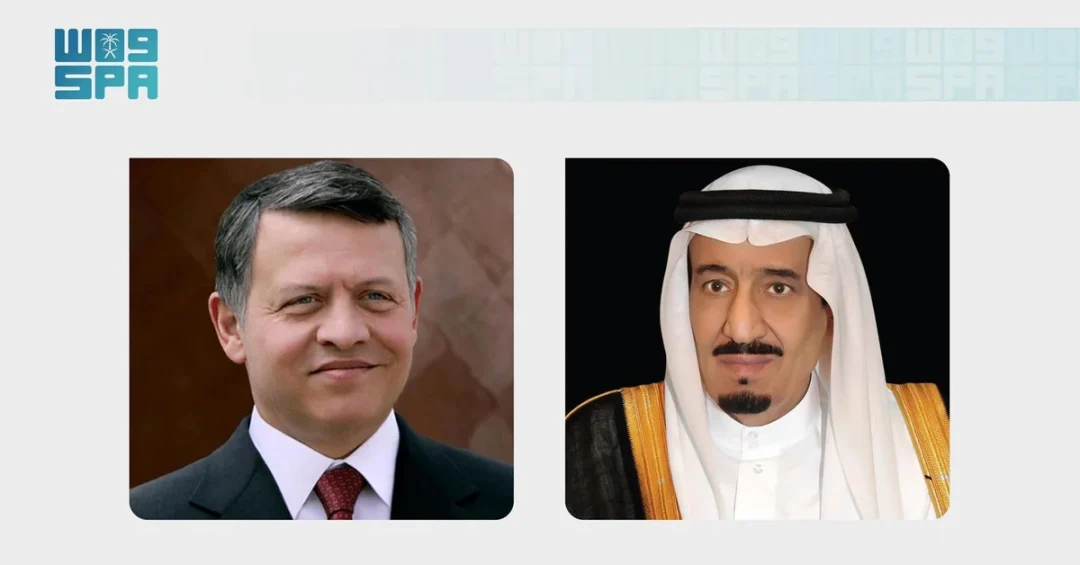
King Abdullah II Ibn Al Hussein of the Hashemite Kingdom of Jordan has congratulated Custodian of the Two Holy Mosques King Salman bin Abdulaziz Al Saud on the occasion of Saudi National Day, according to an official cable released by the Saudi Press Agency. The message, dated September 23, 2026, conveyed the Jordanian monarch’s warmest congratulations and sincere sentiments to the Saudi leadership and people as the Kingdom marked its national day.
How does a single congratulatory cable capture the depth of a relationship that stretches across generations, borders, and shared national interests? In the case of Saudi-Jordanian ties, the answer lies in decades of consistent diplomatic engagement, family connections between the two royal houses, and a mutual commitment to regional stability. King Abdullah II’s message, while brief in form, reflects a broader pattern of high-level communication between Amman and Riyadh that has remained steady through periods of regional change. The cable also included prayers for the continued good health and well-being of the Custodian of the Two Holy Mosques, as well as wishes that the Saudi people would realize their aspirations for further progress and prosperity under the Kingdom’s leadership.
Context and Background
Why has Saudi National Day become such an important fixture on the regional diplomatic calendar? Observed each year on September 23, the occasion commemorates the unification of the Kingdom of Saudi Arabia in 1932 under the leadership of the late King Abdulaziz Al Saud. Over the decades, it has evolved from a purely domestic celebration into a moment when heads of state, governments, and international organizations extend formal greetings to the Custodian of the Two Holy Mosques and the Saudi people. The messages that arrive in Riyadh each year offer a useful barometer of the Kingdom’s standing in the region and beyond.
The relationship between the Hashemite Kingdom of Jordan and the Kingdom of Saudi Arabia is one of the oldest and most consistently maintained partnerships in the Arab world. It rests on geographic proximity, shared history, and a long record of coordination on political, security, and economic matters. Jordan has consistently supported Saudi Arabia’s role as a stabilizing force in the region, while the Kingdom has provided economic and developmental support to its northern neighbor over many years. This mutual understanding has allowed both countries to navigate regional challenges without allowing differences to undermine the broader relationship.
King Abdullah II’s cable is therefore not an isolated gesture but part of a sustained diplomatic rhythm. Exchanges of this kind between Amman and Riyadh occur throughout the year, covering national occasions, religious holidays, and bilateral visits. They serve to reaffirm a relationship that both sides have an interest in keeping strong, particularly as the Middle East continues to experience significant political and economic shifts.
Key Details
What exactly did the Jordanian monarch convey in his message to the Saudi leadership? According to the Saudi Press Agency, King Abdullah II expressed his warmest congratulations and sincere sentiments on the occasion of Saudi National Day. He prayed for the continued good health and well-being of the Custodian of the Two Holy Mosques, King Salman bin Abdulaziz Al Saud, and for the Saudi people to realize their aspirations for further progress and prosperity under the Saudi leadership. The cable was sent directly to the Custodian of the Two Holy Mosques, underscoring the personal dimension of the relationship between the two leaders.
The timing of the message is consistent with established diplomatic practice. National day greetings are typically dispatched on or around the date of the occasion, and the Saudi Press Agency routinely publishes such messages as part of its official coverage. The publication of the cable allows the public in both countries to see the warmth of the exchange and reinforces the sense of solidarity between the two nations. It also provides a transparent record of high-level communication that analysts and observers can reference when assessing regional dynamics.
It is worth noting that the message was addressed to King Salman bin Abdulaziz Al Saud in his capacity as Custodian of the Two Holy Mosques, a title that carries profound religious and historical significance for Muslims around the world. The use of this title in official correspondence reflects the respect that Jordan, like other states, accords to the Saudi leadership’s role in safeguarding the two holy mosques in Makkah and Madinah. This dimension adds a layer of meaning to the exchange that goes beyond conventional diplomacy.
International and Regional Impact
How do messages like this one shape the wider regional environment? In the Middle East, diplomatic gestures between heads of state often carry more weight than their brevity might suggest. They signal continuity, reduce uncertainty, and provide reassurance to markets, investors, and ordinary citizens alike. When the King of Jordan publicly congratulates the Saudi leadership on a major national occasion, it reinforces the impression of a stable and cooperative regional order at a time when many parts of the world are experiencing heightened tension.
For international audiences, the exchange offers a window into how Saudi Arabia is perceived by its neighbors. Jordan’s message is one of many that arrive from across the Arab and Islamic world, as well as from countries in Asia, Europe, and the Americas. The consistency of these greetings reflects the Kingdom’s central position in regional affairs and its role as a convenor of diplomatic dialogue. Saudi Arabia’s leadership in organizations such as the Gulf Cooperation Council, the Organization of Islamic Cooperation, and various multilateral forums ensures that its national day is observed well beyond its own borders.
The Saudi-Jordanian relationship also has practical dimensions that extend beyond ceremonial exchanges. The two countries cooperate on trade, energy, infrastructure, and security matters, and they share an interest in maintaining stability along their common border and in the broader Levant. Jordan’s participation in regional initiatives that align with Saudi priorities, including efforts to promote economic integration and counter extremism, further strengthens the partnership. The congratulatory cable is a visible expression of a relationship that operates on multiple levels simultaneously.
Economic and Strategic Significance
Why does the Saudi-Jordanian partnership matter in economic terms? Saudi Arabia is one of Jordan’s most important trading partners and a significant source of investment and financial support. The Kingdom has contributed to Jordanian development projects, provided assistance during periods of economic difficulty, and supported infrastructure initiatives that improve connectivity between the two countries. These economic ties are underpinned by a shared interest in regional stability, which is a prerequisite for the investment and trade that both economies depend on.
From a strategic perspective, the relationship between Amman and Riyadh contributes to a broader architecture of Arab cooperation. Both countries have consistently supported efforts to resolve regional conflicts through dialogue and diplomacy, and both have emphasized the importance of maintaining the security of the Red Sea corridor and other vital trade routes. Saudi Arabia’s Vision 2030 program, which seeks to diversify the Kingdom’s economy and expand its role as a global hub for trade, tourism, and investment, creates new opportunities for partnership with Jordan in sectors such as logistics, renewable energy, and technology.
The strategic alignment between the two countries is also reflected in their approach to regional organizations and international forums. Jordan and Saudi Arabia frequently coordinate their positions on issues of common concern, and their diplomats maintain regular contact at both the bilateral and multilateral levels. This coordination helps to ensure that Arab voices are heard clearly in global discussions on security, development, and humanitarian affairs. The congratulatory message is a small but meaningful symbol of this ongoing cooperation.
Vision 2030 Alignment
How does a diplomatic exchange of this kind connect to Saudi Arabia’s long-term national vision? Vision 2030, launched under the leadership of Crown Prince Mohammed bin Salman, aims to transform the Kingdom’s economy, society, and international role. A key component of the vision is strengthening Saudi Arabia’s position as a regional leader and a bridge between continents. Positive and stable relationships with neighboring countries, including Jordan, are essential to that goal because they create the conditions for trade, investment, tourism, and cultural exchange that the vision depends on.
The Custodian of the Two Holy Mosques, King Salman bin Abdulaziz Al Saud, has consistently emphasized the importance of Arab solidarity and cooperation, and the Kingdom’s diplomatic outreach reflects that priority. As Vision 2030 continues to unfold, Saudi Arabia’s partnerships with countries like Jordan will play a role in advancing shared objectives such as economic diversification, youth empowerment, and regional security. The Jordanian monarch’s message on Saudi National Day is a reminder that the Kingdom’s progress is watched closely and welcomed by its neighbors, and that its leadership role in the region remains strong and respected.
20 Questions
Q1. Who sent congratulations to the Custodian of the Two Holy Mosques on Saudi National Day?
A1. King Abdullah II Ibn Al Hussein of the Hashemite Kingdom of Jordan sent a cable of congratulations to Custodian of the Two Holy Mosques King Salman bin Abdulaziz Al Saud on the occasion of Saudi National Day, according to the Saudi Press Agency.
Q2. When was the congratulatory cable sent?
A2. The cable was dated September 23, 2026, which is the date on which Saudi National Day is observed each year, commemorating the unification of the Kingdom of Saudi Arabia in 1932.
Q3. What did King Abdullah II express in his message?
A3. King Abdullah II expressed his warmest congratulations and sincere sentiments on the occasion of Saudi National Day, and he prayed for the continued good health and well-being of the Custodian of the Two Holy Mosques.
Q4. What wishes did the Jordanian monarch extend to the Saudi people?
A4. He prayed for the Saudi people to realize their aspirations for further progress and prosperity under the Saudi leadership, reflecting the close and fraternal ties between the two countries.
Q5. Why is Saudi National Day significant?
A5. Saudi National Day marks the unification of the Kingdom of Saudi Arabia in 1932 under the leadership of the late King Abdulaziz Al Saud, and it is celebrated annually on September 23 with events across the Kingdom and messages from world leaders.
Q6. How does this message reflect Saudi-Jordanian relations?
A6. The message reflects the longstanding and fraternal relationship between the two countries, which is built on shared history, geographic proximity, and consistent coordination on political, economic, and security matters of mutual interest.
Q7. What is the significance of the title Custodian of the Two Holy Mosques?
A7. The title refers to the Saudi monarch’s role in safeguarding the two holy mosques in Makkah and Madinah, a responsibility of profound religious and historical importance to Muslims around the world.
Q8. How does the Saudi Press Agency report such messages?
A8. The Saudi Press Agency publishes official messages and statements from heads of state and government as part of its coverage of diplomatic exchanges, providing a transparent record of high-level communication between Saudi Arabia and other nations.
Q9. What does this exchange say about regional stability?
A9. It signals continuity and cooperation between two key Arab states, reinforcing the impression of a stable regional order and providing reassurance to markets, investors, and citizens who value predictability in international relations.
Q10. Do other countries also send congratulations on Saudi National Day?
A10. Yes, Saudi Arabia receives congratulatory messages from heads of state, governments, and international organizations around the world, reflecting the Kingdom’s central role in regional and global affairs.
Q11. What are the main areas of Saudi-Jordanian cooperation?
A11. The two countries cooperate on trade, energy, infrastructure, security, and regional diplomacy, and they share an interest in maintaining stability along their common border and in the broader Levant region.
Q12. How does Jordan benefit from its relationship with Saudi Arabia?
A12. Jordan benefits from economic support, investment, and trade with Saudi Arabia, as well as from the Kingdom’s role as a stabilizing force in the region, which contributes to an environment conducive to development.
Q13. What role does Saudi Arabia play in the Arab world?
A13. Saudi Arabia is a leading member of the Gulf Cooperation Council and the Organization of Islamic Cooperation, and it plays a central role in regional diplomacy, economic integration, and efforts to promote peace and stability.
Q14. How does Vision 2030 relate to Saudi Arabia’s international partnerships?
A14. Vision 2030 aims to diversify the Saudi economy and expand the Kingdom’s global role, and stable relationships with neighboring countries like Jordan help create conditions for trade, investment, tourism, and cultural exchange.
Q15. Was the cable published by an official source?
A15. Yes, the cable was reported by the Saudi Press Agency, which is the official news agency of the Kingdom of Saudi Arabia and a recognized source for government statements and diplomatic communications.
Q16. What is the historical basis of Saudi-Jordanian ties?
A16. The ties rest on geographic proximity, shared history, and decades of diplomatic engagement, including regular exchanges between the two royal houses and coordination on matters of common concern in the region.
Q17. How often do Saudi and Jordanian leaders communicate?
A17. The two countries maintain regular diplomatic contact throughout the year, including exchanges on national occasions, religious holidays, and bilateral visits, reflecting the strength and continuity of the relationship.
Q18. What message does this send to the international community?
A18. It demonstrates that Saudi Arabia enjoys warm and respectful relations with its neighbors, and that its national day is an occasion recognized and celebrated by leaders across the region and beyond.
Q19. Does the cable mention any specific initiatives or agreements?
A19. The cable focuses on congratulations and prayers for the leadership and people of Saudi Arabia, without detailing specific initiatives, consistent with the traditional format of national day greetings between heads of state.
Q20. What is the broader significance of this diplomatic exchange?
A20. The exchange underscores the enduring friendship between Saudi Arabia and Jordan, highlights the Kingdom’s respected position in the region, and reflects the continued strength of Arab solidarity under Saudi leadership.
Reader Feedback
We value your thoughts. Please share your feedback on this article.
Your feedback helps us improve our coverage.
Related articles
 Interior Ministry Launches National Day Passport Stamp
 Makkah Rainfall: SPA Reports Moderate to Heavy Showers
 US Congratulates Saudi Arabia on 96th National Day
 Saudi, Korean FMs Meet on Sidelines of UN General Assembly
 Al-Khobar Hosts Military Air and Naval Shows for Saudi National Day
 King Salman Directs Naming of Riyadh Mosque After King Abdulaziz