


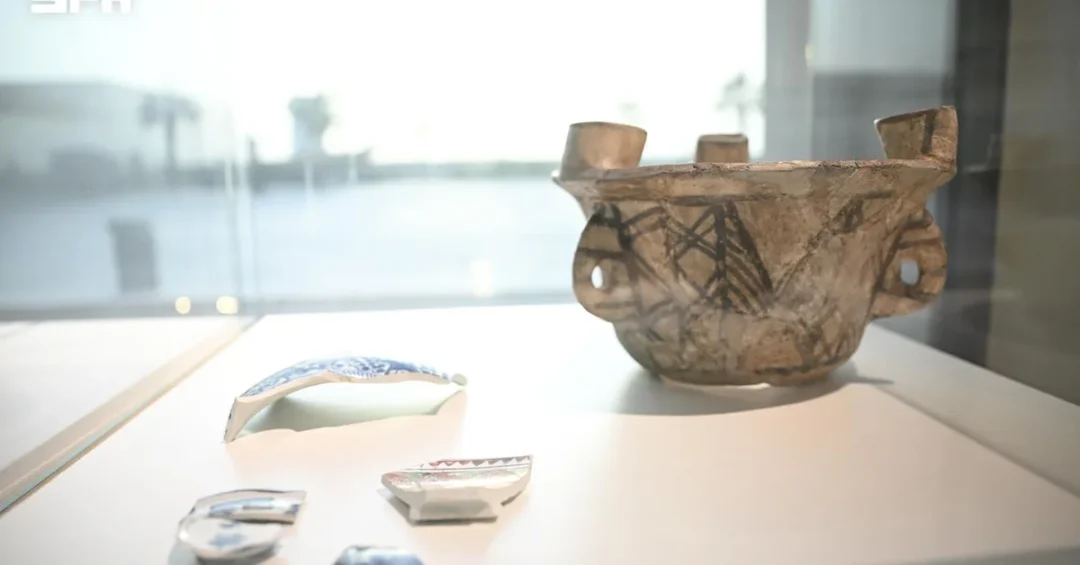
The Sunken Treasures: The Maritime Heritage of the Red Sea exhibition at the Red Sea Museum in Historic Jeddah is displaying archaeological finds recovered from the Othman Ibn Affan Mosque, including Chinese ceramics and an 1880 CE southern Arabian oil lamp, according to the Saudi Press Agency (SPA). The artifacts, dated between the 17th and 19th centuries CE, underscore Jeddah’s centuries-long role as a major Red Sea port, a gateway for pilgrims traveling to Makkah, and a global trade hub connecting Arabia with Asia, Africa, and Europe.
The exhibition, announced through official Saudi channels, traces the 1,300-year legacy of the mosque, which was established after Caliph Othman Ibn Affan designated Jeddah as Makkah’s primary port. By presenting these maritime discoveries to an international audience, the Red Sea Museum is reinforcing Historic Jeddah’s standing as a UNESCO World Heritage site and a global cultural destination aligned with Saudi Vision 2030. Could the recovery of these objects change how the world understands the Red Sea’s place in global trade history?
Context and Background
How did a single port city come to hold such a pivotal position in the history of the Islamic world? Jeddah’s rise began in the 7th century CE, when Caliph Othman Ibn Affan designated it as the principal maritime gateway for pilgrims and goods bound for Makkah. That decision transformed a modest coastal settlement into a bustling entrepôt where merchants from China, India, Yemen, Egypt, and the Mediterranean met, traded, and exchanged ideas. The Othman Ibn Affan Mosque, named in honor of the caliph, became a spiritual and civic anchor for the growing city and has remained a landmark of Historic Jeddah for roughly 1,300 years.
The Sunken Treasures: The Maritime Heritage of the Red Sea exhibition, hosted at the Red Sea Museum, draws on archaeological material recovered from the mosque and its surroundings. According to the Saudi Press Agency, the displayed finds include Chinese ceramics dated between the 17th and 19th centuries CE and an 1880 CE southern Arabian oil lamp. These objects are not merely decorative relics; they are physical evidence of the routes, commodities, and communities that made Jeddah a crossroads of civilizations long before the modern era. For international audiences, the exhibition offers a rare window into how Red Sea navigation shaped the economy and culture of the Arabian Peninsula over many centuries.
The Red Sea Museum itself forms part of a broader Saudi effort to preserve and present the Kingdom’s cultural heritage. Historic Jeddah, known locally as Al-Balad, was inscribed on the UNESCO World Heritage List in 2014, recognizing its outstanding value as a testament to human cultural tradition and maritime trade. By situating the Othman Ibn Affan Mosque artifacts within this wider urban and architectural context, the exhibition connects Jeddah’s past to its present role as a vibrant, cosmopolitan city on the Red Sea coast.
Key Details
What exactly do the recovered artifacts reveal about daily life and commerce in historic Jeddah? The Chinese ceramics on display point to long-distance trade networks that linked the Red Sea to East Asia, even in the 17th to 19th centuries. Such porcelain and stoneware were prized across the Islamic world, and their presence in Jeddah confirms the city’s integration into Indian Ocean commerce. The 1880 CE southern Arabian oil lamp, meanwhile, reflects local craftsmanship and the regional exchange of utilitarian objects, offering insight into lighting, domestic life, and artisanal traditions of the period.
The exhibition also highlights the mosque’s enduring legacy. Established after Caliph Othman’s directive, the Othman Ibn Affan Mosque served not only as a place of worship but also as a focal point for the community of pilgrims, merchants, and residents who passed through Jeddah. Over 1,300 years, the mosque has witnessed the rise and fall of empires, the shifting of trade routes, and the modernization of the Kingdom, yet it remains a symbol of continuity and faith. The archaeological finds displayed at the Red Sea Museum add a tangible dimension to that history, allowing visitors to see objects that were once used by people connected to the mosque and its environs.
According to official Saudi information, the exhibition is designed to promote awareness of Red Sea navigation history and to position Historic Jeddah as a global cultural destination. The Red Sea Museum, located in the heart of Al-Balad, provides an appropriate setting for these artifacts, surrounded by the coral-stone buildings and traditional architecture that earned the district its UNESCO status. By integrating archaeological research with public display, the exhibition contributes to the Kingdom’s wider efforts to document and celebrate its maritime heritage.
International and Regional Impact
How might this exhibition influence global perceptions of Saudi Arabia’s cultural depth? For international visitors and scholars, the Sunken Treasures exhibition presents Saudi Arabia as a custodian of world heritage, not merely a modern economic power. The artifacts from the Othman Ibn Affan Mosque resonate with audiences across Asia, Africa, and Europe because they represent shared histories of trade, pilgrimage, and cultural exchange. Chinese ceramics, for instance, speak to centuries of contact between the Arabian Peninsula and East Asia, while the southern Arabian oil lamp connects Jeddah to the broader cultural landscape of the Arabian Peninsula.
Regionally, the exhibition reinforces the Red Sea’s importance as a corridor of commerce and culture. In an era when the Red Sea remains a vital artery for global shipping, recalling its historical role adds depth to contemporary discussions about maritime security, economic cooperation, and cultural diplomacy. Saudi Arabia’s efforts to preserve and showcase this heritage can foster greater regional collaboration in tourism, research, and heritage management. For neighboring countries and international partners, the exhibition signals the Kingdom’s openness to sharing its history and welcoming visitors to explore its cultural treasures.
Economic and Strategic Significance
What economic opportunities can flow from cultural heritage initiatives like this one? Saudi Arabia’s Vision 2030 places culture and tourism among the key pillars of economic diversification. By attracting international visitors to Historic Jeddah and the Red Sea Museum, the exhibition supports the growth of the tourism sector, creates jobs in hospitality, guiding, and heritage conservation, and stimulates local businesses in Al-Balad. Cultural tourism is a high-value segment that can extend visitor stays and encourage repeat visits, contributing to the broader goal of increasing tourism’s share of gross domestic product.
Strategically, the exhibition complements the Kingdom’s investments in Red Sea development, including luxury resorts and marine conservation projects. Historic Jeddah serves as a cultural anchor that balances these modern developments, offering visitors a sense of place and authenticity. The Red Sea Museum and similar institutions help diversify the Kingdom’s cultural offering beyond religious pilgrimage, appealing to travelers interested in history, archaeology, and architecture. This aligns with Vision 2030’s ambition to position Saudi Arabia as a premier global destination for culture and heritage.
Vision 2030 Alignment
How does a 1,300-year-old mosque connect to a 21st-century national transformation plan? Saudi Vision 2030 emphasizes the preservation and promotion of Saudi heritage as a source of national pride and a driver of economic growth. The Sunken Treasures exhibition directly supports these objectives by showcasing the maritime history of the Red Sea and the legacy of the Othman Ibn Affan Mosque, thereby enriching the cultural narrative that the Kingdom presents to the world. It also reflects the leadership’s commitment to protecting Islamic and historical sites while opening them to global audiences.
As Saudi Arabia continues to invest in museums, archaeological research, and heritage tourism, initiatives like this one demonstrate how the past can inform and inspire the future. By tracing Jeddah’s evolution from a caliphate-era port to a modern metropolis, the exhibition invites the world to appreciate the Kingdom’s role in connecting civilizations. In doing so, it advances Vision 2030’s goal of a vibrant society, a thriving economy, and an ambitious nation proud of its heritage and engaged with the global community.
20 Questions
Q1. What is the name of the exhibition currently at the Red Sea Museum in Historic Jeddah?
A1. The exhibition is titled “Sunken Treasures: The Maritime Heritage of the Red Sea.” It displays archaeological finds from the Othman Ibn Affan Mosque and highlights Jeddah’s role as a historic Red Sea port and trade hub.
Q2. Where is the exhibition being held?
A2. It is being held at the Red Sea Museum in Historic Jeddah, also known as Al-Balad. The district is a UNESCO World Heritage site renowned for its coral-stone architecture and maritime heritage.
Q3. What kinds of artifacts are on display?
A3. The exhibition features Chinese ceramics dated between the 17th and 19th centuries CE and an 1880 CE southern Arabian oil lamp. These items were recovered from the Othman Ibn Affan Mosque area.
Q4. How old is the legacy of the Othman Ibn Affan Mosque?
A4. The mosque has a legacy of approximately 1,300 years. It was established after Caliph Othman Ibn Affan designated Jeddah as the primary port for Makkah.
Q5. Why did Caliph Othman Ibn Affan designate Jeddah as Makkah’s port?
A5. He designated Jeddah as Makkah’s primary port to facilitate the arrival of pilgrims and trade goods by sea. This decision helped Jeddah grow into a major Red Sea commercial and pilgrimage gateway.
Q6. What do the Chinese ceramics indicate about Jeddah’s history?
A6. The Chinese ceramics indicate that Jeddah was integrated into long-distance trade networks linking the Red Sea with East Asia. They show the city was a global trade hub in the 17th to 19th centuries.
Q7. What is the significance of the 1880 CE southern Arabian oil lamp?
A7. The oil lamp reflects local craftsmanship and regional exchange of utilitarian objects. It provides insight into domestic life and artisanal traditions in the Arabian Peninsula during the late 19th century.
Q8. How does the exhibition support Saudi Vision 2030?
A8. It supports Vision 2030 by promoting Red Sea navigation history and positioning Historic Jeddah as a global cultural destination. This aligns with goals to diversify the economy through tourism and heritage.
Q9. What is the Red Sea Museum’s role in Historic Jeddah?
A9. The Red Sea Museum serves as a cultural institution that preserves and displays the maritime heritage of the Red Sea. It contributes to the revitalization of Historic Jeddah as a hub for tourism and education.
Q10. When was Historic Jeddah inscribed as a UNESCO World Heritage site?
A10. Historic Jeddah was inscribed on the UNESCO World Heritage List in 2014. The designation recognizes its outstanding value as a testament to maritime trade and cultural tradition.
Q11. What does the exhibition reveal about Jeddah’s role in pilgrimage?
A11. It reveals that Jeddah served as the main gateway for pilgrims traveling to Makkah by sea. The mosque’s location and artifacts highlight the city’s centuries-long function as a pilgrimage hub.
Q12. How might the exhibition impact international tourism to Saudi Arabia?
A12. It may attract culturally curious travelers interested in archaeology and maritime history. This can extend visitor stays and boost the local economy, supporting Vision 2030 tourism targets.
Q13. What is the historical relationship between Jeddah and the Red Sea?
A13. Jeddah has been a major Red Sea port for over a millennium, facilitating trade and pilgrimage. Its strategic location connected Arabia with Asia, Africa, and Europe through maritime routes.
Q14. Are there other artifacts from the mosque not mentioned in the report?
A14. The Saudi Press Agency report specifically mentions Chinese ceramics and an 1880 CE southern Arabian oil lamp. Further details about additional artifacts have not been released through official channels.
Q15. How does the exhibition contribute to cultural preservation?
A15. It contributes by displaying and interpreting archaeological finds, raising public awareness of heritage. This supports efforts to document and protect Saudi Arabia’s maritime and Islamic history for future generations.
Q16. What economic benefits can Historic Jeddah gain from such exhibitions?
A16. Historic Jeddah can benefit from increased tourist footfall, job creation in hospitality and guiding, and stimulation of local businesses. Cultural tourism is a key component of economic diversification under Vision 2030.
Q17. Who announced the exhibition details?
A17. The details were announced by the Saudi Press Agency (SPA), an official Saudi news authority. This ensures the information is reliable and aligned with official narratives.
Q18. What makes the Othman Ibn Affan Mosque historically important?
A18. The mosque is important because it was established following Caliph Othman Ibn Affan’s directive to make Jeddah Makkah’s port. It has served as a spiritual and civic landmark for about 1,300 years.
Q19. How does the exhibition connect to Red Sea navigation history?
A19. It showcases artifacts that were transported via Red Sea routes, illustrating the region’s maritime trade networks. This highlights the Red Sea’s historical role as a corridor of commerce and cultural exchange.
Q20. What future developments might follow this exhibition?
A20. Future developments may include further archaeological research, expanded museum displays, and enhanced heritage tourism initiatives. These would continue to support Vision 2030’s cultural and economic objectives.
Reader Feedback
We value your thoughts. Please share your feedback on this article.
Your feedback helps us improve our coverage.
Related articles
 Al-Baha Calligraphy Exhibition Records SAR100,000 in Sales
 Poland’s Fire Falcons Praises Saudi Falcon Auction
 Beit Alsharbatly Enriches Historic Jeddah’s Summer Culture
 Saudi Culture and Arts Society Reviews Development Plans
 Al-Baha Workshops Showcase Holy Kaaba Kiswah Craft
 Submerged Treasures Exhibition Celebrates Red Sea Heritage