


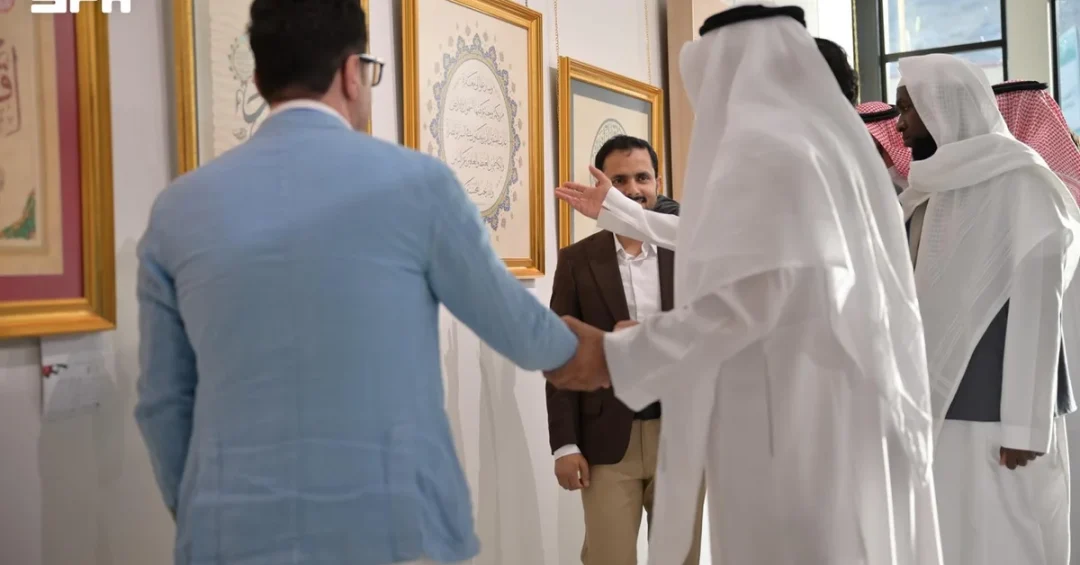
A calligraphy exhibition in Al-Baha has recorded sales of SAR100,700 through the acquisition of eight calligraphy artworks, with the total value of exhibited pieces reaching SAR618,225, according to the Saudi Press Agency. The event, reported on August 6, 2026, brought together collectors, cultural institutions, and admirers of Arabic calligraphy, underscoring the enduring appeal of one of the Islamic world’s most revered artistic traditions. Among the acquisitions was a work by internationally acclaimed calligrapher Maryam Norouzi, executed in Jali Thuluth script and embellished with 18-karat gold. Two additional works by calligraphers from Al-Baha Region were also acquired: one by Abdullah Suwailem in Jali Diwani script and another by Abdulaziz Mujathal in ornamental Diwani script, highlighting the excellence of Saudi talent in Arabic calligraphy.
The exhibition’s significance extends well beyond the sales figures. It also features works by several leading calligraphers, including four rare pieces by Halim Efendi. These works are the original templates for inscriptions he later executed on a mosque dome, giving them exceptional artistic and historical significance and making them rare collectibles in the art of Arabic calligraphy. For an international audience, the event offers a window into how Saudi Arabia is preserving, promoting, and monetizing its cultural heritage in line with the ambitions of Vision 2030. How does a regional exhibition in Al-Baha connect to the Kingdom’s broader cultural strategy? The answer lies in the intersection of art, commerce, and national identity that this event so vividly illustrates.
Context and Background
Arabic calligraphy is not merely a decorative art; it is a central expression of Islamic civilization, a discipline that has evolved over more than fourteen centuries. From the earliest Quranic manuscripts to the architectural inscriptions that adorn mosques and palaces, calligraphy has served as a bridge between faith, language, and aesthetics. In Saudi Arabia, this heritage is actively nurtured through a network of cultural institutions, festivals, and educational programs supported by the Ministry of Culture, which was established in 2018 as part of the Kingdom’s sweeping Vision 2030 reforms. The Al-Baha exhibition is one such initiative, designed to elevate regional artistic talent while attracting collectors and tourists to areas beyond the major metropolitan centers.
Al-Baha Region, often called the ‘Pearl of the South,’ is known for its mountainous terrain, agricultural heritage, and distinctive cultural traditions. Hosting a calligraphy exhibition of this caliber in Al-Baha signals a deliberate effort to decentralize cultural activity and bring world-class art to all corners of the Kingdom. The presence of works by internationally acclaimed calligrapher Maryam Norouzi alongside local artists such as Abdullah Suwailem and Abdulaziz Mujathal creates a dialogue between global mastery and regional excellence. This blend is central to Saudi Arabia’s cultural policy, which seeks to honor tradition while positioning the Kingdom as a dynamic player in the global creative economy.
Why does the location of an art exhibition matter in the broader narrative of national development? Because it demonstrates that cultural investment is not confined to Riyadh or Jeddah but reaches communities across the country. The Al-Baha event thus serves as a microcosm of Vision 2030’s inclusive approach, where every region contributes to and benefits from the Kingdom’s cultural renaissance. Moreover, the sale of eight artworks, including pieces valued for their historical rarity, indicates a growing market for fine calligraphy within Saudi Arabia, a trend that bodes well for artists, galleries, and cultural entrepreneurs.
Key Details
The financial outcomes of the exhibition are notable for several reasons. Total sales of SAR100,700 from eight works represent a robust conversion rate given the niche nature of the art form. The overall value of exhibited pieces, SAR618,225, suggests that the collection included high-value masterpieces that may not have been sold but contributed to the exhibition’s prestige. The acquisition of Maryam Norouzi’s Jali Thuluth work, embellished with 18-karat gold, highlights the premium segment of the market. Jali Thuluth is a large, monumental script often used in architectural inscriptions, and its combination with gold leaf elevates the piece to a luxury collectible. Norouzi’s international reputation adds further luster, attracting buyers who value both artistic merit and investment potential.
Equally significant are the acquisitions of works by Al-Baha-based calligraphers. Abdullah Suwailem’s Jali Diwani script and Abdulaziz Mujathal’s ornamental Diwani script represent distinct styles within the calligraphic canon. Jali Diwani is known for its grandeur and is frequently used in royal decrees and formal documents, while ornamental Diwani emphasizes intricate decorative elements. The fact that these local artists’ works were purchased alongside an international star underscores the depth of talent in the region. It also provides tangible economic support to Saudi artists, encouraging them to pursue calligraphy as a viable profession. Could this be a model for other regions to emulate? The success in Al-Baha suggests that with proper curation and promotion, local art markets can thrive.
The exhibition’s crown jewels, however, may be the four rare pieces by Halim Efendi. These works are the original templates for inscriptions he later executed on a mosque dome. In the world of calligraphy, such templates, known as ‘templates’ or ‘cartons,’ are often destroyed or lost during the transfer process, making surviving examples exceedingly rare. Their presence in Al-Baha offers collectors a once-in-a-lifetime opportunity to own a piece of history. Halim Efendi, an Ottoman-era master, is celebrated for his contributions to the revival of classical scripts in the late 19th and early 20th centuries. The historical significance of these templates cannot be overstated; they provide insight into the creative process of a legendary artist and preserve the technical precision required for monumental inscriptions.
International and Regional Impact
From an international perspective, the Al-Baha exhibition reinforces Saudi Arabia’s growing stature as a destination for cultural tourism and art investment. Collectors from the Gulf, Europe, and Asia are increasingly drawn to Islamic art, and Saudi Arabia is positioning itself as a trusted source of authenticated, high-quality pieces. The involvement of an internationally acclaimed artist like Maryam Norouzi signals that the Kingdom’s art scene is integrated with global networks. This integration is mutually beneficial: international artists gain access to a passionate and affluent market, while Saudi audiences and collectors gain exposure to diverse calligraphic traditions. The exhibition also serves as a diplomatic soft-power tool, showcasing the Kingdom’s commitment to preserving Islamic heritage, a message that resonates across the Muslim world and beyond.
Regionally, the event strengthens cultural ties within the Gulf Cooperation Council and the broader Middle East. Calligraphy is a shared heritage, and exhibitions like this create opportunities for cross-border collaboration, scholarly exchange, and joint acquisitions. They also contribute to the region’s tourism ecosystem, as cultural travelers often combine visits to heritage sites, museums, and festivals. Al-Baha, with its pleasant climate and scenic landscapes, is well-placed to benefit from this trend. The exhibition may inspire similar events in other Saudi regions, fostering a network of cultural attractions that collectively enhance the Kingdom’s appeal. In a world where cultural diplomacy is increasingly important, Saudi Arabia’s investment in calligraphy sends a positive message of openness and respect for tradition.
What does the success of this exhibition tell us about the future of the art market in Saudi Arabia? It suggests that demand for high-quality calligraphy is robust and growing, driven by a new generation of collectors who value both aesthetics and cultural authenticity. It also indicates that regional events can achieve commercial viability without sacrificing artistic integrity. As the Kingdom continues to develop its cultural infrastructure, including museums, galleries, and art fairs, the market for calligraphy is likely to expand further. This growth will create opportunities for artists, curators, and entrepreneurs, while enriching the cultural landscape for residents and visitors alike.
Economic and Strategic Significance
The economic implications of the Al-Baha exhibition extend beyond the immediate sales figures. The art market is a high-value, knowledge-intensive sector that can generate employment, attract foreign investment, and boost tourism. By supporting calligraphy exhibitions, Saudi Arabia is nurturing a creative economy that aligns with Vision 2030’s goal of diversifying revenue sources away from oil. The purchase of artworks by local calligraphers also circulates money within the regional economy, supporting small businesses such as framing workshops, shipping services, and galleries. Furthermore, the exhibition enhances the value of Al-Baha’s cultural brand, which can be leveraged to attract visitors throughout the year. Strategic investment in culture is thus not a luxury but a component of sustainable development.
From a strategic standpoint, the exhibition contributes to the preservation of intangible cultural heritage, a priority for UNESCO and a key element of Saudi Arabia’s cultural policy. Arabic calligraphy was inscribed on UNESCO’s Representative List of the Intangible Cultural Heritage of Humanity in 2021, a recognition that underscores its global importance. By hosting exhibitions that feature rare works and promote living artists, Saudi Arabia is actively safeguarding this heritage for future generations. The Kingdom’s efforts also align with the goals of the National Culture Strategy, which aims to make culture a way of life and a driver of economic growth. The Al-Baha event exemplifies how local initiatives can contribute to national objectives, creating a ripple effect that benefits artists, communities, and the country as a whole.
How can other sectors learn from the success of this cultural initiative? The key lies in combining authenticity with market awareness. The organizers of the Al-Baha exhibition curated a collection that balanced international prestige with regional talent, and they marketed it to a discerning audience. This approach can be applied to other creative industries, from fashion to design, where Saudi Arabia has rich traditions to draw upon. By investing in quality, storytelling, and strategic partnerships, the Kingdom can build a cultural economy that is both profitable and proud of its roots. The calligraphy exhibition is a small but significant step in that direction, demonstrating that culture and commerce can thrive together.
Vision 2030 Alignment
The Al-Baha calligraphy exhibition is a concrete manifestation of Vision 2030’s cultural pillar, which seeks to enrich the lives of citizens and residents while showcasing Saudi Arabia’s heritage to the world. Under the leadership of the Ministry of Culture, the Kingdom has launched numerous initiatives to support artists, preserve heritage, and promote cultural tourism. The exhibition’s success in generating sales and attracting high-value works reflects the growing maturity of the Saudi art market and the effectiveness of these policies. It also supports the Vision’s goal of increasing household spending on culture and entertainment, a key indicator of quality of life. By bringing world-class art to Al-Baha, the event ensures that the benefits of cultural development are shared across all regions, reinforcing national unity and pride.
Looking ahead, the exhibition sets a precedent for future cultural events in the Kingdom. It demonstrates that with careful curation and strong local support, even a niche art form can achieve commercial success and international attention. As Saudi Arabia continues to invest in museums, galleries, and festivals, the demand for calligraphy and other traditional arts is likely to grow, creating a virtuous cycle of preservation and innovation. The rare works by Halim Efendi, the golden Jali Thuluth piece by Maryam Norouzi, and the exquisite scripts of Abdullah Suwailem and Abdulaziz Mujathal will be remembered not only for their beauty but also for their role in advancing the Kingdom’s cultural renaissance. In the coming years, Al-Baha may well become a regular stop on the global calligraphy circuit, further enhancing Saudi Arabia’s reputation as a guardian of Islamic art and a dynamic player in the global creative economy.
What does this mean for the international audience? It means that Saudi Arabia is not only a place of economic opportunity but also a destination for cultural discovery. The Kingdom’s commitment to preserving and promoting Arabic calligraphy invites the world to appreciate a tradition that has shaped civilizations. As Vision 2030 unfolds, events like the Al-Baha exhibition will continue to bridge cultures, create economic value, and celebrate the timeless beauty of the written word. For collectors, scholars, and travelers, the message is clear: Saudi Arabia’s cultural scene is vibrant, welcoming, and full of treasures waiting to be discovered.
20 Questions
Q1. What was the total sales figure recorded at the Al-Baha calligraphy exhibition?
A1. The exhibition recorded sales of SAR100,700 through the sale of eight calligraphy artworks, according to the Saudi Press Agency.
Q2. How many calligraphy artworks were sold during the exhibition?
A2. Eight calligraphy artworks were sold, contributing to the total sales of SAR100,700.
Q3. What was the total value of all exhibited pieces at the exhibition?
A3. The total value of the exhibited pieces reached SAR618,225, reflecting the high quality and rarity of the collection.
Q4. Which internationally acclaimed calligrapher’s work was acquired at the exhibition?
A4. A work by internationally acclaimed calligrapher Maryam Norouzi was acquired, executed in Jali Thuluth script and embellished with 18-karat gold.
Q5. What script style was used in Maryam Norouzi’s acquired artwork?
A5. Maryam Norouzi’s artwork was executed in Jali Thuluth script, a monumental style often used in architectural inscriptions.
Q6. Which local calligraphers from Al-Baha Region had their works acquired?
A6. Works by Abdullah Suwailem in Jali Diwani script and Abdulaziz Mujathal in ornamental Diwani script were acquired, highlighting Saudi talent.
Q7. What is the significance of the four rare pieces by Halim Efendi?
A7. They are the original templates for inscriptions he later executed on a mosque dome, giving them exceptional artistic and historical significance.
Q8. Why are Halim Efendi’s templates considered rare collectibles?
A8. Such templates are often destroyed or lost during the transfer process, making surviving examples exceedingly rare and highly sought after by collectors.
Q9. Where did the calligraphy exhibition take place?
A9. The exhibition took place in Al-Baha, a region in southwestern Saudi Arabia known for its mountainous terrain and cultural heritage.
Q10. When was the exhibition reported by the Saudi Press Agency?
A10. The exhibition was reported on August 6, 2026, by the Saudi Press Agency, highlighting its cultural and economic impact.
Q11. What does the success of this exhibition indicate about the Saudi art market?
A11. It indicates a growing demand for high-quality calligraphy and a robust market for fine art within the Kingdom, driven by collectors and cultural institutions.
Q12. How does the exhibition support Vision 2030 goals?
A12. It supports Vision 2030 by promoting cultural heritage, diversifying the economy, and enhancing quality of life through artistic engagement and tourism.
Q13. What role does the Ministry of Culture play in such events?
A13. The Ministry of Culture supports and promotes cultural events like this exhibition, aligning them with the National Culture Strategy and Vision 2030 objectives.
Q14. How does the exhibition contribute to cultural tourism in Saudi Arabia?
A14. It attracts collectors and art enthusiasts to Al-Baha, boosting local tourism and showcasing the Kingdom’s cultural offerings to international visitors.
Q15. What is Jali Thuluth script and why is it significant?
A15. Jali Thuluth is a large, monumental script used in architectural inscriptions and royal documents, prized for its grandeur and complexity.
Q16. What is the difference between Jali Diwani and ornamental Diwani scripts?
A16. Jali Diwani is known for its grandeur and formal use, while ornamental Diwani emphasizes intricate decorative elements and artistic flair.
Q17. How does the exhibition highlight Saudi talent in Arabic calligraphy?
A17. By acquiring works from local calligraphers like Abdullah Suwailem and Abdulaziz Mujathal, the exhibition showcases the excellence of Saudi artists.
Q18. What is the historical importance of Halim Efendi’s work?
A18. Halim Efendi was an Ottoman-era master whose templates offer insight into his creative process and the technical precision of monumental inscriptions.
Q19. How might this exhibition influence future cultural events in Saudi Arabia?
A19. It sets a precedent for successful regional art exhibitions, encouraging similar events that blend commerce with cultural preservation across the Kingdom.
Q20. What message does the exhibition send to the international community?
A20. It signals Saudi Arabia’s commitment to preserving Islamic heritage, supporting artists, and positioning itself as a vibrant cultural destination aligned with Vision 2030.
Reader Feedback
We value your thoughts. Please share your feedback on this article.
Your feedback helps us improve our coverage.
Related articles
 Poland’s Fire Falcons Praises Saudi Falcon Auction
 Beit Alsharbatly Enriches Historic Jeddah’s Summer Culture
 Saudi Culture and Arts Society Reviews Development Plans
 Al-Baha Workshops Showcase Holy Kaaba Kiswah Craft
 Submerged Treasures Exhibition Celebrates Red Sea Heritage
 Beijing Named UNESCO-UIA World Architecture Capital 2029