


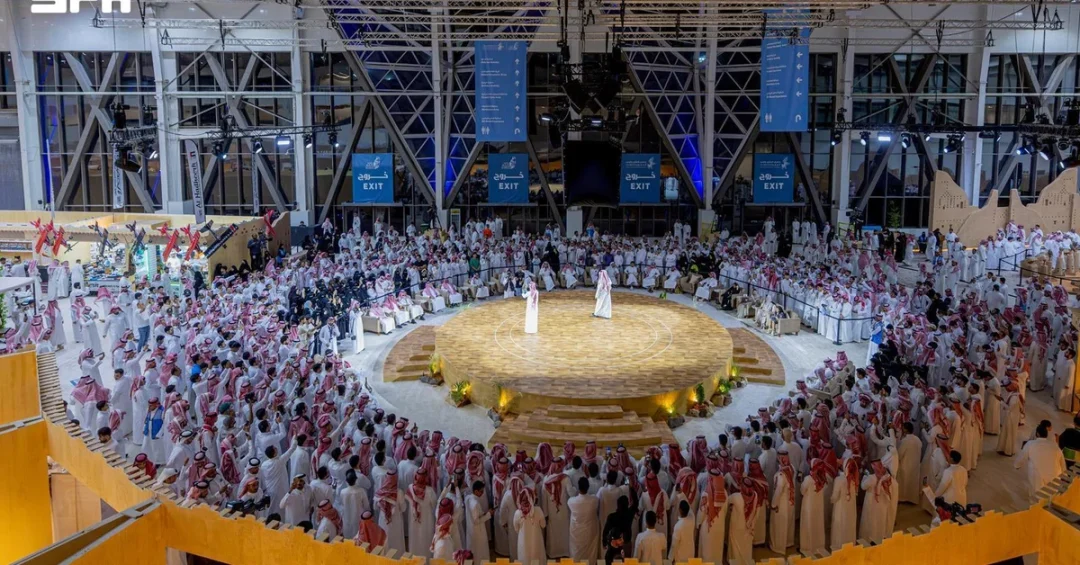
The National Center for Falcons has confirmed that its 2026 auction for locally trapped falcons will begin on October 1 and run through November 30, coinciding with the Kingdom’s annual falcon trapping season. The announcement, released through official Saudi channels, sets the dates for one of the most closely watched events on the regional falconry calendar and reaffirms the Kingdom’s commitment to organizing the trade of juvenile migratory Peregrine falcons (Shaheen Bahri) within a transparent, regulated framework.
The auction will be held at the center’s headquarters in Malham, north of Riyadh, and will be broadcast on television channels and social media platforms so that falconers and enthusiasts across the Kingdom and beyond can follow the bidding in real time. The event brings together falcon trappers and falconers from across Saudi Arabia, organizing sales under rules designed to safeguard participants’ rights, ensure transparency, and support the preservation and transmission of falconry heritage to future generations. For an international audience, the auction offers a clear window into how Saudi Arabia is balancing a deeply rooted cultural tradition with modern conservation and regulatory standards. But what exactly makes this two-month window so significant for the future of falconry?
Context and Background
Falconry occupies a unique place in the cultural history of the Arabian Peninsula, where the bond between falconer and bird has been passed down for generations and remains a living practice rather than a museum relic. The late founder of the modern Kingdom, King Abdulaziz Al Saud, was himself a celebrated falconer, and that legacy continues to shape how Saudis view the sport today. In recognition of its cultural weight, UNESCO inscribed falconry on its Representative List of the Intangible Cultural Heritage of Humanity, a status that Saudi Arabia has worked actively to uphold through dedicated institutions and annual events. The National Center for Falcons was established to bring structure, science, and sustainability to a practice that had for centuries relied on informal, community-based rules.
The center’s regulatory approach distinguishes carefully between categories of birds. The auction is dedicated exclusively to juvenile migratory Peregrine falcons, known locally as Shaheen Bahri, that are trapped within the Kingdom. Adult Peregrine falcons, referred to as Qarnas, and Saker falcons, known as Hur, are excluded from the sale, in line with the center’s regulatory approach to supporting their sustainability and preserving their breeds. This distinction is not a technicality; it reflects a deliberate conservation strategy that allows young migratory birds to be traded while protecting breeding adults and vulnerable species. Why does such a precise classification matter for the long-term health of falcon populations across the region?
The timing of the auction is equally deliberate. It coincides with Saudi Arabia’s annual falcon trapping season, a period when migratory birds pass through the Arabian Peninsula. By aligning the sale with the natural rhythm of migration, the center ensures that the auction reflects real conditions on the ground and that participants are operating within a defined, monitored season rather than an open-ended market. The result is an event that is both culturally authentic and administratively disciplined.
Key Details of the 2026 Auction
The 2026 auction will open on October 1 and close on November 30, giving trappers and falconers a full two months to participate. The venue is the National Center for Falcons headquarters in Malham, north of Riyadh, a location that has become a hub for falconry-related activity in the Kingdom. Sales will be organized within a framework that safeguards participants’ rights and ensures transparency, according to the official announcement. That framework includes clear rules on bidding, ownership transfer, and record-keeping, all of which are intended to build trust among buyers and sellers who may be traveling from different regions of the country.
Broadcasting is a central feature of the event. The auction will be carried on television channels and social media platforms, allowing falconers and enthusiasts to follow bidding on locally trapped falcons even if they cannot attend in person. This digital dimension extends the reach of the auction well beyond Malham and gives international observers a direct view of how the market operates. For Saudi Arabia, it also demonstrates how traditional pursuits can be adapted to modern media without losing their character. What does it say about the Kingdom’s approach to heritage that a centuries-old practice is now streamed to a global audience?
The auction is open to falcon trappers and falconers from across the Kingdom, and its structure is designed to support them while contributing to the preservation, development, and transmission of falconry heritage to future generations. By concentrating sales in a single, regulated event, the center reduces the risk of informal transactions that could undermine conservation goals. It also creates a predictable marketplace where prices, participation, and compliance can be monitored over time.
International and Regional Impact
Falconry is not confined to Saudi Arabia. It is practiced across the Gulf, in parts of Central Asia, and in many countries beyond, and the Kingdom’s auction is watched closely by enthusiasts and conservation bodies in those regions. The exclusion of adult Peregrine falcons and Saker falcons from the sale sends a signal that Saudi Arabia is prioritizing species sustainability over short-term commercial gain. That signal carries weight in international discussions about migratory bird conservation, where the Arabian Peninsula sits on a major flyway. Regional neighbors that share these migratory routes have an interest in seeing the Kingdom’s regulatory model succeed.
The broadcast element further amplifies the auction’s international profile. Television and social media coverage means that falconers in other countries can observe the standards being applied, from trapping rules to sale procedures. Over time, this visibility can encourage similar frameworks elsewhere and reinforce Saudi Arabia’s position as a leader in heritage conservation. For an international audience, the event is also an entry point into understanding how the Kingdom manages the intersection of culture, wildlife, and commerce. Can a single auction really influence conservation practices beyond national borders?
Economic and Strategic Significance
Falconry is a significant economic activity in its own right, supporting trappers, trainers, veterinarians, equipment suppliers, and event organizers. A well-regulated auction creates a transparent price mechanism and reduces the uncertainty that can discourage legitimate participants. By setting a fixed season and a defined venue, the National Center for Falcons gives businesses and individuals a predictable calendar around which to plan. This is particularly important for small-scale trappers who rely on seasonal income and who benefit from rules that protect their rights during sales.
Strategically, the auction supports Saudi Arabia’s broader efforts to diversify its economy and promote sectors linked to culture, tourism, and outdoor recreation. Falconry events attract visitors, generate media coverage, and showcase the Kingdom’s natural environment. They also complement the growth of domestic tourism, as travelers combine visits to Riyadh and its surroundings with attendance at heritage events. The Malham headquarters, located north of the capital, is well positioned to serve as a focal point for this activity. How does a traditional auction fit into a modern economic diversification strategy?
Vision 2030 Alignment
The auction aligns directly with the goals of Saudi Vision 2030, the national transformation program that seeks to diversify the economy, preserve cultural heritage, and improve quality of life. Vision 2030 explicitly recognizes the value of Saudi Arabia’s cultural and natural assets, and falconry sits at the intersection of both. By regulating the trade of locally trapped falcons, the National Center for Falcons helps ensure that a cherished tradition can continue without compromising wildlife sustainability. The event also supports the vision’s emphasis on transparency and institutional governance, applying modern standards to a practice with deep historical roots.
Looking ahead, the 2026 auction is expected to reinforce the Kingdom’s role as a global hub for falconry and heritage conservation. The combination of a defined season, a regulated marketplace, and broad media coverage positions the event as a model that can be refined and expanded in future years. For falconers, trappers, and international observers alike, the message is clear: Saudi Arabia intends to protect its heritage and its wildlife together, and to share the results with the world. As the October 1 opening approaches, the question is not whether the auction will draw attention, but how its example will shape the next chapter of falconry in the region and beyond.
20 Questions
Q1. When does the 2026 National Center for Falcons auction begin?
A1. The auction begins on October 1 and runs through November 30, 2026, coinciding with Saudi Arabia’s annual falcon trapping season.
Q2. Where will the auction be held?
A2. It will be held at the National Center for Falcons headquarters in Malham, located north of Riyadh, the capital of Saudi Arabia.
Q3. Which falcons are included in the auction?
A3. The auction is dedicated to juvenile migratory Peregrine falcons, known locally as Shaheen Bahri, that are trapped within the Kingdom of Saudi Arabia.
Q4. Which falcons are excluded from the auction?
A4. Adult Peregrine falcons, known as Qarnas, and Saker falcons, known as Hur, are excluded in line with the center’s regulatory approach to sustainability.
Q5. Why are some falcons excluded from the sale?
A5. The exclusions support the sustainability of falcon breeds and help preserve them for future generations, reflecting a deliberate conservation strategy.
Q6. Who can participate in the auction?
A6. Falcon trappers and falconers from across the Kingdom of Saudi Arabia are brought together to participate in the regulated sales event.
Q7. How will the auction ensure transparency?
A7. Sales are organized within a framework that safeguards participants’ rights and ensures transparency through clear rules on bidding, ownership transfer, and record-keeping.
Q8. Will the auction be broadcast to the public?
A8. Yes, the auction will be broadcast on television channels and social media platforms, allowing falconers and enthusiasts to follow the bidding remotely.
Q9. What is the significance of the Shaheen Bahri falcon?
A9. The Shaheen Bahri is a juvenile migratory Peregrine falcon prized in Arabian falconry, and its regulated trade supports both heritage and conservation goals.
Q10. What is the cultural importance of falconry in Saudi Arabia?
A10. Falconry is a deeply rooted heritage practice in Saudi Arabia, passed down through generations and recognized internationally as intangible cultural heritage by UNESCO.
Q11. How does the auction support falconry heritage?
A11. It contributes to the preservation, development, and transmission of falconry heritage to future generations by organizing sales within a regulated and supportive framework.
Q12. What role does the National Center for Falcons play?
A12. The center regulates the auction, sets categories for eligible birds, and works to balance cultural tradition with the sustainability of falcon populations.
Q13. Why does the auction coincide with the trapping season?
A13. Aligning the auction with the annual trapping season ensures it reflects natural migration patterns and operates within a defined, monitored period.
Q14. How does the auction benefit local trappers?
A14. It provides a predictable marketplace with rules that protect participants’ rights, helping small-scale trappers who rely on seasonal income from falcon sales.
Q15. What economic activities does falconry support?
A15. Falconry supports trappers, trainers, veterinarians, equipment suppliers, and event organizers, contributing to a specialized economic ecosystem in the Kingdom.
Q16. How does the auction relate to Saudi Vision 2030?
A16. It aligns with Vision 2030 goals of diversifying the economy, preserving cultural heritage, and improving quality of life through regulated, transparent institutions.
Q17. What international interest exists in the auction?
A17. Falconers and conservation bodies across the Gulf, Central Asia, and beyond watch the auction because it sets standards for migratory bird conservation.
Q18. How does the broadcast extend the auction’s reach?
A18. Television and social media coverage allows enthusiasts outside Saudi Arabia to observe the bidding and the regulatory standards being applied.
Q19. What message does the auction send about conservation?
A19. It signals that Saudi Arabia prioritizes species sustainability over short-term commercial gain by protecting breeding adults and vulnerable species.
Q20. What is expected after the 2026 auction concludes?
A20. The event is expected to reinforce Saudi Arabia’s role as a global hub for falconry and heritage conservation, with the model refined in future years.
Reader Feedback
We value your thoughts. Please share your feedback on this article.
Your feedback helps us improve our coverage.
Related articles
 AlUla Celebrates Saudi National Day with Heritage Events
 Historic Linah Marks Saudi National Day with Heritage Events
 Public Art Gives Contemporary Voice to Riyadh’s National Day
 Buraidah’s Ancient Depressions: Agricultural and Cultural Memory
 Northern Borders Region Gears Up for Saudi National Day
 Buraidah Dates Carnival inspection teams monitor quality