


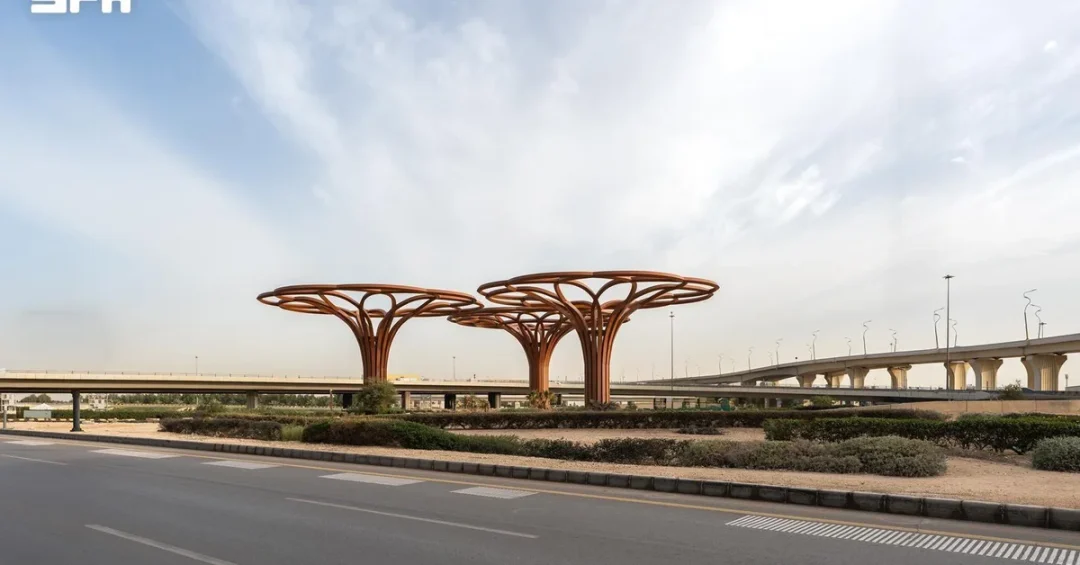
On Saudi National Day, Riyadh’s public art transforms the city into a living gallery, offering a contemporary voice to the Kingdom’s rich heritage through works by Saudi artists. As the capital celebrates its storied past and dynamic present, installations such as Zaman Jassim’s When the Moon is Full and Ahmad Angawi’s Untitled invite residents and visitors to engage with themes of memory, identity, and national pride. These works, part of the Riyadh Art program, exemplify how the city weaves creativity into its urban fabric, aligning with Saudi Vision 2030’s cultural ambitions.
Context and Background
Riyadh Art, one of the world’s largest public art initiatives, launched under the patronage of the Royal Commission for Riyadh City, aims to install over 1,000 artworks across the capital. The program underscores the Kingdom’s commitment to fostering cultural expression and enhancing quality of life, a key pillar of Vision 2030. On Saudi National Day, the program’s installations take on heightened meaning, serving as landmarks that connect the city’s historical layers with its forward-looking spirit.
The two featured works reflect distinct artistic approaches. Zaman Jassim’s When the Moon is Full, situated at Qasr Al-Hukm Metro Station, is a contemplative piece combining illuminated discs, imagery, and sound to explore time, memory, and human experience. Meanwhile, Ahmad Angawi’s Untitled draws inspiration from the Saudi national anthem, integrating sculptural elements like vertical steel frameworks reminiscent of palm trees into the urban transit flow.
Key Details
Jassim’s When the Moon is Full offers a multisensory journey that resonates with the fleeting nature of life, inviting pause amid the city’s rhythm. The work’s placement at a major metro station ensures daily commuters encounter art as part of their routine, democratizing access to creative expression. Angawi’s Untitled, on the other hand, directly engages with national sentiment. Its structural forms echo the anthem’s cadence, transforming a transit hub into a space of patriotic reflection. Both installations highlight the diversity of Saudi contemporary art while remaining deeply rooted in local heritage.
The Riyadh Art program has already delivered numerous high-profile works, from large-scale sculptures to interactive light installations. These projects not only beautify public spaces but also stimulate economic activity and tourism, drawing visitors to explore the city’s cultural corridors. On National Day, such works become focal points for community gatherings and celebrations, reinforcing social cohesion and shared identity.
Implications and Impact
The integration of public art into Riyadh’s urban landscape signals a broader shift in how the Kingdom presents itself to the world. By investing in cultural infrastructure, Saudi Arabia positions its cities as global destinations for art and creativity. This aligns with Vision 2030’s goal of diversifying the economy and promoting cultural tourism. Moreover, the works serve as a bridge between generations, allowing younger Saudis to connect with their heritage through contemporary mediums while offering international audiences a nuanced view of the Kingdom’s artistic evolution.
The placement of these works in high-traffic areas like metro stations ensures that art is not confined to galleries but becomes part of everyday life. This approach fosters a sense of ownership and pride among residents, who see their stories reflected in the city’s aesthetic. It also enhances the visitor experience, making Riyadh a more vibrant and welcoming capital.
Vision 2030 Alignment
Through initiatives like Riyadh Art, Saudi Arabia is actively realizing Vision 2030’s cultural objectives, which aim to enrich the quality of life, empower local talent, and showcase the Kingdom’s heritage on a global stage. As Riyadh continues to evolve, its public spaces will remain canvases for the creativity of Saudi artists, ensuring that the nation’s story is told with authenticity and innovation. This National Day, the fusion of art and identity underscores a future where tradition and modernity coexist harmoniously.
20 Questions
Q1. What is the Riyadh Art program?
A1. Riyadh Art is a major public art initiative under the Royal Commission for Riyadh City, aiming to install over 1,000 artworks across the capital to enhance cultural expression and quality of life.
Q2. Who created When the Moon is Full?
A2. Zaman Jassim created When the Moon is Full, an installation located at Qasr Al-Hukm Metro Station, blending illuminated discs, imagery, and sound to explore time and memory.
Q3. What is the theme of When the Moon is Full?
A3. The work explores themes of time, memory, farewell, and the fleeting beauty of human experience through a contemplative multisensory experience.
Q4. Who is Ahmad Angawi?
A4. Ahmad Angawi is a Saudi artist known for his work Untitled, which evokes the Saudi national anthem and incorporates vertical steel frameworks inspired by palm trees.
Q5. Where is Ahmad Angawi’s Untitled located?
A5. It is integrated into the urban fabric and transit flow, likely in a public space, but specific location details are not provided in the source.
Q6. How does public art contribute to Saudi National Day celebrations?
A6. Public art adds contemporary significance to National Day by evoking memory and expressing identity, allowing citizens and visitors to engage with the nation’s heritage in innovative ways.
Q7. What is the significance of placing art in metro stations?
A7. Placing art in metro stations democratizes access, making creative works part of daily life for commuters and enhancing the urban experience.
Q8. How does Riyadh Art align with Vision 2030?
A8. Riyadh Art supports Vision 2030’s goals of enriching quality of life, empowering local talent, and promoting cultural tourism, thereby diversifying the economy.
Q9. What materials are used in Ahmad Angawi’s Untitled?
A9. The work comprises sculptural and structural elements, including vertical steel frameworks inspired by palm trees, integrated into the transit environment.
Q10. How many artworks does Riyadh Art aim to install?
A10. Riyadh Art aims to install over 1,000 artworks across the capital, transforming the city into a massive open-air gallery.
Q11. What emotions does When the Moon is Full evoke?
A11. It evokes contemplation on time, memory, farewell, and the transient nature of human experiences, encouraging introspection.
Q12. Who oversees the Riyadh Art program?
A12. The Royal Commission for Riyadh City oversees the Riyadh Art program, ensuring its alignment with the city’s developmental and cultural goals.
Q13. How does public art impact tourism in Riyadh?
A13. Public art attracts cultural tourism, drawing visitors to explore the city’s artistic offerings, thereby boosting the local economy and global profile.
Q14. What role does public art play in national identity?
A14. Public art serves as a medium to express national identity, connecting citizens with their heritage and fostering pride through contemporary interpretations.
Q15. Are there other Saudi artists featured in Riyadh Art?
A15. Yes, Riyadh Art features numerous Saudi and international artists, showcasing a diverse range of styles and perspectives across the city.
Q16. How does Untitled engage with the national anthem?
A16. Untitled evokes the national anthem through its structural forms and movement, creating an artistic experience that resonates with patriotic sentiment.
Q17. What is the goal of integrating art into urban infrastructure?
A17. The goal is to enhance the aesthetic and cultural value of public spaces, making art accessible to all and enriching the daily lives of residents and visitors.
Q18. How does Riyadh Art support Saudi artists?
A18. Riyadh Art provides a platform for Saudi artists to showcase their work on a grand scale, contributing to the growth of the local art scene and cultural economy.
Q19. What makes When the Moon is Full a multisensory experience?
A19. It combines illuminated discs, imagery, and sound to create an immersive environment that engages multiple senses and invites reflection.
Q20. How does public art reflect Riyadh’s evolution?
A20. Public art reflects Riyadh’s evolution by bridging tradition and modernity, showcasing the city’s dynamic growth while honoring its historical roots.
Reader Feedback
We value your thoughts. Please share your feedback on this article.
Your feedback helps us improve our coverage.