


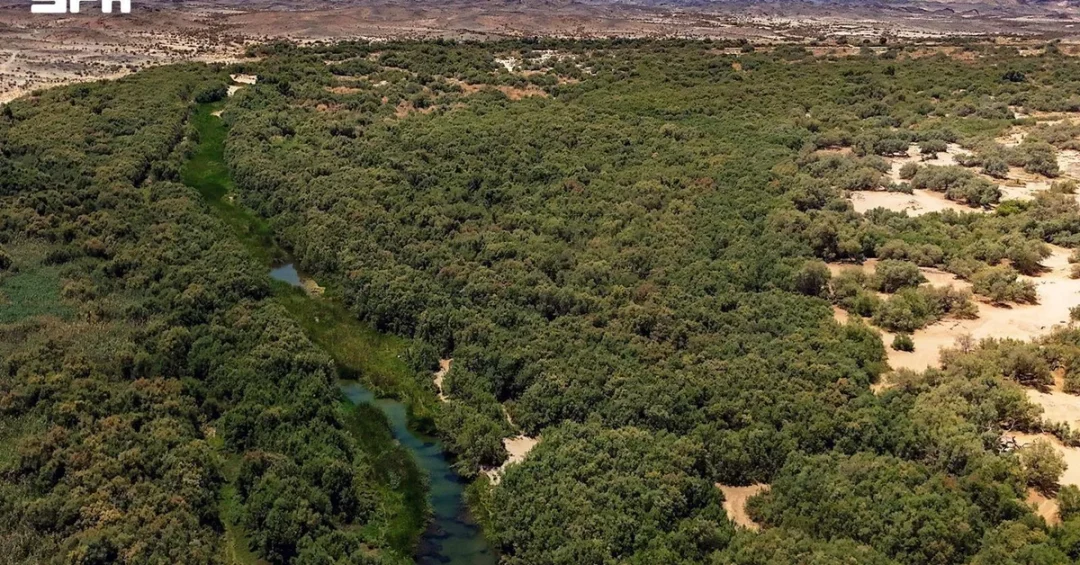
Turabah Governorate, located in the Makkah Region of the Kingdom of Saudi Arabia, is home to the Turabah Dam, an underground dam situated roughly 54 kilometers south of the governorate center along Wadi Turabah, one of the area’s most notable valleys, where water, wild trees, rocky formations, and diverse wildlife combine to form a peaceful natural setting. The site, shaped over time by seasonal floods and distinctive terrain, has developed into a scenic landscape of slopes, riverbanks, stone formations, and greenery that now draws visitors and nature enthusiasts from across the region, according to information released through the Saudi Press Agency (SPA), the Kingdom’s official national news agency.
For international observers, the Turabah Dam represents far more than a quiet outdoor retreat. It illustrates how Saudi Arabia is identifying, protecting, and promoting its natural heritage as part of a broader national effort to diversify tourism and quality-of-life offerings under Vision 2030. The dam’s combination of water, vegetation, and wildlife habitat gives it both recreational and environmental value, and its growing popularity among weekend visitors underscores a wider shift in how the Kingdom presents its landscapes to residents and international travelers alike. Could a single valley in the Makkah Region offer a window into Saudi Arabia’s environmental and tourism ambitions? The evidence emerging from Turabah suggests it can.
Context and Background
What makes Wadi Turabah such a distinctive natural environment? Wadi Turabah is one of the most prominent valleys in Turabah Governorate, and its terrain has been shaped by seasonal floods that carry water through the valley system, carving slopes and riverbanks and depositing the sediment that supports native plant growth. The underground dam sits within this landscape, positioned about 54 kilometers south of the governorate center, where the interaction of water, rock, and vegetation creates conditions that are unusual for many parts of the Arabian Peninsula. The result is a setting that feels removed from urban congestion while remaining accessible to residents of the governorate and surrounding areas.
The Saudi Press Agency reported that the dam’s surroundings provide a habitat for birds and local wildlife, while the presence of water supports the growth of native plants. This combination of elements, water, wild trees, rocky formations, and wildlife, is what gives the site its character and its appeal. The dam is not simply a piece of water infrastructure; it is an ecosystem in which the natural processes of the valley sustain a living landscape. For a Kingdom that has long been associated internationally with desert terrain, sites such as this broaden the picture of what Saudi Arabia’s natural environment contains and how it is being cared for.
Context matters here. Across Saudi Arabia, government agencies have been working to document and develop natural and heritage sites in line with national tourism and environmental goals. The Turabah Dam fits into that pattern: a location with genuine ecological value that is also suitable for low-impact recreation, including walking, photography, and birdwatching. Its emergence as a destination reflects deliberate efforts to connect communities with their natural surroundings while preserving the features that make those surroundings special.
Key Details
What exactly does a visit to the Turabah Dam involve? According to the Saudi Press Agency, the site attracts visitors and nature enthusiasts seeking a quiet retreat away from urban crowds. On weekends, visitors enjoy outdoor activities such as walking, relaxing near the valley, exploring the area, and photographing the beauty of the water, rocks, and sky. These are simple, accessible pursuits, and their popularity speaks to a growing demand within the Kingdom for outdoor experiences that do not require extensive travel or infrastructure.
Adel Al-Baqmi, a tour guide who spoke with the Saudi Press Agency, said the dam has become a destination for residents and visitors due to its calm atmosphere and natural appeal. His account, carried by the Kingdom’s official news agency, describes a site whose primary attraction is its tranquility and its unspoiled character. The valley’s slopes, riverbanks, and stone formations provide natural vantage points, while the presence of water creates reflections and contrasts that are particularly suited to photography. Birds and local wildlife add movement and interest for observers, making the area suitable for birdwatching as well as general nature appreciation.
The dam’s environmental role deserves emphasis. Water retention in the valley supports native vegetation, which in turn provides food and shelter for birds and other wildlife. This cycle, water enabling plants, plants supporting wildlife, wildlife drawing visitors, gives the site a self-reinforcing value: the healthier the ecosystem, the more rewarding the visitor experience, and the stronger the case for protecting the landscape. For Saudi Arabia, such sites demonstrate that environmental protection and public enjoyment can reinforce one another rather than compete.
International and Regional Impact
Why should an international audience pay attention to a valley in the Makkah Region? Saudi Arabia’s tourism sector has been expanding rapidly, with the Kingdom welcoming a growing number of visitors from around the world and developing destinations that range from heritage sites to coastal resorts. Natural attractions such as the Turabah Dam complement those larger projects by offering authentic, landscape-based experiences in less-traveled areas. For international travelers interested in ecotourism, birdwatching, and photography, the site represents a category of destination that is becoming easier to discover as Saudi Arabia’s tourism infrastructure matures.
Regionally, the dam highlights the ecological diversity of the Arabian Peninsula. Valleys such as Wadi Turabah act as natural corridors for wildlife and vegetation, and their preservation contributes to broader environmental resilience. Saudi Arabia’s engagement with environmental protection, including habitat conservation and sustainable land management, aligns with international expectations and with the Kingdom’s own commitments. Sites like this one also support local communities by attracting visitors who spend time and resources in the area, creating modest but meaningful economic activity around guiding, hospitality, and transport.
Economic and Strategic Significance
How does a scenic dam connect to Saudi Arabia’s economic strategy? Tourism is a central pillar of Vision 2030, the national transformation program designed to diversify the Kingdom’s economy beyond hydrocarbons. The strategy includes ambitious destinations such as NEOM and the Red Sea Project, but it also depends on a wide base of smaller attractions that give visitors reasons to explore different regions. The Turabah Dam is precisely this kind of asset: a low-cost, high-value natural site that can be promoted to domestic and international audiences without large-scale construction.
Beyond tourism, the site reflects the strategic importance Saudi Arabia places on water and environmental management. Underground dams and valley water systems play a role in capturing and managing seasonal flows, supporting vegetation, and sustaining local ecosystems. The visible results at Wadi Turabah, greenery, wildlife, and a stable natural setting, illustrate how careful stewardship of water resources can produce environmental and recreational benefits simultaneously. For a country that treats water security and environmental sustainability as national priorities, such outcomes are strategically significant.
Vision 2030 Alignment
Does the Turabah Dam embody the goals of Vision 2030? In several respects, yes. Vision 2030 seeks to improve quality of life for citizens and residents, expand tourism, protect the environment, and create economic opportunities across the Kingdom’s regions. The dam supports each of these aims: it offers a peaceful recreational space, it attracts visitors, it preserves a functioning ecosystem, and it generates activity for local guides and businesses. The Saudi Press Agency’s coverage of the site, including the comments of tour guide Adel Al-Baqmi, reflects official recognition of its value as an eco-tourism attraction in Turabah.
Looking forward, the Turabah Dam is well positioned to serve as a model for how Saudi Arabia develops natural sites responsibly. With its unique landscape, biodiversity, and opportunities for relaxation, birdwatching, and photography, it offers visitors a memorable experience surrounded by nature while demonstrating that conservation and public access can coexist. As the Kingdom continues to open its regions to the world and to invest in sustainable tourism, places like this valley will help tell a fuller story of Saudi Arabia: a country of ambitious megaprojects, yes, but also of quiet landscapes where water, rock, and wildlife come together. For residents and international visitors alike, the Turabah Dam invites discovery, and its continued care will ensure that invitation remains open for generations to come.
20 Questions
Q1. Where is the Turabah Dam located?
A1. The Turabah Dam is located about 54 kilometers south of Turabah Governorate in the Makkah Region of Saudi Arabia, along Wadi Turabah, one of the governorate’s most notable valleys, according to the Saudi Press Agency.
Q2. What type of dam is the Turabah Dam?
A2. It is an underground dam situated amid changing landscapes where water, wild trees, rocky formations, and diverse wildlife come together, forming a peaceful natural setting shaped by seasonal floods and unique terrain.
Q3. What natural features define the area around the dam?
A3. The area features slopes, riverbanks, stone formations, and greenery, created over time by seasonal floods and the distinctive terrain of Wadi Turabah, giving the site its scenic character and appeal.
Q4. Why does the Turabah Dam attract visitors?
A4. The dam attracts visitors and nature enthusiasts seeking a quiet retreat away from urban crowds, offering calm atmosphere, natural beauty, and opportunities for relaxation, walking, exploring, and photography of water, rocks, and sky.
Q5. What wildlife can be found near the dam?
A5. The dam’s surroundings provide a habitat for birds and local wildlife, while the presence of water supports the growth of native plants, highlighting the site’s recreational and environmental value according to official information.
Q6. What activities do visitors enjoy at the dam?
A6. On weekends, visitors enjoy outdoor activities such as walking, relaxing near the valley, exploring the area, and photographing the beauty of the water, rocks, and sky, making it a popular weekend destination.
Q7. Who commented on the dam’s popularity?
A7. Tour guide Adel Al-Baqmi told the Saudi Press Agency that the dam has become a destination for residents and visitors due to its calm atmosphere and natural appeal, reflecting its growing reputation.
Q8. What makes the dam an eco-tourism attraction?
A8. Its unique landscape, biodiversity, and opportunities for relaxation, birdwatching, and photography make the underground dam an important eco-tourism attraction in Turabah, offering visitors a memorable experience surrounded by nature.
Q9. How does water support the local environment?
A9. The presence of water supports the growth of native plants, which in turn provide habitat and food for birds and local wildlife, creating a functioning ecosystem that benefits both nature and visitors.
Q10. What role do seasonal floods play at the site?
A10. Seasonal floods have shaped the landscape over time, carving slopes and riverbanks and contributing to the formation of the scenic terrain of stone formations and greenery that visitors now enjoy.
Q11. Is the Turabah Dam suitable for photography?
A11. Yes. Visitors photograph the beauty of the water, rocks, and sky, and the combination of reflections, natural formations, and wildlife makes the site particularly appealing for nature and landscape photography enthusiasts.
Q12. Why is the dam important for birdwatching?
A12. The dam’s surroundings provide habitat for birds, and the presence of water and native vegetation attracts wildlife, making the area suitable for birdwatching as part of its broader eco-tourism appeal.
Q13. How does the dam support Saudi Arabia’s tourism goals?
A13. As a natural attraction that draws visitors, the dam supports Vision 2030’s tourism objectives by offering authentic landscape-based experiences in the Makkah Region and encouraging domestic and international visitors to explore beyond major cities.
Q14. What environmental value does the site have?
A14. The site supports native plants and provides habitat for birds and local wildlife, demonstrating how water retention in valleys can sustain ecosystems while also offering recreational benefits to the public.
Q15. Who reported on the Turabah Dam?
A15. The Saudi Press Agency, the Kingdom’s official national news agency, reported on the dam, including comments from tour guide Adel Al-Baqmi, confirming official recognition of the site’s value.
Q16. What is Wadi Turabah?
A16. Wadi Turabah is one of the most notable valleys in Turabah Governorate, and its terrain, shaped by seasonal floods, forms the landscape in which the underground dam is situated.
Q17. How far is the dam from Turabah Governorate center?
A17. The dam is located approximately 54 kilometers south of Turabah Governorate, according to the Saudi Press Agency, placing it within accessible reach for residents and visitors exploring the region.
Q18. Does the dam offer a quiet retreat?
A18. Yes. The dam attracts visitors seeking a quiet retreat away from urban crowds, and its calm atmosphere and natural appeal have made it a destination for relaxation and nature appreciation on weekends.
Q19. How does the dam align with Vision 2030?
A19. The dam supports Vision 2030 goals by improving quality of life, expanding tourism, protecting the environment, and generating local economic activity, positioning it as a model for responsible natural site development.
Q20. What makes the Turabah Dam memorable for visitors?
A20. Its unique landscape, biodiversity, and opportunities for relaxation, birdwatching, and photography offer visitors a memorable experience surrounded by nature, making it a standout eco-tourism attraction in the region.
Reader Feedback
We value your thoughts. Please share your feedback on this article.
Your feedback helps us improve our coverage.
Related articles
 Taif Governor Meets Cooperative Tourism Agency Chairman
 Jeddah Summer 2026 Drives Spending and Hospitality Growth
 Jeddah Blends Al-Balad Heritage with Obhur Beaches
 Al-Shuaiba Beaches Emerge as Kitesurfing Hub in Saudi Arabia
 Jeddah: Heritage and Modernity Draw Global Tourists
 Badr Al-Janoub Vegetation Boosts Sustainable Tourism