


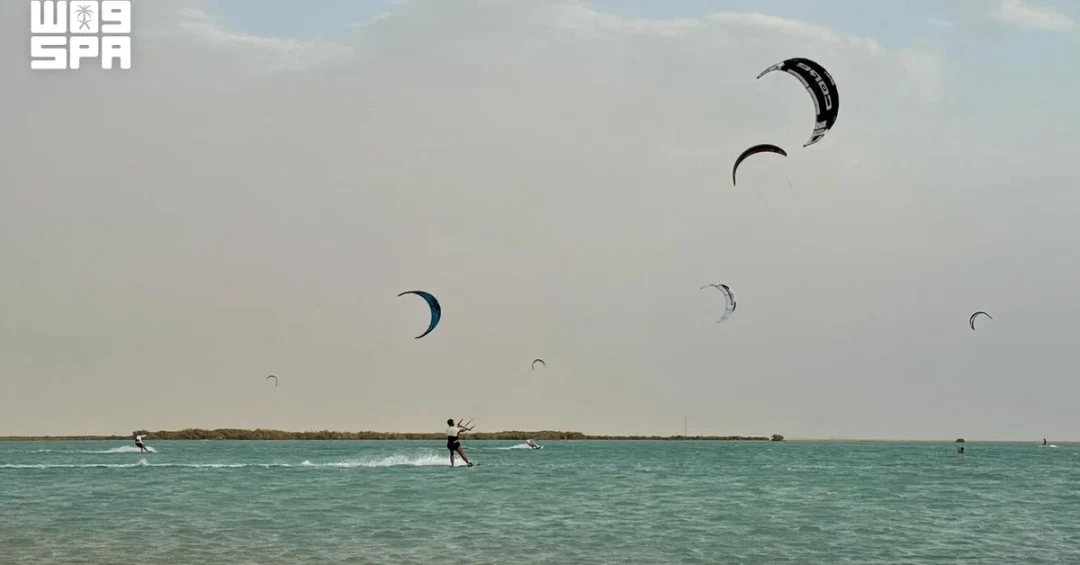
Al-Shuaiba, a coastal area south of Jeddah in Makkah Province, is emerging as a preferred destination for kitesurfing among the region’s adventure-seeking youth, according to the Saudi Press Agency (SPA). The growing popularity of the sport along Saudi Arabia’s Red Sea coastline reflects a broader surge in marine sports and outdoor recreation across the Kingdom, supported by the nation’s extensive coastline and diverse marine environments. Young enthusiasts from Makkah are increasingly traveling to Al-Shuaiba to practice kitesurfing, a sport that combines athletic skill, physical fitness, and a deep connection with wind and water.
Kitesurfing, which involves a large kite or sail connected to the athlete by lines and a control system, requires practitioners to stand on a board designed to glide across the water’s surface. The sport harnesses wind power to generate movement and speed, enabling maneuvers and jumps that demand balance, concentration, and the ability to read wind direction and respond to changing marine conditions. The rise of this activity in Al-Shuaiba signals a diversification of sporting interests among Saudi youth and aligns with the Kingdom’s Vision 2030 goals of enhancing quality of life and promoting active, healthy lifestyles.
Context and Background
Why has kitesurfing captured the imagination of Makkah’s youth in recent years? The answer lies in the unique combination of geography, climate, and a national push toward outdoor recreation. Saudi Arabia’s Red Sea coastline stretches for hundreds of kilometers, offering consistent wind patterns and calm, shallow waters in areas like Al-Shuaiba that are ideal for kitesurfing. The sport has been gaining traction alongside organized events and competitions held in recent years, which have helped raise its profile and attract newcomers.
Al-Shuaiba is located south of Jeddah, within Makkah Province, and is easily accessible for residents of the holy city. The area’s beaches have become a gathering point for young marine sports enthusiasts who seek an alternative to traditional land-based activities. This shift reflects the diversity of young people’s sporting interests, with many turning to pursuits that combine sport, recreation, and adventure. The Saudi Press Agency reported that the growing community interest in marine sports and outdoor activities has created a suitable environment for various water sports, including kitesurfing.
The Kingdom’s leadership has consistently emphasized the importance of youth engagement in sports and recreation as part of its broader social and economic transformation. Through initiatives under Vision 2030, Saudi Arabia has invested in sports infrastructure, coastal development, and community programs that encourage active lifestyles. Al-Shuaiba’s emergence as a kitesurfing hub is a direct result of these efforts, demonstrating how national policy can translate into grassroots enthusiasm and local economic activity.
Key Details
What exactly does kitesurfing involve, and why does it appeal to adventure seekers? The sport requires a large kite or sail connected to the athlete by lines and a control system, while the practitioner stands on a board designed to glide across the water’s surface. Harnessing the power of the wind to generate movement and speed, kitesurfers perform maneuvers and jumps that demand balance, concentration, and the ability to read wind direction and respond to varying marine conditions. It is a physically demanding activity that builds core strength, coordination, and mental focus.
Young marine sports enthusiasts from Makkah head to Al-Shuaiba to practice kitesurfing, a sport that has gained growing popularity among adventure enthusiasts for offering a sporting experience that combines excitement, physical fitness, and skill in handling wind and water movements. The SPA report highlighted that the growing popularity of the sport reflects the diversity of young people’s sporting interests, with some turning to activities that combine sport, recreation, and adventure.
The Al-Shuaiba coastline offers favorable conditions for kitesurfing, including consistent winds and relatively calm waters, making it suitable for both beginners and experienced practitioners. While specific equipment providers and training schools were not detailed in the official report, the presence of a dedicated community of kitesurfers suggests an organic development of the sport in the area. This grassroots growth is often a precursor to formalized clubs, competitions, and tourism offerings, which could further elevate Al-Shuaiba’s profile as a marine sports destination.
International and Regional Impact
How does the rise of kitesurfing in Al-Shuaiba fit into Saudi Arabia’s broader regional and international sporting ambitions? The Kingdom has been actively positioning itself as a global hub for sports and entertainment, hosting major events such as Formula 1, the Dakar Rally, and various water sports competitions. The growth of kitesurfing at the local level complements these high-profile initiatives by building a pipeline of talent and enthusiasm that can support future international events.
Regionally, Saudi Arabia’s Red Sea coast is increasingly recognized as a premier destination for marine sports, rivaling established locations in Egypt, Jordan, and the UAE. The development of Al-Shuaiba as a kitesurfing hub adds to the Kingdom’s diverse tourism portfolio, which includes heritage sites, cultural festivals, and luxury resorts. International visitors seeking adventure tourism may soon find Al-Shuaiba an attractive addition to their itineraries, particularly as infrastructure and services improve.
The international kitesurfing community has also taken note of Saudi Arabia’s potential. With its long coastline, reliable winds, and growing investment in coastal development, the Kingdom is well-positioned to attract global kitesurfing enthusiasts and competitions. This aligns with Vision 2030’s goal of increasing tourism’s contribution to GDP and diversifying the economy away from oil. The presence of young Saudi athletes in the sport also helps showcase the Kingdom’s dynamic and forward-looking image to the world.
Economic and Strategic Significance
What economic opportunities does the kitesurfing trend in Al-Shuaiba create for the local community and the Kingdom? The growth of marine sports often stimulates demand for equipment, training, accommodation, and hospitality services. As more young people take up kitesurfing, local entrepreneurs may find opportunities to establish rental shops, schools, and cafés, creating jobs and generating income. This micro-economic activity contributes to the broader goal of reducing unemployment and empowering small businesses.
Strategically, the development of Al-Shuaiba as a kitesurfing destination supports Saudi Arabia’s efforts to diversify its tourism offerings beyond religious pilgrimage and heritage sites. While Makkah Province is globally renowned for the Hajj and Umrah pilgrimages, attracting millions of visitors annually, the region also has untapped potential for leisure and adventure tourism. By promoting coastal activities like kitesurfing, the Kingdom can extend visitor stays and increase spending in the local economy.
Furthermore, the sport’s emphasis on physical fitness and outdoor activity aligns with the Quality of Life Program, a key Vision 2030 initiative aimed at enhancing the well-being of Saudi citizens and residents. Encouraging youth to engage in sports like kitesurfing helps combat sedentary lifestyles and promotes healthier communities. The Red Sea’s marine environment also offers opportunities for environmental education and conservation, as kitesurfers develop a deeper appreciation for coastal ecosystems.
Vision 2030 Alignment
How does the kitesurfing scene in Al-Shuaiba reflect the broader objectives of Saudi Vision 2030? The Vision, launched in 2016 under the leadership of Crown Prince Mohammed bin Salman, seeks to transform the Kingdom into a diversified, vibrant economy and society. Among its pillars are the Quality of Life Program, which aims to increase sports participation and recreational opportunities, and the Tourism Development Program, which targets 100 million annual visits by 2030. The enthusiasm for kitesurfing among Makkah’s youth directly supports these goals by promoting active lifestyles and showcasing the Kingdom’s natural assets.
The emergence of Al-Shuaiba as a kitesurfing hub is a testament to the power of Vision 2030 to inspire grassroots change. As Saudi Arabia continues to invest in its coastal regions, develop world-class infrastructure, and host international events, locations like Al-Shuaiba will play an increasingly important role in the Kingdom’s sporting and tourism landscape. The young kitesurfers of Makkah are not just enjoying a new hobby; they are pioneers of a more active, adventurous, and globally connected Saudi Arabia. Their passion for wind and water is helping to write the next chapter of the Kingdom’s remarkable journey toward a prosperous and dynamic future.
20 Questions
Q1. What is kitesurfing and how does it work?
A1. Kitesurfing uses a large kite or sail connected to the athlete by lines and a control system. The practitioner stands on a board designed to glide across the water’s surface, harnessing wind power to generate movement, speed, maneuvers, and jumps.
Q2. Where is Al-Shuaiba located?
A2. Al-Shuaiba is a coastal area south of Jeddah in Makkah Province, Saudi Arabia. It lies along the Red Sea and is easily accessible for residents of Makkah and Jeddah.
Q3. Why is Al-Shuaiba suitable for kitesurfing?
A3. Al-Shuaiba offers consistent wind patterns and relatively calm, shallow waters, making it ideal for kitesurfing. Saudi Arabia’s extensive coastline and diverse marine locations create a suitable environment for various water sports, including kitesurfing.
Q4. Who is driving the growth of kitesurfing in Al-Shuaiba?
A4. Young marine sports enthusiasts from Makkah are driving the growth. They head to Al-Shuaiba to practice kitesurfing, a sport that has gained popularity among adventure enthusiasts for combining excitement, physical fitness, and skill.
Q5. What skills are required for kitesurfing?
A5. Kitesurfing requires balance, concentration, and the ability to read wind direction and respond to varying marine conditions. It also demands physical fitness and skill in handling wind and water movements.
Q6. When did kitesurfing start gaining popularity in Saudi Arabia?
A6. In recent years, events and competitions related to kitesurfing have been held alongside growing community interest in marine sports and outdoor activities. The trend has accelerated as part of Vision 2030’s quality of life initiatives.
Q7. What does the growing popularity of kitesurfing reflect?
A7. It reflects the diversity of young people’s sporting interests, with some turning to activities that combine sport, recreation, and adventure. It also signals a broader shift toward active lifestyles in the Kingdom.
Q8. How does kitesurfing align with Vision 2030?
A8. Kitesurfing aligns with Vision 2030’s Quality of Life Program, which aims to increase sports participation and recreational opportunities. It also supports tourism development by showcasing Saudi Arabia’s coastal assets.
Q9. What economic benefits could kitesurfing bring to Al-Shuaiba?
A9. It could stimulate demand for equipment, training, accommodation, and hospitality services, creating jobs and supporting small businesses. This contributes to economic diversification and local development.
Q10. Are there organized kitesurfing competitions in Saudi Arabia?
A10. Yes, events and competitions related to the sport have been held in recent years. These events help raise the profile of kitesurfing and attract new participants.
Q11. What marine conditions are ideal for kitesurfing?
A11. Ideal conditions include consistent wind, relatively calm waters, and enough space for maneuvers. Al-Shuaiba’s Red Sea location provides these conditions for much of the year.
Q12. How does kitesurfing benefit physical health?
A12. Kitesurfing builds core strength, coordination, balance, and cardiovascular fitness. It also enhances mental focus and concentration, making it a comprehensive workout.
Q13. Is kitesurfing safe for beginners?
A13. With proper training and safety equipment, kitesurfing can be safe for beginners. It is important to learn from certified instructors and follow safety guidelines.
Q14. What role does the Saudi Press Agency play in reporting this trend?
A14. The Saudi Press Agency (SPA) is the official news agency of Saudi Arabia. It reported on the growing popularity of kitesurfing in Al-Shuaiba, highlighting the enthusiasm of Makkah’s youth.
Q15. How does kitesurfing contribute to Saudi Arabia’s tourism goals?
A15. It adds an adventure tourism offering that can attract international visitors, extending their stays and increasing spending. This supports the Vision 2030 goal of 100 million annual visits by 2030.
Q16. What is the significance of Al-Shuaiba’s location for Makkah residents?
A16. Al-Shuaiba is close to Makkah, making it accessible for day trips or weekend outings. This proximity encourages regular participation in marine sports.
Q17. Can kitesurfing help promote environmental awareness?
A17. Yes, kitesurfers develop a deeper appreciation for coastal ecosystems and marine environments. This can foster support for conservation efforts and sustainable practices.
Q18. What infrastructure exists at Al-Shuaiba for kitesurfing?
A18. While specific infrastructure details were not provided in the official report, the area’s beaches and waters are naturally suited for the sport. Growing demand may lead to improved facilities.
Q19. How does kitesurfing fit into Saudi Arabia’s sports diversification strategy?
A19. It complements other sports like football, motorsports, and water sports, showcasing the Kingdom’s ability to host diverse athletic activities. This diversification is a key part of Vision 2030.
Q20. What is the future outlook for kitesurfing in Saudi Arabia?
A20. With continued investment in coastal development and youth engagement, kitesurfing is poised to grow further. Al-Shuaiba could become a premier destination for the sport in the region.
Reader Feedback
We value your thoughts. Please share your feedback on this article.
Your feedback helps us improve our coverage.
Related articles
 Jeddah: Heritage and Modernity Draw Global Tourists
 Badr Al-Janoub Vegetation Boosts Sustainable Tourism
 Badr Al Janoub: A Green Oasis for Sustainable Tourism
 Custodian’s Guests Tour Madinah’s Historic Islamic Sites
 Dumat Al-Jandal’s 33 Parks Elevate Summer Quality of Life
 Jeddah Beaches Draw Summer Crowds with Diverse Activities