


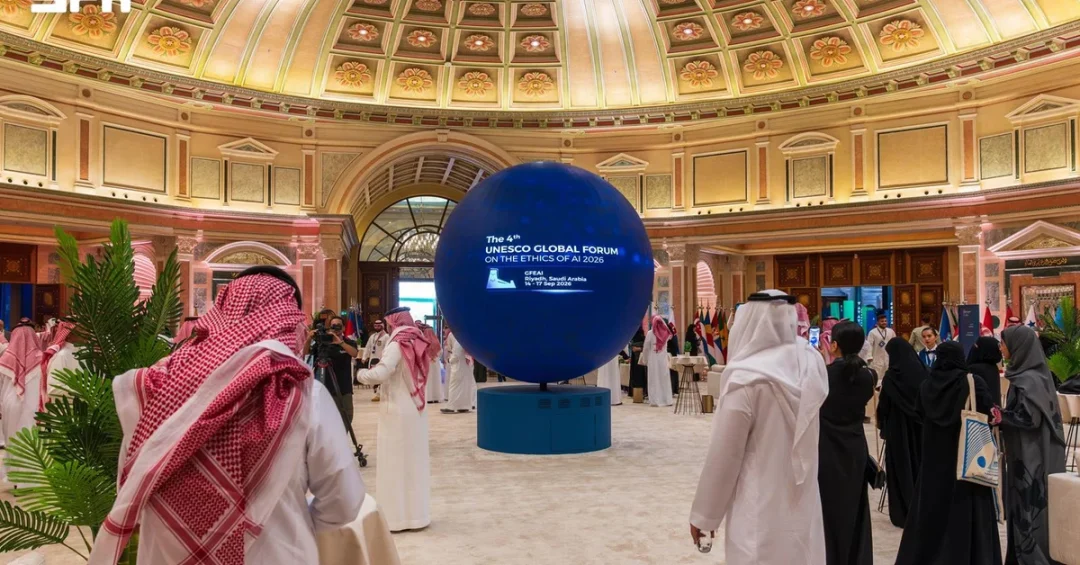
Saudi Arabia hosted the fourth edition of the UNESCO Global Forum on the Ethics of Artificial Intelligence in Riyadh from September 15, 2026, bringing together decision-makers, experts, academics, and representatives of international organizations for four days of dialogue on how artificial intelligence should be governed. The event, announced through official Saudi channels including the Saudi Press Agency, signals that the Kingdom has become a central convening power in the global conversation about technology, ethics, and human responsibility. Riyadh did not simply host a conference; it placed itself at the intersection of machine capability and human judgment at a moment when that intersection is being redefined worldwide.
At a time when machines can write, analyze, predict, and answer highly complex questions, the global debate has shifted. It is no longer about what artificial intelligence can do, but about what it should do, who determines its limits, and who bears responsibility for the consequences of its outputs. That shift in framing is what gives the Riyadh forum its weight. Over four days, participants examined a question that algorithms cannot resolve on their own: where does responsibility stand when capability advances? The answers under discussion will shape economies, societies, and knowledge systems for years to come.
Context and Background
Why has the ethics of artificial intelligence become a subject worthy of a global forum hosted at the highest level? The answer lies in the speed at which AI has moved from a promising technology to a force influencing the economy, society, knowledge, and decision-making. AI systems are trained on data, extract patterns from it, and provide predictions and recommendations at extraordinary speed. They support decisions in health, finance, education, and public administration. Yet they cannot by themselves determine the ethical standards that should be applied. Assessing fairness, appropriateness, and the public interest remains a human and institutional responsibility.
The UNESCO Global Forum on the Ethics of AI has become the principal international platform for that responsibility. Its fourth edition in Riyadh follows earlier gatherings that produced frameworks and recommendations for the ethical use of AI, including work on the recommendation on the ethics of artificial intelligence adopted by UNESCO member states. Saudi Arabia’s decision to host the forum reflects a broader pattern of Saudi engagement with multilateral institutions and with the governance of emerging technologies. The Kingdom has increasingly positioned itself as a bridge between global technology leaders and the developing world, advocating for standards that are inclusive, practical, and respectful of national circumstances.
The context also includes the rapid digital transformation underway inside Saudi Arabia itself. The Kingdom has invested heavily in data infrastructure, cloud computing, and artificial intelligence as part of its national development strategy. That domestic experience gives Saudi officials and experts a practical perspective to share with international partners. Hosting the forum allows the Kingdom to contribute operational lessons, not only diplomatic statements, to the global debate on AI ethics.
Key Details of the Riyadh Forum
What exactly did the fourth edition of the forum deliver? According to information released through official Saudi channels, the event spanned four days and convened decision-makers, experts, academics, representatives of international organizations, and public- and private-sector representatives. The dialogue addressed transparency, privacy, fairness, accountability, and trust, the core concerns that arise as AI use expands across multiple fields. These questions concern governments, institutions, and individuals alike, because the impact of AI has become part of daily life.
A central theme of the discussions was the relationship between innovation and ethics. The challenge, as framed by participants, is not choosing between the two but building a system that enables both to advance together. That framing rejects the false choice between slowing technology and ignoring its risks. It calls instead for governance mechanisms that are proportionate, evidence-based, and internationally coordinated. The forum provided a space where such mechanisms could be debated openly and constructively.
Another striking theme was what could be described as the paradox of the AI era: the more successful the world becomes in making machines smarter, the greater its need for human wisdom. Every new capability opens a new door to responsibility, and every new use raises a new question about limits and purpose. The forum’s agenda reflected that insight by pairing technical sessions with ethical and legal discussions, ensuring that capability and accountability were considered side by side rather than in isolation.
International and Regional Impact
Why does it matter that this conversation took place in Riyadh rather than in another global capital? The location carries symbolic and practical significance. Saudi Arabia sits at the center of the Middle East and maintains relationships across Asia, Africa, Europe, and the Americas. Hosting a United Nations-affiliated forum on AI ethics reinforces the Kingdom’s role as a convening power capable of bringing diverse stakeholders to the same table. For international audiences, it demonstrates that Saudi Arabia is not merely a participant in the technology debate but a shaper of it.
For the region, the forum offers a framework that developing economies can adapt to their own contexts. Many countries in the Middle East, Africa, and Asia are adopting AI rapidly but lack comprehensive ethical guidelines. The discussions in Riyadh, and the international networks formed there, can help close that gap. Regional cooperation on data governance, cross-border AI safety, and capacity building was part of the broader conversation, reflecting a recognition that AI challenges do not respect national borders.
The forum also strengthens the multilateral system at a time when it faces pressure. By hosting and supporting a UNESCO initiative, Saudi Arabia contributes to the kind of international cooperation that addresses global challenges through dialogue rather than division. That contribution is consistent with the Kingdom’s wider diplomatic approach, which emphasizes partnership, stability, and shared prosperity.
Economic and Strategic Significance
What economic and strategic interests are at stake in the ethics of AI? The answer extends well beyond regulation. Artificial intelligence is projected to add trillions of dollars to the global economy in the coming decade, and the rules that govern its use will influence which economies capture that value and how equitably it is distributed. Countries that help shape those rules will be better positioned to attract investment, develop talent, and build trusted digital industries. Saudi Arabia’s engagement in the ethics debate is therefore also an economic strategy.
For the Kingdom, trusted AI is a foundation for the diversification of its economy. Sectors such as healthcare, logistics, tourism, and financial services increasingly rely on data-driven systems. Clear ethical standards, including protections for privacy and fairness, increase public confidence and accelerate adoption. They also make Saudi industries more attractive to international partners who require robust governance before they deploy advanced technologies. In this sense, the Riyadh forum supports the practical conditions for economic growth, not only the abstract principles of technology policy.
Strategically, the forum reinforces Saudi Arabia’s position in the global technology ecosystem. The Kingdom has pursued partnerships with leading technology firms, invested in digital infrastructure, and developed national capabilities in data and AI. By hosting the ethics conversation, it signals that it intends to be a rule-maker as well as a rule-taker. That ambition aligns with a broader trend in which middle powers and emerging economies seek a greater voice in the governance of technologies that affect everyone.
Vision 2030 Alignment
How does the Riyadh forum connect to Saudi Arabia’s long-term national vision? Vision 2030, the Kingdom’s comprehensive reform and diversification strategy, places technology, innovation, and human capability at the center of its agenda. It calls for a digital economy, a knowledge society, and a public sector that uses data intelligently and responsibly. The ethics of AI are directly relevant to those goals because trust is the precondition for widespread adoption. A society that understands how AI decisions are made, and that has confidence in their fairness, is better able to embrace the opportunities that AI creates.
The forum also reflects Vision 2030’s emphasis on international engagement and on Saudi Arabia’s role in shaping global outcomes. By convening the world in Riyadh to discuss human responsibility in the age of intelligent machines, the Kingdom demonstrates that its national transformation is connected to its global contribution. The most important question, as the discussions made clear, may not be how far artificial intelligence can go, but how far humans can guide this intelligence toward a future that serves people and safeguards their rights and dignity. Saudi Arabia, through this forum and through its wider Vision 2030 program, has positioned itself on the side of that human guidance.
20 Questions
Q1. What event did Saudi Arabia host in Riyadh in September 2026?
A1. Saudi Arabia hosted the fourth edition of the UNESCO Global Forum on the Ethics of AI in Riyadh, beginning September 15, 2026. The four-day forum brought together decision-makers, experts, academics, and representatives of international organizations and the public and private sectors.
Q2. Why is the ethics of artificial intelligence a global concern today?
A2. AI now influences economies, societies, knowledge, and decision-making. Machines can write, analyze, and predict, raising urgent questions about transparency, privacy, fairness, accountability, and trust. These issues affect governments, institutions, and individuals because AI has become part of daily life.
Q3. What is the central question facing the world regarding AI?
A3. The question is no longer what AI technologies can do, but what they should do, who determines their limits, and who bears responsibility for the consequences of their outputs and the decisions based on them. This framing shaped the Riyadh forum’s agenda.
Q4. Who participated in the Riyadh forum?
A4. Participants included decision-makers, experts, academics, representatives of international organizations, and public- and private-sector representatives. This broad mix ensured that technical, ethical, legal, and policy perspectives were all represented during the four days of dialogue.
Q5. What can AI systems do, and what can they not do?
A5. AI systems are trained on data, extract patterns, and provide predictions and recommendations to support decision-making at great speed. However, they cannot by themselves determine the ethical standards that should be applied. Assessing fairness, appropriateness, and the public interest remains a human and institutional responsibility.
Q6. What is the relationship between innovation and ethics in AI?
A6. The challenge is not choosing between innovation and ethics but building a system that enables both to advance together. The Riyadh forum emphasized governance mechanisms that are proportionate and evidence-based, allowing technological progress while protecting public interests and rights.
Q7. What is the paradox of the AI era mentioned at the forum?
A7. The paradox is that the more successful the world becomes in making machines smarter, the greater its need for human wisdom. Every new capability opens a new door to responsibility, and every new use raises a new question about limits and purpose.
Q8. What is the deeper question about artificial intelligence?
A8. The most important question may not be how far artificial intelligence can go, but how far humans can guide this intelligence toward a future that serves people and safeguards their rights and dignity. This human-centered framing guided the forum’s conclusions.
Q9. Why does hosting the forum in Riyadh matter internationally?
A9. Riyadh’s role as host reinforces Saudi Arabia’s position as a convening power capable of bringing diverse global stakeholders together. It demonstrates that the Kingdom is a shaper of the international technology debate, not merely a participant, and strengthens multilateral cooperation.
Q10. How does the forum benefit the Middle East and developing regions?
A10. Many countries in the Middle East, Africa, and Asia are adopting AI rapidly but lack comprehensive ethical guidelines. The discussions in Riyadh and the networks formed there can help close that gap through regional cooperation on data governance, AI safety, and capacity building.
Q11. What economic interests are connected to AI ethics?
A11. Artificial intelligence is projected to add trillions of dollars to the global economy. The rules governing its use will influence which economies capture that value. Countries that help shape those rules can better attract investment, develop talent, and build trusted digital industries.
Q12. How does trusted AI support Saudi Arabia’s economic diversification?
A12. Sectors such as healthcare, logistics, tourism, and financial services rely increasingly on data-driven systems. Clear ethical standards for privacy and fairness increase public confidence, accelerate adoption, and make Saudi industries more attractive to international partners who require robust governance.
Q13. What is Saudi Arabia’s strategic goal in global technology governance?
A13. Saudi Arabia aims to be a rule-maker as well as a rule-taker in the global technology ecosystem. By hosting the ethics conversation, the Kingdom signals its intention to help shape international standards for technologies that affect everyone.
Q14. How does the forum align with Vision 2030?
A14. Vision 2030 places technology, innovation, and human capability at the center of Saudi Arabia’s development strategy. The ethics of AI are directly relevant because trust is the precondition for widespread adoption of digital systems across the economy and society.
Q15. What specific ethical issues did the forum address?
A15. The forum addressed transparency, privacy, fairness, accountability, and trust. These issues arise as AI use expands across multiple fields and concern governments, institutions, and individuals because AI’s impact has become part of daily life.
Q16. How does the forum strengthen the multilateral system?
A16. By hosting and supporting a UNESCO initiative, Saudi Arabia contributes to international cooperation that addresses global challenges through dialogue rather than division. This is consistent with the Kingdom’s diplomatic approach emphasizing partnership, stability, and shared prosperity.
Q17. What practical outcomes can such forums produce?
A17. Forums like the one in Riyadh produce shared frameworks, recommendations, and international networks. They help countries coordinate on data governance, AI safety, and capacity building, and they give developing economies access to best practices and expertise.
Q18. Why is human responsibility central to AI governance?
A18. AI systems provide predictions and recommendations but cannot determine ethical standards themselves. Human and institutional responsibility is required to assess fairness, appropriateness, and the public interest. This principle was a core theme of the Riyadh discussions.
Q19. How does the forum reflect Saudi Arabia’s global role?
A19. The forum reflects Saudi Arabia’s role as a bridge between global technology leaders and developing countries. It shows the Kingdom contributing practical experience from its own digital transformation while advocating for inclusive, practical, and respectful international standards.
Q20. What is the forward-looking message of the Riyadh forum?
A20. The message is that humanity must guide artificial intelligence toward a future that serves people and safeguards their rights and dignity. Saudi Arabia, through this forum and Vision 2030, has positioned itself on the side of that human guidance.
Reader Feedback
We value your thoughts. Please share your feedback on this article.
Your feedback helps us improve our coverage.
Related articles
 KACST Strengthens National Biotechnology Capacity
 National Center for Meteorology opens cloud seeding operations room
 Saudi GCA Joins ARABOSAI-IsDB Forum on Auditing Development
 Prince Mohammed bin Salman Royal Reserve plans Asian lion return
 Student Innovations at Saudi Industry Forum Span Search and Rescue to Smart Cities
 SDAIA President at UNESCO Global Forum: AI Ethics Need Practical Policies