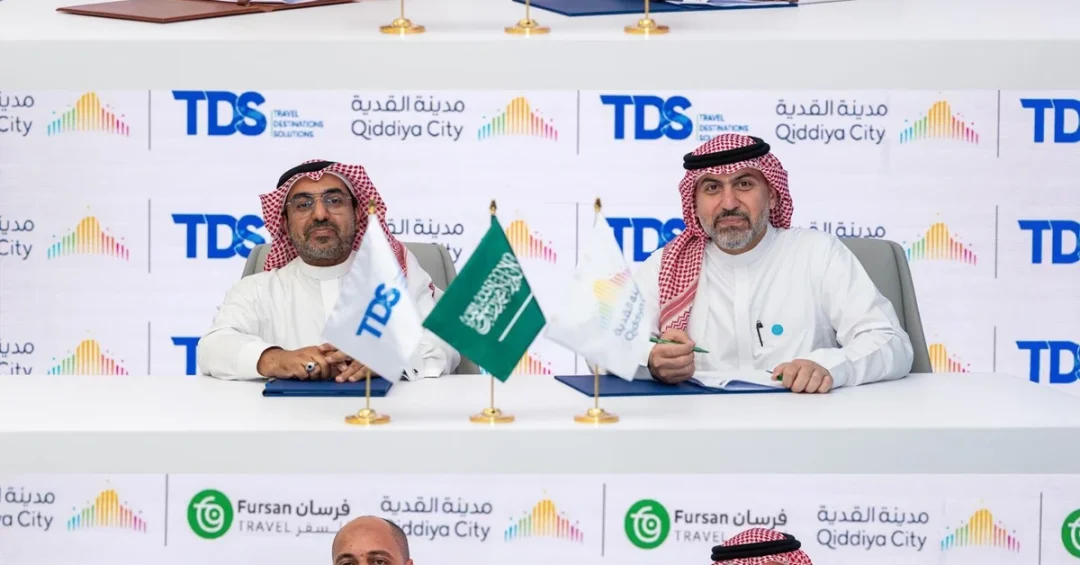
Qiddiya City has signed memoranda of understanding with five leading travel and tourism service providers, a move announced via the Saudi Press Agency that is designed to make visiting the entertainment, sport, and culture destination smoother for travelers from inside the Kingdom and around the world. The agreements were concluded with Al Faris International Travel and Tourism, Travel Destinations Solutions, Al Matar Commercial Services Company, AlMosafer Travel and Tourism Company, and Fursan Travel and Tourism Company, according to the official announcement carried by the Saudi Press Agency on September 10, 2026.
The memoranda form part of a strategic direction at Qiddiya City to expand its network of partnerships across the travel and tourism sector and to strengthen its readiness to welcome visitors as its destinations and experiences move toward opening. For an international audience, the significance is straightforward: Qiddiya is not only building attractions, it is building the commercial and logistical pathways that will bring people to them. Why does that matter so much at this stage of the project’s development? Because a destination of this scale depends as heavily on how easily a guest can plan, book, and arrive as it does on the quality of the experience itself.
Context and Background
Qiddiya City is one of the flagship giga-projects of Saudi Arabia’s Vision 2030 transformation program, conceived as a global destination that brings together entertainment, sport, and culture under the guiding concept of the “Power of Play.” Located near Riyadh, it is designed to host a dense concentration of theme parks, sports venues, cultural facilities, and hospitality offerings within a single integrated urban environment. The travel and tourism agreements announced through the Saudi Press Agency represent the next layer of that build-out: the visitor-facing infrastructure that connects a would-be guest to the destination long before they set foot on site.
Why do partnerships with travel companies matter to a project still under construction? The answer lies in how modern tourism actually works. International visitors rarely book a single attraction in isolation; they assemble a trip from flights, transfers, hotels, tickets, and timed entries, often through travel agencies, online travel platforms, and corporate travel networks. By aligning early with established providers, Qiddiya City is positioning itself inside those booking ecosystems rather than waiting to be discovered after opening. The MoUs therefore serve a dual purpose: they are commercial agreements and they are readiness measures, ensuring that when visitors begin planning trips, the pathways to Qiddiya are already familiar to the intermediaries they trust.
The five companies involved bring complementary strengths. Al Faris International Travel and Tourism, Travel Destinations Solutions, Al Matar Commercial Services Company, AlMosafer Travel and Tourism Company, and Fursan Travel and Tourism Company each operate within different segments of the travel trade, from leisure packaging to commercial services and digital booking. Together, they represent a cross-section of the expertise Qiddiya City intends to draw on as it prepares to receive guests from within the Kingdom and abroad.
The Agreements and How They Work
According to the official announcement, the MoUs aim to establish shared frameworks for cooperation with a select group of travel and tourism service providers. The stated objective is to develop more integrated and flexible solutions across the visitor journey: from planning and booking, through travel and arrival arrangements, to enjoying Qiddiya City’s experiences more smoothly and efficiently. In practical terms, that means the partners will work with Qiddiya City to design how a trip is assembled, sold, and delivered.
Through these partnerships, Qiddiya City will leverage the specialized expertise, booking infrastructure, and commercial networks of the travel companies. What does that look like on the ground? It can include packaged itineraries that bundle attraction access with transport and accommodation, corporate and group travel programs, digital distribution through established booking platforms, and arrival services that reduce friction at the point of entry. The joint focus, as stated in the announcement, is on delivering integrated and flexible solutions across every stage of the visitor journey, from initial planning and booking to travel arrangements and arrival.
The agreements also reinforce Qiddiya City’s ongoing commitment to building quality partnerships with key players in the tourism and travel ecosystem. They form part of future plans to develop integrated tourism solutions that enhance the readiness of its destinations to welcome visitors, and they contribute to expanding the scope of cooperation with sector partners by providing more flexible and efficient options for the visitor journey. For a destination preparing to host large volumes of guests, this kind of groundwork is not incidental; it is the operational spine of the visitor experience.
International and Regional Impact
For regional travelers, particularly from the Gulf Cooperation Council states, the agreements could simplify short-break travel to Riyadh’s entertainment and sports offerings. The Gulf market is already highly mobile, with strong air connectivity and a culture of weekend leisure trips. By integrating with travel providers that serve these routes and customer bases, Qiddiya City can tap into existing demand and convert it into visits more efficiently. The same logic applies to corporate and incentive travel, a segment where Al Matar Commercial Services Company and similar providers have deep experience.
For the wider international market, the MoUs signal that Qiddiya City intends to compete for global tourism spend on the strength of its access and convenience, not only its attractions. International visitors planning a first trip to Saudi Arabia often rely on travel agents, tour operators, and online platforms to navigate visa processes, flights, and ground transport. Embedding Qiddiya into those channels early helps normalize it as a bookable destination rather than an unknown quantity. It also supports Saudi Arabia’s broader tourism goals, which include raising the sector’s contribution to the economy and increasing international visitor numbers as part of Vision 2030.
Economic and Strategic Significance
The economic logic behind the agreements is grounded in volume and conversion. Tourism destinations generate revenue not only from ticket sales but from the broader spending that surrounds a visit: hotels, restaurants, retail, transport, and extended stays. The easier it is to book a trip, the higher the conversion rate from interest to actual visitation, and the greater the ancillary spend. By working with travel companies that already hold customer relationships and booking infrastructure, Qiddiya City can shorten the path from awareness to purchase.
Strategically, the MoUs also represent an investment in resilience. A destination that depends on a single channel or a single market is vulnerable to shifts in demand. A diversified network of travel partners across leisure, corporate, and digital segments spreads that risk and broadens the addressable audience. The announcement describes these partnerships as part of a strategic direction to expand Qiddiya City’s network in the travel and tourism sector and to strengthen its readiness to welcome visitors from within the Kingdom and abroad, a framing that emphasizes long-term capability building rather than a one-off commercial deal.
Vision 2030 Alignment
The agreements sit squarely within Saudi Arabia’s Vision 2030 objectives, which seek to diversify the national economy, expand the tourism sector, and create world-class destinations that attract visitors from around the world. Qiddiya City, as a flagship giga-project, is a central expression of that ambition, and its success depends on a functioning visitor economy that spans airlines, agencies, booking platforms, and ground services. The MoUs announced via the Saudi Press Agency are a concrete step in assembling that ecosystem.
They also reflect the Kingdom’s broader approach to modernization: building partnerships with established private-sector players, leveraging their expertise, and integrating new destinations into global travel networks. As Qiddiya City moves toward welcoming visitors, these agreements will help ensure that the journey to the destination is as considered as the experience within it. For international observers, the message is clear: Saudi Arabia is not only building attractions, it is building the systems that will bring the world to them, in line with Vision 2030’s goal of establishing the Kingdom as a leading global tourism destination.
20 Questions
Q1. What did Qiddiya City announce on September 10, 2026?
A1. Qiddiya City announced the signing of memoranda of understanding with five major travel and tourism service providers, according to the Saudi Press Agency. The agreements aim to expand partnerships and strengthen readiness to welcome visitors.
Q2. Which five companies signed MoUs with Qiddiya City?
A2. The companies are Al Faris International Travel and Tourism, Travel Destinations Solutions, Al Matar Commercial Services Company, AlMosafer Travel and Tourism Company, and Fursan Travel and Tourism Company, as reported by the Saudi Press Agency.
Q3. What is the main purpose of these MoUs?
A3. The MoUs aim to establish shared frameworks for cooperation that develop more integrated and flexible solutions for the visitor journey, from planning and booking through travel and arrival to enjoying Qiddiya City’s experiences.
Q4. How do these agreements benefit visitors?
A4. They are designed to make the visitor journey smoother and more efficient by leveraging the travel companies’ expertise, booking infrastructure, and commercial networks to deliver integrated options across every stage of a trip.
Q5. What is Qiddiya City?
A5. Qiddiya City is a flagship Saudi giga-project conceived as a global destination bringing together entertainment, sport, and culture, built on the concept of “Power of Play” and aligned with Vision 2030.
Q6. Where is Qiddiya City located?
A6. Qiddiya City is located near Riyadh, Saudi Arabia’s capital, positioning it within easy reach of the Kingdom’s largest population center and its international airport.
Q7. What does “Power of Play” mean in this context?
A7. “Power of Play” is the guiding concept behind Qiddiya City, reflecting its focus on inspiring experiences built around entertainment, sport, and culture for visitors of all ages.
Q8. How do these MoUs fit into Vision 2030?
A8. They support Vision 2030’s goals of diversifying the economy, expanding tourism, and establishing Saudi Arabia as a leading global destination by building the visitor infrastructure needed to attract international guests.
Q9. Will these partnerships affect international travelers?
A9. Yes. By integrating with established travel providers, Qiddiya City aims to make booking and traveling to the destination easier for international visitors who rely on agencies and digital platforms.
Q10. What role do travel agencies play in this strategy?
A10. Travel agencies and booking platforms hold customer relationships and distribution networks. Partnering with them allows Qiddiya City to reach potential visitors through trusted channels and simplify trip planning.
Q11. What is AlMosafer Travel and Tourism Company known for?
A11. AlMosafer is a prominent Saudi travel and tourism company with digital booking capabilities. Its inclusion signals Qiddiya City’s intent to work with established online travel infrastructure.
Q12. Why did Qiddiya City sign five MoUs at once?
A12. Signing multiple agreements simultaneously expands the partnership network across different travel segments, strengthening readiness and providing more flexible options for visitors from within the Kingdom and abroad.
Q13. What does “readiness to welcome visitors” mean?
A13. It refers to preparing the operational and commercial pathways that allow visitors to plan, book, and arrive smoothly, ensuring the destination is ready when its experiences open to the public.
Q14. Are these agreements legally binding contracts?
A14. They are memoranda of understanding, which establish frameworks for cooperation and shared objectives. They are typically followed by more detailed commercial agreements as partnerships develop.
Q15. How might these partnerships affect Saudi Arabia’s tourism sector?
A15. They can help increase visitor numbers and spending by making Qiddiya City more accessible through established travel channels, supporting the sector’s growth and its contribution to the national economy.
Q16. What types of experiences will Qiddiya City offer?
A16. Qiddiya City is planned to offer a mix of entertainment, sport, and cultural experiences, including theme parks, sports venues, and cultural facilities within an integrated urban environment.
Q17. When will Qiddiya City open to visitors?
A17. The official announcement does not specify opening dates. The MoUs are part of preparations and readiness measures ahead of welcoming visitors in the future.
Q18. How does this announcement reflect Saudi Arabia’s modernization?
A18. It shows the Kingdom building private-sector partnerships and integrating new destinations into global travel networks, a hallmark of the Vision 2030 approach to economic diversification and tourism development.
Q19. What is the significance for corporate travel?
A19. Partners such as Al Matar Commercial Services Company bring expertise in commercial travel, which can help Qiddiya City attract business groups, incentives, and corporate events alongside leisure visitors.
Q20. What is the broader message of this announcement?
A20. The message is that Saudi Arabia is building not only world-class attractions but also the systems and partnerships that bring visitors to them, supporting Vision 2030’s goal of a thriving tourism economy.
Reader Feedback
We value your thoughts. Please share your feedback on this article.
Your feedback helps us improve our coverage.