


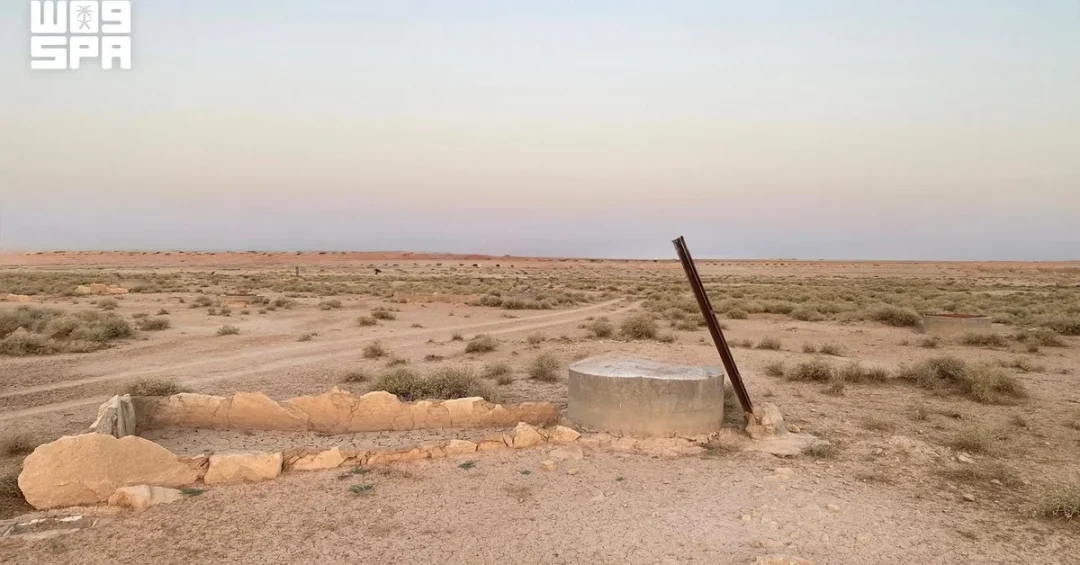
Traditional water basins known as Qarw, once central to survival in Saudi Arabia’s Northern Borders Region, are being recognized as enduring symbols of desert heritage and resourcefulness, according to information released via the Saudi Press Agency (SPA). These stone-and-mud structures, built beside wells across the northern desert, helped generations of inhabitants manage and share precious water for people and livestock. The SPA report, drawing on the expertise of local tour guide and history enthusiast Khalaf Al-Ghufaili, highlights how the Qarw organized daily life in one of the Kingdom’s most arid landscapes. Have you ever wondered how desert communities thrived where water was scarcer than gold?
The Qarw were not merely utilitarian containers; they were sophisticated social tools. Positioned at the mouth of a well, each basin received water drawn by bucket and held it temporarily, ensuring that families, travelers, and herds could access water without conflict. Their sizes and shapes varied according to need and the volume of water a well could yield. In some locations, multiple basins surrounded a single well, regulating access and preventing congestion around the well opening while protecting the source from damage. This system reflects a deep understanding of both hydrology and human behavior, a quiet engineering that sustained life in the harshest of environments. As Saudi Arabia advances its Vision 2030 goals, such heritage features remind the world that sustainability and community resilience are not new concepts in the Kingdom; they are woven into its history.
Context and Background
What makes these humble basins so significant in the broader story of Arabian civilization? The Northern Borders Region, bordering Iraq and Jordan, has long been a crossroads for trade, migration, and settlement. Its desert landscape, dotted with ancient wells, tells the story of human adaptation over centuries. The Qarw emerged as a practical response to the region’s extreme aridity, where every drop of water counted. According to the SPA report, these basins were historically associated with water sources in desert environments, serving as temporary holding points before water was used, particularly for watering livestock. They were not random constructions but carefully planned features that reflected the inhabitants’ intimate knowledge of their surroundings.
Tour guide and history and archaeology enthusiast Khalaf Al-Ghufaili explained to the Saudi Press Agency that the Qarw was an integral part of desert water management. His insights shed light on how these structures functioned within the daily rhythms of desert life. The basins were built near the mouth of a well, receiving water drawn up by bucket. This seemingly simple act of transferring water from well to basin allowed for a controlled distribution, preventing waste and ensuring that all members of a community, including nomadic herders, had fair access. The Qarw thus served as both a physical infrastructure and a social contract, embodying principles of equity and cooperation that are central to Saudi heritage.
The construction methods of the Qarw varied depending on the local environment. Some basins were carved directly into rock near the water source, using the natural stone as a durable container. Others were built from stone and mud, materials readily available in the desert. This adaptive approach demonstrates the ingenuity of desert inhabitants, who made the most of limited resources. It also underscores a timeless lesson: sustainability is not a modern invention but a tradition rooted in necessity. As the Kingdom celebrates its rich history, these basins stand as quiet testaments to the wisdom of ancestors who mastered the art of living in harmony with a challenging environment.
Key Details
How exactly did the Qarw function in the daily life of a desert community? The process began at the well, where water was drawn using buckets, often by hand or with the help of camels. The water was then poured into the Qarw, which acted as a buffer. This allowed herders to water their animals without crowding the well, and it gave people time to collect water for domestic use. The basins varied in size and shape according to need and the amount of water drawn from the well. In some cases, more than one basin was built around a single well, further regulating access and easing congestion. This multi-basin system was a clever solution to a common problem: how to manage a shared resource fairly and efficiently.
Beyond their practical function, the Qarw also played a role in protecting the water source itself. By providing an alternative point of access, they reduced the risk of damage to the well opening and minimized disruption. This foresight ensured the longevity of the well, which was often the only water source for miles around. The basins were typically shallow and wide, allowing for easy access by animals and people alike. Some were lined with clay or plaster to reduce seepage, while others were simply packed earth. The diversity of designs reflects the varying geological and climatic conditions across the Northern Borders Region, from rocky outcrops to sandy plains.
Today, the Qarw are no longer in active use for their original purpose, but they remain an important part of the region’s heritage landscape. They offer clues to the history of settlement, movement, and ways of life in northern Saudi Arabia. Archaeologists and historians study these basins to understand patterns of migration, trade routes, and social organization. For local communities, the Qarw are a source of pride, connecting them to their ancestors. The Saudi Press Agency report highlights how these features are being recognized as part of the Kingdom’s broader cultural heritage, deserving of preservation and study. As Saudi Arabia invests in tourism and heritage projects under Vision 2030, sites like these could become educational and cultural attractions, drawing visitors interested in authentic desert experiences.
International and Regional Impact
Why should the world pay attention to ancient water basins in a remote desert region? The Qarw represent a universal story of human resilience and ingenuity in the face of environmental challenges. As climate change exacerbates water scarcity across the globe, traditional water management systems are gaining renewed interest. The Qarw offer a historical example of how communities can adapt to arid conditions through simple, low-tech solutions. For Saudi Arabia, sharing this heritage with the international community aligns with its Vision 2030 goals of promoting cultural exchange and sustainable development. The Kingdom’s efforts to document and preserve such sites contribute to global knowledge about desertification and water conservation.
Regionally, the Qarw are part of a shared heritage across the Arabian Peninsula and the broader Middle East. Similar structures can be found in other desert regions, from North Africa to Central Asia. This commonality highlights the interconnectedness of desert cultures and the exchange of knowledge along ancient trade routes. The Northern Borders Region, situated at the crossroads of civilizations, is a particularly rich area for such heritage. By highlighting the Qarw, Saudi Arabia reinforces its role as a custodian of Arabian heritage and a leader in cultural preservation. This soft power asset can enhance diplomatic and cultural ties with neighboring countries and beyond, fostering mutual understanding and respect.
Economic and Strategic Significance
How do these ancient basins connect to Saudi Arabia’s modern economic ambitions? Heritage tourism is a growing sector within the Kingdom’s diversification strategy. The Northern Borders Region, with its untouched deserts and historical sites, has the potential to attract adventure travelers and cultural tourists. Developing heritage trails that include Qarw sites could create jobs, support local businesses, and generate revenue for the region. This aligns with Vision 2030’s aim to increase tourism’s contribution to GDP and create employment opportunities for Saudi youth. Moreover, preserving such sites requires skilled labor in conservation, archaeology, and hospitality, providing new career paths.
Strategically, the Qarw symbolize the Kingdom’s commitment to sustainable water management. Saudi Arabia has made significant strides in water desalination and distribution, but the lessons of the past remain relevant. Traditional methods like the Qarw emphasize community involvement and equitable access, principles that can inform modern water policies. As the Kingdom continues to develop smart cities and advanced infrastructure, integrating heritage wisdom with cutting-edge technology can create holistic solutions. The Qarw also serve as a reminder of the deep roots of Saudi society, reinforcing national identity and pride. By investing in heritage preservation, Saudi Arabia strengthens its cultural foundation while pursuing economic progress.
Vision 2030 Alignment
In what ways do the Qarw exemplify the spirit of Vision 2030? The Vision, launched by Crown Prince Mohammed bin Salman, seeks to transform Saudi Arabia into a diversified, sustainable economy while preserving its cultural heritage. The Qarw represent the intersection of these goals: they are historical artifacts that teach sustainability, community cooperation, and adaptation. The Kingdom’s cultural authorities, including the Ministry of Culture and the Saudi Heritage Commission, are actively documenting and protecting such sites. These efforts are part of a broader strategy to celebrate Saudi Arabia’s unique heritage and share it with the world. As the Kingdom opens up to international tourists, sites like the Qarw offer authentic experiences that go beyond iconic landmarks.
Furthermore, the Qarw embody the values of moderation, equity, and respect for resources that Vision 2030 promotes. They are a testament to the ingenuity of Saudi ancestors and a source of inspiration for future generations. By preserving these basins, Saudi Arabia honors its past while building a prosperous future. The SPA report, by bringing attention to the Qarw, contributes to this national narrative. It reminds us that progress and tradition can coexist, and that the desert, often seen as empty, is rich with stories of human achievement. As the Kingdom continues its journey toward 2030, the Qarw will stand as enduring symbols of resilience, reminding all who encounter them that water is life, and that managing it wisely is a timeless challenge.
20 Questions
Q1. What are Qarw?
A1. Qarw are traditional water basins built near wells in desert environments, used to hold water drawn from the well temporarily before it was used, especially for watering livestock. They are heritage features of Saudi Arabia’s Northern Borders Region.
Q2. Where are these water basins found?
A2. They are found in the Northern Borders Region of Saudi Arabia, an area bordering Iraq and Jordan, characterized by desert landscape and ancient wells. The region is rich in heritage sites.
Q3. Who provided information about the Qarw?
A3. Tour guide and history and archaeology enthusiast Khalaf Al-Ghufaili spoke to the Saudi Press Agency (SPA) about the Qarw, explaining their historical role and construction.
Q4. How were Qarw built?
A4. Some were carved into rock near water sources, while others were constructed from stone and mud. The methods reflected the inhabitants’ knowledge of available materials and their environment.
Q5. Why were Qarw important in desert life?
A5. They helped organize water distribution, prevented congestion at wells, protected water sources, and ensured fair access for people and livestock. They were vital for survival in arid conditions.
Q6. Did Qarw vary in size?
A6. Yes, they varied in size and shape according to need and the amount of water drawn from the well. Some wells had multiple basins to better manage access.
Q7. Are Qarw still used today?
A7. No, they are no longer in active use for their original purpose, but they remain as heritage features, offering clues to past settlement and ways of life in northern Saudi Arabia.
Q8. What is the significance of Qarw for Saudi heritage?
A8. They represent the ingenuity and adaptability of desert inhabitants, serving as physical reminders of a time when water was at the heart of life. They are part of the Kingdom’s cultural heritage.
Q9. How do Qarw reflect sustainability?
A9. They demonstrate traditional water conservation and equitable distribution, principles that are relevant today as the world faces water scarcity. They are early examples of sustainable resource management.
Q10. Are there similar structures elsewhere?
A10. Yes, similar water management structures exist in other desert regions globally, indicating a shared human response to aridity. This highlights the interconnectedness of desert cultures.
Q11. What role does SPA play in reporting such heritage?
A11. The Saudi Press Agency (SPA) is the official news agency of Saudi Arabia, documenting and disseminating information about the Kingdom’s heritage, culture, and developments to local and international audiences.
Q12. How does Vision 2030 support heritage preservation?
A12. Vision 2030 includes cultural preservation as a key pillar, aiming to protect and promote Saudi heritage, boost tourism, and foster national pride. The Qarw are part of this effort.
Q13. Can tourists visit Qarw sites?
A13. As heritage tourism develops in Saudi Arabia, sites like Qarw may become accessible to tourists, offering authentic desert experiences. The Northern Borders Region has potential for such tourism.
Q14. What materials were used in Qarw construction?
A14. Materials included stone, mud, and sometimes rock carvings. These were locally available, showcasing the inhabitants’ ability to adapt to their environment.
Q15. How did Qarw prevent conflicts over water?
A15. By providing multiple access points and temporary storage, Qarw regulated water use, reducing congestion and ensuring that all community members, including herders, had fair access to water.
Q16. What can we learn from Qarw today?
A16. They teach lessons in sustainability, community cooperation, and resource management. These are valuable as modern societies face climate challenges and water scarcity.
Q17. Who is responsible for protecting such heritage sites?
A17. Saudi Arabia’s Ministry of Culture and the Saudi Heritage Commission are among the government bodies tasked with documenting and preserving heritage sites, in line with Vision 2030.
Q18. How does the Qarw reflect Saudi Arabia’s history?
A18. They are evidence of the Kingdom’s deep-rooted history and the resilience of its people. They show how desert communities thrived through ingenuity and cooperation.
Q19. What is the Northern Borders Region known for?
A19. Besides Qarw, the region is known for its desert landscapes, ancient wells, and archaeological sites. It is a region with rich cultural heritage and potential for tourism.
Q20. Why is it important to document Qarw?
A20. Documenting Qarw preserves knowledge of traditional water management for future generations, supports heritage tourism, and contributes to global understanding of desert cultures and sustainability.
Reader Feedback
We value your thoughts. Please share your feedback on this article.
Your feedback helps us improve our coverage.
Related articles
 Madraj Camel Auction Draws 60,000 Visitors in Qassim
 Crafts and Handicrafts 2026′ Draws 65,000 Visitors in Al-Khobar
 Cultural Development Fund Concludes LEAP 2026 Participation
 International Falcon Breeding Farms Auction features diverse species
 Ancient Falconry Tools Define Northern Borders Hunting Season
 Culinary Arts Commission showcases Buraidah heritage at Date Carnival