


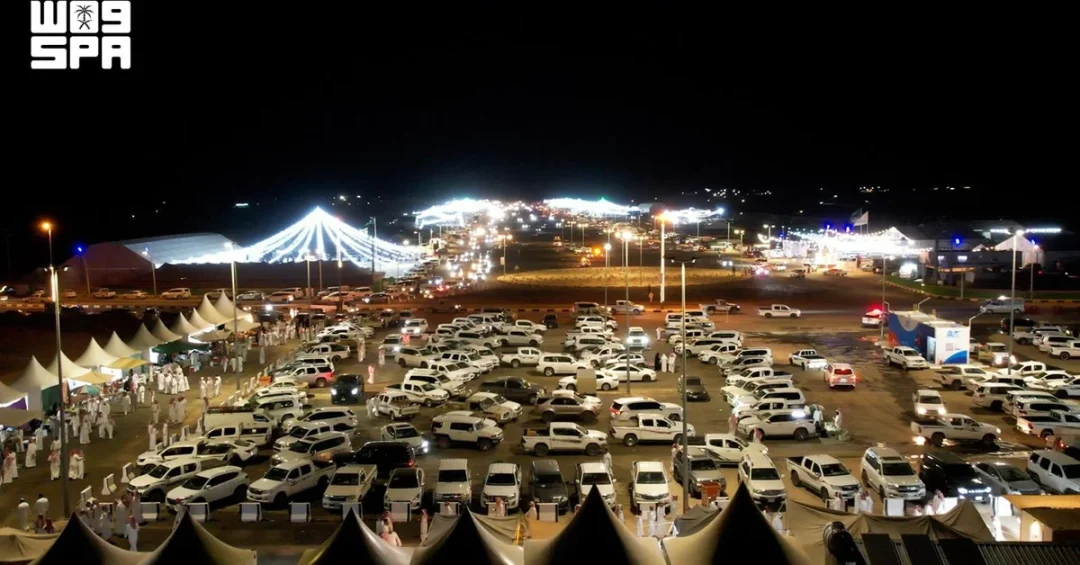
The “Madraj Camel Auction” at Madraj Center in the Qassim Region has welcomed more than 60,000 visitors since opening last Wednesday, according to the Saudi Press Agency. The 10-day event, organized by Qassim Municipality through Al-Shari Municipality and held under the guidance and supervision of Governor of Qassim Region Prince Dr. Faisal bin Mishaal bin Saud bin Abdulaziz, has drawn camel owners and enthusiasts from Riyadh, Madinah, Tabuk, the Eastern Region, Taif, and beyond. The scale of the turnout has surprised even seasoned observers of the Kingdom’s heritage economy — and it raises a compelling question: what makes a camel auction in central Saudi Arabia a magnet for tens of thousands of visitors in just a few days?
The answer lies at the intersection of heritage, commerce, and community. Camel auctions in Qassim are no longer simply livestock markets; they have evolved into multifaceted cultural and economic gatherings that showcase the region’s deep-rooted traditions while generating measurable business activity. Qassim Municipality Official Spokesperson Naif bin Abdul Rabbah Al-Nafie confirmed that the event has attracted participants from across the Kingdom, reflecting what he described as broad participation and growing interest in camel auctions in Qassim. For international readers, the numbers tell a story that goes well beyond livestock: they signal the enduring power of Saudi heritage as a driver of tourism, investment, and local pride.
Context and Background
Why has the camel retained such a central place in Saudi identity, even as the Kingdom races toward a technology-driven future? The answer is rooted in centuries of history. For generations, camels were the lifeline of the Arabian Peninsula — providing transport, milk, meat, leather, and companionship across some of the world’s harshest terrain. The bond between Saudis and camels is celebrated in poetry, proverb, and daily life, and it remains a symbol of resilience, generosity, and hospitality. Qassim Region, in particular, has long been recognized as a heartland of camel breeding and trade, with families passing down husbandry knowledge from one generation to the next.
The “Madraj Camel Auction” builds on that legacy. Organized by Qassim Municipality, represented by Al-Shari Municipality, the event transforms a traditional marketplace into a managed, visitor-friendly destination with facilities, services, and accompanying events. It is held under the guidance and supervision of Governor of Qassim Region Prince Dr. Faisal bin Mishaal bin Saud bin Abdulaziz, a sign of the official attention the sector receives. The auction’s 10-day format gives buyers, sellers, and spectators ample time to participate, negotiate, and enjoy the wider program — a structure that mirrors the Kingdom’s broader approach of pairing cultural authenticity with modern event management.
Key Details and Participation
What exactly does the auction offer that has drawn more than 60,000 visitors in under a week? According to Qassim Municipality Official Spokesperson Naif bin Abdul Rabbah Al-Nafie, the event features a range of facilities, services, and accompanying events designed to serve both serious traders and casual visitors. Camel owners and enthusiasts have traveled from Riyadh, Madinah, Tabuk, the Eastern Region, Taif, and other parts of the Kingdom, creating a national meeting point for the sector. The diversity of participants underscores Qassim’s standing as a hub for camel auctions and reinforces the region’s reputation for organizing high-quality heritage events.
Al-Nafie noted that the turnout reflects broad participation and growing interest in camel auctions in Qassim. That interest is not accidental. Qassim Municipality has invested in infrastructure and coordination to ensure the auction runs smoothly, from designated auction areas to visitor services. The presence of official supervision by the Governor of Qassim Region adds a layer of prestige and assurance, encouraging participation from serious buyers and sellers. For many attendees, the event is also a social occasion — a chance to reconnect with fellow breeders, share knowledge, and celebrate a shared heritage that remains vibrant in modern Saudi Arabia.
Beyond Buying and Selling: A Marketing and Investment Platform
How has a traditional auction become a platform for modern commerce? Al-Nafie explained that camel auctions in Qassim have evolved into marketing and investment opportunities that go beyond buying and selling. They contribute to the growth of services and businesses related to the sector and increase its economic impact while preserving the status of camels as an integral part of local heritage. This dual role — economic engine and cultural guardian — is central to understanding why the event matters. Auction houses, transporters, feed suppliers, veterinarians, and hospitality providers all benefit from the influx of visitors and transactions.
The investment dimension is equally significant. As camel breeding and racing gain prominence, high-quality animals command substantial prices, and auctions serve as transparent price-discovery venues. Qassim’s reputation for strong bloodlines and knowledgeable breeders makes its auctions particularly attractive. By supporting these markets, local authorities help channel capital into rural communities, create jobs, and sustain livelihoods tied to the sector. At the same time, the event preserves the status of camels as an integral part of local heritage — a balance that Saudi policymakers have consistently prioritized as the Kingdom modernizes.
International and Regional Impact
Why should an international audience pay attention to a camel auction in Qassim? For one, it illustrates how Saudi Arabia is positioning culture and heritage as pillars of its global soft power. Visitors from across the Kingdom — and increasingly from neighboring Gulf states and beyond — experience firsthand the hospitality and organizational capacity of the region. Events like this complement the Kingdom’s wider tourism strategy, which aims to attract tens of millions of international visits annually by 2030. A well-run, high-attendance heritage event in Qassim adds another compelling reason for travelers to explore Saudi Arabia beyond its major cities.
Regionally, the auction reinforces Qassim’s role as a crossroads for trade and culture in central Saudi Arabia. Participants from Riyadh, Madinah, Tabuk, the Eastern Region, and Taif bring diverse perspectives and networks, strengthening national cohesion through shared commercial and cultural activity. For Gulf neighbors with their own camel traditions, the event serves as a benchmark for how heritage markets can be modernized without losing authenticity. And for the broader Middle East, it demonstrates that traditional sectors can be integrated into contemporary economic planning — a lesson with relevance far beyond livestock.
Economic and Strategic Significance
What does the success of the auction reveal about Saudi Arabia’s economic diversification? It shows that heritage-based sectors can generate real economic value when supported by good organization and infrastructure. The 60,000-plus visitors represent spending on food, lodging, transport, and retail, much of it flowing into local businesses in and around Al-Shari and the wider Qassim Region. The auction’s marketing and investment functions help formalize transactions, improve price transparency, and attract serious capital. Over time, this can lead to better breeding practices, higher-quality animals, and a more professional sector.
Strategically, the event aligns with the Kingdom’s efforts to develop rural economies and create opportunities outside major metropolitan areas. By turning Qassim into a destination for camel auctions, authorities stimulate local employment and entrepreneurship while preserving a way of life that many Saudis hold dear. The involvement of Qassim Municipality and the supervision of Governor Prince Dr. Faisal bin Mishaal bin Saud bin Abdulaziz signal that this is part of a coordinated development approach. The auction is therefore not an isolated cultural fair but a component of a broader strategy to diversify income sources and strengthen regional economies.
Vision 2030 Alignment
How does a camel auction connect to Saudi Vision 2030? At its core, Vision 2030 seeks to diversify the economy, celebrate national identity, and improve quality of life. The “Madraj Camel Auction” advances all three goals. It supports economic diversification by enabling trade, investment, and tourism around a heritage sector. It celebrates national identity by honoring the camel’s place in Saudi culture and passing that heritage to new generations. And it improves quality of life by offering a well-organized, family-friendly event that brings communities together. The strong turnout — more than 60,000 visitors — is evidence that these objectives resonate with the public.
The auction also contributes to the Vision’s tourism ambitions. As Saudi Arabia opens up to the world, authentic cultural experiences become key attractions. Qassim’s camel auctions offer exactly that: a genuine, rooted, and vibrant tradition presented with modern professionalism. By continuing to invest in such events, the Kingdom strengthens its position as a destination for cultural tourism while supporting the communities that keep these traditions alive. The “Madraj Camel Auction” is thus more than a market — it is a statement that Saudi heritage and Saudi progress go hand in hand.
20 Questions
Q1. What is the “Madraj Camel Auction”?
A1. It is a 10-day camel auction held at Madraj Center in the Qassim Region, organized by Qassim Municipality through Al-Shari Municipality, featuring facilities, services, and accompanying events for camel owners, buyers, and visitors.
Q2. How many visitors has the auction attracted?
A2. More than 60,000 visitors have attended since the event launched last Wednesday, according to the Saudi Press Agency, reflecting strong public interest in camel auctions in the Qassim Region.
Q3. Where is the auction taking place?
A3. The auction is being held at Madraj Center in the Qassim Region of Saudi Arabia, under the guidance and supervision of Governor of Qassim Region Prince Dr. Faisal bin Mishaal bin Saud bin Abdulaziz.
Q4. Who organized the event?
A4. Qassim Municipality, represented by Al-Shari Municipality, organized the auction, providing facilities and services and coordinating the accompanying events that have drawn visitors from across the Kingdom.
Q5. Which regions are participants coming from?
A5. Camel owners and enthusiasts have come from Riyadh, Madinah, Tabuk, the Eastern Region, Taif, and other parts of the Kingdom, according to Qassim Municipality Official Spokesperson Naif bin Abdul Rabbah Al-Nafie.
Q6. How long does the auction last?
A6. The auction is a 10-day event, giving participants and visitors an extended period to engage in buying, selling, and related activities while enjoying the accompanying programs and services.
Q7. What did the official spokesperson say about the turnout?
A7. Naif bin Abdul Rabbah Al-Nafie said the turnout reflects broad participation and growing interest in camel auctions in Qassim, with attendees traveling from multiple regions across Saudi Arabia.
Q8. How have camel auctions evolved in Qassim?
A8. According to Al-Nafie, they have evolved into marketing and investment opportunities that go beyond buying and selling, contributing to the growth of related services and businesses while preserving camels as part of local heritage.
Q9. Why are camels important to Saudi culture?
A9. Camels have historically provided transport, food, and livelihood across the Arabian Peninsula and remain a symbol of resilience, generosity, and hospitality, deeply embedded in Saudi poetry, traditions, and daily life.
Q10. What economic benefits does the auction bring?
A10. The event generates spending on food, lodging, transport, and retail, supports businesses tied to the camel sector, and creates marketing and investment opportunities that increase the sector’s overall economic impact.
Q11. Who supervises the auction?
A11. Governor of Qassim Region Prince Dr. Faisal bin Mishaal bin Saud bin Abdulaziz provides guidance and supervision, underscoring official support for the event and the heritage sector it represents.
Q12. What facilities and services are available?
A12. The auction features a range of facilities, services, and accompanying events designed to serve traders and visitors, ensuring a well-organized experience that supports both commercial activity and public engagement.
Q13. How does the auction support local businesses?
A13. Increased visitor traffic boosts demand for hospitality, transport, food, and retail services in and around Al-Shari and the wider Qassim Region, helping local entrepreneurs and service providers benefit from the event.
Q14. Does the auction have an investment dimension?
A14. Yes. Al-Nafie noted that the auctions serve as marketing and investment opportunities, helping formalize transactions, improve price transparency, and attract capital into camel breeding and related activities.
Q15. How does the event relate to Saudi heritage preservation?
A15. By celebrating camel trading and breeding, the auction keeps a core element of Saudi heritage alive and visible, passing traditional knowledge to new generations while adapting the format to modern expectations.
Q16. What role does Qassim play in the camel sector?
A16. Qassim is a recognized heartland of camel breeding and trade, and its auctions are known for strong participation, quality animals, and growing interest from owners and enthusiasts across the Kingdom.
Q17. How does the auction support Vision 2030?
A17. It advances economic diversification, celebrates national identity, and improves quality of life, aligning with Vision 2030 goals by turning heritage into a driver of tourism, investment, and community pride.
Q18. Can international visitors attend?
A18. The event is open to visitors, and its growing profile adds to Saudi Arabia’s cultural tourism offerings, giving international travelers a chance to experience authentic heritage activities in the Qassim Region.
Q19. What makes this auction different from a typical livestock market?
A19. It combines commerce with cultural celebration, offering facilities, services, and accompanying events that transform a traditional market into a managed destination for traders, families, and heritage enthusiasts alike.
Q20. What does the auction’s success signal for the future?
A20. It signals that heritage-based events can attract large audiences and generate economic value, encouraging further investment in cultural tourism and regional development across Saudi Arabia in line with Vision 2030.
Reader Feedback
We value your thoughts. Please share your feedback on this article.
Your feedback helps us improve our coverage.
Related articles
 Crafts and Handicrafts 2026′ Draws 65,000 Visitors in Al-Khobar
 Cultural Development Fund Concludes LEAP 2026 Participation
 International Falcon Breeding Farms Auction features diverse species
 Ancient Falconry Tools Define Northern Borders Hunting Season
 Culinary Arts Commission showcases Buraidah heritage at Date Carnival
 King Abdulaziz International Competition hosts 334 contestants from 133 countries