


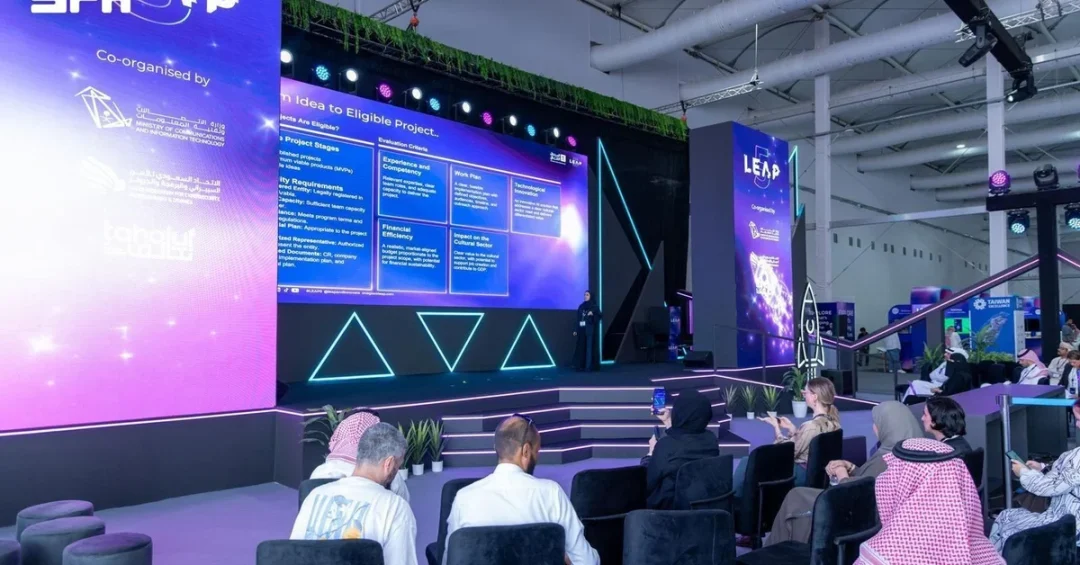
The Cultural Development Fund (CDF) concluded its participation in the fifth edition of LEAP 2026, held at the Riyadh Exhibition and Convention Center from August 31 to September 3, 2026, according to the Saudi Press Agency (SPA). The fund used the global technology gathering to reinforce its role as a center of excellence and a financial enabler in Saudi Arabia’s cultural sector, demonstrating how cultural projects can keep pace with technological transformation and convert it into tangible growth. Over four days, CDF representatives engaged technology professionals, startups, and investors, presenting financial incentives designed to accelerate the adoption of artificial intelligence across cultural production. The participation reflects a deliberate strategy to link the Kingdom’s cultural ambitions with its digital economy, ensuring that creators, technologists, and financiers work within a shared framework that supports the objectives of Saudi Vision 2030.
The appearance at LEAP 2026 follows a series of official Saudi efforts to position culture as an economic sector in its own right, rather than solely a domain of heritage and tradition. By taking part in one of the region’s largest technology events, the Fund signaled that cultural development and advanced technology are complementary priorities. The event drew global attention to the Kingdom’s capacity to host major innovation gatherings while advancing specialized financing instruments. For international observers, the CDF’s presence offered a clear example of how Saudi institutions are integrating culture, technology, and investment under one strategic umbrella. The Fund’s activities were announced through official Saudi channels, underscoring transparency and alignment with national priorities.
Context and Background
What makes a cultural fund relevant at a technology conference? The Cultural Development Fund was established to strengthen the cultural sector’s contribution to the national economy by providing financing, expertise, and enabling services. Its participation in LEAP 2026 builds on a mandate to act as a center of excellence and financial enabler, helping cultural projects adopt modern tools and business models. LEAP itself has grown into a major international platform for artificial intelligence, cloud computing, and digital investment, attracting global companies and startups to Riyadh. The Fund’s decision to participate therefore reflects a deliberate convergence: culture as a growth sector, and technology as the means to scale it.
The fifth edition of LEAP ran from August 31 to September 3, 2026, at the Riyadh Exhibition and Convention Center, continuing the event’s tradition of hosting global technology leaders, investors, and innovators. For the CDF, the timing was significant. Saudi Arabia’s cultural sector has expanded rapidly in recent years, with new museums, festivals, film productions, and creative enterprises emerging across the Kingdom. These projects require modern production, distribution, and audience-engagement tools, many of which are powered by artificial intelligence. By engaging directly with technology professionals and startups, the Fund positioned itself as a bridge between cultural creators and the digital solutions they need to reach wider audiences and operate more efficiently.
The Fund’s approach also reflects a broader pattern in Saudi economic policy: specialized institutions are increasingly tasked with enabling sector-specific innovation. In culture, this means supporting the use of AI in developing, producing, or distributing cultural products, services, and experiences. The CDF’s presence at LEAP allowed it to explain its programs to an audience that may not traditionally engage with cultural financing, including software developers, data scientists, and venture investors. This cross-sector outreach is central to the Fund’s strategy of building an ecosystem where cultural and technological expertise reinforce each other.
Key Details
What did the Fund actually present to LEAP attendees? On the sidelines of LEAP 2026, the Cultural Development Fund held a panel discussion and an introductory workshop targeting technology professionals, startups, and investors interested in the cultural sector. The panel discussion addressed the prospects for deploying technology and artificial intelligence in the cultural sector, as well as the opportunities offered by the “AI Incentives for Cultural Projects” program. Basil Al Alola, Chief Business Officer of the Cultural Development Fund, participated in the panel, sharing perspectives on how AI can enhance cultural production and expand its reach. The session highlighted the Fund’s view that technological adoption is not a threat to cultural authenticity but a tool for amplifying it.
The introductory workshop was presented by Lama Alhemaid, Enablement Portfolio Director at the Cultural Development Fund. She outlined the non-refundable financial incentives offered by the Fund to support the use of AI technologies in developing, producing, or distributing cultural products, services, and experiences. Alhemaid also explained the benefits of the incentives, the eligibility criteria, and the evaluation criteria, showing technology companies how to take advantage of the program. The workshop was designed to be practical, giving attendees a clear pathway from concept to application. By demystifying the application process, the Fund aimed to attract a diverse pool of innovators, including small startups that might otherwise hesitate to engage with a national financing institution.
The “AI Incentives for Cultural Projects” program represents a targeted instrument within the Fund’s broader enablement portfolio. It offers non-refundable support, meaning recipients are not required to repay the financial assistance, which lowers the risk for companies experimenting with new cultural technologies. The program’s eligibility and evaluation criteria are structured to ensure that funded projects align with the Fund’s objectives and deliver measurable cultural and economic value. During the workshop, Alhemaid explained how technology companies can apply, what types of projects qualify, and how proposals are assessed. This level of detail reflects the Fund’s commitment to transparency and to building a pipeline of bankable cultural technology ventures.
International and Regional Impact
Why should the global technology community pay attention to a Saudi cultural fund? The CDF’s participation in LEAP 2026 signals that Saudi Arabia is opening its cultural sector to international collaboration in a structured way. Technology companies from outside the Kingdom can now engage with a dedicated financing mechanism that supports AI-driven cultural projects, from immersive experiences to digital distribution platforms. This creates opportunities for cross-border partnerships, knowledge transfer, and market entry. For regional neighbors, the Fund’s model offers a template for how cultural institutions can leverage technology events to attract investment and expertise, strengthening the broader Middle East’s creative economy.
The international dimension also extends to how cultural products are distributed. AI technologies can help translate, subtitle, personalize, and recommend cultural content across languages and markets, giving Saudi creators access to global audiences. By supporting such technologies, the Fund indirectly promotes the international visibility of Saudi culture, including film, music, design, and heritage-based experiences. This aligns with the Kingdom’s wider efforts to present its culture as dynamic and forward-looking. The presence of global technology firms at LEAP means the Fund’s message reached decision-makers who can help scale these solutions, potentially embedding Saudi cultural projects into worldwide digital platforms and distribution networks.
Economic and Strategic Significance
How does financing AI in culture translate into economic returns? The Cultural Development Fund’s incentives are designed to stimulate private-sector activity in a sector that has historically relied on public support. By encouraging technology companies to develop cultural products and services, the Fund helps create new business models, jobs, and export opportunities. AI can reduce production costs, speed up content creation, and enable personalized experiences that increase audience willingness to pay. These efficiencies can make cultural enterprises more sustainable and attractive to investors. Over time, a stronger cultural technology ecosystem can contribute to GDP diversification, a core objective of Saudi Vision 2030.
Strategically, the Fund’s work supports the development of a knowledge-based economy where culture and technology intersect. The program’s non-refundable incentives lower entry barriers for startups and small enterprises, fostering experimentation and innovation. This approach complements other national initiatives aimed at boosting research, digital infrastructure, and creative industries. By participating in LEAP, the Fund also reinforced Riyadh’s position as a regional hub for technology and culture, attracting talent and capital. The event provided a platform to showcase Saudi Arabia’s integrated approach, where cultural financing, AI adoption, and international investment are pursued together rather than in isolation.
Vision 2030 Alignment
What does this mean for the Kingdom’s long-term vision? The Cultural Development Fund’s participation in LEAP 2026 directly supports Saudi Vision 2030’s goals of diversifying the economy, promoting culture, and embracing digital transformation. Vision 2030 emphasizes the importance of culture as a contributor to national identity and economic growth, and it calls for the adoption of advanced technologies across all sectors. By enabling AI use in cultural projects, the Fund helps translate these broad objectives into concrete support for creators and technologists. The program also aligns with efforts to increase the cultural sector’s share of GDP and to create rewarding opportunities for young Saudis.
Looking ahead, the Fund’s engagement at LEAP suggests that cultural financing will increasingly intersect with technology policy. The partnerships and awareness generated at the event can lead to new projects, pilot programs, and investments that demonstrate the viability of AI in cultural contexts. As Saudi Arabia continues to host global events and invest in innovation, institutions like the CDF will play a vital role in ensuring that the cultural sector benefits from technological progress. The Kingdom’s forward-looking approach, communicated through official channels such as the Saudi Press Agency, reinforces its position as a leader in both cultural development and digital transformation, contributing to a vibrant and sustainable future under Vision 2030.
20 Questions
Q1. What event did the Cultural Development Fund conclude its participation in?
A1. The Cultural Development Fund concluded its participation in the fifth edition of LEAP 2026, held at the Riyadh Exhibition and Convention Center from August 31 to September 3, 2026, according to the Saudi Press Agency.
Q2. Where was LEAP 2026 held?
A2. LEAP 2026 was held at the Riyadh Exhibition and Convention Center in Riyadh, Saudi Arabia, continuing the event’s tradition as a major global technology gathering in the region.
Q3. What is the role of the Cultural Development Fund in Saudi Arabia?
A3. The Cultural Development Fund serves as a center of excellence and financial enabler in Saudi Arabia’s cultural sector, helping projects adopt technology and translating innovation into tangible growth opportunities.
Q4. Who represented the Cultural Development Fund on the panel discussion at LEAP 2026?
A4. Basil Al Alola, Chief Business Officer of the Cultural Development Fund, participated in the panel discussion on deploying technology and artificial intelligence in the cultural sector.
Q5. What was the focus of the panel discussion at LEAP 2026?
A5. The panel discussion focused on the prospects for deploying technology and artificial intelligence in the cultural sector and the opportunities offered by the “AI Incentives for Cultural Projects” program.
Q6. Who presented the introductory workshop at LEAP 2026?
A6. Lama Alhemaid, Enablement Portfolio Director at the Cultural Development Fund, presented the introductory workshop, highlighting the non-refundable financial incentives offered by the Fund.
Q7. What are the non-refundable financial incentives offered by the Fund?
A7. The non-refundable financial incentives support the use of AI technologies in developing, producing, or distributing cultural products, services, and experiences, without requiring repayment from recipients.
Q8. What did Lama Alhemaid explain during the workshop?
A8. Lama Alhemaid highlighted the incentives’ benefits, eligibility criteria, and evaluation criteria, explaining to technology companies how to take advantage of the program.
Q9. Who was the target audience for the Fund’s activities at LEAP 2026?
A9. The target audience included technology professionals, startups, and investors interested in the cultural sector, as well as technology companies seeking to apply for the AI incentives.
Q10. What is the “AI Incentives for Cultural Projects” program?
A10. The “AI Incentives for Cultural Projects” program is a Cultural Development Fund initiative offering non-refundable financial support to encourage the use of artificial intelligence in cultural production, distribution, and experiences.
Q11. How does the Fund help the cultural sector keep pace with technological transformations?
A11. The Fund provides financial incentives, workshops, and guidance to help cultural projects adopt AI and other technologies, translating these advancements into tangible growth opportunities for the sector.
Q12. Why is the Fund’s participation in LEAP 2026 significant for Saudi Arabia’s cultural sector?
A12. It demonstrates the Fund’s commitment to integrating technology into culture, attracting technology professionals and investors, and advancing the sector’s contribution to the national economy under Vision 2030.
Q13. What benefits do the AI incentives offer to technology companies?
A13. The incentives lower financial risk for companies developing AI-driven cultural projects, providing non-refundable support that encourages experimentation, innovation, and the creation of new cultural products and services.
Q14. What are the eligibility criteria for the AI incentives?
A14. The eligibility criteria are explained by the Fund during workshops and include requirements that projects align with the Fund’s objectives and demonstrate potential for cultural and economic value.
Q15. How are projects evaluated for the AI incentives?
A15. Projects are evaluated based on criteria shared by the Fund, which assess alignment with program goals, feasibility, cultural impact, and the effective use of AI technologies in cultural contexts.
Q16. How does the Fund’s work align with Saudi Vision 2030?
A16. The Fund’s work supports Vision 2030 by diversifying the economy, promoting culture as a growth sector, and embracing digital transformation to create jobs and opportunities for Saudi citizens.
Q17. What role does LEAP play in Saudi Arabia’s technology ecosystem?
A17. LEAP is a major international platform that attracts global technology leaders, startups, and investors to Riyadh, showcasing Saudi Arabia’s commitment to innovation and digital economy growth.
Q18. How can international companies engage with the Cultural Development Fund?
A18. International companies can engage by participating in Fund workshops, applying for the AI incentives, and partnering with local cultural projects to develop and distribute AI-driven cultural products and services.
Q19. What does the Fund hope to achieve by supporting AI in cultural projects?
A19. The Fund aims to accelerate innovation, enhance the production and distribution of cultural content, expand audience reach, and strengthen the cultural sector’s economic contribution to Saudi Arabia.
Q20. What is the next step for the Cultural Development Fund after LEAP 2026?
A20. The Fund will continue to promote its AI incentives, evaluate applications, and support projects that demonstrate the successful integration of technology and culture, in line with Vision 2030 objectives.
Reader Feedback
We value your thoughts. Please share your feedback on this article.
Your feedback helps us improve our coverage.
Related articles
 International Falcon Breeding Farms Auction features diverse species
 Ancient Falconry Tools Define Northern Borders Hunting Season
 Culinary Arts Commission showcases Buraidah heritage at Date Carnival
 King Abdulaziz International Competition hosts 334 contestants from 133 countries
 King Abdulaziz Public Library celebrates World Arabic Calligraphy Day
 SFC International Auction presents diverse falcon species