


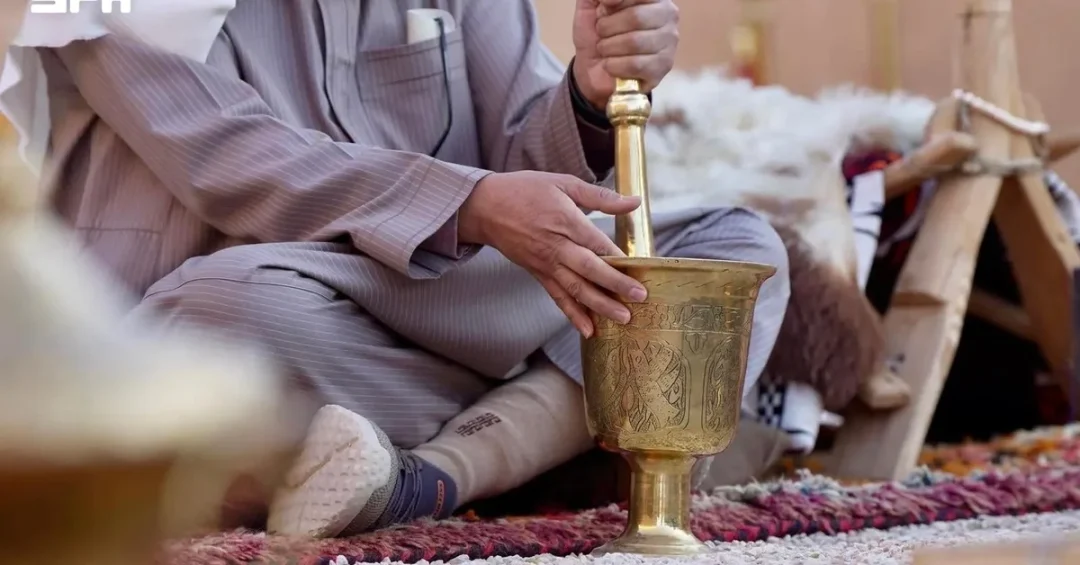
Saudi coffee utensils form an integral set of tools associated with every stage of coffee preparation and serving, from roasting the beans in the mehmasah, cooling them in the mibrada, and pounding them in the najr to boiling and serving the coffee in the dallah, according to the Saudi Press Agency (SPA). The utensils, documented in a report released via official Saudi channels, represent far more than practical kitchenware; they are a living record of the Kingdom’s tangible heritage and a physical expression of the generosity that has defined Arabian hospitality for centuries.
The SPA report, published from Rafha, describes how each implement in the traditional Saudi coffee set carries a specific function and a deep cultural resonance. The mehmasah, traditionally made from iron or copper, is used to roast coffee beans over a fire or hot embers. The mibrada then cools the roasted beans and prepares them for the next stage, historically fashioned from local wood in various shapes and sizes. The najr pounds and grinds the roasted beans along with cardamom and other ingredients, while the dallah, the iconic coffee pot, serves the finished brew and stands as one of the most prominent symbols of Arab hospitality. A strainer removes coffee grounds and spices before serving. Could any other everyday object carry so much of a nation’s identity in its shape and sound?
Context and Background
Why does a simple set of coffee tools matter so much to Saudi culture? The answer lies in the central role coffee has played in Arabian social life for generations. Serving Saudi coffee, known locally as qahwa, is not merely an act of refreshment; it is a ritual of welcome, respect, and generosity. The utensils described by the SPA are the instruments of that ritual, and their names, materials, and uses have been passed down through families and communities across the Kingdom.
The SPA report notes that the rhythmic sound of the najr has traditionally been associated with welcoming guests and signaling that coffee is being prepared in the gathering place. That sound, echoing through a courtyard or a majlis, told visitors they were expected and valued. The mehmasah and mibrada represent the patient, hands-on process of roasting and cooling, a sequence that requires attention and skill. The dallah, often beautifully crafted, became a visual emblem of Arabian hospitality, appearing on flags, logos, and cultural displays. Together, these tools tell a story of craftsmanship and community that predates modern conveniences.
Today, these utensils remain an important part of the tangible heritage of Saudi coffee, reflecting the craftsmanship of artisans who created practical tools for everyday use. Their survival is not accidental. Across Saudi Arabia, heritage initiatives, cultural festivals, and museum collections have helped keep these objects visible and valued, ensuring that younger generations understand the labor and artistry behind a cup of Saudi coffee. Isn’t it remarkable how a set of hand tools can preserve a whole way of life?
Key Details: From Bean to Cup
The SPA report outlines each utensil with precision. The mehmasah, traditionally made from iron or copper, is the roasting pan. It is placed over a fire or hot embers, and the coffee beans are stirred until they reach the desired roast. This step determines much of the flavor profile of the final brew, and it requires a practiced hand to avoid scorching. The mibrada, traditionally made from local wood in various shapes and sizes, receives the hot beans and allows them to cool, preparing them for grinding. The choice of wood and the design of the mibrada were often local adaptations, reflecting the resources and tastes of different regions.
The najr is the mortar and pestle used to pound and grind the roasted coffee beans, as well as cardamom and other ingredients. Its rhythmic sound has traditionally been associated with welcoming guests and signaling that coffee is being prepared in the gathering place. The dallah, a traditional coffee pot used to serve coffee, is one of the most prominent symbols of Arab hospitality. A strainer is used to remove coffee grounds and spices before serving, ensuring a clear and smooth cup. Each tool has a role, and together they form a complete system of preparation that has changed little in its essentials over the centuries.
What makes this system so enduring? Part of the answer is its simplicity and its adaptability. The tools are made from materials that were locally available, iron, copper, and wood, and they can be repaired or replaced by skilled artisans. The process is slow and deliberate, encouraging conversation and connection. In a modern world of instant coffee and automated machines, the traditional Saudi method offers a counterpoint: a reminder that hospitality is about time, attention, and presence, not speed. The SPA’s documentation of these utensils is therefore also a documentation of values.
International and Regional Impact
How does a local coffee tradition reach a global audience? Saudi coffee and its associated utensils have increasingly become part of the Kingdom’s cultural diplomacy. Saudi coffee was inscribed on UNESCO’s Representative List of the Intangible Cultural Heritage of Humanity, a recognition that highlighted the beverage’s role in Saudi society and its connection to the wider Arab world. The utensils described by the SPA are central to that heritage, and their display at international events, exhibitions, and cultural weeks helps introduce global audiences to Saudi traditions.
Regionally, the coffee utensils resonate across the Gulf and the broader Middle East, where similar tools and rituals are shared. The dallah, in particular, is a familiar symbol in many Arab countries, appearing on coins, logos, and public monuments. This shared heritage creates a basis for cultural exchange and mutual understanding. For international visitors to Saudi Arabia, whether for tourism, business, or pilgrimage, encountering a traditional coffee service can be a memorable and welcoming experience. It is a tangible way to experience Saudi generosity firsthand. Could a cup of coffee become a bridge between cultures?
Economic and Strategic Significance
What economic value can heritage carry? The SPA report notes that these utensils remain an important part of the tangible heritage of Saudi coffee, reflecting the craftsmanship of artisans who created practical tools for everyday use. That craftsmanship supports a network of artisans, workshops, and small businesses that produce and sell traditional coffee tools. In a diversified economy, such heritage-based enterprises contribute to job creation, tourism, and the preservation of skills that might otherwise be lost.
Saudi coffee itself has become a growing sector, with local production and branding gaining prominence. The utensils are part of that value chain, from the roasting pan to the serving pot. Cultural festivals and markets across the Kingdom provide platforms for artisans to showcase their work, and online platforms have expanded their reach. By documenting and celebrating these tools, official Saudi channels help raise awareness and support demand. This aligns with broader efforts to diversify the economy and promote cultural industries as part of the Kingdom’s long-term development strategy.
Vision 2030 Alignment
How does a traditional coffee set connect to a modern national vision? Saudi Vision 2030 emphasizes the preservation and promotion of Saudi heritage as a source of pride and a driver of cultural and economic growth. The utensils described by the SPA, the mehmasah, mibrada, najr, and dallah, are tangible expressions of that heritage. They feature in cultural events, tourism experiences, and educational programs that introduce Saudi traditions to new generations and to the world. By keeping these tools in use and in view, the Kingdom ensures that its hospitality traditions remain dynamic rather than frozen in the past.
As Saudi Arabia continues to open to the world through tourism, investment, and international partnerships, the simple act of serving Saudi coffee becomes a statement of identity and welcome. The SPA’s documentation of these utensils is a reminder that modernization and tradition can coexist, each strengthening the other. For international audiences, understanding the dallah and its companions is a step toward understanding Saudi Arabia itself: a nation proud of its past, confident in its present, and building its future with the same care and craftsmanship that its ancestors poured into a cup of coffee.
20 Questions
Q1. What is the mehmasah used for in Saudi coffee preparation?
A1. The mehmasah is a roasting pan, traditionally made from iron or copper, used to roast coffee beans over a fire or hot embers. It is the first step in preparing Saudi coffee.
Q2. What material was traditionally used to make the mibrada?
A2. The mibrada was traditionally made from local wood in various shapes and sizes. It is used to cool the roasted coffee beans before they are pounded.
Q3. What is the function of the najr?
A3. The najr is a mortar and pestle used to pound and grind roasted coffee beans, as well as cardamom and other ingredients. Its rhythmic sound traditionally signals that coffee is being prepared.
Q4. Why is the dallah considered a symbol of Arab hospitality?
A4. The dallah is a traditional coffee pot used to serve coffee. It is one of the most prominent symbols of Arab hospitality, representing generosity and welcome to guests.
Q5. What is the purpose of the strainer in Saudi coffee service?
A5. The strainer is used to remove coffee grounds and spices before serving. This ensures a clear and smooth cup of coffee for guests.
Q6. What sound has traditionally been associated with welcoming guests?
A6. The rhythmic sound of the najr, the mortar and pestle, has traditionally been associated with welcoming guests. It signals that coffee is being prepared in the gathering place.
Q7. Where was the SPA report on Saudi coffee utensils published from?
A7. The Saudi Press Agency report was published from Rafha. It documents the traditional utensils and their role in Saudi coffee preparation and hospitality.
Q8. What does the term qahwa refer to?
A8. Qahwa is the local Saudi term for coffee. Serving qahwa is a ritual of welcome, respect, and generosity in Saudi culture.
Q9. How does the mehmasah affect the flavor of Saudi coffee?
A9. The mehmasah roasting process determines much of the final flavor profile. A practiced hand is needed to roast the beans evenly without scorching them.
Q10. What materials were traditionally used for the mehmasah?
A10. The mehmasah was traditionally made from iron or copper. These materials conduct heat well and were locally available, making them practical for daily use.
Q11. Why are these utensils considered tangible heritage?
A11. They are considered tangible heritage because they reflect the craftsmanship of artisans who created practical tools for everyday use. They remain an important part of Saudi coffee culture today.
Q12. How does the mibrada prepare beans for the next stage?
A12. The mibrada cools the roasted beans after they are removed from the mehmasah. This cooling prepares them for pounding and grinding in the najr.
Q13. What other ingredients are ground in the najr besides coffee beans?
A13. Cardamom and other ingredients are also ground in the najr. These additions contribute to the distinctive flavor and aroma of traditional Saudi coffee.
Q14. How does the dallah function in coffee service?
A14. The dallah is used to boil and serve coffee. It is designed with a long spout for pouring and is often beautifully crafted, making it a visual emblem of hospitality.
Q15. Why is the traditional Saudi coffee process described as slow and deliberate?
A15. The process involves roasting, cooling, pounding, and brewing, each requiring attention and skill. This slowness encourages conversation and connection among guests and hosts.
Q16. What recognition has Saudi coffee received internationally?
A16. Saudi coffee was inscribed on UNESCO’s Representative List of the Intangible Cultural Heritage of Humanity. This recognition highlights its role in Saudi society and its connection to Arab heritage.
Q17. How do these utensils support economic diversification in Saudi Arabia?
A17. They support artisans, workshops, and small businesses that produce and sell traditional coffee tools. This contributes to job creation, tourism, and the preservation of heritage skills.
Q18. What role do cultural festivals play in preserving these traditions?
A18. Cultural festivals provide platforms for artisans to showcase their work and for visitors to experience traditional coffee preparation. They help keep the utensils visible and valued by new generations.
Q19. How does the majlis relate to Saudi coffee serving?
A19. The majlis is a gathering place where guests are received. The sound of the najr signals that coffee is being prepared there, welcoming visitors and honoring them.
Q20. How does Saudi coffee heritage align with Vision 2030?
A20. Vision 2030 emphasizes preserving and promoting Saudi heritage as a source of pride and a driver of cultural and economic growth. Coffee utensils feature in cultural events, tourism, and education, keeping traditions dynamic.
Reader Feedback
We value your thoughts. Please share your feedback on this article.
Your feedback helps us improve our coverage.
Related articles
 Historic Al-Ain Village Preserves Stone Houses in Al-Ais
 Hira Cultural District’s Quran Museum Blends Islamic Design with Natural Beauty
 International Falcon Breeders Auction sells 5 falcons for 348,000 riyals
 Film Commission announces Oscar nomination rules for 2027
 Najran palm frond industry preserves traditional heritage
 Dutch falconer Sam participates in international auction