


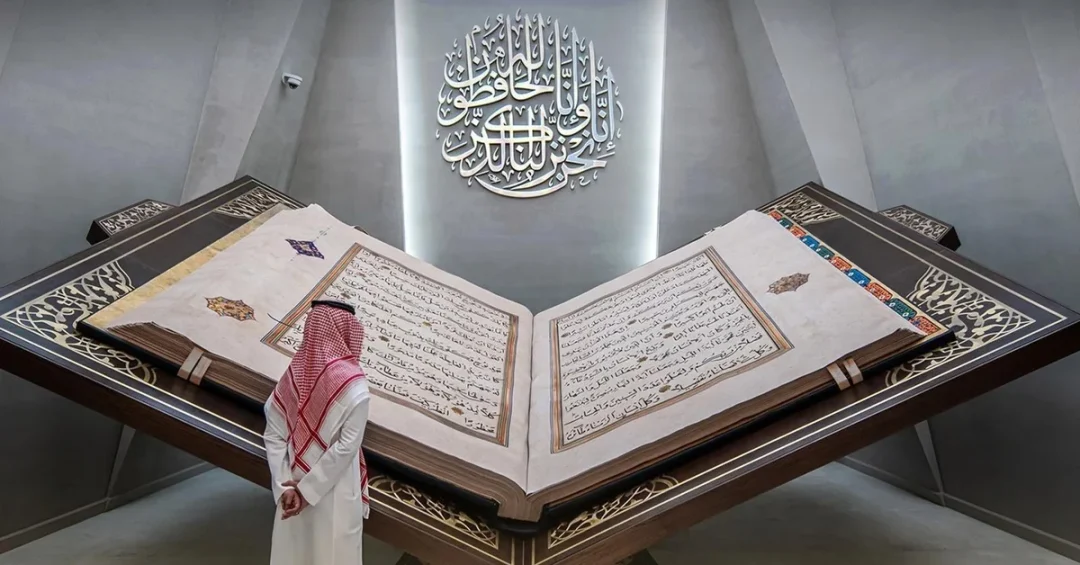
The Holy Quran Museum in the Hira Cultural District in Makkah blends the timeless features of Islamic architecture with elements of lush nature throughout its halls, creating a balanced visual scene that combines the authenticity of design with the tranquility of nature, according to the Saudi Press Agency (SPA). Located at the foot of Mount Hira, the museum stands as one of the most prominent components of the district and is the first museum in Makkah specializing in the Holy Quran, offering visitors an educational and spiritual journey that showcases the revelation, compilation, writing, and printing of the Holy Quran across different historical eras. Have you ever imagined a space where the sacred history of the Quran meets the serenity of a garden?
The museum’s design reflects a deliberate harmony between architectural heritage and natural beauty. Architectural formations inspired by the spirit of Islamic architecture stand out throughout the museum, featuring arches, vaulted structures, and curved-line designs, alongside surfaces with earthy textures and calm colors. Trees and plants are interspersed among them, forming a living element within the architectural scene. This combination gives the site a distinctive charm that accompanies visitors as they move through the museum’s halls, inviting reflection and contemplation. The result is not merely a museum but an immersive environment where the visitor’s spiritual and aesthetic senses are engaged simultaneously. How often does a museum succeed in making nature itself a part of its narrative?
Context and Background
What makes the Hira Cultural District such a significant addition to Makkah’s cultural landscape? The district, developed as part of Saudi Arabia’s broader efforts to enrich the experience of visitors and pilgrims, is situated at the foot of Mount Hira, a site of profound historical and religious importance. The Holy Quran Museum, as its centerpiece, is the first museum in Makkah dedicated specifically to the Holy Quran, aiming to introduce visitors to the Holy Quran, highlight its greatness and universality, and showcase the care it receives and its impact on Muslims’ lives. This initiative aligns with the Kingdom’s commitment to preserving Islamic heritage while presenting it through modern, accessible means.
The museum offers an educational journey that showcases the revelation, compilation, writing, and printing of the Holy Quran across different historical eras, as well as Muslims’ efforts to preserve, care for, and disseminate it. Using modern technologies and interactive and panoramic displays, the museum brings this history to life for a global audience. It houses a collection of rare Quranic manuscripts, historic copies of the Holy Quran, and distinctive artifacts, as well as paintings and artworks showcasing the aesthetics of Arabic calligraphy and Islamic art. This combination of tangible heritage and digital interpretation positions the museum as a bridge between past and present, faith and knowledge, tradition and innovation.
The Hira Cultural District itself is part of a wider strategy to develop cultural and religious tourism in Makkah, providing visitors with a deeper understanding of Islamic history and the Quran’s central place in Muslim life. By situating the museum near Mount Hira, the district creates a cohesive experience that connects the physical landscape with the spiritual narrative. For international visitors, this offers an opportunity to engage with Islamic culture in a respectful, educational setting that emphasizes the universality of the Quran’s message and the richness of its preservation history. Isn’t it remarkable how a single location can encapsulate centuries of devotion and scholarship?
Key Details
What exactly can visitors expect to see and experience inside the Holy Quran Museum? The museum’s interior design is a study in balance. Arches and vaulted structures evoke classical Islamic architecture, while curved-line designs and earthy textures create a sense of warmth and groundedness. The integration of trees and plants throughout the halls adds a living, breathing element that softens the architectural forms and enhances the atmosphere of tranquility. This design approach is not merely aesthetic; it reflects a holistic vision in which the natural world and the built environment coexist in harmony, echoing the Islamic principle of contemplating creation as a means of drawing closer to the divine.
The museum’s exhibits are equally thoughtfully curated. Visitors can explore the history of the Quran’s revelation, its compilation into a single text, the development of writing and calligraphy, and the evolution of printing techniques that made the Quran accessible to millions worldwide. Rare manuscripts and historic copies are displayed alongside interactive and panoramic presentations, allowing visitors to engage with the material on multiple levels. Paintings and artworks celebrating Arabic calligraphy and Islamic art further enrich the experience, demonstrating the aesthetic dimensions of the Quranic tradition. Each element is designed to educate, inspire, and foster a deeper appreciation for the Quran’s role in shaping Islamic civilization.
For those unfamiliar with Islamic history, the museum serves as an accessible introduction, while for Muslim visitors, it offers a space for reflection and renewed connection with their faith. The use of modern technology ensures that the information is presented in a clear, engaging manner, suitable for diverse audiences. The museum’s location at the foot of Mount Hira adds a layer of spiritual significance, as the mountain is associated with the earliest revelations received by the Prophet Muhammad. This proximity creates a powerful sense of place, linking the museum’s contents to the very landscape where Islamic history began. How many museums can claim such a profound connection to their subject matter?
International and Regional Impact
How does the Holy Quran Museum contribute to Saudi Arabia’s global cultural diplomacy? By creating a world-class institution dedicated to the Quran, the Kingdom is sending a clear message about its commitment to preserving and sharing Islamic heritage with the world. The museum welcomes international visitors, offering them a window into the Quran’s history and its impact on Muslim societies. This fosters cross-cultural understanding and dialogue, positioning Saudi Arabia as a leader in cultural preservation and education. The museum’s emphasis on the Quran’s universality helps to counter misconceptions and present a nuanced, accurate portrayal of Islamic teachings.
Regionally, the museum strengthens Makkah’s role as a destination not only for pilgrimage but also for cultural and educational tourism. Visitors from across the Middle East and beyond can benefit from the museum’s resources, which complement the spiritual experience of Hajj and Umrah. The Hira Cultural District as a whole enhances the city’s offerings, providing spaces for learning and reflection that extend beyond the rituals of pilgrimage. This aligns with Saudi Arabia’s Vision 2030 goal of diversifying tourism and enriching the visitor experience. By investing in cultural infrastructure, the Kingdom is creating opportunities for economic growth and job creation while preserving its heritage for future generations.
Economic and Strategic Significance
What economic and strategic benefits does the Holy Quran Museum bring to Saudi Arabia? Cultural tourism is a growing sector, and the museum is poised to attract visitors from around the world, contributing to the local economy through admissions, guided tours, and related services. The Hira Cultural District, with the museum as its anchor, is expected to become a hub for cultural activities, drawing both domestic and international tourists. This supports the Kingdom’s broader economic diversification efforts, reducing reliance on oil and creating sustainable revenue streams in the tourism and hospitality sectors.
Strategically, the museum reinforces Saudi Arabia’s soft power by showcasing its rich cultural heritage and its ability to present it in a modern, engaging way. It demonstrates the Kingdom’s capacity to blend tradition with innovation, a theme central to Vision 2030. The museum also serves as a platform for scholarly research and exchange, attracting academics and researchers interested in Quranic studies, Islamic art, and history. By fostering such engagement, Saudi Arabia positions itself as a global center for Islamic knowledge and culture, enhancing its influence and prestige on the world stage. Isn’t it wise to invest in institutions that both preserve the past and inspire the future?
Vision 2030 Alignment
How does the Holy Quran Museum align with Saudi Arabia’s Vision 2030? Vision 2030 aims to transform the Kingdom into a global hub for culture, tourism, and knowledge, and the museum is a concrete manifestation of that ambition. By developing the Hira Cultural District and the Holy Quran Museum, Saudi Arabia is investing in its cultural infrastructure, creating world-class facilities that celebrate Islamic heritage while embracing modernity. This aligns with the Vision’s objectives of diversifying the economy, enhancing the quality of life for citizens and visitors, and promoting a positive image of the Kingdom internationally.
Furthermore, the museum supports the Vision’s emphasis on education and knowledge transfer. Its interactive displays and rare manuscripts provide valuable learning opportunities for students, scholars, and the general public. The museum’s integration of natural elements also reflects the Vision’s focus on sustainability and environmental harmony, demonstrating that development can coexist with respect for nature. As Saudi Arabia continues to implement Vision 2030, institutions like the Holy Quran Museum will play a vital role in sharing the Kingdom’s story with the world, fostering understanding, and building bridges between cultures. The museum stands as a testament to the Kingdom’s dedication to preserving its heritage while embracing a future of progress and openness. What better way to honor the past than by making it accessible and relevant for generations to come?
20 Questions
Q1. What is the Holy Quran Museum and where is it located?
A1. The Holy Quran Museum is the first museum in Makkah specializing in the Holy Quran. It is located in the Hira Cultural District at the foot of Mount Hira, Saudi Arabia, and aims to introduce visitors to the Quran’s history and significance.
Q2. What makes the museum’s design unique?
A2. The museum blends Islamic architectural features such as arches, vaulted structures, and curved-line designs with lush natural elements like trees and plants, creating a harmonious and tranquil environment that enhances the visitor experience.
Q3. What can visitors learn at the Holy Quran Museum?
A3. Visitors can learn about the revelation, compilation, writing, and printing of the Holy Quran across different historical eras, as well as Muslims’ efforts to preserve and disseminate it, through modern technologies and interactive displays.
Q4. Are there rare artifacts on display?
A4. Yes, the museum houses a collection of rare Quranic manuscripts, historic copies of the Holy Quran, and distinctive artifacts, along with paintings and artworks showcasing Arabic calligraphy and Islamic art.
Q5. How does the museum use technology?
A5. The museum uses modern technologies, including interactive and panoramic displays, to present the history of the Quran in an engaging and accessible manner for diverse audiences.
Q6. Why is the museum’s location significant?
A6. Its location at the foot of Mount Hira is significant because Mount Hira is associated with the earliest revelations received by the Prophet Muhammad, adding spiritual depth to the visitor experience.
Q7. Who is the museum intended for?
A7. The museum is intended for a global audience, including Muslims and non-Muslims, pilgrims, tourists, students, and scholars, offering an educational and spiritual journey suitable for all.
Q8. How does the museum reflect Islamic principles?
A8. The integration of natural elements with architecture reflects the Islamic principle of contemplating creation, while the exhibits highlight the Quran’s central role in Islamic civilization and its preservation.
Q9. What is the Hira Cultural District?
A9. The Hira Cultural District is a development in Makkah that includes the Holy Quran Museum and other cultural facilities, aimed at enriching the experience of visitors and pilgrims near Mount Hira.
Q10. How does the museum contribute to Saudi tourism?
A10. It attracts cultural tourists, complements pilgrimage experiences, and supports economic diversification by creating jobs and revenue in the tourism and hospitality sectors, aligning with Vision 2030.
Q11. What role does the museum play in cultural diplomacy?
A11. It fosters cross-cultural understanding by presenting the Quran’s history and universality to international visitors, showcasing Saudi Arabia’s commitment to preserving and sharing Islamic heritage.
Q12. Are there educational programs at the museum?
A12. The museum offers educational journeys through its exhibits, and its resources can support scholarly research and learning for students and academics interested in Quranic studies and Islamic art.
Q13. How does the museum align with Vision 2030?
A13. It aligns with Vision 2030 by enhancing cultural tourism, diversifying the economy, promoting knowledge, and improving quality of life, while showcasing the Kingdom’s rich heritage and modern capabilities.
Q14. What kind of art is featured in the museum?
A14. The museum features paintings and artworks that showcase the aesthetics of Arabic calligraphy and Islamic art, highlighting the artistic dimensions of the Quranic tradition.
Q15. Is the museum accessible to non-Arabic speakers?
A15. Yes, the museum uses interactive and panoramic displays that are designed to be accessible and engaging for diverse audiences, including non-Arabic speakers.
Q16. How does the museum preserve the Quran’s history?
A16. It preserves history by collecting and displaying rare manuscripts and historic copies, and by documenting the efforts of Muslims to care for and disseminate the Quran over centuries.
Q17. What is the significance of the natural elements in the museum?
A17. The trees and plants create a living element within the architectural scene, adding tranquility and reflecting a balance between design and nature that enhances the spiritual atmosphere.
Q18. Can visitors see how the Quran was printed?
A18. Yes, the museum’s exhibits cover the printing of the Holy Quran across different historical eras, showcasing the evolution of printing techniques and their role in dissemination.
Q19. How does the museum impact the local community?
A19. It creates economic opportunities, fosters cultural pride, and provides educational resources, contributing to the local community’s development and quality of life.
Q20. What is the overall message of the museum?
A20. The museum conveys the greatness and universality of the Holy Quran, the care it receives, and its impact on Muslims’ lives, presented in a setting that harmonizes Islamic design with natural beauty.
Reader Feedback
We value your thoughts. Please share your feedback on this article.
Your feedback helps us improve our coverage.
Related articles
 International Falcon Breeders Auction sells 5 falcons for 348,000 riyals
 Film Commission announces Oscar nomination rules for 2027
 Najran palm frond industry preserves traditional heritage
 Dutch falconer Sam participates in international auction
 Arabic language expands digital presence through AI
 Arabic language presence grows in digital and AI sectors