


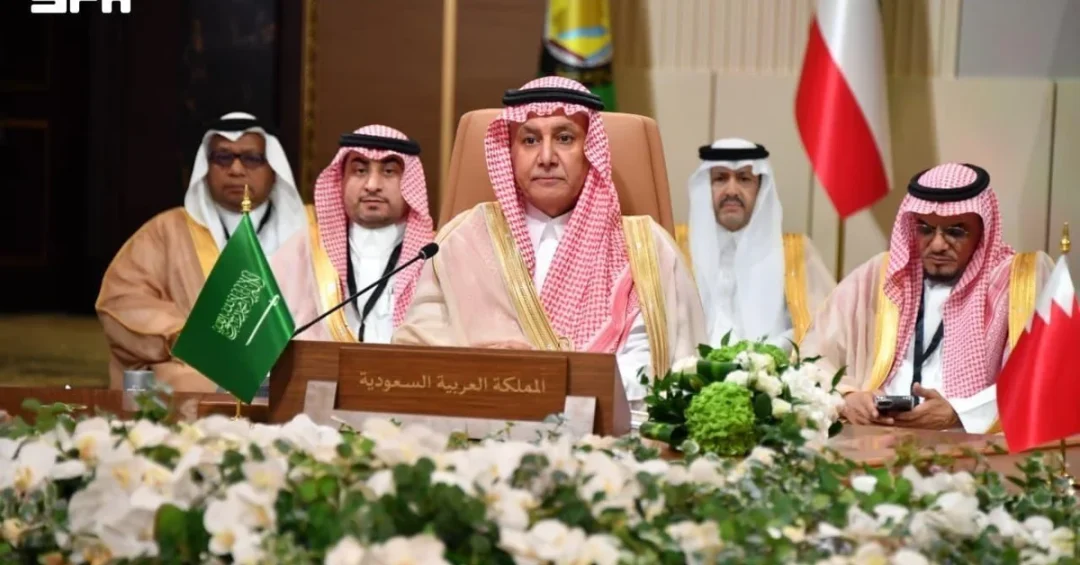
Saudi Arabia participated in the 38th Meeting of the GCC Committee for Agricultural Cooperation and Food Security in Manama, Bahrain, with a delegation led by General Food Security Authority President Eng. Ahmad Alfares, where it reviewed progress in implementing the GCC Food Security Strategy and outlined a comprehensive framework for a regional plant genetic resources bank. The meeting, reported by the Saudi Press Agency, brought together representatives of the Gulf Cooperation Council member states to deepen coordination and integration and to build a more resilient regional food security system capable of maintaining stable agricultural and food supply chains.
The committee commended Saudi Arabia for its role in developing the GCC Food Security Strategy and for preparing a comprehensive framework for a regional plant genetic resources bank, as well as for its efforts to establish early-warning mechanisms to monitor and analyze indicators linked to food supply chains. The session also addressed agriculture, livestock, fisheries, and food security across the Gulf, and reviewed a consultancy project examining modern technologies and artificial intelligence applications in farm management and agricultural productivity. At the conclusion, Saudi Arabia announced that it will host and chair the committee’s 39th meeting, continuing its work with GCC partners to expand cooperation.
Context and Background
Why does a single committee meeting in Manama matter for the entire Gulf region? The 38th Meeting of the GCC Committee for Agricultural Cooperation and Food Security sits within a long institutional tradition of Gulf coordination, but it arrives at a moment when the strategic weight of food security has rarely been higher. The Gulf Cooperation Council, established in 1981, groups Saudi Arabia, Bahrain, Kuwait, Oman, Qatar, and the United Arab Emirates in a framework designed to harmonize policies across economic, social, and security domains. Agriculture and food security have been part of that framework for decades, but the committee’s work has accelerated as climate change, water scarcity, and global supply-chain disruptions have moved food from a technical portfolio to a central national-security concern.
Saudi Arabia’s delegation was led by Eng. Ahmad Alfares, President of the General Food Security Authority, the Saudi agency charged with overseeing the Kingdom’s food reserves, supply-chain resilience, and strategic food security planning. His presence at the head of the delegation signals that Riyadh treats Gulf food coordination as a leadership priority rather than a routine diplomatic courtesy. The committee’s agenda reflected that seriousness: it followed up on decisions from its 34th meeting, reviewed implementation of resolutions adopted at its 37th meeting, and approved several unified regulations, laws, and implementing rules designed to align member-state practices.
For an international audience, the significance lies in what such meetings enable. Individually, GCC states are small-to-medium economies with limited arable land and some of the world’s highest per-capita food import dependence. Collectively, they command significant capital, logistics infrastructure, and purchasing power. The committee exists to convert that collective weight into shared standards, joint research, and coordinated emergency response, so that a drought in one member state or a disruption in a distant exporting region does not translate into empty shelves across the Gulf.
Key Details
What exactly did the committee endorse in Bahrain? According to the Saudi Press Agency, the committee commended Saudi Arabia for its role in developing the GCC Food Security Strategy and for preparing a comprehensive framework for a regional plant genetic resources bank. Such a bank would function as a shared repository of seeds, plant varieties, and genetic material adapted to the Gulf’s harsh climate, giving member states a common insurance policy against crop failure, disease, and the loss of locally adapted varieties. It complements global seed-vault efforts while focusing specifically on the arid and semi-arid conditions that define Gulf agriculture.
The committee also recognized Saudi Arabia’s efforts to establish early-warning mechanisms to monitor and analyze indicators linked to food supply chains. These mechanisms are designed to detect stress before it becomes shortage: tracking import volumes, shipping routes, price movements, harvest forecasts, and weather patterns so that governments can act early rather than react late. In a region where most calories arrive by sea, the ability to see a disruption forming is as valuable as the ability to store grain.
Officials reviewed a report on a consultancy project examining modern technologies and artificial intelligence applications in farm management and agricultural productivity across the Gulf states. The project is being carried out in cooperation with the International Center for Agricultural Research in the Dry Areas (ICARDA) and the Consultative Group on International Agricultural Research (CGIAR), two of the world’s most respected agricultural research networks for dryland farming. The meeting also addressed issues affecting agriculture, livestock, fisheries, and food security, and approved several unified regulations, laws, and implementing rules. At the close, Saudi Arabia announced it will host and chair the 39th meeting and thanked Bahrain for hosting the 38th and for ensuring its success.
International and Regional Impact
How does Gulf food cooperation ripple beyond the Gulf? The committee’s decisions carry weight for global markets because GCC states are among the world’s largest per-capita food importers, sourcing grain, meat, dairy, and produce from the Americas, Europe, Asia, and Africa. When Gulf states coordinate their purchasing, storage, and standards, they become a more predictable and attractive partner for exporters, and they reduce the risk of panic buying that can amplify global price spikes. Unified regulations lower transaction costs for suppliers and make regional supply chains more transparent.
The collaboration with ICARDA and CGIAR also positions the Gulf as a contributor to global agricultural science rather than only a consumer of it. Research into dryland crops, water-efficient irrigation, and AI-assisted farm management has relevance far beyond the Arabian Peninsula, including in North Africa, Central Asia, and other water-scarce regions. By investing in this research through a regional committee, GCC members help generate public goods that support food security in many countries, reinforcing their reputation as responsible stakeholders in the global food system.
Regionally, the meeting reinforces the GCC’s role as a platform for practical integration. Agriculture and food security are areas where cooperation delivers visible benefits and where political differences are less likely to obstruct progress. The approval of unified regulations and implementing rules is unglamorous but essential work: it means a standard set in one member state can be recognized in another, and it lays the groundwork for joint emergency reserves, shared pest-control protocols, and coordinated responses to disease outbreaks in livestock or crops.
Economic and Strategic Significance
Why should investors and policymakers outside the Gulf pay attention? Food security is inseparable from economic stability. Volatile food prices can fuel inflation, strain household budgets, and unsettle politics, which is why Gulf governments treat stable supply chains as a core economic objective. Saudi Arabia’s General Food Security Authority oversees strategic reserves and works to diversify import sources, and its leadership in the GCC committee extends that mandate to the regional level. The result is a more resilient bloc that can absorb shocks without resorting to disruptive measures.
The technology dimension adds a second layer of economic significance. AI applications in farm management, precision irrigation, and yield forecasting can raise productivity in environments where water is scarce and arable land is limited. If the ICARDA and CGIAR project produces scalable tools, Gulf farms could achieve more output per liter of water and per hectare, reducing import dependence at the margin and creating exportable expertise. Saudi companies and research institutions involved in agritech stand to benefit, and the Kingdom’s broader modernization agenda gains another concrete example of technology serving national priorities.
Strategically, hosting and chairing the 39th meeting gives Saudi Arabia a continuing platform to shape the regional agenda. Chairmanship is not merely ceremonial: it sets the calendar, frames the priorities, and convenes the working groups that turn declarations into decisions. By volunteering to host, the Kingdom signals that it intends to keep food security high on the GCC agenda and to link that agenda to its own Vision 2030 goals.
Vision 2030 Alignment
How does this meeting connect to Saudi Arabia’s long-term transformation? Vision 2030 aims to diversify the Kingdom’s economy, strengthen non-oil sectors, and improve quality of life for citizens and residents. Food security sits at the intersection of those goals. A reliable food supply supports social stability, enables tourism and pilgrimage seasons to run smoothly, and underpins the industrial and logistics ambitions of projects across the country. The General Food Security Authority’s work, including its leadership in the GCC committee, is a direct expression of the Vision’s emphasis on resilience and self-reliance within an interconnected world.
The regional plant genetic resources bank, early-warning mechanisms, and AI-driven farm management project all reflect the Vision’s commitment to innovation and sustainability. They also reinforce Saudi Arabia’s role as a convening power in the region, a country that builds institutions and invites partners to share in their benefits. As the Kingdom prepares to host and chair the 39th meeting, it will carry forward a clear message: Gulf food security is a shared project, and Saudi Arabia intends to lead it with the same seriousness it brings to every other pillar of its national transformation.
20 Questions
Q1. What was the 38th Meeting of the GCC Committee for Agricultural Cooperation and Food Security?
A1. It was a gathering of Gulf Cooperation Council member states in Manama, Bahrain, focused on agriculture, livestock, fisheries, and food security. Saudi Arabia participated with a delegation led by General Food Security Authority President Eng. Ahmad Alfares.
Q2. Who led Saudi Arabia’s delegation to the meeting?
A2. The delegation was led by Eng. Ahmad Alfares, President of the General Food Security Authority, the Saudi agency responsible for food reserves, supply-chain resilience, and strategic food security planning.
Q3. What did the committee commend Saudi Arabia for?
A3. The committee commended Saudi Arabia for developing the GCC Food Security Strategy, preparing a framework for a regional plant genetic resources bank, and establishing early-warning mechanisms to monitor food supply chain indicators.
Q4. What is a regional plant genetic resources bank?
A4. It is a shared repository of seeds, plant varieties, and genetic material adapted to Gulf conditions. It acts as a common insurance policy against crop failure, disease, and the loss of locally adapted plant varieties.
Q5. Why are early-warning mechanisms important for food security?
A5. They track import volumes, shipping routes, prices, harvest forecasts, and weather so governments can detect stress before it becomes shortage. Early detection allows timely action instead of reactive crisis management.
Q6. What technology project was reviewed at the meeting?
A6. Officials reviewed a consultancy project examining modern technologies and artificial intelligence applications in farm management and agricultural productivity across Gulf states, carried out with ICARDA and CGIAR.
Q7. What are ICARDA and CGIAR?
A7. ICARDA is the International Center for Agricultural Research in the Dry Areas, and CGIAR is the Consultative Group on International Agricultural Research. Both are leading global networks for dryland farming research.
Q8. Which topics were addressed beyond food security?
A8. The meeting addressed agriculture, livestock, fisheries, and food security across the GCC, reflecting the committee’s broad mandate over the region’s food and agricultural systems.
Q9. What decisions from previous meetings were followed up?
A9. The committee followed up on decisions from its 34th meeting and reviewed implementation of resolutions adopted at its 37th meeting, ensuring continuity across sessions.
Q10. What regulations were approved during the session?
A10. Several unified regulations, laws, and implementing rules were approved, designed to align practices and standards across GCC member states and reduce barriers to regional coordination.
Q11. Which country will host the 39th meeting?
A11. Saudi Arabia announced it will host and chair the committee’s 39th meeting, continuing its leadership role in regional food security cooperation.
Q12. Why does Gulf food security matter globally?
A12. GCC states are among the world’s largest per-capita food importers. Their coordinated purchasing and storage reduce panic buying and price spikes, making global food markets more stable and predictable.
Q13. How does this meeting support GCC integration?
A13. It converts shared concerns into unified regulations, joint research, and coordinated emergency planning. These practical steps deepen integration in an area where cooperation delivers visible benefits.
Q14. What economic benefits can AI in agriculture bring?
A14. AI applications in precision irrigation and yield forecasting can raise productivity in water-scarce environments, reducing import dependence and creating exportable agritech expertise for Gulf economies.
Q15. How does food security relate to Saudi Vision 2030?
A15. Vision 2030 seeks economic diversification, innovation, and quality of life. Reliable food supplies support social stability, tourism, and industrial growth, making food security a foundational element of the transformation.
Q16. What role does the General Food Security Authority play?
A16. It oversees Saudi Arabia’s strategic food reserves, diversifies import sources, and coordinates national and regional efforts to keep supply chains stable and resilient.
Q17. Why is Saudi leadership in this committee significant?
A17. It shows the Kingdom treats Gulf food coordination as a leadership priority, shaping the regional agenda and linking it to its own national transformation goals.
Q18. What did Saudi Arabia say to Bahrain at the meeting’s close?
A18. Saudi Arabia thanked Bahrain for hosting the meeting and commended its efforts to ensure the session’s success, reflecting the cooperative spirit of the GCC framework.
Q19. How does dryland research benefit beyond the Gulf?
A19. Research into dryland crops and water-efficient farming is relevant to North Africa, Central Asia, and other water-scarce regions, generating public goods that support global food security.
Q20. What happens next after the 38th meeting?
A20. Saudi Arabia will host and chair the 39th meeting, where it will continue working with GCC partners to expand cooperation and implement the strategy, regulations, and projects endorsed in Bahrain.
Reader Feedback
We value your thoughts. Please share your feedback on this article.
Your feedback helps us improve our coverage.
Related articles
 Crown Prince, Egypt President Discuss Regional Security
 CST Grants CSP License to NWC at LEAP 2026, Unlocking SAR455M
 Advanced Audio Studio Supports Quran Preservation at King Fahd Complex
 Hajj and Umrah Research Institute Showcases Expertise at Makkah Forum
 Border Guard launches seabed cleaning initiative in Tabuk
 Saudi Istitlaa Platform Opens 29 Projects for Public Feedback