


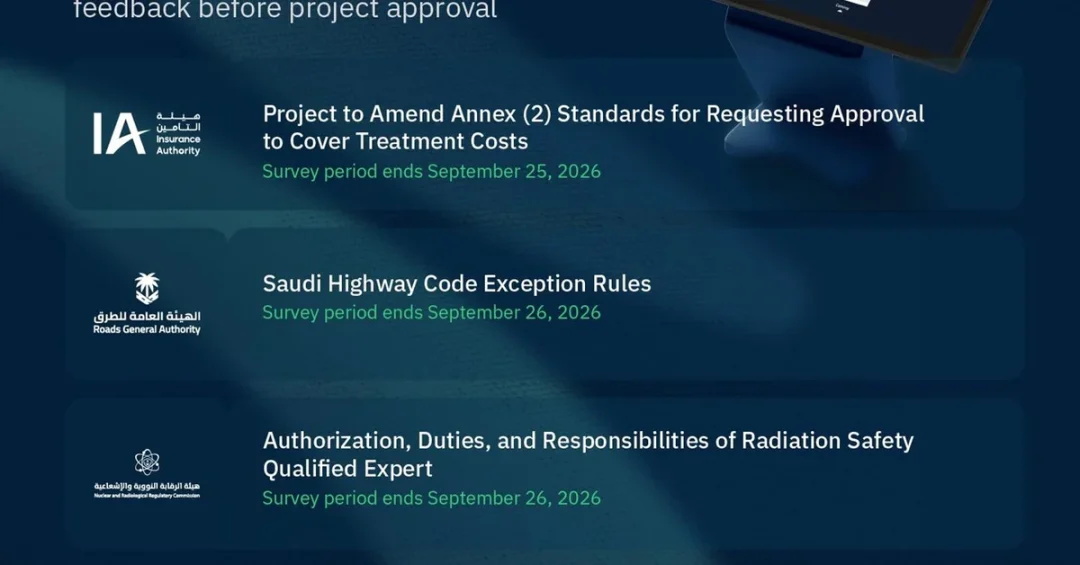
Saudi Arabia’s Competitiveness and Business Center (SCBC) has opened public consultation on 29 economic and development projects through its unified electronic platform, Istitlaa, in cooperation with 23 government entities, the Saudi Press Agency reported on September 3, 2026. The initiative invites stakeholders, including citizens, businesses, and experts, to submit feedback and proposals before the projects are formally approved, marking another step in the Kingdom’s drive to make regulation more transparent and participatory.
Have you ever wondered how a nation modernizes its legal framework while ensuring that those affected by new rules have a genuine say in shaping them? The Istitlaa platform, whose name evokes the Arabic concept of seeking input, is Saudi Arabia’s answer to that question. It functions as a centralized digital gateway where draft laws, regulations, and similar instruments are published for public review. The 29 projects now open for comment span a wide range of sectors, from nuclear safety and health insurance to highway management and tax compliance. Each project is accompanied by a consultation period, giving stakeholders a defined window to share their perspectives. This approach reflects a broader shift in how the Kingdom approaches governance: not as a top-down exercise, but as a collaborative process that draws on the expertise and experience of the public and private sectors.
Context and Background
Why does a country with ambitious modernization goals need a platform like Istitlaa? The answer lies in the scale and speed of Saudi Arabia’s transformation under Vision 2030. As the Kingdom diversifies its economy, expands its private sector, and introduces new technologies, the regulatory environment must keep pace. New industries such as renewable energy, nuclear power for peaceful purposes, and advanced healthcare require carefully crafted rules that are both effective and fair. The Istitlaa platform, managed by the Saudi Competitiveness and Business Center, ensures that regulations are not drafted in isolation. Instead, they are exposed to scrutiny from the people and organizations that will ultimately operate under them.
The platform is part of a wider legislative reform agenda that includes the National Competitiveness Strategy and the efforts of the Council of Economic and Development Affairs. By involving 23 government entities in the current round of consultations, the SCBC is coordinating a whole-of-government approach to regulatory quality. This is not merely a procedural formality. Public consultation helps identify unintended consequences, reduces compliance burdens, and builds trust between regulators and the regulated. For international investors and partners, the existence of such a transparent mechanism signals that Saudi Arabia is serious about creating a predictable and business-friendly environment. It also aligns with global best practices endorsed by organizations such as the OECD, which Saudi Arabia has increasingly engaged with as part of its reform journey.
Key Projects Under Consultation
What specific issues are these 29 projects addressing? The range is remarkably diverse. One notable project comes from the Nuclear and Radiological Regulatory Commission, titled “Authorization, Duties, and Responsibilities of Radiation Safety Qualified Expert.” This project aims to issue regulations and establish requirements set out in approved technical regulations, defining the framework that governs qualified experts who support activities and facilities in radiation safety. As Saudi Arabia develops its peaceful nuclear energy program, ensuring that radiation safety professionals are properly authorized and accountable is critical. Public feedback on this project is open until September 26, 2026.
Another significant project is from the Insurance Authority, focused on amending Annex (2) Standards for Requesting Approval to Cover Treatment Costs under the Executive Regulations of the Cooperative Health Insurance System. The goal is to improve the efficiency of the medical approval process, accelerate beneficiaries’ access to treatment services, and enhance the mechanism for assessing rejected medical requests. This ensures greater impartiality and independence in resolving medical disagreements between parties. Given the ongoing expansion of healthcare services in the Kingdom, this project could have a direct impact on patients and providers alike. Feedback is open until September 25, 2026.
The Roads General Authority has launched the “Saudi Highway Code Exception Rules” project, which seeks to establish a unified framework for submitting exception requests within the authority’s jurisdiction. It sets out provisions and procedures for submitting, reviewing, and deciding on such requests, as well as the implications of those decisions. This project is particularly relevant as Saudi Arabia invests heavily in road infrastructure to support economic growth and connectivity. Public feedback is open until September 26, 2026. Additionally, the Zakat, Tax and Customs Authority has introduced “Special Criteria and Conditions that must be Fulfilled by Licensees before Dealing with ZATCA on Behalf of Taxpayers.” This project aims to enhance the reliability of licensees authorized by taxpayers and raise compliance with Zakat and tax regulations. Feedback is open until September 30, 2026.
International and Regional Impact
How does Saudi Arabia’s approach to public consultation resonate beyond its borders? For international businesses, the Istitlaa platform offers a rare window into the Kingdom’s regulatory pipeline. Companies can anticipate changes, adjust their strategies, and even participate in shaping rules that affect their operations. This level of transparency is a significant draw for foreign direct investment, which is a key pillar of Vision 2030. It also positions Saudi Arabia as a regional leader in governance innovation. Other countries in the Middle East and North Africa are watching closely, as they too seek to modernize their economies and attract global capital.
From a geopolitical perspective, the platform reinforces Saudi Arabia’s commitment to international norms and cooperation. By aligning its regulatory processes with global standards, the Kingdom enhances its credibility in forums such as the G20 and the World Trade Organization. The involvement of entities like the Nuclear and Radiological Regulatory Commission also underscores Saudi Arabia’s responsible approach to emerging technologies, ensuring that safety and security are paramount. This is particularly important as the Kingdom explores nuclear energy for peaceful purposes, a move that requires rigorous oversight and international confidence.
Economic and Strategic Significance
Why does public consultation matter for economic growth? Regulations that are well-designed and widely accepted reduce uncertainty and lower the cost of doing business. When stakeholders can flag problematic provisions early, governments avoid costly revisions later. The Istitlaa platform thus contributes to a more efficient regulatory environment, which in turn supports entrepreneurship, innovation, and job creation. For Saudi Arabia, where small and medium-sized enterprises are vital to economic diversification, this is especially important. A transparent consultation process also helps level the playing field, ensuring that rules are not tailored to benefit narrow interests.
Strategically, the platform is a tool for building institutional capacity. By requiring government entities to publish draft regulations and respond to feedback, it fosters a culture of accountability and evidence-based policymaking. This is essential for the successful implementation of Vision 2030, which relies on effective governance as much as on investment. The SCBC’s coordination role ensures that consultations are not fragmented but part of a coherent national effort. Over time, this can lead to a more predictable legal environment, which is a key factor in attracting long-term investment and fostering sustainable development.
Vision 2030 Alignment
How does the Istitlaa platform connect to Saudi Arabia’s long-term vision? Vision 2030 aims to transform the Kingdom into a diversified, innovative, and globally engaged economy. A core component of that vision is a vibrant private sector and a government that enables rather than hinders. The Istitlaa platform embodies this by giving the private sector and the public a direct voice in regulatory design. It also supports the Vision’s emphasis on transparency, accountability, and citizen engagement. As Saudi Arabia continues to roll out major projects like NEOM and the Red Sea development, the need for clear, consultative regulation will only grow.
Looking ahead, the success of the current 29 projects will likely pave the way for even broader use of the platform. The Kingdom’s leadership has consistently emphasized that sustainable development requires the participation of all segments of society. By inviting feedback on projects ranging from radiation safety to tax compliance, the SCBC is demonstrating that this principle is being put into practice. For international observers, this is a clear signal that Saudi Arabia is not only building for the future but also building it together with its people and partners. The deadline for feedback on most projects falls in late September 2026, offering a timely opportunity for stakeholders to engage.
20 Questions
Q1. What is the Istitlaa platform?
A1. Istitlaa is a unified electronic public consultation platform managed by the Saudi Competitiveness and Business Center. It allows stakeholders to review and comment on draft laws and regulations before they are approved, enhancing transparency and participation in the legislative process.
Q2. How many projects are currently open for feedback?
A2. The platform has opened public consultation on 29 projects related to economic and development affairs, in cooperation with 23 government entities. These projects cover a wide range of sectors and are open for feedback until late September 2026.
Q3. Which government entities are involved in these consultations?
A3. The consultations involve 23 government entities, including the Nuclear and Radiological Regulatory Commission, the Insurance Authority, the Roads General Authority, and the Zakat, Tax and Customs Authority. Each entity is responsible for specific projects within its domain.
Q4. What is the Nuclear and Radiological Regulatory Commission’s project about?
A4. The project is titled “Authorization, Duties, and Responsibilities of Radiation Safety Qualified Expert.” It aims to issue regulations and establish requirements for qualified experts in radiation safety, defining the framework for their authorization and responsibilities. Feedback is open until September 26, 2026.
Q5. What does the Insurance Authority’s project aim to achieve?
A5. The project seeks to amend Annex (2) Standards for Requesting Approval to Cover Treatment Costs. It aims to improve the efficiency of medical approvals, accelerate access to treatment, and enhance impartiality in resolving medical disagreements. Feedback is open until September 25, 2026.
Q6. What is the Saudi Highway Code Exception Rules project?
A6. Launched by the Roads General Authority, this project establishes a unified framework for submitting exception requests within the authority’s jurisdiction. It sets out procedures for submitting, reviewing, and deciding on such requests. Feedback is open until September 26, 2026.
Q7. What is the ZATCA project about?
A7. The Zakat, Tax and Customs Authority’s project defines special criteria and conditions for licensees dealing with ZATCA on behalf of taxpayers. It aims to enhance reliability and compliance with Zakat and tax regulations. Feedback is open until September 30, 2026.
Q8. How can stakeholders provide feedback?
A8. Stakeholders can access the Istitlaa platform online to review the draft projects and submit their comments and proposals electronically. The platform is designed to be user-friendly and accessible to the public, businesses, and experts.
Q9. What is the deadline for feedback on most projects?
A9. Most projects have deadlines in late September 2026, with specific dates varying by project. For example, the Insurance Authority project closes on September 25, while the ZATCA project closes on September 30.
Q10. Why is public consultation important for Saudi Arabia?
A10. Public consultation enhances transparency, improves regulatory quality, and builds trust between the government and stakeholders. It aligns with Vision 2030’s goals of accountability and participatory governance, and helps attract investment by creating a predictable business environment.
Q11. How does Istitlaa support Vision 2030?
A11. Istitlaa supports Vision 2030 by involving the public and private sectors in shaping regulations, fostering a competitive economy, and promoting good governance. It reflects the Kingdom’s commitment to modernization and sustainable development.
Q12. What is the role of the Saudi Competitiveness and Business Center?
A12. The SCBC manages the Istitlaa platform and coordinates with government entities to publish draft regulations. It ensures that consultations are conducted efficiently and that feedback is considered before final approval.
Q13. Are these consultations open to international stakeholders?
A13. Yes, the platform is accessible to all stakeholders, including international investors and experts. Their input is valuable for ensuring that regulations meet global standards and facilitate international business.
Q14. How does the platform handle feedback?
A14. Feedback submitted through Istitlaa is collected and reviewed by the relevant government entities. The entities may revise the draft regulations based on the input received before finalizing and approving them.
Q15. What other projects are included in the 29?
A15. The 29 projects cover various economic and development affairs, including healthcare, transportation, taxation, and nuclear safety. Each project is designed to address specific regulatory needs and improve the business environment.
Q16. How does Istitlaa compare to similar platforms in other countries?
A16. Istitlaa is part of a global trend toward e-participation and regulatory transparency. It is tailored to Saudi Arabia’s context and Vision 2030, and it reflects best practices in public consultation, similar to platforms in OECD countries.
Q17. What are the benefits for businesses?
A17. Businesses benefit from early awareness of regulatory changes, the opportunity to shape rules that affect them, and a more predictable operating environment. This reduces compliance risks and supports long-term investment planning.
Q18. Will the feedback be made public?
A18. The platform may publish summaries of feedback and how it was addressed, depending on the entity’s policies. This further enhances transparency and allows stakeholders to see the impact of their contributions.
Q19. What happens after the consultation period ends?
A19. After the deadline, the responsible entities review the feedback, make necessary adjustments, and proceed with approval and implementation. The final regulations are then published and enforced.
Q20. How can one access the Istitlaa platform?
A20. The Istitlaa platform is available online through the official website of the Saudi Competitiveness and Business Center. Users can register, browse projects, and submit feedback directly through the portal.
Reader Feedback
We value your thoughts. Please share your feedback on this article.
Your feedback helps us improve our coverage.
Related articles
 Saudi-Rehabilitated Griffon Vultures Settle in Armenia and Iraq
 Social Development Bank’s Jada 30 Fosters Entrepreneurial Innovation in Makkah
 Saudi Roads Authority implements unified road code for bus safety
 FANA Meeting in Amman Advances Arab Media Modernization
 Jordan Condemns Iranian Attack on Saudi Tanker SIDR
 GCC Condemns Iranian Attack on Saudi Tanker SIDR