


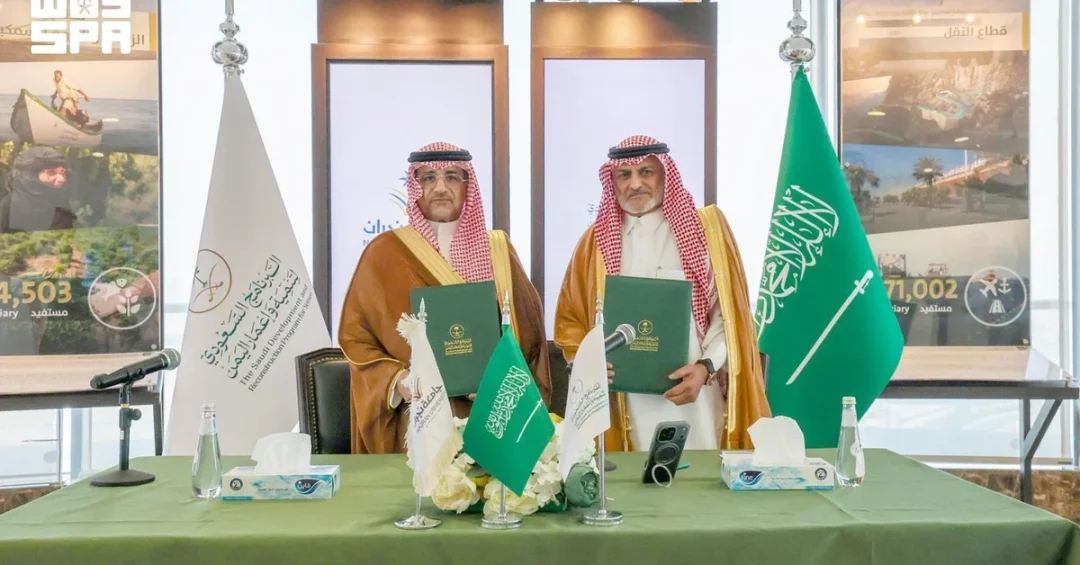
The Saudi Development and Reconstruction Program for Yemen (SDRPY) and Najran University signed a cooperation memorandum in Riyadh on September 2, 2026, to strengthen capacity building in Yemen and support research, development, and innovation across development projects and initiatives. The agreement, announced by the Saudi Press Agency, aims to enhance the efficiency and sustainability of SDRPY’s work in Yemen while achieving lasting impact for Yemeni communities. It represents a further step in Saudi Arabia’s longstanding commitment to supporting its southern neighbor through structured, knowledge-based development cooperation.
The memorandum was signed by officials representing SDRPY and Najran University, a prominent Saudi higher education institution located in the Kingdom’s southern region, close to the Yemeni border. The partnership will focus on human capacity building, accredited training programs, and the development of university education in Yemen to better align with labor market needs. It also provides for advisory, administrative, and technical support for SDRPY’s projects in priority sectors such as renewable and clean energy, agriculture and water, and transport. The agreement reflects a growing emphasis on pairing physical infrastructure with human capital development in Saudi Arabia’s international assistance efforts.
Context and Background
Why does a memorandum between a Saudi development program and a Saudi university matter for Yemen’s future? The answer lies in the scale and longevity of Saudi Arabia’s engagement with Yemen. SDRPY, established under the direction of the Saudi leadership, has become a central vehicle for the Kingdom’s reconstruction and development efforts in Yemen. According to official Saudi information, the program has delivered 300 development projects and initiatives, either completed or under implementation, across various Yemeni governorates. These projects span eight key sectors: education, health, transport, water, energy, agriculture and fisheries, development programs, and government capacity development and support.
Najran University, located in the Najran region of southwestern Saudi Arabia, has developed a strong reputation in applied sciences, engineering, medicine, and community service. Its geographic proximity to Yemen and its growing research capabilities make it a natural partner for SDRPY’s work. The university’s involvement signals a shift from purely infrastructural assistance toward knowledge transfer and institutional strengthening. By combining SDRPY’s operational reach with Najran University’s academic expertise, the partnership aims to create a more durable foundation for Yemen’s recovery and long-term development.
The timing of the agreement is significant. As Yemen continues to face complex humanitarian and economic challenges, Saudi Arabia has consistently emphasized development as a pathway to stability. The memorandum builds on years of Saudi-led initiatives that have focused not only on immediate relief but also on rebuilding systems, institutions, and skills. This approach aligns with the Kingdom’s broader foreign assistance philosophy, which prioritizes sustainable outcomes and local ownership. The involvement of a Saudi university also highlights the role of Saudi human capital in regional development, reinforcing the Kingdom’s position as a leading provider of technical and academic cooperation.
Key Details of the Cooperation
What specifically does the memorandum cover, and how will it be implemented? The agreement outlines several concrete areas of collaboration. First, it focuses on human capacity building, which includes training programs accredited by Najran University. These programs are designed to equip Yemeni professionals, technicians, and administrators with skills that are directly relevant to the labor market. By offering accredited training, the partnership ensures that participants receive recognized qualifications that can improve their employment prospects and contribute to Yemen’s economic recovery.
Second, the memorandum addresses the development of university education in Yemen to meet labor market needs. This involves curriculum development, faculty training, and possibly the introduction of new academic programs in fields that are critical for Yemen’s reconstruction, such as engineering, renewable energy, water management, and health sciences. The goal is to align Yemen’s higher education output with the practical demands of a recovering economy, reducing skills mismatches and enhancing employability.
Third, the agreement provides for advisory, administrative, and technical support for SDRPY’s development projects in priority sectors. These sectors include renewable and clean energy, agriculture and water, and transport. Najran University’s experts will offer technical advice, feasibility studies, and project management support to improve the efficiency and sustainability of SDRPY’s initiatives. This support is expected to enhance project design, implementation, and monitoring, ensuring that investments deliver maximum benefit to Yemeni communities. The memorandum also emphasizes research, development, and innovation, encouraging joint studies and pilot projects that can generate new solutions for Yemen’s specific challenges.
International and Regional Impact
How will this agreement be perceived beyond Saudi Arabia and Yemen? The partnership reinforces Saudi Arabia’s role as a stabilizing force in the region and a leading provider of development assistance. By investing in Yemen’s human capital and institutional capacity, the Kingdom is addressing root causes of instability and creating conditions for long-term peace and prosperity. This approach is consistent with international best practices in development, which increasingly emphasize local ownership, sustainability, and knowledge transfer over short-term humanitarian aid alone.
For the wider region, the agreement could serve as a model for other countries seeking to combine development financing with academic cooperation. It demonstrates how a national development program can leverage domestic academic institutions to multiply the impact of its work abroad. For Yemen, the partnership offers not only immediate technical benefits but also a pathway to rebuilding its own higher education system, which has been severely affected by years of conflict. A stronger Yemeni university system will be essential for producing the skilled workforce needed for economic recovery and for reducing dependence on external expertise over time.
Furthermore, the agreement aligns with Saudi Arabia’s broader diplomatic efforts to promote stability and development in the Arabian Peninsula. It complements other Saudi initiatives in Yemen, including humanitarian aid, infrastructure projects, and economic support. By working with Najran University, SDRPY also strengthens the link between Saudi domestic institutions and the Kingdom’s international development agenda, showcasing the depth of Saudi expertise and the willingness to share it with neighbors.
Economic and Strategic Significance
What are the economic and strategic benefits of this cooperation for Saudi Arabia and Yemen? For Yemen, the memorandum promises to enhance the skills of its workforce, improve the quality of its university education, and increase the efficiency of development projects. These outcomes can contribute to job creation, higher productivity, and more resilient economic sectors. In a country where unemployment and poverty remain major challenges, investments in human capital are critical for generating sustainable growth and reducing reliance on aid.
For Saudi Arabia, the agreement supports the Kingdom’s strategic interest in a stable, prosperous Yemen. A stronger Yemeni economy and society reduce security threats and create opportunities for trade and investment. The partnership also reinforces Saudi Arabia’s soft power and its reputation as a responsible regional leader. Additionally, the collaboration with Najran University enhances the university’s research portfolio and provides its faculty and students with valuable international experience, contributing to the Kingdom’s own knowledge economy and Vision 2030 objectives.
Strategically, the memorandum deepens Saudi-Yemeni ties at a time when regional cooperation is increasingly important. It demonstrates that Saudi Arabia’s engagement with Yemen goes beyond military or humanitarian dimensions, encompassing long-term development and capacity building. This comprehensive approach is likely to be welcomed by international partners and can attract further support for Yemen’s recovery. The focus on renewable energy and water, in particular, addresses critical resource challenges that affect Yemen’s stability and economic potential.
Vision 2030 Alignment
How does this cooperation reflect Saudi Arabia’s Vision 2030? Vision 2030, the Kingdom’s ambitious national transformation plan, emphasizes economic diversification, human capital development, and global engagement. The SDRPY-Najran University partnership embodies these principles by investing in education and training, promoting innovation, and extending Saudi expertise internationally. It showcases the Kingdom’s commitment to being a catalyst for regional development and a source of stability and prosperity.
Moreover, the agreement highlights the role of Saudi universities in contributing to national and regional development, a key objective of Vision 2030’s human capability development program. By engaging in international cooperation, Najran University can enhance its academic standing, attract talent, and generate research that benefits both Saudi Arabia and its neighbors. This aligns with the Vision’s goal of building a knowledge-based economy and fostering a culture of excellence and innovation.
Ultimately, the memorandum represents a forward-looking partnership that links Saudi Arabia’s domestic strengths with its regional responsibilities. It underscores the Kingdom’s belief that sustainable development is the foundation of lasting peace and that investing in people is the most effective way to build a better future. As SDRPY and Najran University begin implementing their cooperation, they will contribute to Yemen’s recovery and to the broader vision of a prosperous and stable region.
20 Questions
Q1. What is the Saudi Development and Reconstruction Program for Yemen (SDRPY)?
A1. SDRPY is a Saudi initiative that implements development and reconstruction projects across Yemen. It has delivered 300 projects in eight sectors, including education, health, transport, water, energy, agriculture, and government capacity building.
Q2. What does the cooperation memorandum between SDRPY and Najran University cover?
A2. The memorandum covers human capacity building, accredited training by Najran University, development of university education in Yemen, and advisory, administrative, and technical support for SDRPY projects in priority sectors such as renewable energy, agriculture, water, and transport.
Q3. When and where was the memorandum signed?
A3. The memorandum was signed in Riyadh on September 2, 2026, as announced by the Saudi Press Agency.
Q4. Why is Najran University involved in this cooperation?
A4. Najran University, located near the Yemeni border, brings academic expertise in applied sciences, engineering, and community service. Its involvement ensures knowledge transfer and institutional strengthening for Yemen’s development.
Q5. How many development projects has SDRPY delivered in Yemen?
A5. SDRPY has delivered 300 development projects and initiatives, either completed or under implementation, across various Yemeni governorates.
Q6. What are the eight key sectors SDRPY works in?
A6. The sectors are education, health, transport, water, energy, agriculture and fisheries, development programs, and government capacity development and support.
Q7. What is the main goal of the memorandum?
A7. The main goal is to enhance the efficiency and sustainability of development projects in Yemen and achieve lasting impact through capacity building, research, and innovation.
Q8. How will the memorandum support Yemen’s labor market?
A8. It will develop university education to meet labor market needs, provide accredited training, and equip Yemeni professionals with skills relevant to reconstruction and economic recovery.
Q9. What role will Najran University play in advisory support?
A9. Najran University will provide technical advice, feasibility studies, and project management support to improve the design, implementation, and monitoring of SDRPY projects.
Q10. Which priority sectors will receive technical support?
A10. Priority sectors include renewable and clean energy, agriculture and water, and transport.
Q11. How does this agreement benefit Saudi Arabia?
A11. It supports Saudi Arabia’s strategic interest in a stable Yemen, enhances the Kingdom’s soft power, and provides Najran University with international experience, contributing to Vision 2030 goals.
Q12. How does the agreement align with Vision 2030?
A12. It aligns with Vision 2030 by investing in human capital, promoting innovation, and extending Saudi expertise internationally, reflecting the Kingdom’s commitment to regional development and global engagement.
Q13. What kind of training will be provided?
A13. Training will be accredited by Najran University and tailored to labor market needs, covering technical, administrative, and professional skills relevant to Yemen’s development sectors.
Q14. Will the agreement help Yemen’s education system?
A14. Yes, it includes developing university education in Yemen, which will help rebuild the higher education system and produce a skilled workforce for economic recovery.
Q15. How does this cooperation differ from previous Saudi aid to Yemen?
A15. It emphasizes knowledge transfer and capacity building alongside infrastructure, marking a shift toward sustainable development and local ownership.
Q16. What is the expected impact on Yemen’s economy?
A16. The agreement aims to enhance workforce skills, improve project efficiency, and support key sectors, contributing to job creation, productivity, and long-term economic resilience.
Q17. How will the agreement be implemented?
A17. Implementation will involve joint teams from SDRPY and Najran University, with specific programs, training schedules, and technical support mechanisms to be developed in the coming months.
Q18. What does SDRPY stand for?
A18. SDRPY stands for the Saudi Development and Reconstruction Program for Yemen.
Q19. Why is this agreement important for regional stability?
A19. By addressing root causes of instability through development and capacity building, the agreement supports long-term peace and prosperity in Yemen and the wider region.
Q20. What are the next steps after signing the memorandum?
A20. SDRPY and Najran University will begin operational planning, including curriculum development, training sessions, and technical support for projects, to ensure timely and effective implementation.
Reader Feedback
We value your thoughts. Please share your feedback on this article.
Your feedback helps us improve our coverage.
Related articles
 Traditional Preservation of Barhi Dates Supports Food Security in Qassim
 Hajjathon 4 Drives Innovation in Hajj and Umrah Services
 Hajj, Umrah Research Forum Sessions Start at Umm Al-Qura
 Saudi Arabia Condemns Iranian Attack on Tanker SIDR
 250+ Printing Machines Boost Quran Output at King Fahd Complex
 Digital Saudi Showcases Government AI Initiatives at LEAP 2026