


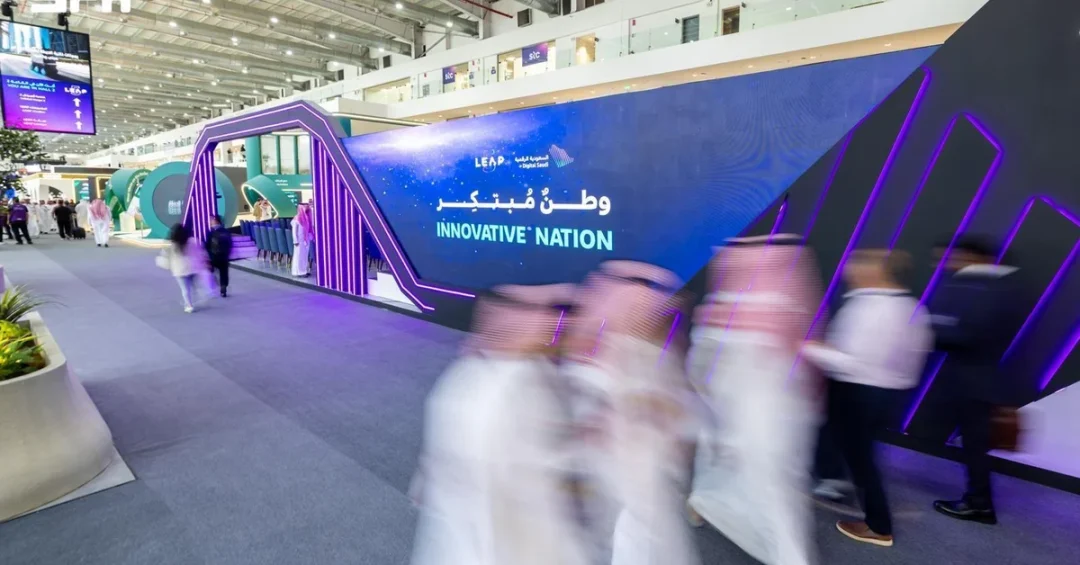
Saudi Arabia’s Digital Saudi exhibition entered its second day at LEAP 2026 in Riyadh with a series of landmark government digital initiatives, new agreements, and national success stories, underscoring the Kingdom’s accelerating shift toward an AI-driven public sector. The event, held in the Saudi capital, brought together government entities from across the Kingdom to showcase how advanced technologies and artificial intelligence are being deployed to enhance public services and deepen integration across the national digital ecosystem. According to the Saudi Press Agency (SPA), the day featured the launch of dedicated platforms, cloud transformations, and AI-powered tools by ministries and authorities, alongside the recognition of 62 government entities for their successful integration into the national Tawakkalna application. The breadth of participation highlighted the ongoing development of Saudi Arabia’s digital government ecosystem and its expanding adoption of emerging technologies.
LEAP 2026, one of the world’s most attended technology events, has become a flagship platform for Saudi Arabia to demonstrate its digital transformation progress to an international audience. The second day of Digital Saudi was marked by announcements that span media, pilgrimage services, agriculture, food safety, and civil defense, reflecting a whole-of-government approach to digital modernization. The event also hosted a panel discussion on heritage and digital transformation, exploring how digital solutions can preserve national heritage while sharing best practices. As the Kingdom advances toward the goals of Vision 2030, these initiatives illustrate how technology is being harnessed not only to improve efficiency but also to elevate the quality of life for citizens, residents, and the millions of pilgrims who visit annually.
Context and Background
How did Saudi Arabia become one of the world’s fastest-moving digital governments? The answer lies in a sustained national commitment to digital transformation that predates the COVID-19 pandemic and has accelerated under Vision 2030. The Digital Saudi exhibition at LEAP 2026 serves as a biennial checkpoint of that journey, bringing together ministries, authorities, and private-sector partners to launch new services and sign agreements. According to SPA, the second day alone saw the Ministry of Media, the Ministry of Hajj and Umrah, the Ministry of Environment, Water and Agriculture, the Saudi Food and Drug Authority, and the Saudi Data and Artificial Intelligence Authority (SDAIA) all announce significant digital milestones. The General Directorate of Civil Defense also presented a case study on the future of civil defense as part of a series spotlighting government transformation models.
The event’s emphasis on artificial intelligence reflects a broader strategic pivot. Saudi Arabia has identified AI as a cornerstone of its economic diversification and public-sector efficiency efforts. SDAIA, established in 2019, leads the national AI strategy, which aims to position the Kingdom among the top global leaders in AI by 2030. The agreements and tools launched at Digital Saudi demonstrate how this strategy is being operationalized across sectors, from pilgrimage management to food safety verification. The recognition of 62 government entities for integrating their services into Tawakkalna, the national super-app, further illustrates the scale of coordination required to deliver a unified digital experience to users. Tawakkalna, originally developed for health pass verification during the pandemic, has evolved into a comprehensive government services platform.
The second day of Digital Saudi also underscored the importance of cloud infrastructure. The Ministry of Hajj and Umrah’s announcement of the full cloud transformation of the Nusuk platform is a case in point. Nusuk, which manages pilgrim services, now operates entirely on cloud infrastructure to boost efficiency and ensure uninterrupted digital services for pilgrims. This move aligns with the Kingdom’s broader cloud-first policy, which encourages government entities to migrate to secure, scalable cloud environments. The presence of international technology firms at LEAP 2026 provides a venue for knowledge exchange and partnership, further embedding Saudi Arabia in the global digital economy.
Key Details
What specific initiatives were unveiled on the second day of Digital Saudi? The Ministry of Media launched a dedicated platform designed to unify its services and bolster sector-wide integration. This platform aims to streamline interactions between media professionals, institutions, and the ministry, reducing administrative friction and enhancing service delivery. Meanwhile, the Ministry of Hajj and Umrah announced the full cloud transformation of the Nusuk platform, a move that will improve infrastructure efficiency and ensure that pilgrims experience uninterrupted digital services throughout their journey. Nusuk, accessible via app and web, provides services ranging from visa applications to accommodation bookings and ritual guidance.
In the field of artificial intelligence, the Ministry of Environment, Water and Agriculture launched “Namaa AI,” a service designed to streamline access to the ministry’s digital offerings and elevate user interaction. The Saudi Food and Drug Authority rolled out “Pro-Verifier,” an AI-driven tool for smart product verification that cross-references product data with official registries. This tool is expected to enhance consumer safety and speed up import and inspection processes. Additionally, SDAIA signed a memorandum of understanding with Darent, a move that will likely expand collaboration on data and AI initiatives. The General Directorate of Civil Defense presented a case study on the future of civil defense, highlighting how digital tools can improve emergency response and public safety.
A major highlight of the day was the recognition of 62 government entities for successfully integrating their services into the national application Tawakkalna. This integration means that users can access a wide range of government services through a single, unified platform, improving convenience and driving adoption. The Digital Saudi exhibition also hosted a panel discussion on heritage and digital transformation, which explored the role of digital solutions in preserving national heritage and sharing best practices. These discussions reflect a holistic approach to digitalization that values cultural preservation alongside technological advancement.
The agreements and launches at Digital Saudi are not isolated events but part of a structured national program. The exhibition continues to present pioneering digital experiences, highlighting innovative solutions and technologies that enhance operational efficiency and foster deeper integration across government sectors. The presence of high-level officials and international delegates at LEAP 2026 amplifies the visibility of these initiatives, positioning Saudi Arabia as a leader in government digital transformation.
International and Regional Impact
How does Saudi Arabia’s digital government progress resonate beyond its borders? The initiatives showcased at LEAP 2026 have significant implications for regional and international partners. The cloud transformation of Nusuk, for example, directly benefits the millions of international pilgrims who use the platform each year. By ensuring uninterrupted digital services, Saudi Arabia enhances the pilgrimage experience, which is a key component of its tourism and religious diplomacy. The Nusuk platform is also a model for other countries seeking to digitize large-scale event management and public services.
On the global stage, Saudi Arabia’s advancements in AI and digital governance contribute to the international conversation on ethical AI and smart cities. SDAIA’s memoranda of understanding and partnerships, such as the one with Darent, signal the Kingdom’s openness to collaboration with global tech entities. The recognition of government entities for Tawakkalna integration demonstrates a scalable model for whole-of-government digital identity and service delivery. For international businesses and investors, these developments indicate a maturing digital market with opportunities in cloud computing, AI, and government-tech solutions. LEAP itself has become a major draw for global tech firms, further integrating Saudi Arabia into worldwide innovation networks.
Economic and Strategic Significance
What does the digital government push mean for Saudi Arabia’s economy? The initiatives launched at Digital Saudi are designed to improve public-sector efficiency, which in turn frees resources for productive investment. AI tools like Pro-Verifier and Namaa AI can reduce manual processing times and improve accuracy, leading to cost savings and faster service delivery. The cloud transformation of Nusuk enhances scalability, allowing the platform to handle peak loads during Hajj and Umrah seasons without service interruptions. These efficiencies contribute to a more attractive business environment and support the growth of the digital economy, a key pillar of Vision 2030.
Strategically, the integration of services into Tawakkalna strengthens the national digital identity framework. By consolidating services, the government can better target policies, reduce fraud, and improve user experience. The recognition of 62 entities for successful integration incentivizes further adoption and sets a benchmark for others. The presence of SDAIA and other authorities at LEAP 2026 also reinforces Saudi Arabia’s ambition to be a regional hub for AI and emerging technologies. As the Kingdom continues to invest in digital infrastructure and skills, these initiatives are expected to generate high-value jobs and attract foreign direct investment.
Vision 2030 Alignment
How do these digital initiatives align with Vision 2030? Vision 2030 aims to diversify the economy, improve public services, and enhance quality of life. The Digital Saudi exhibition at LEAP 2026 directly supports these goals by showcasing tangible progress in digital government. The Ministry of Media’s unified platform, the Nusuk cloud transformation, and the AI tools from various ministries all contribute to a more responsive and efficient government. The integration of services into Tawakkalna advances the goal of a seamless digital experience for citizens and residents. Moreover, the emphasis on AI and cloud computing aligns with the National Strategy for Data and AI, which seeks to position Saudi Arabia as a global leader in these fields.
The recognition of 62 government entities for Tawakkalna integration is a testament to the collaborative spirit driving Vision 2030. It demonstrates that digital transformation is not confined to a single ministry but is a collective national effort. As Saudi Arabia continues to host global events like LEAP and showcase its achievements, it reinforces its role as a regional and international leader in technology and innovation. The forward-looking conclusion is clear: the Kingdom is building a digital future that not only serves its people but also sets a benchmark for the world. With each new initiative, Saudi Arabia moves closer to realizing the Vision 2030 objective of a thriving, diversified, and digitally empowered nation.
20 Questions
Q1. What was the main focus of Digital Saudi’s second day at LEAP 2026?
A1. The second day focused on launching government digital initiatives, signing agreements and memoranda of understanding, and presenting national success stories, with broad participation from government entities showcasing AI and advanced technologies.
Q2. Which ministry launched a dedicated platform to unify services?
A2. The Ministry of Media launched a dedicated platform to unify its services and bolster sector-wide integration, aiming to streamline interactions and improve service delivery.
Q3. What did the Ministry of Hajj and Umrah announce regarding the Nusuk platform?
A3. The Ministry of Hajj and Umrah announced the full cloud transformation of the Nusuk platform to boost infrastructure efficiency and ensure uninterrupted digital services for pilgrims.
Q4. What is Namaa AI and which ministry launched it?
A4. Namaa AI is a service launched by the Ministry of Environment, Water and Agriculture to streamline access to digital services and elevate user interaction.
Q5. What is Pro-Verifier and which authority introduced it?
A5. Pro-Verifier is an AI-driven tool for smart product verification introduced by the Saudi Food and Drug Authority. It cross-references product data with official registries to enhance safety.
Q6. Which authority signed a memorandum of understanding with Darent?
A6. The Saudi Data and Artificial Intelligence Authority signed a memorandum of understanding with Darent, expanding collaboration on data and AI initiatives.
Q7. What case study was presented by the General Directorate of Civil Defense?
A7. The General Directorate of Civil Defense presented a case study on the future of Civil Defense as part of a series spotlighting government transformation models.
Q8. What was the theme of the panel discussion hosted by Digital Saudi?
A8. The panel discussion focused on heritage and digital transformation in the Kingdom, exploring the role of digital solutions in preserving national heritage and sharing best practices.
Q9. How many government entities were recognized for integrating services into Tawakkalna?
A9. A total of 62 government entities were recognized for successfully integrating their services into the national application Tawakkalna.
Q10. What is Tawakkalna and why is its integration significant?
A10. Tawakkalna is Saudi Arabia’s national super-app for government services. Its integration by 62 entities signifies a unified digital experience for users and improved service accessibility.
Q11. What does the cloud transformation of Nusuk mean for pilgrims?
A11. It ensures that pilgrims experience uninterrupted digital services, improved infrastructure efficiency, and reliable access to Nusuk’s services during their pilgrimage journey.
Q12. How does Namaa AI enhance digital interaction?
A12. Namaa AI streamlines access to the ministry’s services, making it easier for users to interact digitally and access information related to environment, water, and agriculture.
Q13. What is the purpose of Pro-Verifier?
A13. Pro-Verifier uses AI to verify product data against official registries, enhancing consumer safety, speeding up inspections, and ensuring compliance with regulations.
Q14. What is the significance of SDAIA’s MoU with Darent?
A14. The MoU expands collaboration on data and AI initiatives, supporting Saudi Arabia’s national AI strategy and fostering innovation in the public and private sectors.
Q15. How does Digital Saudi reflect the development of the Kingdom’s digital ecosystem?
A15. It highlights ongoing development and expanding adoption of advanced technologies and AI across government entities, demonstrating a cohesive national digital transformation effort.
Q16. What role does LEAP 2026 play in Saudi Arabia’s tech ambitions?
A16. LEAP 2026 serves as a global platform for Saudi Arabia to showcase its digital achievements, attract international partnerships, and position itself as a leader in technology and innovation.
Q17. How do these initiatives support Vision 2030?
A17. They enhance public service efficiency, improve quality of life, and support economic diversification, all core objectives of Vision 2030, while advancing the National Strategy for Data and AI.
Q18. What are the economic benefits of AI adoption in government services?
A18. AI adoption reduces manual processing, lowers costs, speeds up service delivery, and improves accuracy, contributing to a more efficient public sector and a competitive digital economy.
Q19. How does the recognition of 62 entities incentivize further digital integration?
A19. It sets a benchmark and encourages other government entities to integrate their services into Tawakkalna, fostering a unified digital government ecosystem.
Q20. What can we expect next from Saudi Arabia’s digital government?
A20. Continued expansion of AI and cloud services, deeper integration across sectors, and more international partnerships, all aligned with Vision 2030 and the goal of a digitally empowered nation.
Reader Feedback
We value your thoughts. Please share your feedback on this article.
Your feedback helps us improve our coverage.
Related articles
 Suhail Star Heralds Milder Weather in Southern Saudi Arabia
 Crown Prince Congratulates Vietnam on Independence Day
 King Salman Congratulates Vietnam on Independence Day
 Environment Ministry Concludes Date Quality Campaign in Qassim
 Saudi Crown Prince Congratulates Uruguay President on Independence Day
 King Salman Congratulates Uruguay on Independence Day