


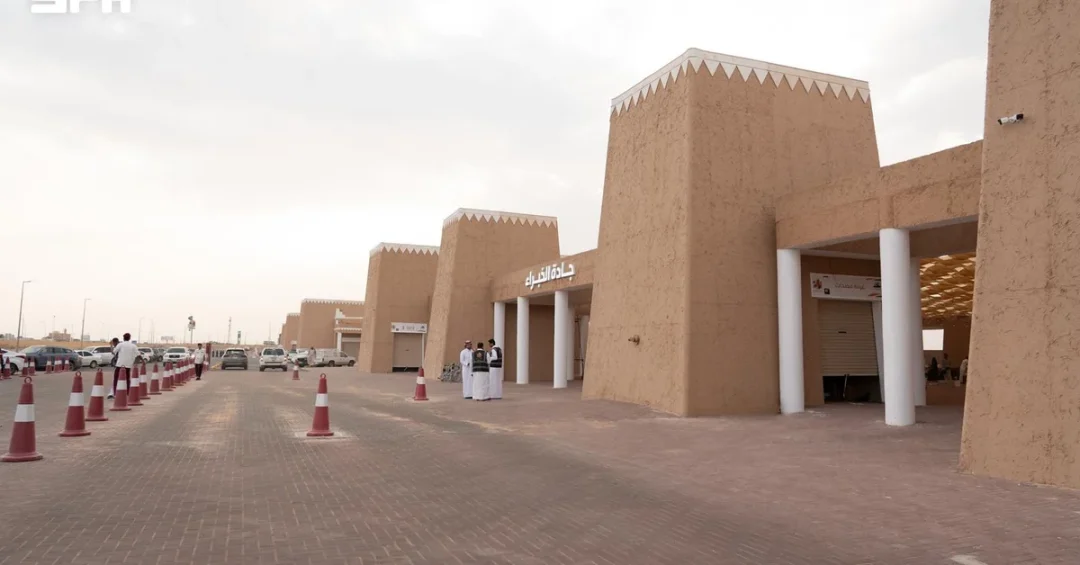
Al-Khabra Boulevard in Saudi Arabia’s Qassim Region has emerged as a strategically positioned economic and tourism destination, drawing on its location along King Fahd Road, the Qassim-Madinah Expressway, to serve travelers, visitors, and a growing community of local producers, according to information released by the Saudi Press Agency (SPA). The development combines commercial activity with tourism and entertainment events, functioning as an attractive stop for road travelers and a platform for marketing the region’s agricultural, handicraft, and heritage products. The project reflects a broader pattern across the Kingdom in which well-placed roadside destinations are being developed into engines of local economic activity, supporting farmers, families working in the cottage industry, and entrepreneurs while strengthening the presence of distinctive Saudi products, particularly dates.
At a time when Saudi Arabia is steadily expanding its domestic tourism and retail sectors, Al-Khabra Boulevard illustrates how targeted infrastructure can transform a simple roadside location into a multi-purpose destination. The project includes around 160 shops and 40 kiosks across an area of approximately 50,000 square meters, creating a diverse environment for commercial activities, festivals, and seasonal events. For startups and cottage-industry families, it offers outlets to reach a broad segment of consumers. Its design, inspired by Najdi identity and local architecture, adds a heritage and cultural dimension to the economic and tourism experience, positioning the boulevard as a model for leveraging sites along major roads to support the local economy.
Context and Background
How does a single boulevard on a desert highway become a catalyst for an entire region’s commercial identity? Al-Khabra Boulevard’s rise is best understood against the backdrop of Qassim’s historical role as one of the Kingdom’s most productive agricultural heartlands. Known for its date palm groves, citrus farms, and a long tradition of handicrafts, Qassim has for decades supplied markets across Saudi Arabia with foodstuffs and artisanal goods. However, like many agricultural regions worldwide, it has faced the challenge of connecting small producers to larger consumer markets. The boulevard directly addresses that gap by placing retail space, kiosks, and event venues along a major artery that carries travelers between Qassim and Madinah.
King Fahd Road, referred to locally as the Qassim-Madinah Expressway, is more than a transport corridor. It is a lifeline for pilgrims, business travelers, and tourists moving through the center of the country. By situating a commercial and cultural destination directly on this route, planners have ensured a steady flow of potential customers. The Saudi Press Agency reported that the boulevard serves as an attractive stop for travelers and visitors, a role that turns passing traffic into economic opportunity. This approach mirrors a wider national effort to develop service stations, rest areas, and roadside markets into destinations in their own right, rather than purely functional waypoints.
The project also reflects a shift in how local development is conceived. Instead of isolated retail centers, the boulevard integrates shopping, dining, entertainment, and heritage displays into a single experience. That integration is deliberate: it extends the time visitors spend on site, increases spending across multiple categories, and gives small vendors access to foot traffic that would be difficult to generate independently. For a region with deep agricultural roots, the model offers a way to convert cultural authenticity into sustainable commercial activity.
Key Details and Design
What makes Al-Khabra Boulevard distinctive is not simply its size but its deliberate blend of commerce and culture. According to the Saudi Press Agency, the project features a design inspired by Najdi identity and local architecture, alongside dedicated areas showcasing products, food, handicrafts, and entertainment activities. This architectural choice is significant: it ensures that the destination feels rooted in Qassim’s heritage rather than resembling a generic retail complex. Visitors encounter traditional design elements while browsing modern retail outlets, a combination that reinforces a sense of place.
The roughly 160 shops and 40 kiosks are arranged across approximately 50,000 square meters, providing space for a wide range of commercial activities. Festivals and seasonal events are a central part of the offering, giving the boulevard a dynamic calendar that changes throughout the year. For entrepreneurs and families working in the cottage industry, these events represent a low-barrier route to market. A kiosk operator selling handmade goods or local food products can reach hundreds of visitors in a single weekend, an opportunity that would be far harder to secure in a conventional shopping mall.
Dates occupy a prominent place in the product mix, which is unsurprising given Qassim’s reputation as a leading date-producing region. By giving local dates and date-based products a high-visibility platform, the boulevard helps strengthen an industry that is both economically important and culturally emblematic. Handicrafts, agricultural goods, and heritage products round out the offering, ensuring that the destination reflects the full breadth of Qassim’s productive traditions. The result is a commercial space that doubles as a showcase for regional identity.
International and Regional Impact
Why should international observers pay attention to a boulevard in central Saudi Arabia? The answer lies in the model it represents. Across the Middle East and beyond, governments are searching for ways to diversify rural economies, support small businesses, and attract domestic tourism. Al-Khabra Boulevard offers a practical example of how existing infrastructure, in this case a major highway, can be leveraged to create new economic value without requiring entirely new transport networks. The approach is cost-effective, scalable, and rooted in local assets.
Regionally, the project strengthens Qassim’s position within Saudi Arabia’s tourism map. The Kingdom has been actively promoting destinations beyond the major cities, and Qassim, with its agricultural heritage, moderate climate, and distinctive culture, is well placed to benefit. Travelers moving between the Qassim region and Madinah now have a compelling reason to stop, spend, and engage with local products. That spending circulates within the regional economy, supporting farmers, artisans, and small business owners. Over time, such stops can extend stays and encourage repeat visits, deepening the region’s tourism footprint.
Internationally, the boulevard contributes to Saudi Arabia’s broader image as a country investing in quality-of-life infrastructure and community-focused development. Visitors from abroad who travel through the region encounter a destination that is clean, well-organized, and culturally authentic. That experience feeds into wider perceptions of the Kingdom as a modern, welcoming, and economically dynamic society, reinforcing the messages at the heart of national transformation efforts.
Economic and Strategic Significance
What does it take to turn passing traffic into lasting economic activity? Al-Khabra Boulevard’s design answers that question through a combination of location, variety, and cultural appeal. The strategic placement on King Fahd Road ensures a constant supply of potential customers, while the mix of shops, kiosks, and event spaces encourages longer visits and higher spending. For local farmers, the boulevard provides a direct channel to consumers, reducing dependence on intermediaries and improving margins. For cottage-industry families, it offers a professional retail environment that would otherwise be out of reach.
The project also supports job creation and skills development. Retail outlets, food vendors, event staff, and maintenance roles all contribute to local employment. More importantly, the boulevard functions as an incubator for small businesses. Startups that prove successful at a kiosk or seasonal stall can grow into permanent shops, creating a pipeline of enterprise development. This progression from micro-scale to established business is a key mechanism through which the project can generate lasting economic impact rather than temporary activity.
From a strategic perspective, the boulevard demonstrates the value of integrating economic development with tourism and heritage promotion. Rather than treating these as separate sectors, the project weaves them together, so that a visit to buy dates also becomes an encounter with Najdi architecture and local craftsmanship. This integration increases the resilience of the local economy: revenue streams are diversified across retail, food, entertainment, and events, reducing vulnerability to downturns in any single category. It is a model that can be replicated in other regions with similar assets.
Vision 2030 Alignment
How does a regional boulevard connect to a national transformation agenda? Saudi Vision 2030 places strong emphasis on diversifying the economy, empowering small businesses, creating jobs, and enriching the quality of life for citizens and visitors. Al-Khabra Boulevard advances each of these objectives in tangible ways. By giving local producers and entrepreneurs access to consumers, it supports private-sector growth. By promoting Qassim’s agricultural and heritage products, it contributes to non-oil economic activity. By creating an attractive destination for travelers, it strengthens domestic tourism, a priority sector under the Vision.
The project also reflects the Vision’s focus on balanced regional development. Rather than concentrating investment solely in major metropolitan areas, initiatives like this bring economic opportunity to regions such as Qassim, helping to spread prosperity and reduce disparities. The emphasis on local identity and architecture ensures that development remains culturally grounded, a principle that runs through many Vision 2030 programs. As Saudi Arabia continues to expand its tourism and retail sectors, Al-Khabra Boulevard stands as a practical example of how strategic location, thoughtful design, and community participation can combine to create enduring value for a region and its people.
20 Questions
Q1. What is Al-Khabra Boulevard and where is it located?
A1. Al-Khabra Boulevard is an economic and tourism destination in Saudi Arabia’s Qassim Region. It is situated along King Fahd Road, also known as the Qassim-Madinah Expressway, positioning it as a convenient stop for travelers and visitors passing through the area.
Q2. What is the size of Al-Khabra Boulevard?
A2. The project spans an area of approximately 50,000 square meters. This substantial footprint accommodates commercial, tourism, and entertainment functions, allowing the boulevard to host a wide range of activities and visitors throughout the year.
Q3. How many shops and kiosks does the boulevard include?
A3. According to the Saudi Press Agency, Al-Khabra Boulevard includes around 160 shops and 40 kiosks. This mix of permanent retail spaces and smaller outlets provides diverse opportunities for businesses of different sizes and types.
Q4. What types of products are marketed at Al-Khabra Boulevard?
A4. The boulevard serves as a platform for marketing the Qassim region’s agricultural, handicraft, and heritage products. Dates are particularly prominent, reflecting Qassim’s status as a leading date-producing region in the Kingdom.
Q5. How does the boulevard support local farmers?
A5. By providing direct retail space and kiosks, the boulevard allows farmers to sell their products to consumers without relying solely on intermediaries. This improves margins and gives agricultural producers greater visibility among travelers and local shoppers.
Q6. What role do cottage-industry families play at the boulevard?
A6. Families working in the cottage industry are given outlets to reach a broad segment of consumers. The kiosks and event spaces offer them a professional retail environment that would otherwise be difficult and costly to access independently.
Q7. What is the architectural style of Al-Khabra Boulevard?
A7. The design is inspired by Najdi identity and local architecture. This approach ensures the destination reflects the cultural heritage of the Qassim region, giving visitors a sense of place rather than a generic commercial experience.
Q8. What kinds of events take place at the boulevard?
A8. The boulevard hosts festivals and seasonal events alongside its regular commercial activity. These events add variety to the visitor experience and create recurring opportunities for vendors, entertainers, and entrepreneurs to engage with the public.
Q9. Why is the location on King Fahd Road important?
A9. King Fahd Road is a major route connecting Qassim with Madinah, carrying pilgrims, business travelers, and tourists. This steady flow of traffic provides a reliable customer base for the boulevard’s shops, kiosks, and event venues.
Q10. How does the boulevard stimulate the local economy?
A10. It combines commercial activity with tourism and entertainment, generating spending across multiple sectors. This supports farmers, small business owners, and entrepreneurs, while keeping economic benefits circulating within the Qassim region.
Q11. What makes Al-Khabra Boulevard a tourism destination?
A11. Its combination of shopping, dining, heritage displays, and entertainment creates a complete visitor experience. Travelers on the Qassim-Madinah route have a compelling reason to stop, spend time, and engage with local culture and products.
Q12. How does the project support startups?
A12. Startups can use kiosks and seasonal stalls as low-cost entry points to test their products and build a customer base. Successful ventures can then expand into permanent shops within the boulevard, creating a growth pipeline.
Q13. What is the significance of dates in the boulevard’s product mix?
A13. Dates are a signature product of Qassim and hold cultural and economic importance. By giving them high visibility, the boulevard strengthens a key regional industry and reinforces the area’s identity as a center of date production.
Q14. How does the boulevard reflect Najdi heritage?
A14. The architecture and design draw on Najdi identity, incorporating local styles and traditional elements. This ensures that the commercial and tourism experience remains connected to the region’s cultural roots and history.
Q15. What benefits does the boulevard bring to travelers?
A15. Travelers gain a well-organized stop where they can rest, shop for local products, enjoy food, and experience regional culture. This improves the quality of long journeys along the Qassim-Madinah Expressway.
Q16. How does Al-Khabra Boulevard align with Saudi Vision 2030?
A16. It supports economic diversification, small business growth, job creation, and domestic tourism, all key objectives of Vision 2030. It also promotes balanced regional development by bringing opportunity to Qassim.
Q17. Can the Al-Khabra Boulevard model be replicated elsewhere?
A17. Yes. The model of leveraging sites along major roads to support local economies can be adapted to other regions with similar assets. It requires strategic location, thoughtful design, and community participation.
Q18. What employment opportunities does the project create?
A18. The boulevard creates roles in retail, food service, event management, and maintenance. It also supports self-employment for vendors and artisans, contributing to local job creation and skills development.
Q19. How does the boulevard enhance Qassim’s tourism profile?
A19. By offering a distinctive destination that combines commerce, culture, and entertainment, it gives visitors a reason to explore Qassim. This can extend stays and encourage repeat visits, strengthening the region’s tourism sector.
Q20. What is the long-term outlook for Al-Khabra Boulevard?
A20. As Saudi Arabia continues to invest in tourism and regional development, the boulevard is well positioned to grow. Its strategic location and diverse offerings provide a strong foundation for sustained economic and cultural activity.
Reader Feedback
We value your thoughts. Please share your feedback on this article.
Your feedback helps us improve our coverage.
Related articles
 Naqwa Unaizah Dates Reach 65 Countries Worldwide
 Tabuk Governor Inaugurates SAR176M Road Projects in Saudi Arabia
 RSGT, CMA CGM Sign SAR1.6 Billion Deal to Develop Jeddah Port Terminal
 Saudi Energy, Bpifrance Sign Grid Financing Agreement
 Crown Prince and Macron Lead Saudi-French Investment Roundtable in Paris
 Saudi-French Trade Hits $53.7 Billion Over Five Years