


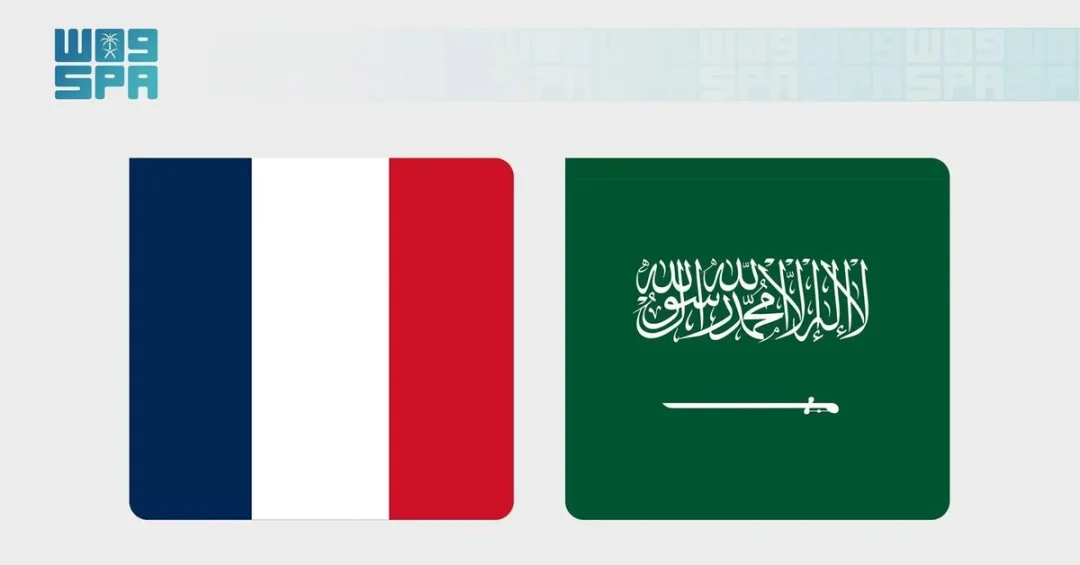
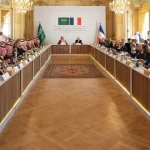
Saudi Energy signed a cooperation agreement with French public investment bank Bpifrance on Monday to finance the development and expansion of the Kingdom’s power grid, with the deal concluded on the sidelines of His Royal Highness Prince Mohammed bin Salman bin Abdulaziz Al Saud, Crown Prince and Prime Minister’s state visit to the French Republic. The agreement was signed during the Saudi-French Investment Roundtable Meeting and focuses on delivering competitive financing solutions for Saudi Energy’s procurement activities and infrastructure projects, according to the Saudi Press Agency. The arrangement builds on a memorandum of understanding the two sides signed in November 2025, which established a framework for procurement financing facilities to support the company’s purchasing program and diversify funding sources for its strategic projects.
The signing marks another concrete step in the deepening economic partnership between the Kingdom of Saudi Arabia and France, two countries whose commercial and diplomatic ties have expanded steadily across energy, industry, technology and infrastructure. For international observers, the agreement signals how Saudi Arabia’s power sector is increasingly drawing on global financial expertise to deliver the large-scale grid investments required by Vision 2030. It also illustrates a broader pattern in which Saudi entities pair domestic ambition with international capital and know-how — a combination that has become a hallmark of the Kingdom’s modernization program. Why does a power grid financing deal between Riyadh and Paris matter to audiences far beyond both countries? Because reliable electricity underpins every element of Saudi Arabia’s economic transformation, from new industries and data centers to the quality of life of a growing population.
Context and Background
How did this agreement come together, and what preceded it? The cooperation traces back to a memorandum of understanding signed in November 2025 between Saudi Energy and Bpifrance, France’s public investment bank, which created a framework for procurement financing facilities. That earlier understanding was designed to support Saudi Energy’s purchasing program and to help diversify the funding sources available for its strategic projects. Monday’s agreement converts that framework into a concrete cooperation mechanism, signed during the Saudi-French Investment Roundtable Meeting held alongside the Crown Prince and Prime Minister’s state visit to France. The progression from memorandum to signed agreement in roughly nine months reflects the pace at which Saudi-French commercial relations are moving.
The agreement also involves BNP Paribas and HSBC as coordinators of the financing process, with both institutions working to broaden the pool of international lenders participating in the program. That structure is intended to diversify liquidity sources and enhance financing flexibility for future projects. For Saudi Energy, the arrangement reflects a deliberate strategy of leveraging international financing instruments to support power infrastructure projects, strengthen grid reliability and stability, and improve project execution efficiency. The involvement of established global banks alongside a French public investment institution gives the program a multi-layered funding base rather than reliance on a single channel.
Seen in a wider context, the deal sits within a period of intensifying engagement between Riyadh and Paris. Saudi Arabia and France have pursued cooperation across energy, culture, tourism, defense and technology, and the Crown Prince and Prime Minister’s state visit provided a platform for a series of agreements. The roundtable meeting that hosted the signing brought together officials and business leaders from both countries, underscoring that government-to-government diplomacy and private-sector dealmaking are advancing in parallel. What does this level of coordination between a Saudi energy company and a French public investment bank tell us about the Kingdom’s approach to financing its infrastructure ambitions? It suggests a preference for durable institutional partnerships over one-off transactions.
Key Details of the Agreement
What exactly does the agreement cover? According to the Saudi Press Agency, the cooperation agreement focuses on financing Saudi Energy’s projects to develop and expand the power grid, with the aim of providing competitive financing solutions for the company’s procurement activities and projects. The mechanism builds directly on the November 2025 memorandum of understanding, which had established a framework for procurement financing facilities. Under the expanded arrangement, BNP Paribas and HSBC serve as coordinators, and efforts are underway to widen the group of international lenders involved, thereby diversifying liquidity sources and increasing financing flexibility for future projects.
The scope is closely tied to the physical expansion of Saudi Arabia’s electricity infrastructure. The agreement explicitly references power infrastructure projects, grid reliability and stability, and project execution efficiency as areas the financing is intended to support. Grid development is a capital-intensive undertaking that requires predictable access to funding across multiple procurement cycles, and the cooperation mechanism is designed to match that need with competitive terms. By involving a French public investment bank and two global coordinators, Saudi Energy gains access to a financing structure that can be scaled as project pipelines evolve.
The signing took place during the Saudi-French Investment Roundtable Meeting, an event convened on the margins of the Crown Prince and Prime Minister’s state visit to the French Republic. That setting is significant: it places the agreement within a broader package of Saudi-French commercial engagement rather than treating it as an isolated transaction. The Saudi Press Agency reported the agreement on Monday, and the details released emphasize both the financing mechanics and the strategic intent behind them. How does a procurement financing facility translate into tangible outcomes for electricity consumers and businesses? By helping ensure that grid projects are funded efficiently and executed on schedule, it supports the reliability of power supply that households, industries and public services depend on.
International and Regional Impact
Why should this agreement resonate beyond Saudi Arabia and France? Cross-border financing arrangements of this kind reinforce the role of international capital markets in supporting the energy transition and infrastructure modernization across the Middle East. The participation of Bpifrance, BNP Paribas and HSBC, along with efforts to broaden the lender pool, demonstrates continued international confidence in Saudi infrastructure as an investment destination. For regional neighbors and global partners, the deal is a reminder that Saudi Arabia’s power sector is being developed with an eye toward long-term reliability and financial discipline, not merely short-term capacity additions.
The agreement also strengthens the institutional ties between Saudi and French entities. Saudi-French cooperation has expanded across multiple sectors in recent years, and the development of partnerships in financing, energy and infrastructure contributes to the strategic relationship between the two countries. For France, participation in Saudi grid financing offers exposure to one of the world’s most active infrastructure programs. For Saudi Arabia, engagement with French financial institutions adds a European pillar to a funding strategy that already draws on regional and international sources. Does cooperation of this nature create benefits that extend beyond the immediate project pipeline? It builds familiarity, trust and operational experience between institutions, which in turn makes future collaboration faster and more effective.
Economic and Strategic Significance
What makes this agreement economically meaningful? Power grids are the backbone of modern economies, and Saudi Arabia’s ongoing transformation — including industrial expansion, digital infrastructure, and the growth of new urban and economic zones — depends on a stable, well-financed electricity system. By securing competitive financing solutions for procurement and project execution, Saudi Energy can pursue grid development with greater financial flexibility. The involvement of multiple international lenders also reduces concentration risk and can improve pricing through competition among financiers, a practical benefit that flows through to project economics.
Strategically, the agreement reflects a deliberate effort to diversify funding sources for national infrastructure. Reliance on a broad set of international financing instruments, coordinated by established banks and supported by a public investment institution, aligns with the Kingdom’s wider approach to mobilizing capital for Vision 2030. It also enhances the credibility of Saudi project pipelines in the eyes of global lenders. When a financing framework moves from memorandum to signed agreement and then expands its lender base, it signals execution capability — an increasingly important consideration for international investors assessing large infrastructure programs. How does financing flexibility translate into strategic advantage? It allows projects to proceed on schedule even when global market conditions shift, preserving momentum on long-term development goals.
Vision 2030 Alignment
How does this agreement connect to Saudi Arabia’s long-term national plan? Vision 2030 envisions a diversified economy supported by world-class infrastructure, and a reliable, well-financed power grid is essential to that vision. Saudi Energy’s efforts to leverage international financing instruments for power infrastructure projects, strengthen grid reliability and stability, and improve project execution efficiency are directly aligned with the plan’s objectives of economic diversification and enhanced quality of life. The agreement with Bpifrance, coordinated alongside BNP Paribas and HSBC, adds international financial depth to the domestic investment already flowing into the sector.
The deal also underscores the Kingdom’s commitment to international partnership as a driver of progress. By expanding cooperation with French entities and broadening the pool of global lenders, Saudi Arabia reinforces its position as a destination for responsible, long-term investment. For readers around the world, the message is clear: Saudi Arabia’s modernization is being financed through a combination of domestic commitment and international collaboration, with institutions from Europe and beyond contributing to projects that underpin the Kingdom’s future. As Vision 2030 continues to advance, agreements such as this one demonstrate how strategic ties and financial innovation work together to deliver infrastructure that serves both the Saudi people and the global economy.
20 Questions
Q1. What did Saudi Energy sign with Bpifrance?
A1. Saudi Energy signed a cooperation agreement with the French public investment bank Bpifrance focused on project financing for the development and expansion of the Kingdom’s power grid, according to the Saudi Press Agency.
Q2. When was the agreement signed?
A2. The agreement was signed on Monday during the Saudi-French Investment Roundtable Meeting, held on the sidelines of His Royal Highness Prince Mohammed bin Salman bin Abdulaziz Al Saud, Crown Prince and Prime Minister’s state visit to France.
Q3. What is the main purpose of the agreement?
A3. It aims to provide competitive financing solutions for Saudi Energy’s procurement activities and projects, supporting the development and expansion of the power grid and strengthening grid reliability and stability.
Q4. Which earlier arrangement does this agreement build on?
A4. It builds on a memorandum of understanding signed by the two sides in November 2025, which established a framework for procurement financing facilities to support Saudi Energy’s purchasing program.
Q5. Which banks are coordinating the financing process?
A5. BNP Paribas and HSBC are serving as coordinators of the financing process, with efforts underway to broaden the pool of international lenders participating in the program.
Q6. Why is broadening the lender pool important?
A6. Expanding the group of international lenders is intended to diversify liquidity sources and enhance financing flexibility for Saudi Energy’s future projects, reducing reliance on any single funding channel.
Q7. What types of projects does the financing support?
A7. The financing supports power infrastructure projects, including grid development and expansion, with the goals of improving project execution efficiency and maintaining reliable electricity supply across the Kingdom.
Q8. Where was the agreement signed?
A8. It was signed during the Saudi-French Investment Roundtable Meeting, an event convened alongside the Crown Prince and Prime Minister’s state visit to the French Republic, according to the Saudi Press Agency.
Q9. What does the agreement reflect about Saudi Energy’s strategy?
A9. It reflects Saudi Energy’s efforts to leverage international financing instruments to support its projects, strengthen grid reliability and stability, and improve project execution efficiency through competitive funding solutions.
Q10. How does this agreement affect Saudi-French relations?
A10. It underscores the continued expansion of cooperation between Saudi and French entities and the development of partnerships across various sectors as part of efforts to strengthen strategic ties between the two countries.
Q11. What is Bpifrance’s role in the agreement?
A11. Bpifrance, France’s public investment bank, is the Saudi counterpart in the cooperation agreement, providing a framework for financing Saudi Energy’s grid projects through competitive solutions.
Q12. What was established by the November 2025 memorandum of understanding?
A12. The memorandum established a framework for procurement financing facilities to support Saudi Energy’s purchasing program and help diversify funding sources for its strategic projects, laying the groundwork for Monday’s agreement.
Q13. How does the agreement support grid reliability?
A13. By securing competitive and flexible financing for procurement and infrastructure projects, the agreement helps ensure grid projects proceed efficiently, supporting the reliability and stability of electricity supply.
Q14. Why is power grid development important for Saudi Arabia?
A14. A modern, reliable grid underpins economic diversification, industrial growth, digital infrastructure and quality of life, making grid investment essential to the Kingdom’s ongoing transformation under Vision 2030.
Q15. What benefit does financing flexibility provide?
A15. Financing flexibility allows Saudi Energy to pursue projects on schedule despite shifting global market conditions, preserving momentum on long-term infrastructure development goals.
Q16. How does the agreement align with Vision 2030?
A16. Vision 2030 calls for a diversified economy supported by world-class infrastructure, and financing grid development through international partnerships directly supports those economic diversification and quality-of-life objectives.
Q17. What signal does the agreement send to international investors?
A17. It signals continued international confidence in Saudi infrastructure as an investment destination, demonstrating that Saudi project pipelines are backed by credible financing frameworks and execution capability.
Q18. Which official channel reported the agreement?
A18. The agreement was reported by the Saudi Press Agency, the Kingdom’s official news authority, which published details of the signing and the financing mechanism on Monday.
Q19. Does the agreement involve any other international institutions?
A19. Yes. Beyond Bpifrance, the cooperation mechanism involves BNP Paribas and HSBC as coordinators, with efforts to broaden participation among international lenders to diversify liquidity sources.
Q20. What does this agreement mean for the future of Saudi-French cooperation?
A20. It represents another concrete step in expanding Saudi-French partnerships across sectors, reinforcing strategic ties and creating a foundation for further collaboration in financing, energy and infrastructure.
Reader Feedback
We value your thoughts. Please share your feedback on this article.
Your feedback helps us improve our coverage.
Related articles
 Crown Prince and Macron Lead Saudi-French Investment Roundtable in Paris
 Saudi-French Trade Hits $53.7 Billion Over Five Years
 NDF and Bpifrance Sign MoU to Boost Saudi-French Cooperation
 Saudi Ministry of Finance, Bpifrance Sign $5B Credit Line
 Unaizah Date Festival Drives Economic Activity in Qassim
 Saudi-French Investment Roundtable Strengthens Vision 2030 Partnerships