


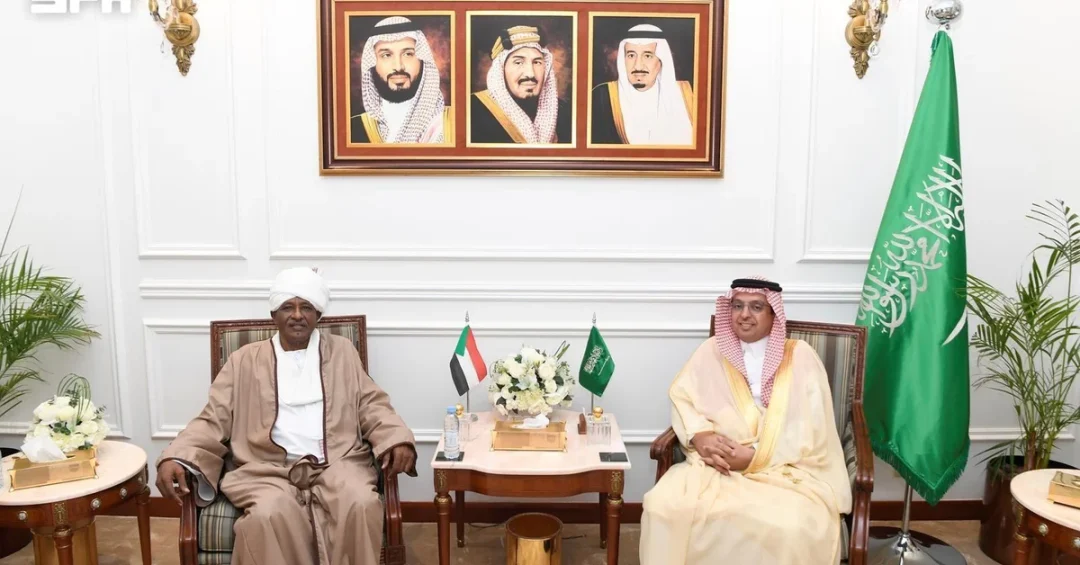
Director General of the Ministry of Foreign Affairs branch in Makkah Region Fareed Al-Shehri received Consul General of the Republic of the Sudan Ambassador Kamal Ali Othman Taha in Jeddah on August 23, 2026, in a formal diplomatic meeting that underscores the enduring strength of Saudi-Sudanese relations. The encounter, announced by the Saudi Press Agency (SPA), brought together two senior representatives of the Kingdom’s diplomatic apparatus and the Sudanese consular corps for discussions on a number of topics of common interest. The meeting reflects the Kingdom’s continued commitment to open diplomatic channels and regional cooperation under the leadership of the Custodian of the Two Holy Mosques and His Royal Highness the Crown Prince.
Why does a single diplomatic meeting in Jeddah matter to observers far beyond the Red Sea region? In the context of Saudi Arabia’s expanding global role, engagements at the consular and regional level are not routine formalities but essential components of a broader strategy to maintain stability, foster economic partnership, and support the well-being of communities connected to the Kingdom. The Makkah Region, home to Jeddah’s diplomatic quarter and the gateway to the Two Holy Mosques, serves as a natural venue for such consultations, particularly with a nation as historically and culturally close to Saudi Arabia as Sudan.
Context and Background
What makes the Saudi-Sudanese relationship one of the most durable partnerships in the region? The ties between the Kingdom of Saudi Arabia and the Republic of the Sudan rest on decades of shared history, geographic proximity across the Red Sea, and deep cultural and religious connections. Sudan has long been a partner in regional affairs, and its citizens have contributed to the social and economic fabric of the Kingdom, including through scholarship programs, professional exchanges, and participation in the annual Hajj and Umrah seasons. The consular relationship is therefore not merely administrative but reflects a living, people-centered partnership.
The Ministry of Foreign Affairs branch in the Makkah Region plays a critical role in managing these relationships. Based in Jeddah, the branch oversees diplomatic engagement for a region that includes the Kingdom’s second-largest city and the principal gateway for millions of pilgrims and international visitors. Fareed Al-Shehri, as Director General, is responsible for coordinating with consulates, facilitating official visits, and ensuring that the Kingdom’s diplomatic outreach is consistent with the directives of the Ministry of Foreign Affairs in Riyadh. His meeting with Ambassador Kamal Ali Othman Taha therefore represents the operational layer of Saudi diplomacy, where policy objectives are translated into practical cooperation.
How has the Kingdom positioned itself as a stabilizing force in the region? Under Vision 2030, Saudi Arabia has pursued a foreign policy that prioritizes dialogue, development, and mutual respect among nations. The Kingdom’s diplomatic network, including its regional branches, supports this approach by maintaining regular contact with counterparts and addressing shared challenges such as economic diversification, labor mobility, and humanitarian coordination. The Sudanese Consulate General in Jeddah is a key node in this network, serving a large Sudanese community and facilitating bilateral exchanges. Meetings like this one help ensure that communication remains open and that both sides can respond quickly to the needs of their citizens.
Key Details of the Meeting
What was actually discussed during the meeting in Jeddah? According to the official statement released via the Saudi Press Agency, Director General Fareed Al-Shehri and Consul General Ambassador Kamal Ali Othman Taha discussed a number of topics of common interest. While the specific agenda items were not detailed in the initial announcement, the phrase “topics of common interest” in Saudi diplomatic practice typically encompasses consular services, bilateral cooperation, regional developments, and matters affecting the two countries’ citizens. The meeting took place at the Ministry of Foreign Affairs branch in the Makkah Region, reinforcing the branch’s role as a hub for diplomatic engagement in western Saudi Arabia.
The participants themselves signal the importance of the encounter. Fareed Al-Shehri serves as Director General of the Makkah Region branch, a position that places him at the intersection of the Kingdom’s diplomatic, security, and service-delivery functions. Ambassador Kamal Ali Othman Taha, as Consul General of the Republic of the Sudan, represents Sudanese interests in the Kingdom and is responsible for protecting Sudanese citizens, promoting trade and cultural ties, and maintaining close communication with Saudi authorities. The professional and respectful tone of the meeting, as conveyed by the official announcement, reflects the mutual regard that characterizes Saudi-Sudanese relations.
Why does the location of the meeting matter? Jeddah has long been the diplomatic capital of the Kingdom, hosting foreign consulates and serving as the historic gateway for pilgrims and traders. The Makkah Region branch of the Ministry of Foreign Affairs operates in a city that is both a commercial center and a cultural crossroads. Holding this meeting in Jeddah allowed the two officials to address consular matters directly relevant to the large Sudanese community in the region while also benefiting from the city’s proximity to the holy sites. This dual function—diplomatic and service-oriented—illustrates how Saudi Arabia integrates its regional governance with its international obligations.
International and Regional Impact
How does a consular meeting in Jeddah resonate across the Red Sea and beyond? The relationship between Saudi Arabia and Sudan has implications for regional stability, trade, and humanitarian cooperation. The Red Sea corridor is a vital artery for global commerce and energy shipments, and both nations share an interest in maintaining maritime security and freedom of navigation. By maintaining regular diplomatic contact, the Kingdom and Sudan contribute to a climate of predictability and cooperation that benefits not only their own citizens but also the wider region. This meeting is therefore a small but meaningful building block in a larger architecture of regional peace and prosperity.
What signal does this send to the international community? It demonstrates that Saudi Arabia remains engaged with its neighbors and partners even amid a rapidly changing geopolitical landscape. The Kingdom’s diplomatic outreach is consistent and institutionalized, operating through ministries, regional branches, and consulates rather than ad hoc channels. For international observers, this consistency is a sign of reliability. For Sudanese citizens in the Kingdom, it is a reassurance that their interests are represented and that bilateral channels remain open. The meeting also aligns with Saudi Arabia’s broader efforts to support development and stability in Africa and the Red Sea region through dialogue and economic partnership.
Economic and Strategic Significance
What economic threads connect Saudi Arabia and Sudan, and why should global audiences pay attention? The two countries have long-standing trade links, with Sudan exporting agricultural products, livestock, and other goods to the Kingdom, while Saudi Arabia provides investment, energy products, and development assistance. Sudanese professionals and workers contribute to the Saudi economy, and Saudi companies have explored opportunities in Sudanese agriculture, mining, and infrastructure. The consular channel is essential for facilitating these exchanges, from visa processing to the resolution of commercial disputes. Meetings like the one in Jeddah help keep these economic arteries open and efficient.
How does this fit into Saudi Arabia’s strategic priorities? The Kingdom’s Vision 2030 agenda emphasizes economic diversification, international investment, and the expansion of non-oil trade. Strengthening ties with African nations, including Sudan, supports these goals by opening new markets for Saudi goods and services and by securing supply chains for food and raw materials. Moreover, Saudi Arabia’s role as a logistics and transport hub—anchored by ports on the Red Sea—depends on stable relations with neighboring countries. The diplomatic engagement between the Makkah Region branch and the Sudanese Consulate General is thus part of a wider economic strategy that links domestic prosperity to regional integration.
Vision 2030 Alignment
How does a diplomatic meeting in Jeddah connect to the transformative goals of Vision 2030? Saudi Arabia’s Vision 2030 is not only an economic blueprint but also a foreign policy framework that seeks to position the Kingdom as a pivotal player in global affairs. By maintaining active and respectful diplomatic relations with countries like Sudan, the Kingdom enhances its reputation as a reliable partner and a force for stability. The Ministry of Foreign Affairs, through its regional branches, is instrumental in this effort, ensuring that Saudi diplomacy is responsive, professional, and aligned with the leadership’s directives. The meeting between Fareed Al-Shehri and Ambassador Kamal Ali Othman Taha exemplifies this institutional commitment.
What does the future hold for Saudi-Sudanese relations? The trajectory points toward continued cooperation in consular affairs, trade, cultural exchange, and regional dialogue. As Saudi Arabia continues to implement Vision 2030, its relationships with African and Red Sea nations will grow in importance, particularly in areas such as food security, renewable energy, and infrastructure. The Kingdom’s leadership has consistently emphasized the value of these partnerships, and the diplomatic machinery—from Riyadh to Jeddah—is geared toward nurturing them. For international readers, this meeting is a reminder that Saudi Arabia’s global role is built on steady, principled engagement, one official encounter at a time.
20 Questions
Q1. Who received the Sudanese Consul General in Jeddah?
A1. Director General of the Ministry of Foreign Affairs branch in Makkah Region Fareed Al-Shehri received the Sudanese Consul General, Ambassador Kamal Ali Othman Taha, in Jeddah on August 23, 2026, according to the Saudi Press Agency.
Q2. What was the main purpose of the meeting?
A2. The two officials met to discuss a number of topics of common interest, reflecting the ongoing diplomatic and consular cooperation between Saudi Arabia and the Republic of the Sudan in the Makkah Region.
Q3. Where did the meeting take place?
A3. The meeting took place in Jeddah, at the Ministry of Foreign Affairs branch in the Makkah Region, which serves as a key hub for diplomatic engagement in western Saudi Arabia.
Q4. Who is Fareed Al-Shehri?
A4. Fareed Al-Shehri is the Director General of the Ministry of Foreign Affairs branch in the Makkah Region, responsible for coordinating diplomatic and consular affairs in the region under the Ministry of Foreign Affairs.
Q5. Who is Ambassador Kamal Ali Othman Taha?
A5. Ambassador Kamal Ali Othman Taha is the Consul General of the Republic of the Sudan in Jeddah, representing Sudanese interests and serving the Sudanese community in the Kingdom of Saudi Arabia.
Q6. When did the meeting occur?
A6. The meeting took place on August 23, 2026, as reported by the Saudi Press Agency, with the announcement issued at 19:21 local time, which corresponds to 16:21 GMT.
Q7. Which Saudi agency reported the meeting?
A7. The Saudi Press Agency (SPA), the Kingdom’s official news agency, reported the meeting, ensuring that the information comes from an authoritative and reliable Saudi government source.
Q8. Why is the Makkah Region branch important for Saudi diplomacy?
A8. The Makkah Region branch oversees diplomatic engagement in a region that includes Jeddah, the Kingdom’s diplomatic capital, and the holy sites, making it central to both consular services and international relations.
Q9. What topics are typically discussed in such meetings?
A9. Such meetings usually cover consular services, bilateral cooperation, regional developments, and matters affecting citizens of both countries, all aimed at strengthening mutual understanding and practical collaboration.
Q10. How does this meeting reflect Saudi-Sudanese relations?
A10. It reflects the deep and enduring ties between the two nations, built on shared history, geographic proximity, and mutual respect, and demonstrates Saudi Arabia’s commitment to maintaining open diplomatic channels.
Q11. What is the significance of Jeddah as a diplomatic venue?
A11. Jeddah has long served as the diplomatic capital of Saudi Arabia, hosting foreign consulates and serving as the gateway for pilgrims, which makes it an ideal location for consular and bilateral discussions.
Q12. How does this meeting align with Vision 2030?
A12. Vision 2030 emphasizes international engagement and economic diversification. Maintaining strong diplomatic ties with Sudan supports regional stability, trade, and the Kingdom’s broader global role.
Q13. Are there economic dimensions to Saudi-Sudanese relations?
A13. Yes, the two countries share trade links in agriculture, livestock, and investment, and the consular channel helps facilitate business exchanges, visa processing, and commercial cooperation.
Q14. What role does the Sudanese Consulate General play in Jeddah?
A14. The Sudanese Consulate General represents Sudanese interests, protects Sudanese citizens, promotes cultural and economic ties, and maintains regular communication with Saudi authorities in the Makkah Region.
Q15. How many Sudanese citizens reside in Saudi Arabia?
A15. While exact figures vary, Sudan has a significant diaspora in the Kingdom, with many professionals, workers, and students contributing to the Saudi economy and society across multiple sectors.
Q16. What does “topics of common interest” mean in diplomatic language?
A16. It refers to subjects that both parties consider important, such as consular affairs, regional security, economic cooperation, and cultural exchange, without disclosing specific confidential details.
Q17. Did the meeting produce any agreements or announcements?
A17. The official statement did not mention specific agreements, describing the meeting as a discussion of topics of common interest, which is typical for routine diplomatic consultations.
Q18. How does Saudi Arabia support regional stability through such meetings?
A18. By maintaining regular dialogue with neighboring and partner countries, Saudi Arabia helps build trust, prevent misunderstandings, and foster cooperation on shared challenges, contributing to regional peace and prosperity.
Q19. What is the historical background of Saudi-Sudanese ties?
A19. Saudi-Sudanese relations date back decades, rooted in shared cultural, religious, and geographic connections, including pilgrimage routes and people-to-people exchanges across the Red Sea.
Q20. What can international readers learn from this meeting?
A20. It shows that Saudi diplomacy is active, institutionalized, and focused on partnership, reflecting the Kingdom’s commitment to stability, development, and Vision 2030 goals on the regional and global stage.
Reader Feedback
We value your thoughts. Please share your feedback on this article.
Your feedback helps us improve our coverage.
Related articles
 Saudi Official Receives Korean Consul General in Jeddah
 Mashael Al-Qarni Named Tourism Development Fund Spokesperson
 GCC Chief Meets Georgia Envoy in Riyadh
 Tarshid Retrofit Program Reaches 17,000 Saudi Schools
 GCC Chief, Korean Envoy Discuss FTA in Riyadh
 Makkah Deputy Governor Receives UAE Consul General