


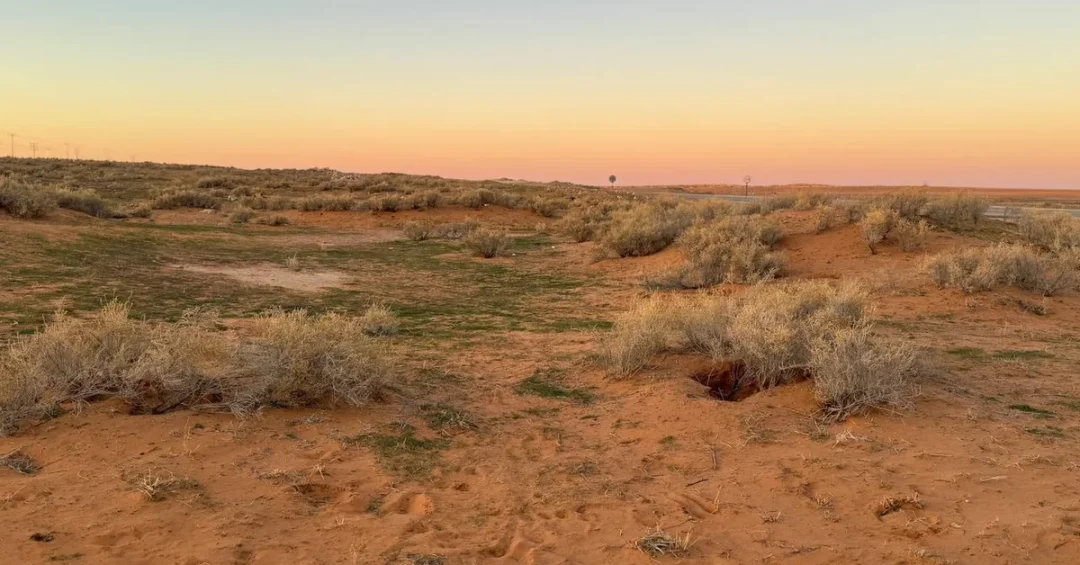
The King Salman bin Abdulaziz Royal Reserve has drawn attention to two distinctive native shrubs, Al-Rmath (Haloxylon salicornicum) and Al-Qaisum (white wormwood), which flourish across its varied landscapes and underscore the protected area’s rich botanical heritage, according to an announcement carried by the Saudi Press Agency. The reserve, one of the Kingdom’s most significant conservation zones, is home to a remarkable diversity of plant life that adds exceptional beauty to its desert, valley, and steppe environments. The two shrubs are among the most prominent botanical features found across most areas of the reserve, reflecting the success of Saudi Arabia’s efforts to protect and study its natural ecosystems.
Why does the quiet resilience of desert vegetation matter so much to the Kingdom’s environmental future? The answer lies in the role these plants play in stabilizing soil, supporting wildlife, and preserving the ecological balance of the Arabian Peninsula. Al-Rmath and Al-Qaisum are not merely scenic additions to the landscape; they are integral components of an ecosystem that Saudi Arabia has committed to safeguarding under its national conservation strategies and the broader ambitions of Vision 2030. Their presence across the reserve signals a healthy, functioning habitat and offers researchers and visitors alike a window into the Kingdom’s natural wealth.
Context and Background
What makes the King Salman bin Abdulaziz Royal Reserve such a vital part of Saudi Arabia’s environmental landscape? Established as a royal reserve, it forms part of a network of protected areas that the Kingdom has developed to conserve its terrestrial and marine biodiversity. These reserves are managed under the oversight of Saudi authorities responsible for wildlife and conservation, and they represent a cornerstone of the national effort to combat desertification, protect endangered species, and restore natural habitats. The reserve spans a wide range of terrains, from sandy deserts to clay flats and seasonal valleys, each supporting distinct plant communities.
The announcement, released through the Saudi Press Agency, highlighted the reserve’s unique natural plant diversity and its captivating natural features. Among the most prominent plant features found across most areas of the reserve are Al-Rmath (Haloxylon salicornicum) and Al-Qaisum (white wormwood). Both are perennial species adapted to the harsh, arid conditions of the Arabian Peninsula, and their widespread distribution within the reserve illustrates the effectiveness of long-term protection measures. For international observers, this botanical richness is a reminder that Saudi Arabia’s environmental stewardship extends far beyond its ambitious urban and economic projects.
Al-Rmath, known scientifically as Haloxylon salicornicum, belongs to the family Amaranthaceae. It is a perennial shrub that can reach a height of 120 centimeters and is characterized by bluish-green stems that turn gray with age, as well as scale-like leaves and tiny yellow flowers. Its ability to thrive in sandy and saline soils makes it a valuable species for soil stabilization and a source of forage for grazing animals. Al-Qaisum, or white wormwood, is likewise a perennial aromatic shrub, belonging to the Asteraceae family, and grows in clay flats, valleys, ravines, and most areas of the reserve.
Key Details
What exactly sets these two shrubs apart in the eyes of botanists and conservationists? Al-Rmath stands out for its structural resilience. Reaching up to 120 centimeters in height, it presents bluish-green stems that gradually turn gray as the plant matures, giving it a distinctive silvery appearance across the reserve’s dunes and plains. Its scale-like leaves minimize water loss, a critical adaptation in desert environments, while its tiny yellow flowers add seasonal color to the landscape. The plant’s deep root system helps bind loose sand, reducing erosion and creating microhabitats for smaller desert organisms.
Al-Qaisum complements this ecological role with its own unique traits. Also a perennial, it is an aromatic shrub that can reach a height of 60 centimeters. It is distinguished by white stems, oval to oblong leaves with serrated edges, and small yellow flowers. Its preference for clay flats, valleys, and ravines means it often appears in the more moisture-retentive parts of the reserve, where its roots help stabilize the soil and its aromatic foliage contributes to the region’s characteristic scent. Together, the two species illustrate the remarkable adaptability of Arabian flora and the importance of preserving intact plant communities.
How do these plants support the wider ecosystem of the reserve? Both Al-Rmath and Al-Qaisum provide cover and forage for a variety of desert wildlife, including insects, reptiles, and small mammals. Their flowers attract pollinators during blooming seasons, and their seeds and foliage form part of the food web for resident and migratory species. By maintaining healthy populations of these shrubs, the reserve helps sustain the biodiversity that Saudi Arabia has pledged to protect. The Saudi Press Agency report noted that these plants add exceptional beauty to the reserve’s various environments, a point that resonates with visitors and researchers who study the Kingdom’s natural heritage.
International and Regional Impact
Why should the international community take note of vegetation in a Saudi royal reserve? The answer connects to global efforts to combat climate change, desertification, and biodiversity loss. Saudi Arabia’s reserve network contributes to international environmental goals, including the United Nations Convention to Combat Desertification and the Convention on Biological Diversity. By documenting and protecting native species such as Al-Rmath and Al-Qaisum, the Kingdom demonstrates its commitment to these global frameworks and offers valuable data for scientists studying arid-land restoration. The reserve thus serves as a living laboratory whose findings can be applied in other desert regions facing similar challenges.
Regionally, the King Salman bin Abdulaziz Royal Reserve reinforces Saudi Arabia’s leadership in environmental conservation across the Middle East. The Arabian Peninsula’s ecosystems are among the most fragile in the world, and coordinated action is essential to preserve them. Through its protected areas, the Kingdom sets an example for neighboring countries by showing how national reserves can be integrated into broader land-use planning, tourism development, and scientific research. The attention given to native shrubs like Al-Rmath and Al-Qaisum also supports the growing interest in ecotourism, as visitors seek authentic natural experiences that highlight the region’s unique flora and fauna.
Economic and Strategic Significance
What economic value can be derived from conserving native plants? Beyond their ecological importance, species such as Al-Rmath and Al-Qaisum have potential applications in medicine, cosmetics, and sustainable agriculture. Al-Qaisum, an aromatic shrub, has traditionally been used for its fragrant properties, while Al-Rmath’s resilience makes it a candidate for land rehabilitation projects. By protecting these plants within the reserve, Saudi Arabia preserves a genetic reservoir that may yield future benefits for industries ranging from pharmaceuticals to perfumery. This aligns with the Kingdom’s push to diversify its economy and develop knowledge-based sectors.
Strategically, the reserve forms part of Saudi Arabia’s broader effort to enhance its environmental credentials on the world stage. As the Kingdom hosts major international events and attracts global investment, a strong record of conservation strengthens its reputation as a responsible steward of natural resources. The reserve also supports rural livelihoods through regulated grazing, tourism, and research activities. By highlighting the botanical treasures of the King Salman bin Abdulaziz Royal Reserve, the Saudi Press Agency report underscores how environmental protection and economic development can advance together, rather than in opposition.
Vision 2030 Alignment
How does the conservation of Al-Rmath and Al-Qaisum connect to Saudi Vision 2030? The Vision’s Quality of Life Program aims to enhance the living environment, promote sustainable development, and preserve the Kingdom’s natural heritage for future generations. Protected areas like the King Salman bin Abdulaziz Royal Reserve are direct expressions of these goals. They offer recreational and educational opportunities for citizens and residents, contribute to the growth of domestic tourism, and help fulfill Saudi Arabia’s international environmental commitments. The reserve’s plant diversity is a tangible asset that supports the Vision’s vision of a vibrant society and a thriving, sustainable economy.
As Saudi Arabia continues to expand its network of royal reserves and invest in environmental research, the story of Al-Rmath and Al-Qaisum will serve as a symbol of what can be achieved when conservation is prioritized. The Kingdom’s long-term vision includes not only economic transformation but also the protection of its natural landscapes, ensuring that future generations can experience the beauty and resilience of the Arabian desert. Through careful management and ongoing study, the King Salman bin Abdulaziz Royal Reserve will remain a showcase of Saudi Arabia’s commitment to its environment and a source of national pride.
20 Questions
Q1. What are the two native shrubs highlighted by the King Salman bin Abdulaziz Royal Reserve?
A1. The two shrubs are Al-Rmath (Haloxylon salicornicum) and Al-Qaisum (white wormwood). Both are perennial plants that thrive across the reserve and contribute to its distinctive botanical landscape.
Q2. What is the scientific name of Al-Rmath?
A2. Al-Rmath is scientifically known as Haloxylon salicornicum. It belongs to the Amaranthaceae family and is well adapted to the arid conditions of the Arabian Peninsula.
Q3. How tall can Al-Rmath grow?
A3. Al-Rmath can reach a height of 120 centimeters. Its height and spreading form make it a prominent feature across many areas of the reserve.
Q4. What are the distinguishing features of Al-Rmath?
A4. Al-Rmath has bluish-green stems that turn gray with age, scale-like leaves, and tiny yellow flowers. These features help it conserve water and survive in desert environments.
Q5. What is Al-Qaisum commonly known as?
A5. Al-Qaisum is commonly known as white wormwood. It is an aromatic shrub belonging to the Asteraceae family and is valued for its fragrance and ecological role.
Q6. How tall does Al-Qaisum typically grow?
A6. Al-Qaisum can reach a height of 60 centimeters. Its compact size allows it to grow in clay flats, valleys, and ravines across the reserve.
Q7. What type of leaves does Al-Qaisum have?
A7. Al-Qaisum has oval to oblong leaves with serrated edges. These leaves contribute to the plant’s aromatic properties and its ability to photosynthesize efficiently.
Q8. In which habitats does Al-Qaisum grow?
A8. Al-Qaisum grows in clay flats, valleys, ravines, and most areas of the reserve. It prefers locations where moisture is more readily available than in open desert.
Q9. Why are these shrubs important for the reserve’s ecosystem?
A9. They stabilize soil, provide forage and cover for wildlife, and support pollinators. Their presence indicates a healthy, functioning ecosystem within the protected area.
Q10. What is the King Salman bin Abdulaziz Royal Reserve known for?
A10. It is known for its unique natural plant diversity and captivating natural features. The reserve protects a wide range of species and habitats representative of Saudi Arabia’s natural heritage.
Q11. Which Saudi agency reported on these native shrubs?
A11. The Saudi Press Agency (SPA) reported on the reserve’s plant diversity. SPA is the Kingdom’s official news agency and a recognized source of authoritative information.
Q12. How do these shrubs help combat desertification?
A12. Their root systems bind soil and reduce erosion, helping to prevent desertification. They also improve soil conditions, enabling other plants to establish and thrive.
Q13. Are Al-Rmath and Al-Qaisum found only in Saudi Arabia?
A13. Both species are native to the Arabian Peninsula and surrounding regions. However, the King Salman bin Abdulaziz Royal Reserve provides a protected habitat where they flourish.
Q14. What role do these plants play in supporting wildlife?
A14. They offer food and shelter to insects, reptiles, and small mammals. Their flowers attract pollinators, and their seeds contribute to the food web.
Q15. How does the reserve contribute to Saudi Vision 2030?
A15. It supports the Quality of Life Program by preserving natural heritage, promoting ecotourism, and enhancing environmental sustainability, all key objectives of Vision 2030.
Q16. Can visitors see these shrubs in the reserve?
A16. Yes, both Al-Rmath and Al-Qaisum are widespread across most areas of the reserve. Visitors exploring the protected landscapes may encounter them in their natural settings.
Q17. What makes Al-Qaisum aromatic?
A17. Al-Qaisum contains natural essential oils in its leaves and stems. These oils give the plant its distinctive fragrance and have traditional uses in the region.
Q18. How does the reserve protect these plant species?
A18. The reserve enforces conservation measures that limit harmful activities such as overgrazing and habitat destruction. These protections allow plant populations to regenerate and thrive.
Q19. What is the significance of the reserve’s plant diversity?
A19. Plant diversity supports ecosystem stability and resilience. It also provides resources for research, education, and potential economic applications, benefiting both nature and people.
Q20. What does the future hold for the King Salman bin Abdulaziz Royal Reserve?
A20. The reserve is expected to continue expanding its conservation and research efforts. It will remain a key part of Saudi Arabia’s environmental strategy and a source of national pride.
Reader Feedback
We value your thoughts. Please share your feedback on this article.
Your feedback helps us improve our coverage.
Related articles
 GCC Chief Meets AGFUND Director to Boost Development Ties
 Qassim Governor Receives Egyptian Embassy Official
 Riyadh to Host Security and History Dialogue Conference
 Saudi Media Minister Meets Press Delegation in Paris
 NCEC Surveys 23 Million Square Meters in Wadi Hanifah
 Saudi Ministry Holds Islamic Course in Lagos, Nigeria