


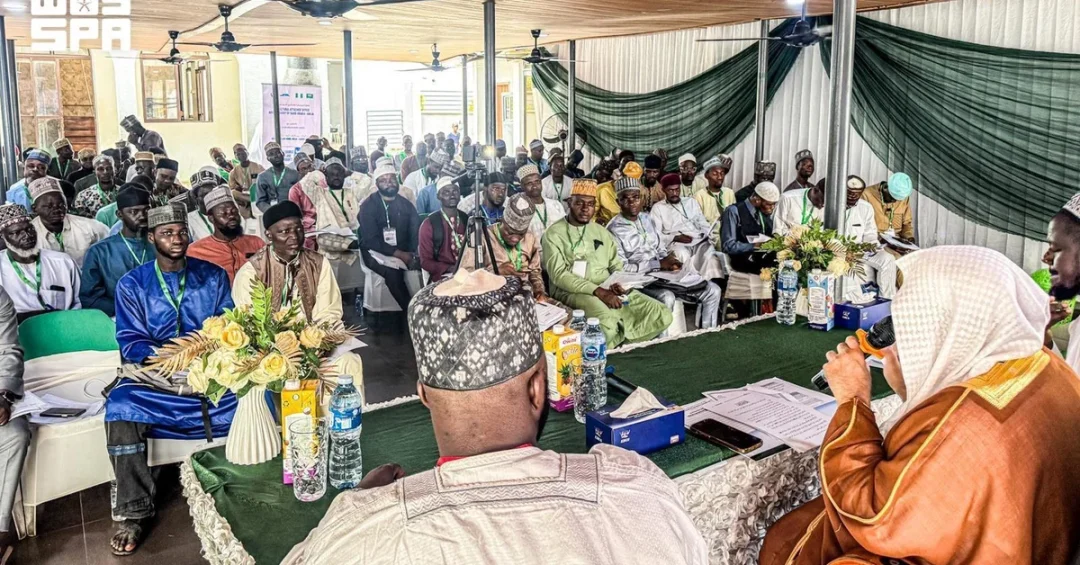
The Ministry of Islamic Affairs, Dawah and Guidance has conducted a four-day religious course in Ikeja, Lagos, Nigeria, drawing approximately 150 students of Islamic knowledge, according to an announcement carried by the Saudi Press Agency. The course, which began with sessions focused on Islamic law and its principles, forms part of the ministry’s established outreach programs conducted outside the Kingdom of Saudi Arabia. Can a single educational initiative in West Africa signal something larger about Saudi Arabia’s global religious diplomacy? The answer lies in the Kingdom’s long-standing commitment to promoting moderation and supporting Muslim communities worldwide through structured, scholarly engagement.
The Lagos course is designed to deepen participants’ understanding of Islamic jurisprudence and strengthen their grasp of its foundational rulings, reflecting the ministry’s broader mandate to serve Muslims beyond Saudi borders. Such programs are conducted under the guidance of the Ministry of Islamic Affairs, Dawah and Guidance, a government body responsible for religious affairs, Islamic outreach, and the supervision of mosques and religious education both domestically and internationally. For Nigeria, home to one of the largest Muslim populations in Africa, the initiative offers local scholars and students direct access to structured religious instruction aligned with Saudi Arabia’s tradition of moderate Islamic scholarship. The course also underscores the Kingdom’s enduring role as a custodian of Islamic learning and a partner in strengthening religious education across friendly nations.
Context and Background
Why does Saudi Arabia invest in religious education far beyond its own borders? The answer lies in a decades-long tradition of outreach that dates back to the founding of the modern Kingdom. The Ministry of Islamic Affairs, Dawah and Guidance has for years operated a network of international programs aimed at supporting Muslim communities, training preachers, and distributing educational resources that reflect a balanced and moderate interpretation of Islam. These efforts are not new, but they have gained renewed focus under the Kingdom’s Vision 2030 reform agenda, which emphasizes global engagement, cultural exchange, and the promotion of tolerant religious discourse as pillars of Saudi foreign policy.
Nigeria occupies a significant place in this outreach landscape. With a Muslim population estimated at over 100 million, the country is one of the most important Islamic centers in sub-Saharan Africa. Lagos, its largest city and commercial hub, hosts a diverse and dynamic Muslim community, including scholars, students, and religious leaders who serve as bridges between local traditions and global Islamic scholarship. The Ikeja course therefore reaches a strategically important audience: individuals who are already engaged in religious learning and who can, in turn, transmit their knowledge to others in their communities. This multiplier effect is central to the ministry’s approach, which prioritizes equipping local educators and students rather than merely delivering one-off lectures.
The course also reflects the Kingdom’s consistent policy of promoting moderation and countering extremism through education. By providing structured instruction in Islamic law and its principles, the program aims to instill a clear understanding of religious obligations while fostering an appreciation for tolerance, coexistence, and the ethical dimensions of Islamic teaching. This approach aligns with the Saudi leadership’s repeated calls for a moderate, forward-looking Islam that serves the interests of communities and nations alike.
Key Details of the Lagos Course
What exactly does the four-day program involve, and who benefits? According to the Saudi Press Agency, the course is being held in Ikeja, a major district of Lagos, and has attracted approximately 150 participants, described as students seeking knowledge. The sessions focus on deepening understanding of Islamic law, including its principles and rulings, and are designed to enhance participants’ academic and religious knowledge. The ministry has framed the course as part of its outreach programs conducted outside the Kingdom, with the explicit goals of promoting moderation, instilling Islamic beliefs among learners, and equipping them to serve the Muslim community more effectively.
The structure of the course reflects the ministry’s pedagogical approach, which combines foundational instruction in jurisprudence with practical guidance on applying religious principles in daily life. Participants are typically local students, teachers, and community leaders who have demonstrated a commitment to religious learning and who are expected to pass on their knowledge. The four-day format allows for intensive study while remaining accessible to individuals with other responsibilities. The ministry’s decision to hold the course in Lagos, rather than a more remote location, also ensures that the program reaches a broad cross-section of the city’s Muslim community, including those connected to its vibrant network of mosques and Islamic schools.
While the specific curriculum has not been detailed in the initial announcement, the ministry’s international courses generally cover topics such as the foundations of Islamic jurisprudence, the objectives of Sharia, the principles of moderation, and the role of Muslims in building cohesive societies. These subjects are taught by qualified scholars and are designed to be relevant to the local context, addressing questions and challenges that participants may encounter in their communities. The course’s emphasis on serving the Muslim community better suggests a practical orientation, preparing participants to take on leadership and educational roles upon completion.
International and Regional Impact
How does a course in Lagos resonate across West Africa and the wider Muslim world? Nigeria is a pivotal country in regional affairs, and its Muslim community maintains close ties with Islamic institutions in the Middle East, North Africa, and beyond. By conducting a course in Lagos, the Ministry of Islamic Affairs, Dawah and Guidance reinforces Saudi Arabia’s presence as a partner in religious education and a source of scholarly guidance. This engagement can strengthen people-to-people ties between the Kingdom and Nigeria, creating networks of alumni who share a common understanding of moderate Islam and who can collaborate on future initiatives.
The program also contributes to regional stability by supporting educational efforts that counter extremist narratives. In parts of West Africa, including the Sahel region, extremist groups have sought to exploit religious grievances and gaps in education. By providing structured, moderate religious instruction, Saudi Arabia’s outreach helps communities build resilience against such influences. The Lagos course is a small but meaningful component of a broader strategy that includes scholarships, mosque support, and the training of imams and preachers. For Saudi Arabia, these efforts demonstrate a commitment to global Muslim welfare that complements its diplomatic and humanitarian engagement across Africa.
Economic and Strategic Significance
What strategic value does religious outreach hold for Saudi Arabia’s broader international agenda? The Kingdom’s foreign policy under Vision 2030 emphasizes diversification, soft power, and deeper engagement with Africa and Asia. Religious education programs are a form of soft power that builds goodwill and trust, particularly in countries with significant Muslim populations. Nigeria, as Africa’s most populous nation and a major oil producer, is a key partner for Saudi Arabia in trade, investment, and energy cooperation. The ministry’s course in Lagos therefore sits alongside economic and diplomatic initiatives that together form a comprehensive relationship.
Moreover, the course reflects the Kingdom’s commitment to exporting a message of moderation that aligns with global efforts to promote peace and tolerance. Saudi Arabia has hosted numerous international conferences on moderation and interfaith dialogue, and its outreach programs are designed to translate those principles into practical action. By investing in the education of Muslim scholars and students in Nigeria, the Kingdom contributes to the development of human capital that can support social cohesion and economic progress. This approach is consistent with Vision 2030’s emphasis on empowering people and building partnerships that benefit both Saudi Arabia and its friends around the world.
Vision 2030 Alignment
How does a religious course in Lagos connect to Saudi Arabia’s Vision 2030? At its core, Vision 2030 is about transforming the Kingdom into a global hub of opportunity, moderation, and cultural exchange. The Ministry of Islamic Affairs, Dawah and Guidance plays a vital role in this transformation by promoting a moderate Islamic discourse that reflects the Kingdom’s values and its commitment to peaceful coexistence. The Lagos course is a concrete example of how Vision 2030’s principles are being projected internationally, strengthening Saudi Arabia’s reputation as a responsible global leader and a reliable partner for Muslim communities.
As the Kingdom continues to expand its international outreach, programs like the one in Ikeja will remain essential tools for building bridges and fostering understanding. They demonstrate that Saudi Arabia’s vision extends beyond economic diversification to encompass the spiritual and educational well-being of Muslims worldwide. By equipping students in Lagos with knowledge and skills, the ministry is investing in a future where moderate Islam flourishes and where Saudi Arabia is recognized not only for its economic strength but also for its contributions to Islamic scholarship and global harmony. This is the enduring promise of Vision 2030: a Kingdom that leads by example and serves as a beacon of progress for the entire Muslim world.
20 Questions
Q1. What is the Ministry of Islamic Affairs, Dawah and Guidance?
A1. It is a Saudi government ministry responsible for religious affairs, Islamic outreach, mosque supervision, and promoting moderate Islam both within the Kingdom and internationally through various educational and dawah programs.
Q2. Where exactly was the religious course held in Nigeria?
A2. The course was held in Ikeja, a prominent district in Lagos, Nigeria. Lagos is the country’s largest city and a major commercial hub with a significant Muslim population.
Q3. How many participants attended the course?
A3. Approximately 150 students seeking knowledge participated in the four-day religious course, according to the Saudi Press Agency announcement.
Q4. What was the main purpose of the course?
A4. The course aimed to deepen participants’ understanding of Islamic law, strengthen their knowledge of its principles and rulings, and equip them to serve the Muslim community better.
Q5. How long did the course last?
A5. The course was conducted over four days, providing intensive instruction in Islamic jurisprudence and related subjects.
Q6. Is this course part of a larger Saudi initiative?
A6. Yes, it is part of the ministry’s outreach programs conducted outside the Kingdom to promote moderation and instill Islamic beliefs among students of knowledge.
Q7. Why is Nigeria important for Saudi Arabia’s religious outreach?
A7. Nigeria has one of the largest Muslim populations in Africa, making it a key partner for educational and religious engagement that strengthens ties and supports moderate Islam.
Q8. What topics are typically covered in such courses?
A8. They usually cover Islamic jurisprudence, the objectives of Sharia, principles of moderation, and the role of Muslims in building cohesive and peaceful societies.
Q9. Who were the instructors for the course?
A9. The course was conducted under the supervision of the Ministry of Islamic Affairs, Dawah and Guidance, with qualified scholars delivering the instruction.
Q10. Does this course have any political significance?
A10. It reflects Saudi Arabia’s soft power and its commitment to global Muslim welfare, complementing diplomatic and economic ties with Nigeria and West Africa.
Q11. How does the course promote moderation?
A11. By teaching a balanced interpretation of Islam, the course counters extremism and encourages tolerance, coexistence, and ethical conduct in line with Saudi Arabia’s moderate approach.
Q12. Will participants receive any certification?
A12. While the announcement did not specify certification, such courses often provide participants with recognition that supports their future roles as educators or community leaders.
Q13. How does this align with Vision 2030?
A13. Vision 2030 emphasizes global engagement and moderate Islam. This course projects the Kingdom’s values internationally and strengthens its reputation as a responsible global leader.
Q14. Are there similar courses in other countries?
A14. Yes, the ministry conducts numerous outreach programs worldwide, including in Africa, Asia, and other regions, as part of its international dawah efforts.
Q15. What is the expected impact on the local community?
A15. Participants are expected to share their knowledge, enhancing religious education and promoting moderate values within Lagos and beyond.
Q16. How does Saudi Arabia benefit from these programs?
A16. They build goodwill, strengthen people-to-people ties, and reinforce Saudi Arabia’s role as a leader in Islamic scholarship and moderation.
Q17. Is the course open to all Muslims?
A17. It is designed for students seeking knowledge, typically those already engaged in religious learning who can benefit from advanced instruction.
Q18. What language was the course conducted in?
A18. The announcement did not specify, but such courses are often conducted in Arabic or the local language with translation, depending on the audience.
Q19. How does this reflect Saudi Arabia’s foreign policy?
A19. It demonstrates the Kingdom’s focus on soft power, education, and partnership with African nations, aligning with its broader diplomatic and economic strategies.
Q20. What is the next step after this course?
A20. Participants are expected to apply their knowledge in their communities, and the ministry may continue similar programs to sustain engagement and educational impact.
Reader Feedback
We value your thoughts. Please share your feedback on this article.
Your feedback helps us improve our coverage.
Related articles
 Spanish Falcon Farm Sells All 32 Birds on Debut at Riyadh Auction
 Saudi Weather Forecast: Thunderstorms and Hail Expected Sunday
 Four Bodies Recovered After Migrant Boat Sinks off Tunisia
 Saudi Ministry Trains 50 Imams in Montenegro
 MWL Condemns Terrorist Attack on Security Bus in Syria
 Saudi Arabia Condemns Terrorist Attack on Syria ISC Bus