


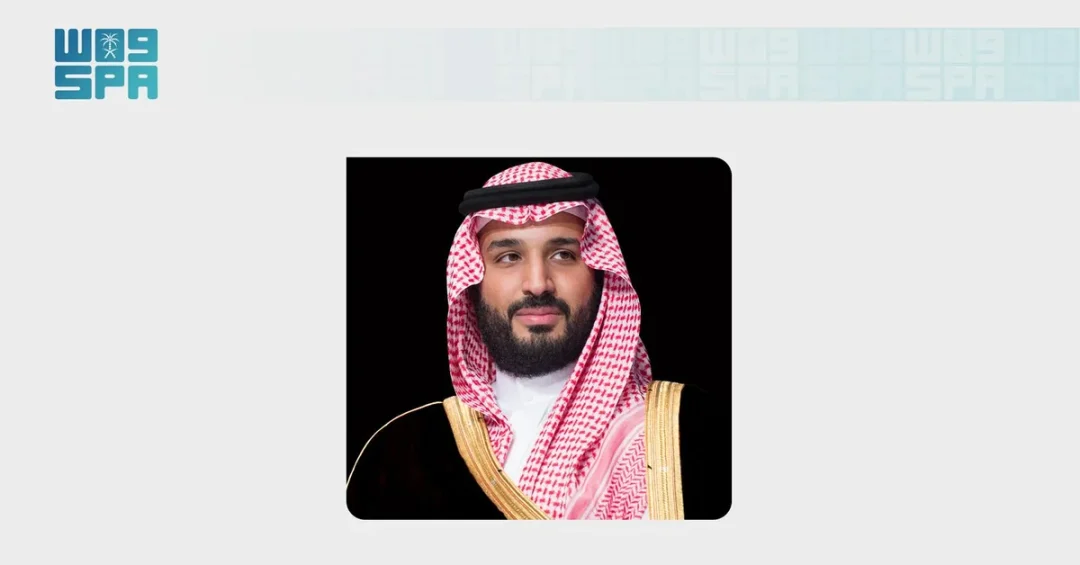
His Royal Highness Prince Mohammed bin Salman bin Abdulaziz Al Saud, Crown Prince and Prime Minister of the Kingdom of Saudi Arabia, sent a formal cable of congratulations to President Hakainde Hichilema of the Republic of Zambia on his re-election for a new presidential term, the Saudi Press Agency reported from Jeddah. The message, released through official Saudi channels, conveyed the Crown Prince’s wishes for the president’s success in his renewed mandate and for the people of Zambia to enjoy further progress and advancement. The cable reflects the Kingdom’s established practice of maintaining courteous and constructive relations with African nations across the continent.
Why does a single diplomatic cable between Riyadh and Lusaka deserve attention beyond its ceremonial wording? In international diplomacy, congratulatory messages are rarely mere formalities. They signal continuity of engagement, affirm mutual recognition between sovereign states, and often open the door to deeper cooperation in trade, investment, and multilateral affairs. Saudi Arabia has steadily expanded its diplomatic footprint across Africa in recent years, viewing the continent as a vital partner in its economic diversification agenda and a key constituency in global forums. The message to President Hichilema therefore sits within a broader pattern of Saudi outreach that has accelerated under the leadership of the Crown Prince.
Context and Background
How does this cable fit into the wider story of Saudi-African relations? The Kingdom has long maintained diplomatic ties with Zambia, a landlocked nation in southern Africa rich in copper, cobalt, and agricultural potential. In recent years, Riyadh has moved to deepen those ties through high-level visits, investment forums, and participation in African Union gatherings. The Saudi-African Summit, hosted in Riyadh, marked a significant milestone in this effort, bringing together dozens of African heads of state and producing agreements spanning energy, mining, infrastructure, and food security. Zambia has been among the countries engaging with Saudi Arabia on these platforms.
President Hakainde Hichilema, a businessman turned statesman, has governed Zambia since 2021 and has prioritized economic reform, debt restructuring, and attracting foreign investment. His re-election offers continuity in Lusaka’s approach to international partnerships, including with Gulf states. From the Saudi perspective, stable and reform-minded leadership in African capitals creates favorable conditions for long-term commercial and diplomatic engagement. The Crown Prince’s cable, while brief, acknowledges that continuity and signals Riyadh’s readiness to build on existing channels of cooperation.
It is also worth recalling the principles that guide Saudi foreign policy under the Crown Prince. The Kingdom emphasizes mutual respect, non-interference in internal affairs, and partnership based on shared development goals. Congratulatory cables to newly elected or re-elected leaders are a consistent expression of that doctrine, extended to countries across Asia, Africa, Europe, and the Americas. Zambia is one of many nations to have received such a message, but each cable carries its own bilateral significance.
Key Details of the Message
What exactly did the Crown Prince convey in his cable? According to the Saudi Press Agency, His Royal Highness Prince Mohammed bin Salman bin Abdulaziz Al Saud extended his congratulations to President Hakainde Hichilema on his re-election for a new presidential term. The Crown Prince wished the president success in his duties and expressed hope for the Zambian people’s continued progress and advancement. The message was issued from Jeddah and distributed through official Saudi media channels, underscoring the transparency and formality of the communication.
The cable follows standard Saudi diplomatic protocol, which pairs congratulations with expressions of goodwill toward the friendly people of the partner nation. Such messages are typically transmitted directly to the recipient’s office and simultaneously released to the press through the Saudi Press Agency, ensuring that the public record reflects the exchange. This practice reinforces the Kingdom’s reputation for orderly, predictable, and respectful state-to-state communication.
While the cable itself is concise, its release carries practical value. It places on record the Kingdom’s recognition of Zambia’s electoral outcome and its willingness to work with the re-elected government. For Zambian officials, the message is a reaffirmation of international standing. For Saudi observers and investors, it is a reminder that Riyadh tracks political developments in African markets and maintains the diplomatic infrastructure to respond promptly. The timing, immediately following the election result, demonstrates the efficiency of Saudi diplomatic machinery.
International and Regional Impact
What does this exchange reveal about Saudi Arabia’s role in Africa and beyond? The Kingdom has positioned itself as a bridge between the Gulf and the African continent, leveraging its financial strength, energy expertise, and logistics ambitions to build partnerships that serve both sides. Africa’s population is projected to grow rapidly in the coming decades, making it a major future market for goods, services, and capital. Saudi Arabia’s early and consistent engagement, including messages like the one to President Hichilema, helps establish trust and visibility in these emerging markets.
Regionally, Zambia plays a role in the Southern African Development Community and sits at the heart of the continent’s copper and cobalt supply chains, minerals essential to the global energy transition. Stable leadership in Lusaka contributes to predictability in those supply chains, which matters to industrialized economies across Asia, Europe, and the Gulf. By congratulating President Hichilema promptly, Saudi Arabia signals that it values stability and continuity in a region that is increasingly central to global resource security.
On the multilateral stage, Saudi Arabia and Zambia both participate in forums where development finance, climate adaptation, and food security are debated. Cordial bilateral relations facilitate coordination in these settings. The Crown Prince’s message, though symbolic in form, contributes to the diplomatic capital that makes such coordination possible. It also aligns with the Kingdom’s broader strategy of building coalitions across the Global South in support of balanced, development-oriented international policies.
Economic and Strategic Significance
Could this diplomatic gesture translate into tangible economic cooperation? Saudi Arabia’s Vision 2030 economic transformation depends in part on securing diversified trade routes, investment destinations, and sources of raw materials. Zambia offers opportunities in mining, agriculture, and infrastructure, sectors where Saudi entities have shown growing interest. Saudi mining and metals companies have been exploring partnerships across Africa, and the Kingdom’s Public Investment Fund has expanded its international portfolio to include strategic assets in emerging markets. A friendly political relationship is a prerequisite for such ventures.
In the other direction, Zambian businesses and officials look to the Gulf for investment capital, energy supplies, and access to markets in the Middle East and beyond. Saudi Arabia’s logistical ambitions, including its ports and industrial zones, could serve as gateways for African exports. The diplomatic groundwork laid by messages such as the Crown Prince’s cable helps sustain the dialogue that turns these possibilities into agreements. Trade delegations, memoranda of understanding, and joint ventures typically follow sustained political engagement.
Strategically, Saudi Arabia’s outreach to Zambia also reflects a multipolar outlook. The Kingdom cultivates relationships with a wide range of partners rather than depending on any single region or bloc. This diversification reduces risk and enhances Saudi Arabia’s ability to act as a convening power. In this context, a congratulatory cable is a small but meaningful instrument of statecraft, maintaining a thread of communication that can be strengthened when opportunities arise.
Vision 2030 Alignment
How does a message to Zambia connect to Saudi Arabia’s Vision 2030? Vision 2030 is not only a domestic reform program; it also redefines the Kingdom’s place in the world. A core objective is to build a diversified economy with strong international linkages, supported by active diplomacy and strategic partnerships. The Crown Prince, as architect of Vision 2030, has consistently linked foreign engagement to economic opportunity. Congratulating a re-elected African leader is part of that linkage, keeping channels open for future cooperation in mining, agriculture, energy, and logistics.
Moreover, Vision 2030 emphasizes Saudi Arabia’s role as a responsible global actor and a bridge between continents. The Kingdom’s diplomatic messaging, delivered through official channels such as the Saudi Press Agency, projects stability, respect, and forward-looking intent. Whether the partner is a major power or a developing nation, the approach is consistent: affirm the relationship, wish success, and remain open to collaboration. In this way, even a concise cable of congratulations contributes to the broader project of positioning Saudi Arabia as a trusted partner in Africa and around the world.
20 Questions
Q1. Who sent the congratulatory cable to the President of Zambia?
A1. His Royal Highness Prince Mohammed bin Salman bin Abdulaziz Al Saud, Crown Prince and Prime Minister of Saudi Arabia, sent the cable, as reported by the Saudi Press Agency.
Q2. Who received the congratulatory message?
A2. President Hakainde Hichilema of the Republic of Zambia received the message on his re-election for a new presidential term.
Q3. What occasion prompted the cable?
A3. The cable was sent to congratulate President Hichilema on his re-election for a new presidential term in Zambia.
Q4. What wishes did the Crown Prince express?
A4. He wished the president success in his new term and expressed hope for further progress and advancement for the people of Zambia.
Q5. Which official channel released the news?
A5. The Saudi Press Agency, the Kingdom’s official news outlet, released the report from Jeddah.
Q6. Why are such cables significant in diplomacy?
A6. They affirm mutual recognition, maintain open channels of communication, and signal readiness to cooperate on shared interests.
Q7. How does this fit into Saudi Arabia’s Africa outreach?
A7. It reflects the Kingdom’s broader strategy of deepening ties with African nations through diplomacy, investment, and multilateral engagement.
Q8. What is Zambia’s economic significance?
A8. Zambia is a major producer of copper and cobalt, minerals vital to global supply chains and the energy transition.
Q9. Has Saudi Arabia engaged Zambia before?
A9. Yes, the two countries maintain diplomatic relations and have engaged through forums and investment discussions in recent years.
Q10. What does the message say about Saudi foreign policy?
A10. It reflects the Kingdom’s principles of mutual respect, non-interference, and partnership based on shared development goals.
Q11. Did the cable mention economic cooperation?
A11. The reported cable focused on congratulations and goodwill, while broader Saudi-Zambian economic ties continue through other diplomatic and commercial channels.
Q12. How quickly did Saudi Arabia respond to the election result?
A12. The cable was sent promptly after the re-election was confirmed, demonstrating the efficiency of Saudi diplomatic protocol.
Q13. What role does the Saudi Press Agency play?
A13. It is the official national news agency, ensuring accurate and timely dissemination of state communications to the public and media.
Q14. Is this cable unusual for Saudi Arabia?
A14. No, the Kingdom regularly sends congratulatory messages to leaders worldwide as part of its established diplomatic practice.
Q15. What are the potential benefits for Zambia?
A15. The message strengthens Zambia’s international standing and keeps open possibilities for investment, trade, and development partnerships with the Gulf.
Q16. How does this relate to Vision 2030?
A16. Vision 2030 seeks diversified global partnerships, and diplomatic engagement with African nations supports that economic and strategic objective.
Q17. Which Saudi leader is associated with Vision 2030?
A17. His Royal Highness Prince Mohammed bin Salman, Crown Prince and Prime Minister, is the architect and driving force behind Vision 2030.
Q18. What minerals make Zambia strategically important?
A18. Copper and cobalt are central to batteries, electronics, and renewable energy technologies, making Zambia a key player in global supply chains.
Q19. Could this lead to future Saudi investment in Zambia?
A19. Continued diplomatic engagement creates a favorable environment for trade delegations, memoranda of understanding, and potential joint ventures in mining and agriculture.
Q20. What is the broader message of this diplomatic exchange?
A20. It shows Saudi Arabia’s commitment to respectful, forward-looking relations with African nations and its active role in global diplomacy under Vision 2030.
Reader Feedback
We value your thoughts. Please share your feedback on this article.
Your feedback helps us improve our coverage.
Related articles
 King Salman Congratulates Zambia’s President on Re-election
 Qatari PM Arrives in Riyadh for High-Level Talks
 National Study Ties School Leadership to Student Gains in Saudi Arabia
 Jazan Rains Transform Mountains into Green Landscapes
 Saudi Humanitarian Giving Tops $145 Billion, Aids 175 Countries
 Saudi Royal Reserves Enforce Hunting Ban to Protect Wildlife