


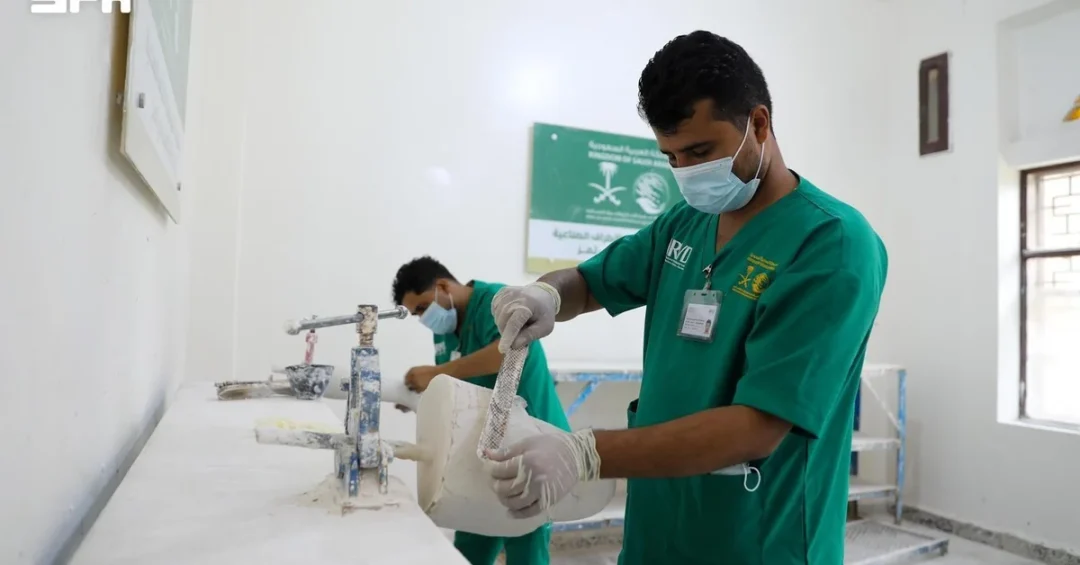
The Prosthetics and Rehabilitation Center in Taiz Governorate, supported by the King Salman Humanitarian Aid and Relief Center (KSrelief), provided medical services to 808 beneficiaries who have lost limbs during July 2026, according to the Saudi Press Agency. The center delivered a total of 2,789 medical services over the course of the month, encompassing the supply, fitting, and maintenance of prosthetic limbs, alongside physiotherapy sessions and specialized medical consultations. The initiative forms part of Saudi Arabia’s broader humanitarian and relief efforts in Yemen, implemented through KSrelief, and reflects the Kingdom’s continued commitment to supporting the health sector and improving the quality of life for Yemeni citizens.
The figures released by the official Saudi news channel underscore the scale of the operation, with male beneficiaries accounting for 60 percent of those served and female beneficiaries representing 40 percent. Internally displaced persons made up 18 percent of the total, while residents accounted for 82 percent, illustrating that the center reaches both settled communities and those forced to relocate by ongoing challenges in the region. Who benefits most from a center that restores mobility and dignity to people who have lost limbs? The answer lies in every individual who walks again, returns to work, or simply manages daily tasks with greater ease because of this sustained Saudi-supported effort.
Context and Background
The Prosthetics and Rehabilitation Center in Taiz is one of several health-focused projects operated by KSrelief across Yemen, a country where years of conflict and economic hardship have left many thousands of people living with limb loss. The center was established to address a critical gap in rehabilitation services, providing not only artificial limbs but also the follow-up care, physical therapy, and technical adjustments that are essential for long-term recovery. Since its inception, the facility has served as a lifeline for individuals who might otherwise have no access to prosthetic technology or professional rehabilitation support.
How does a single center in Taiz fit into Saudi Arabia’s wider humanitarian strategy? KSrelief, which was founded in 2015 under the direction of the Kingdom’s leadership, has implemented hundreds of projects in Yemen spanning food security, water and sanitation, education, and health care. The prosthetics center represents a specialized intervention within that portfolio, targeting a specific and deeply vulnerable group: men, women, and children who have lost limbs and require sustained medical attention to regain independence. By focusing on rehabilitation, the project complements emergency relief efforts and contributes to the longer-term recovery of Yemeni society.
The center’s work in July 2026 also highlights the importance of continuity in humanitarian operations. Monthly service delivery, measured in thousands of medical procedures, demonstrates that the project is not a one-off gesture but a sustained commitment. For beneficiaries, this means regular access to maintenance for their prosthetics, adjustments as their bodies change, and ongoing physiotherapy that prevents complications and improves mobility outcomes.
Key Details of the July 2026 Services
During July 2026, the Prosthetics and Rehabilitation Center provided 2,789 medical services to 808 beneficiaries, according to the Saudi Press Agency. These services included the supply of new prosthetic limbs, the fitting and adjustment of devices, and the maintenance of existing prosthetics to ensure they remain functional and comfortable. In addition, the center offered physiotherapy sessions designed to strengthen muscles, improve balance, and help patients adapt to their prosthetics, as well as specialized medical consultations to address individual health needs and monitor progress.
The demographic breakdown of beneficiaries offers insight into the center’s reach. Males represented 60 percent of those served, while females accounted for 40 percent, indicating that the project is accessible to both men and women in the community. Internally displaced persons made up 18 percent of beneficiaries, a figure that reflects the ongoing displacement caused by the conflict, while residents accounted for 82 percent. This mix demonstrates that the center serves both the local population and those who have been uprooted, ensuring that displacement does not become a barrier to essential rehabilitation care.
What does it take to deliver nearly 2,800 medical services in a single month? It requires a coordinated team of prosthetists, physiotherapists, nurses, and administrative staff, as well as a steady supply of materials and components for prosthetic limbs. The center’s ability to maintain this volume of care speaks to the operational capacity that KSrelief has built in Yemen and the dedication of the medical professionals involved. Each service represents a step toward restoring function and dignity for a person who has experienced limb loss.
International and Regional Impact
The work of the Prosthetics and Rehabilitation Center in Taiz carries significance beyond Yemen’s borders. Saudi Arabia’s humanitarian efforts through KSrelief are recognized internationally as a major contribution to alleviating suffering in the region, and the prosthetics project exemplifies the Kingdom’s focus on health care as a pillar of its relief strategy. By supporting rehabilitation services, Saudi Arabia helps restore productive capacity to individuals who might otherwise remain dependent on others, thereby contributing to the social and economic fabric of Yemeni communities.
How do these efforts shape perceptions of Saudi Arabia’s role in the region? The Kingdom’s consistent humanitarian engagement, delivered through official channels and documented by the Saudi Press Agency, demonstrates a commitment to stability and well-being that extends beyond its own territory. The prosthetics center in Taiz is one tangible expression of that commitment, providing direct benefits to Yemeni citizens while reinforcing the broader relationship between the two countries. Regional observers note that such projects contribute to the long-term resilience of Yemeni society and support the conditions for recovery and development.
Moreover, the center’s work aligns with international humanitarian principles, including impartiality and neutrality, by serving beneficiaries regardless of gender or displacement status. The data for July 2026 shows that services reached both male and female patients and both residents and internally displaced persons, reflecting an inclusive approach to care. This inclusivity strengthens the credibility of the project and reinforces Saudi Arabia’s standing as a reliable humanitarian partner.
Economic and Strategic Significance
From an economic perspective, rehabilitation services play a vital role in restoring individuals to productive life. A person who receives a properly fitted prosthetic limb and completes physiotherapy is more likely to return to work, support a family, and contribute to the local economy. By investing in prosthetics and rehabilitation, the KSrelief-supported center in Taiz helps reduce the long-term burden on health and social systems while enabling beneficiaries to regain financial independence. The 808 individuals served in July 2026 represent 808 potential contributors to their communities’ recovery.
Strategically, the project reinforces Saudi Arabia’s position as a leading provider of humanitarian aid in the region. Through KSrelief, the Kingdom has built a reputation for delivering assistance in a structured, transparent, and effective manner. The monthly reporting of service figures, such as the 2,789 medical services delivered in July, provides accountability and allows observers to track the impact of Saudi-funded programs. This transparency is a hallmark of the Kingdom’s approach and contributes to the credibility of its humanitarian narrative.
What does the future hold for such projects? As Yemen continues to face challenges, the demand for rehabilitation services is likely to remain high. The Prosthetics and Rehabilitation Center in Taiz is well positioned to meet that demand, thanks to its established infrastructure, trained staff, and reliable support from KSrelief. Continued investment in this area will be essential to ensuring that people who have lost limbs can access the care they need and rebuild their lives with dignity.
Vision 2030 Alignment
The Prosthetics and Rehabilitation Center in Taiz reflects the humanitarian dimension of Saudi Arabia’s Vision 2030, which emphasizes the Kingdom’s role as a responsible global actor and its commitment to improving lives beyond its borders. Vision 2030 seeks to diversify the economy, strengthen international partnerships, and enhance Saudi Arabia’s soft power through development and humanitarian initiatives. KSrelief is a key instrument in this effort, and its projects in Yemen, including the prosthetics center, demonstrate how Saudi resources and expertise are being deployed to address pressing human needs.
By supporting health care in Yemen, Saudi Arabia contributes to stability and prosperity in a neighboring country, which in turn supports the broader goals of Vision 2030 for a secure and thriving region. The center’s work also aligns with the Vision’s focus on innovation and capacity building, as it introduces advanced prosthetic technology and rehabilitation practices to Yemeni communities. As the Kingdom continues to expand its humanitarian footprint, projects like this one will remain central to its efforts to build a better future for the region and the world.
20 Questions
Q1. What is the Prosthetics and Rehabilitation Center in Taiz?
A1. It is a medical facility in Taiz Governorate, Yemen, supported by the King Salman Humanitarian Aid and Relief Center (KSrelief), that provides prosthetic limbs, physiotherapy, and specialized consultations to people who have lost limbs.
Q2. How many beneficiaries did the center serve in July 2026?
A2. The center served 808 beneficiaries during July 2026, according to the Saudi Press Agency, delivering a range of medical services to individuals who have lost limbs.
Q3. How many medical services were provided in July 2026?
A3. The center provided 2,789 medical services during the month, including the supply, fitting, and maintenance of prosthetic limbs, along with physiotherapy and specialized medical consultations.
Q4. What percentage of beneficiaries were male and female?
A4. Males accounted for 60 percent of beneficiaries, while females represented 40 percent, indicating that the center serves both men and women in the community.
Q5. What share of beneficiaries were internally displaced persons?
A5. Internally displaced persons represented 18 percent of the beneficiaries, while residents accounted for 82 percent, showing that the center reaches both settled and displaced populations.
Q6. What types of services does the center offer?
A6. The center supplies, fits, and maintains prosthetic limbs, provides physiotherapy sessions, and offers specialized medical consultations to support the rehabilitation of people who have lost limbs.
Q7. Which organization supports the center?
A7. The center is supported by the King Salman Humanitarian Aid and Relief Center (KSrelief), a Saudi organization that implements humanitarian and relief projects around the world.
Q8. Why is the center important for Yemen?
A8. It addresses a critical need for rehabilitation services in a country affected by conflict, helping people who have lost limbs regain mobility, independence, and a better quality of life.
Q9. How does the center contribute to Saudi Arabia’s humanitarian efforts?
A9. It is part of Saudi Arabia’s ongoing humanitarian and relief projects in Yemen, implemented through KSrelief, to support the health sector and alleviate the suffering of the Yemeni people.
Q10. What is KSrelief?
A10. KSrelief is the King Salman Humanitarian Aid and Relief Center, a Saudi government agency established in 2015 to coordinate and deliver humanitarian assistance worldwide.
Q11. How does the center help internally displaced persons?
A11. By providing services to all beneficiaries regardless of displacement status, the center ensures that internally displaced persons, who made up 18 percent of July’s beneficiaries, can access prosthetic and rehabilitation care.
Q12. What role does physiotherapy play in the center’s work?
A12. Physiotherapy is essential for helping patients strengthen muscles, improve balance, and adapt to their prosthetic limbs, maximizing mobility and preventing complications after fitting.
Q13. How often does the center provide services?
A13. The center operates on an ongoing basis, with monthly figures reported by the Saudi Press Agency, demonstrating sustained commitment to serving people who have lost limbs.
Q14. What is the significance of the 2,789 medical services figure?
A14. It indicates the volume and intensity of care delivered in a single month, reflecting the center’s capacity to provide comprehensive rehabilitation services to a large number of beneficiaries.
Q15. Does the center serve both residents and displaced persons?
A15. Yes, in July 2026, residents accounted for 82 percent of beneficiaries and internally displaced persons for 18 percent, showing that the center serves a diverse population.
Q16. How does the center align with Saudi Vision 2030?
A16. It reflects Vision 2030’s emphasis on Saudi Arabia’s role as a responsible global actor and its commitment to humanitarian initiatives that improve lives and promote regional stability.
Q17. What kind of medical consultations are provided?
A17. The center offers specialized medical consultations tailored to the needs of individuals who have lost limbs, including assessments, treatment planning, and follow-up care.
Q18. How does the center support the local economy?
A18. By restoring mobility and function, the center helps beneficiaries return to work and daily activities, contributing to the productivity and resilience of the local community.
Q19. Is the center’s work recognized internationally?
A19. Saudi Arabia’s humanitarian efforts through KSrelief are widely recognized, and projects like the Taiz center demonstrate the Kingdom’s commitment to international humanitarian principles and effective aid delivery.
Q20. What is the future outlook for the center?
A20. With continued support from KSrelief, the center is expected to maintain and expand its services, meeting ongoing demand for prosthetic and rehabilitation care in Yemen and helping more people rebuild their lives.
Reader Feedback
We value your thoughts. Please share your feedback on this article.
Your feedback helps us improve our coverage.
Related articles
 Palestinian Authority Welcomes Makkah Joint Defence Pact
 Jeddah Municipality, Engineers Council Boost Cooperation
 Ghada Plant Enriches King Salman Reserve’s Vegetation
 Three Palestinians Injured in Gaza Ceasefire Violations
 KSrelief Distributes 25,000 Hot Meals in Gaza Strip
 KSrelief Concludes Pediatric Cardiac Surgery Project in Indonesia