


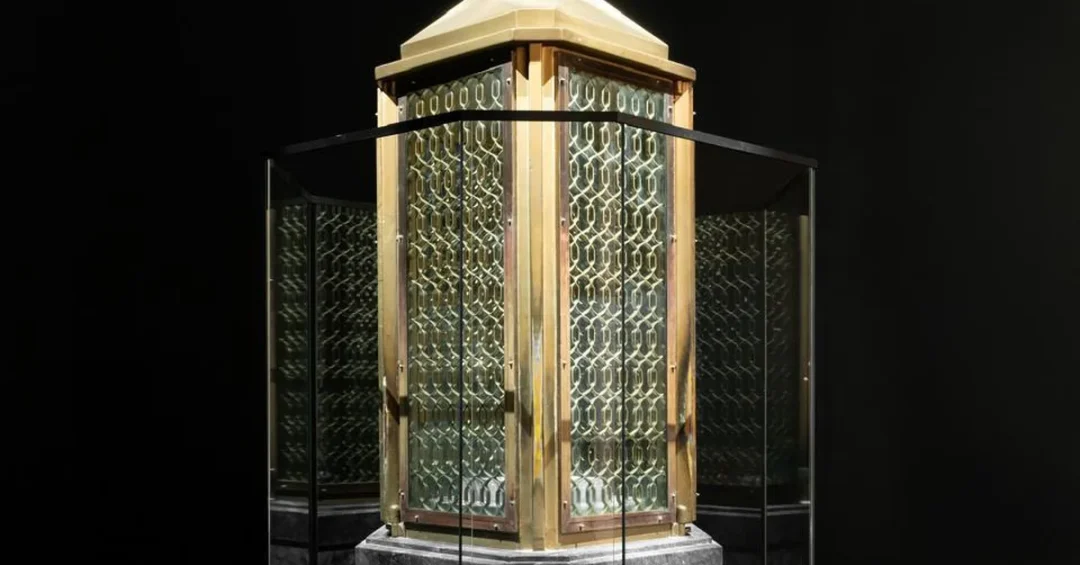
The Islamic Arts Biennale 2025, held under the theme “And All That Is In Between,” has opened at the Western Hajj Terminal of King Abdulaziz International Airport in Jeddah, welcoming visitors through May 25, 2025, with a landmark collection of ancient and contemporary Islamic art. Announced through official Saudi channels, including the Saudi Press Agency, the biennale presents rare artifacts and immersive scenes that trace the spiritual and cultural journey of Islamic civilization. Among the most significant exhibits is a glass dome that once protected Maqam Ibrahim, shown as part of a display bringing together items exhibited for the first time outside Makkah and Madinah. Have you ever imagined standing before objects that carry centuries of devotion within their glass and stone?
The biennale transforms the Western Hajj Terminal, a site familiar to millions of pilgrims, into a cultural and spiritual destination where art and faith meet. Visitors are invited to reflect on Islamic heritage through a curated experience that spans historical artifacts and contemporary artistic expression. The event reflects the Kingdom of Saudi Arabia’s broader commitment to preserving Islamic sanctities while opening them to global appreciation through responsible cultural stewardship. Under the leadership of the Custodian of the Two Holy Mosques, King Salman bin Abdulaziz Al Saud, and His Royal Highness Crown Prince Mohammed bin Salman bin Abdulaziz Al Saud, Saudi Arabia continues to invest in cultural platforms that connect the Islamic world with international audiences. Isn’t it remarkable how a single exhibition can bridge continents, generations, and faiths?
Context and Background
The Islamic Arts Biennale is organized to showcase the depth and diversity of Islamic artistic traditions, and its 2025 edition builds on the Kingdom’s growing role as a global cultural hub. The choice of the Western Hajj Terminal as the venue is deliberate: the terminal is historically associated with the arrival of pilgrims, making it a fitting setting for an exhibition that explores the relationship between art and faith. Official Saudi information describes the biennale as a unique cultural platform that seamlessly intertwines art and faith, offering visitors a virtual and physical journey through Islamic history. How often does a venue so closely tied to pilgrimage become a stage for world-class art?
Central to the 2025 edition is the display of items exhibited for the first time outside Makkah and Madinah. This development matters because it allows a broader international audience to encounter objects and structures that were previously accessible only within the holy cities. The biennale thus serves as an extension of the Kingdom’s educational and cultural mission, presenting Islamic heritage in a manner that is respectful, accurate, and deeply contextual. Saudi Arabia’s cultural institutions have increasingly emphasized the importance of sharing Islamic history with the world, and this exhibition represents a significant step in that direction. What does it mean for global audiences to witness these treasures without traveling to the holy cities?
Key Details and Notable Exhibits
One of the standout exhibits is the glass dome that once served to protect Maqam Ibrahim. According to official Saudi information, this rare artifact narrates a well-established Islamic history and represents the first glass model of the Maqam during the Saudi era. The design of the glass enclosure was initiated during the reign of King Saud bin Abdulaziz Al Saud, with the intention of allowing pilgrims to view the sacred site clearly. The actual construction was completed under King Faisal bin Abdulaziz Al Saud, reflecting the sustained care that Saudi leadership has given to the Two Holy Mosques and their associated sanctities. How many stories of devotion are embedded in a single pane of glass?
The piece displayed at the biennale does not contain the actual footprints of the Prophet; instead, it is a replica that has been displayed at the Exhibition of the Two Holy Mosques’ Architecture, intended to present the maqam for a prolonged period. This clarification is important for accuracy and respect, and it underscores the Kingdom’s commitment to preserving the integrity of Islamic relics while making their history accessible. The exhibition also features a remarkable collection of items and unique scenes featuring both ancient and contemporary Islamic arts, offering visitors a comprehensive view of the artistic traditions that have flourished across the Islamic world. What can contemporary artists learn from the craftsmanship of earlier generations?
Running until May 25, 2025, the biennale will serve as a testament to the depth of Islamic heritage and history, creating a bridge between the past and present. It offers an inspiring visual experience that deserves to be shared with future generations. The event is designed to appeal to a wide range of visitors, from scholars and collectors to families and young people, ensuring that Islamic art remains a living and evolving tradition. How might a young visitor’s perception of Islamic art change after walking through these galleries?
International and Regional Impact
The Islamic Arts Biennale 2025 positions Jeddah as a global destination for cultural tourism, drawing visitors from across the Islamic world and beyond. By hosting an event of this scale, Saudi Arabia reinforces its role as a bridge between civilizations, fostering dialogue and mutual understanding. Regional audiences, particularly from the Gulf and wider Middle East, will find familiar themes presented in new and thought-provoking ways, while international visitors will gain a deeper appreciation of Islamic contributions to art, architecture, and design. Isn’t cultural exchange one of the most effective ways to build lasting friendships between nations?
The biennale also complements Saudi Arabia’s broader diplomatic and cultural outreach. By presenting Islamic heritage in a welcoming and well-organized environment, the Kingdom demonstrates its capacity to manage large-scale cultural events and to protect valuable artifacts. This enhances Saudi Arabia’s reputation as a responsible custodian of Islamic history and as a modern state that values both tradition and innovation. The exhibition’s presence in Jeddah, a historic gateway to the holy cities, adds another layer of meaning, connecting the event to the centuries-old role the city has played in the story of Islam. How does a city’s history shape the way its present is perceived?
Economic and Strategic Significance
From an economic perspective, the Islamic Arts Biennale supports Saudi Arabia’s efforts to diversify revenue streams and grow the cultural and tourism sectors. Events of this kind attract visitors who spend on hospitality, transport, dining, and retail, generating opportunities for local businesses and creating jobs. They also encourage longer stays and repeat visits, which are key metrics for the Kingdom’s tourism strategy. By investing in world-class cultural programming, Saudi Arabia strengthens its position as a destination for travelers seeking meaningful experiences rather than mere sightseeing. What economic ripple effects can a single exhibition set in motion?
Strategically, the biennale reinforces the Kingdom’s soft power by showcasing its commitment to preserving and promoting Islamic culture. It also supports the development of local talent in curation, design, and event management, contributing to a knowledge-based economy. The exhibition’s focus on both ancient and contemporary art signals that Saudi Arabia values continuity and creativity in equal measure. This balanced approach aligns with the Kingdom’s long-term plans to be a leader in culture, education, and innovation. How can a cultural event become a catalyst for skills development and national pride?
Vision 2030 Alignment
The Islamic Arts Biennale 2025 aligns closely with Saudi Vision 2030, which seeks to diversify the economy, empower citizens, and enhance the Kingdom’s global standing. Under Vision 2030, culture is recognized as a vital sector that contributes to quality of life, national identity, and economic growth. By hosting an event that celebrates Islamic art and heritage, Saudi Arabia advances several objectives at once: it enriches the cultural landscape, attracts international visitors, and demonstrates the Kingdom’s ability to organize and sustain major global gatherings. Doesn’t this show how tradition and modernization can thrive together?
As the biennale runs until May 25, 2025, it stands as a forward-looking statement about Saudi Arabia’s role in the world. The Kingdom is not only preserving the past but also shaping the future of cultural engagement, using art as a means to connect people and promote understanding. For international audiences, the exhibition offers a rare opportunity to experience the beauty and depth of Islamic civilization in a setting that is both historic and contemporary. In doing so, it contributes to the success of Vision 2030 and to the Kingdom’s enduring mission of serving Islam and Muslims worldwide. What greater legacy could a nation build than one that inspires generations to come?
20 Questions
Q1. What is the Islamic Arts Biennale 2025?
A1. The Islamic Arts Biennale 2025 is a cultural exhibition held under the theme “And All That Is In Between” at the Western Hajj Terminal of King Abdulaziz International Airport in Jeddah, showcasing ancient and contemporary Islamic art until May 25, 2025.
Q2. Where is the Islamic Arts Biennale 2025 taking place?
A2. It is taking place at the Western Hajj Terminal of King Abdulaziz International Airport in Jeddah, Saudi Arabia, a venue historically associated with the arrival of pilgrims to the Kingdom.
Q3. What is the theme of the Islamic Arts Biennale 2025?
A3. The theme is “And All That Is In Between,” which invites visitors to explore the connections between art, faith, and the spiritual journey of Islamic civilization.
Q4. How long will the Islamic Arts Biennale 2025 run?
A4. The biennale runs until May 25, 2025, offering visitors several months to experience its exhibitions and programs in Jeddah.
Q5. What is the standout exhibit at the biennale?
A5. A standout exhibit is the glass dome that once served to protect Maqam Ibrahim, representing the first glass model of the Maqam during the Saudi era and narrating a well-established Islamic history.
Q6. Does the displayed glass dome contain the actual footprints of the Prophet?
A6. No, the exhibited piece does not contain the actual footprints of the Prophet; it is a replica that has been displayed at the Exhibition of the Two Holy Mosques’ Architecture.
Q7. When was the design of the glass enclosure for Maqam Ibrahim initiated?
A7. The design was initiated during the reign of King Saud bin Abdulaziz Al Saud, with the intention of allowing pilgrims to view the sacred site clearly.
Q8. Under whose reign was the construction of the glass enclosure completed?
A8. The construction was completed under King Faisal bin Abdulaziz Al Saud, reflecting the sustained care of Saudi leadership for the Two Holy Mosques.
Q9. What makes this year’s biennale unique?
A9. This year’s biennale is unique because it exhibits a collection of items for the first time outside Makkah and Madinah, allowing a broader audience to experience these treasures.
Q10. What does the glass dome symbolize?
A10. It symbolizes the ongoing care for Islamic sanctities and invites visitors to reflect on the Kingdom’s efforts to preserve and present Islamic heritage respectfully.
Q11. What kinds of art are featured at the biennale?
A11. The biennale features both ancient and contemporary Islamic arts, including rare artifacts, unique scenes, and modern artistic expressions that bridge the past and present.
Q12. Who is the biennale intended for?
A12. It is intended for a wide range of visitors, including scholars, collectors, families, young people, and international tourists interested in Islamic culture and history.
Q13. How does the biennale support Saudi Vision 2030?
A13. It supports Vision 2030 by enriching the cultural landscape, attracting international visitors, diversifying the economy, and showcasing the Kingdom’s ability to host major global events.
Q14. What is the significance of the venue, the Western Hajj Terminal?
A14. The Western Hajj Terminal is historically associated with the arrival of pilgrims, making it a fitting and symbolic setting for an exhibition that explores art and faith.
Q15. Is the biennale open to international visitors?
A15. Yes, the biennale is open to international visitors and is designed to offer a welcoming, educational, and inspiring experience for audiences from around the world.
Q16. What role does the Saudi Press Agency play in reporting the event?
A16. The Saudi Press Agency provides official information about the biennale, ensuring that details about exhibits and dates are communicated accurately and transparently.
Q17. How does the biennale reflect Saudi Arabia’s care for Islamic sanctities?
A17. It reflects this care by displaying rare artifacts and replicas, such as the Maqam Ibrahim glass dome, in a respectful manner that educates visitors about their history and significance.
Q18. What can visitors expect to see at the biennale?
A18. Visitors can expect to see a remarkable collection of items and unique scenes featuring ancient and contemporary Islamic arts, including first-time exhibits outside the holy cities.
Q19. Why is the biennale considered a bridge between the past and present?
A19. It is considered a bridge because it juxtaposes historical artifacts with contemporary art, showing how Islamic traditions continue to inspire creativity and innovation today.
Q20. What is the lasting impact of the Islamic Arts Biennale 2025?
A20. The lasting impact is a deeper global appreciation of Islamic heritage, strengthened cultural tourism in Saudi Arabia, and a testament to the Kingdom’s role as a custodian of Islamic history and a leader in cultural diplomacy.
Reader Feedback
We value your thoughts. Please share your feedback on this article.
Your feedback helps us improve our coverage.
Related articles
 Riyadh Glows with Lanterns for Ramadan Celebrations
 Jeddah Historic District Hosts Ramadan Season 2025
 Traditional Games Bring Families Together during Ramadan
 Diriyah Biennale Foundation Launches Ramadan ‘Biennale Nights
 First House Exhibition at Grand Mosque Showcases Kaaba History
 Al-Balad Bazaars Revive Ramadan Spirit in Historic Jeddah