


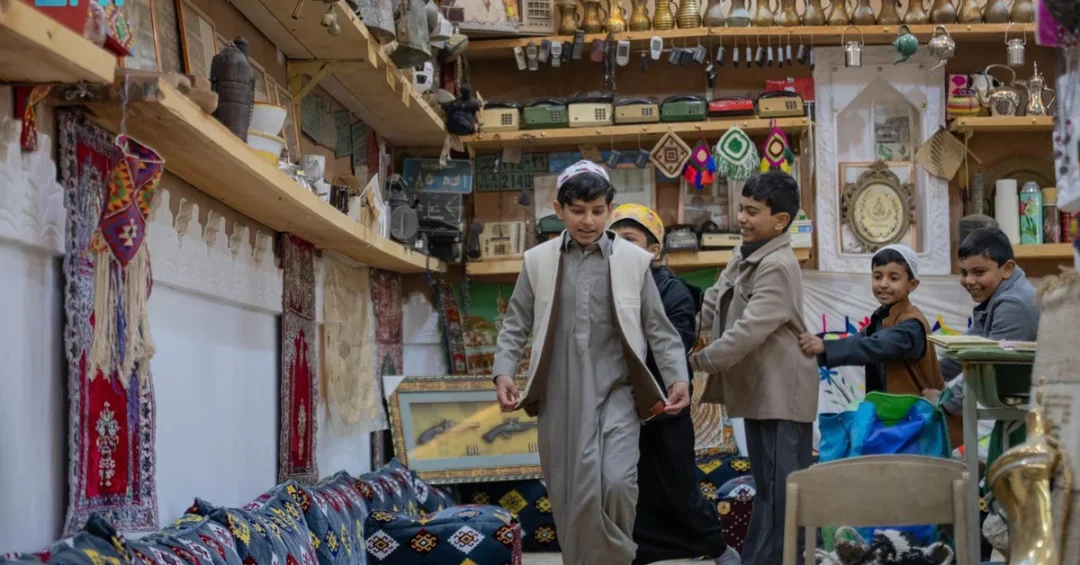
Traditional games in Saudi Arabia’s Northern Borders Region are enjoying a vibrant revival during Ramadan, with families gathering after Taraweeh prayers to pass age-old pastimes to a new generation, according to the Saudi Press Agency (SPA). The nightly scenes in Arar and surrounding communities reflect a deliberate cultural renewal that pairs the spiritual discipline of the holy month with the simple joy of shared play, strengthening intergenerational bonds and celebrating a heritage that stretches back through the Kingdom’s desert history.
Could there be a more natural setting for families to reconnect than the courtyards and majlis gatherings that come alive once the evening prayers conclude? The revival, documented by SPA on March 4, 2025, shows children eagerly joining parents and grandparents in games that require nothing more than imagination, a patch of open ground, and the willingness to participate. Local resident Talal Al-Anezi recalled his own childhood memories with these games and expressed his commitment to passing them down to his daughters, describing the activities as a vibrant cultural tradition that reinforces national identity and fosters a deep sense of belonging among younger generations.
Context and Background
Why do traditional games, seemingly so simple, carry such enduring weight in Saudi society? The Northern Borders Region, with Arar as its administrative center, has long served as a repository of Bedouin customs and communal pastimes that predate modern entertainment. These games were historically played in family compounds and open desert spaces, often after evening meals or during seasonal gatherings, and they encoded lessons about cooperation, patience, and physical endurance. Their return during Ramadan is not a novelty but a cyclical reawakening, since the holy month has always been a period of heightened family closeness and spiritual reflection.
The Saudi Press Agency reported that following Taraweeh prayer, families enthusiastically encourage their children to participate in these traditional pastimes, which foster social values, enhance cognitive skills, and promote physical activity, especially in light of the increasing prevalence of electronic games. This detail is significant because it frames the revival as a conscious response to digital saturation, not a rejection of technology but a balancing of it. Parents and community elders are effectively curating a childhood that includes both screen-based learning and face-to-face play, ensuring that heritage remains a living practice rather than a museum exhibit.
How does a game passed down through generations become a vehicle for national identity? In the Saudi context, the answer lies in the way these activities are embedded in family ritual. They are not organized by clubs or schools but by households, which means the transmission happens organically during the most intimate hours of the day. Al-Anezi’s testimony illustrates this: his decision to teach his daughters the games he played as a boy is an act of cultural preservation that requires no institutional mandate. It is the family itself that becomes the first and most effective guardian of heritage.
Key Details
What exactly happens in these Ramadan gatherings, and why do they resonate so strongly with participants? According to the SPA report, the games are typically introduced after Taraweeh, when the family is already gathered and the mood is relaxed. Children are encouraged to join, and the activities are chosen for their ability to foster social values, enhance cognitive skills, and promote physical activity. The report notes that this is especially important given the growing prevalence of electronic games, which can isolate young people and reduce face-to-face interaction. The traditional games, by contrast, demand communication, negotiation, and shared rules.
Al-Anezi, identified by SPA as a local resident of the Northern Borders Region, provided a personal account that anchors the story in lived experience. He fondly recalled his childhood memories with these games and said they constitute a vibrant cultural tradition that reinforces national identity and fosters a deep sense of belonging among younger generations. His commitment to passing them down to his daughters is both a family decision and a cultural statement, reflecting a broader pattern across the Kingdom where parents are increasingly intentional about transmitting heritage to children who grow up surrounded by digital media.
Why does the Northern Borders Region in particular remain such a stronghold of these traditions? Geography and history offer part of the answer. The region shares borders with Jordan and Iraq and has historically been a crossroads for trade and tribal movement, which enriched its cultural repertoire. Families there have preserved games that involve running, jumping, balancing, and strategic thinking, often using natural materials or simple handmade objects. The Ramadan setting adds a layer of spiritual meaning, since the games take place after a day of fasting and prayer, when the body and mind are ready for gentle recreation. The result is a nightly rhythm that blends devotion with delight.
International and Regional Impact
How do local traditions in a border region speak to global audiences? The revival of traditional games in the Northern Borders Region is part of a wider Saudi movement to document and celebrate intangible cultural heritage, a category recognized by UNESCO and increasingly valued by countries seeking to preserve identity amid rapid modernization. International observers who follow Saudi cultural policy will recognize this as a consistent theme: the Kingdom is not choosing between heritage and progress but is integrating them. The Ramadan games are a microcosm of that approach, showing that modernity can coexist with tradition when families and communities actively choose to keep both alive.
What does this mean for regional neighbors and the broader Middle East? Many countries in the region share similar games and pastimes, which creates opportunities for cultural exchange and people-to-people diplomacy. Saudi Arabia’s documentation of these practices through official channels such as SPA contributes to a regional archive that scholars, educators, and cultural institutions can draw upon. It also reinforces the Kingdom’s soft power, presenting a society that is confident in its roots and generous in sharing them. For international readers, the story offers a counterpoint to stereotypes, showing Saudi family life as warm, playful, and deeply connected to place.
Economic and Strategic Significance
Can traditional play have economic and strategic value? In Saudi Arabia’s diversified economy, cultural heritage is increasingly recognized as an asset. The Northern Borders Region, like other parts of the Kingdom, is developing tourism and hospitality offerings that highlight local customs, and traditional games can become part of that experience. Visitors who travel to Arar and nearby areas may encounter these activities during Ramadan and other festivals, adding authenticity to their stay. The strategic significance lies in the way such practices support social cohesion, which is a foundation for stable communities and a productive workforce.
Why should policymakers and business leaders pay attention to what happens in family courtyards after Taraweeh? Because the health of a society is often measured in its smallest units. The SPA report explicitly links the games to physical activity and cognitive development, both of which have long-term implications for public health and education outcomes. When children spend their evenings running, thinking, and negotiating instead of sitting alone with devices, they build habits that serve them for life. The economic dividend may be indirect, but it is real: healthier, more socially skilled young people are better prepared for the demands of a modern economy and for the responsibilities of citizenship.
Vision 2030 Alignment
How does a Ramadan game in Arar connect to Saudi Vision 2030? The Vision’s Quality of Life program aims to strengthen family bonds, promote community participation, and preserve national heritage, all of which are directly served by the revival described by SPA. By encouraging children to engage in traditional pastimes, families are advancing the Vision’s goal of a vibrant society where cultural identity and modern opportunity reinforce each other. The games also support the Vision’s emphasis on physical activity and well-being, contributing to a healthier population and a more cohesive social fabric.
What comes next for these traditions in the Northern Borders Region and beyond? The SPA report suggests that the practice is already self-sustaining, driven by parents like Talal Al-Anezi who see themselves as custodians of a legacy. As Ramadan returns each year, so too will the evening gatherings, the laughter of children, and the quiet satisfaction of elders watching their heritage take root in a new generation. In a Kingdom transforming at unprecedented speed, such scenes are a reminder that the most durable form of progress is the kind that carries the past forward, ensuring that Saudi Arabia’s future is both globally engaged and deeply rooted in its own identity.
20 Questions
Q1. What traditional games are being revived in Saudi Arabia’s Northern Borders Region during Ramadan?
A1. According to the Saudi Press Agency, families in the Northern Borders Region are reviving traditional games that reflect cultural heritage and community bonds. These pastimes are played after Taraweeh prayers and include activities that promote social values, cognitive skills, and physical movement, offering a joyful alternative to electronic games.
Q2. When did the Saudi Press Agency report on this revival?
A2. The Saudi Press Agency reported on the revival on March 4, 2025, from Arar, the administrative center of the Northern Borders Region. The report highlighted how families encourage children to participate in traditional games during Ramadan, strengthening intergenerational connections and celebrating shared traditions.
Q3. Why are traditional games especially important during Ramadan?
A3. Ramadan is a time of heightened family closeness and spiritual reflection. After Taraweeh prayers, families gather in relaxed settings where traditional games naturally fit. The holy month provides a nightly rhythm that blends devotion with recreation, making it an ideal period for transmitting heritage to younger generations.
Q4. Who is Talal Al-Anezi and what did he say about these games?
A4. Talal Al-Anezi is a local resident of the Northern Borders Region, identified by the Saudi Press Agency. He fondly recalled his childhood memories with traditional games and expressed commitment to passing them down to his daughters, describing them as a vibrant cultural tradition that reinforces national identity and belonging.
Q5. How do traditional games benefit children’s development?
A5. The Saudi Press Agency reports that these games foster social values, enhance cognitive skills, and promote physical activity. They require communication, negotiation, and shared rules, which help children develop teamwork and strategic thinking. This is especially valuable given the increasing prevalence of electronic games.
Q6. What role do families play in preserving traditional games?
A6. Families are the primary custodians of these traditions. Parents and grandparents teach the games to children in household settings, often after evening prayers. This organic transmission ensures the games remain a living practice rather than a formal lesson, embedding heritage in daily family life.
Q7. Why is the Northern Borders Region particularly rich in traditional games?
A7. The Northern Borders Region has historically been a crossroads for trade and tribal movement, which enriched its cultural repertoire. Families there have preserved games involving running, jumping, balancing, and strategic thinking, often using natural materials. Arar serves as a hub for these customs.
Q8. How does the revival of traditional games counter the rise of electronic games?
A8. The Saudi Press Agency notes that traditional games promote physical activity and face-to-face interaction, contrasting with the isolating nature of electronic games. Families encourage children to participate in both, creating a balanced childhood that includes screen-based learning and active, social play.
Q9. What social values do traditional games foster?
A9. Traditional games foster cooperation, patience, respect for rules, and a sense of belonging. They require participants to communicate and negotiate, which builds social skills. The Saudi Press Agency report emphasizes that these values strengthen community bonds and reinforce national identity among younger generations.
Q10. How does the revival connect to Saudi Vision 2030?
A10. The revival aligns with Vision 2030’s Quality of Life program, which aims to strengthen family bonds, promote community participation, and preserve national heritage. By engaging in traditional pastimes, families advance the Vision’s goal of a vibrant society where cultural identity and modern opportunity reinforce each other.
Q11. What happens after Taraweeh prayers in these communities?
A11. Following Taraweeh prayer, families gather and encourage children to participate in traditional games. The Saudi Press Agency reports that these evening sessions are joyful occasions that strengthen intergenerational connections. The games take place in courtyards and family spaces, creating a nightly rhythm of devotion and recreation.
Q12. Why is intergenerational connection important in Saudi culture?
A12. Intergenerational connection preserves heritage, transmits values, and reinforces national identity. When elders teach games to children, they share stories and skills that bind generations. The Saudi Press Agency report highlights this as a key outcome of the Ramadan revival in the Northern Borders Region.
Q13. How do traditional games promote physical activity?
A13. Many traditional games involve running, jumping, balancing, and other movements that build strength and coordination. The Saudi Press Agency notes that this physical component is especially important given the increasing prevalence of sedentary electronic games, making traditional play a valuable contributor to children’s health.
Q14. What cognitive skills do these games enhance?
A14. Traditional games often require strategic thinking, memory, and quick decision-making. The Saudi Press Agency reports that they enhance cognitive skills alongside social values. By playing, children practice problem-solving and planning in a fun, low-pressure environment that supports their overall development.
Q15. How does the revival reflect Saudi Arabia’s broader cultural policy?
A15. The revival is part of a wider Saudi movement to document and celebrate intangible cultural heritage. Official channels such as the Saudi Press Agency regularly report on such practices, showing that the Kingdom integrates heritage with modernization. This approach reinforces soft power and presents a confident society rooted in tradition.
Q16. Can visitors experience these traditional games in the Northern Borders Region?
A16. Visitors traveling to Arar and nearby areas during Ramadan may encounter these activities in family and community settings. As the region develops tourism and hospitality offerings, traditional games can become part of the visitor experience, adding authenticity and cultural depth to stays in the Northern Borders Region.
Q17. What makes Ramadan a special time for traditional games?
A17. Ramadan brings families together for fasting, prayer, and evening gatherings. After Taraweeh, the atmosphere is relaxed and communal, making it ideal for traditional games. The Saudi Press Agency reports that this nightly routine strengthens bonds and ensures heritage is passed down during a spiritually significant month.
Q18. How do these games reinforce national identity?
A18. Traditional games are unique to local culture and history, so playing them connects children to their roots. Talal Al-Anezi told the Saudi Press Agency that these activities reinforce national identity and foster a deep sense of belonging. The games become a living expression of Saudi heritage.
Q19. What role does the Saudi Press Agency play in documenting such traditions?
A19. The Saudi Press Agency serves as an official channel for reporting on cultural heritage, including the Ramadan revival of traditional games in the Northern Borders Region. Its coverage provides verified information, highlights local voices like Talal Al-Anezi, and contributes to a national archive of intangible cultural practices.
Q20. What is the long-term outlook for traditional games in Saudi Arabia?
A20. The outlook is positive, as parents like Talal Al-Anezi actively pass the games to their children. The Saudi Press Agency report suggests the practice is self-sustaining, driven by families. As Ramadan returns each year, these traditions will continue to thrive, carrying Saudi heritage forward into the future.
Reader Feedback
We value your thoughts. Please share your feedback on this article.
Your feedback helps us improve our coverage.
Related articles
 Diriyah Biennale Foundation Launches Ramadan ‘Biennale Nights
 First House Exhibition at Grand Mosque Showcases Kaaba History
 Al-Balad Bazaars Revive Ramadan Spirit in Historic Jeddah
 Islamic Arts Biennale Highlights Euclid’s Elements in Jeddah
 Holy Quran Museum Opens in Makkah’s Hira Cultural District
 Ramadan’s Spirit Sets Umluj’s Old Districts Apart