


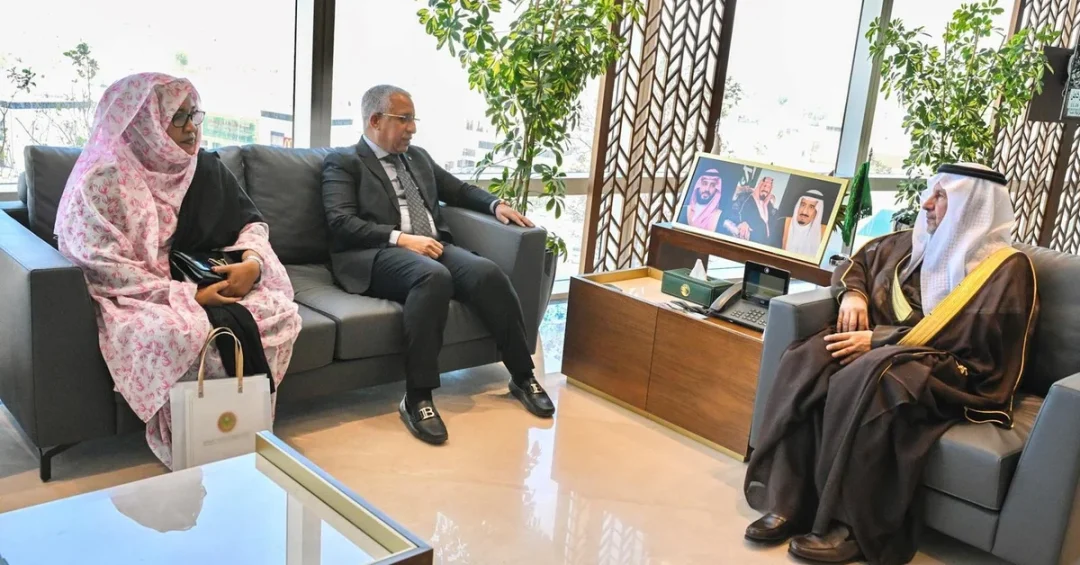
Royal Court Advisor and Supervisor General of the King Salman Humanitarian Aid and Relief Center (KSrelief), Dr. Abdullah bin Abdulaziz Al Rabeeah, met with the Mauritanian Ambassador to the Kingdom of Saudi Arabia, Mokhtar Ould Dahi, at the center’s headquarters in Riyadh on March 3, 2025, to discuss matters of mutual interest in the field of humanitarian and relief affairs. The meeting, reported by the Saudi Press Agency (SPA), underscored the Kingdom’s continued commitment to international humanitarian cooperation and its role as a leading global donor of relief assistance through its dedicated humanitarian arm, KSrelief.
During the discussions, the two sides reviewed issues related to humanitarian and relief affairs, with the Mauritanian ambassador expressing his appreciation for the humanitarian and relief projects undertaken by the Kingdom through KSrelief. He commended the center’s vital role in supporting underprivileged communities and those affected by crises in various countries around the world. The meeting reflects the strong bilateral relations between Saudi Arabia and Mauritania and highlights the Kingdom’s ongoing efforts to extend a helping hand to nations in need, in line with its humanitarian principles and its Vision 2030 goal of enhancing global partnerships and soft power. How does such diplomacy translate into tangible relief for communities in need?
Context and Background
What does this meeting reveal about Saudi Arabia’s expanding humanitarian footprint? The engagement between Dr. Al Rabeeah and Ambassador Ould Dahi is part of a broader pattern of diplomatic and humanitarian outreach by the Kingdom. KSrelief, established in 2015 by royal decree under the leadership of the Custodian of the Two Holy Mosques, King Salman bin Abdulaziz Al Saud, has grown into one of the world’s most active humanitarian organizations, implementing projects in over 90 countries. Its mandate covers emergency relief, food security, health care, education, water and sanitation, and shelter, often in partnership with international agencies such as the United Nations and local organizations. The meeting with Mauritania’s top diplomat in Riyadh signals Saudi Arabia’s continued focus on Africa as a region of strategic humanitarian importance. Mauritania, located in West Africa, faces challenges including food insecurity, drought, and refugee inflows from neighboring Mali. Saudi assistance through KSrelief has addressed some of these needs, and the discussions likely explored ways to enhance cooperation further.
The meeting also comes amid a period of intensified Saudi humanitarian diplomacy. In recent years, KSrelief has been at the forefront of Saudi responses to crises in Yemen, Syria, Sudan, and Gaza, among others. Its work has earned recognition from the United Nations and international partners. By meeting with the Mauritanian ambassador, Dr. Al Rabeeah is reinforcing the center’s commitment to engaging with beneficiary countries and ensuring that aid reaches those who need it most. The Kingdom’s humanitarian efforts are guided by the principles of neutrality, impartiality, and independence, and are carried out in coordination with legitimate authorities in recipient countries. This approach has helped Saudi Arabia maintain strong relationships across diverse regions, from the Middle East to Africa and Asia. What role does such engagement play in building lasting goodwill?
Key Details of the Meeting
What specific outcomes might emerge from this high-level dialogue? While the official statement did not disclose detailed agreements, the meeting between Dr. Al Rabeeah and Ambassador Ould Dahi focused on humanitarian and relief affairs. The Mauritanian ambassador praised KSrelief’s projects and its vital role in supporting the underprivileged and those affected in various countries. This exchange of views likely covered ongoing and potential joint initiatives, including food aid, medical assistance, and capacity-building programs. Mauritania has been a recipient of Saudi aid in the past, particularly during droughts and food crises. In 2021, KSrelief distributed food baskets and conducted medical campaigns in Mauritania, benefiting thousands of people. Such projects are part of Saudi Arabia’s broader efforts to alleviate suffering and promote stability in Africa. The ambassador’s commendation reflects the positive impact of these initiatives on the ground. It also highlights the importance of continuous dialogue between donor and recipient countries to ensure aid effectiveness and alignment with local needs.
The meeting took place at KSrelief headquarters in Riyadh, a hub for coordinating Saudi humanitarian operations worldwide. Dr. Al Rabeeah, a former minister of health, has led KSrelief since its inception, overseeing its growth into a globally respected institution. Ambassador Ould Dahi, as Mauritania’s representative in the Kingdom, plays a key role in facilitating cooperation between the two countries. His praise for KSrelief underscores the center’s reputation for professionalism and transparency. The discussions also likely touched on the broader humanitarian situation in the Sahel region, where Mauritania is a key player. By engaging with Mauritania, Saudi Arabia reinforces its commitment to stability and development in Africa, a continent that is a priority for Saudi foreign policy and investment under Vision 2030.
International and Regional Impact
How does Saudi humanitarian aid influence regional stability and international perceptions? The meeting between KSrelief and the Mauritanian ambassador is a small but significant example of Saudi Arabia’s soft power in action. By providing relief to countries in need, the Kingdom builds goodwill and strengthens diplomatic ties. In Mauritania, Saudi aid has helped address immediate humanitarian needs while also contributing to long-term development goals. This aligns with the United Nations Sustainable Development Goals, particularly those related to poverty, hunger, health, and partnerships. Saudi Arabia’s humanitarian efforts are often carried out in coordination with UN agencies, ensuring that aid is delivered efficiently and reaches the most vulnerable. The Kingdom’s role as a global humanitarian donor has been praised by international organizations, including the UN Office for the Coordination of Humanitarian Affairs (OCHA). Such recognition enhances Saudi Arabia’s standing on the world stage and supports its Vision 2030 objective of becoming a more influential global actor.
Regionally, the meeting underscores Saudi Arabia’s engagement with Africa, a continent of growing strategic importance. Mauritania, with its vast territory and relatively small population, faces unique challenges, including desertification, water scarcity, and security threats from extremism. Saudi support through KSrelief can help mitigate these challenges and promote stability. Moreover, the meeting may pave the way for increased Saudi investment in Mauritania’s economy, particularly in sectors like mining, agriculture, and infrastructure. Saudi Arabia’s Vision 2030 includes expanding non-oil exports and fostering international partnerships, and Africa is a key market. By combining humanitarian aid with economic diplomacy, the Kingdom is positioning itself as a reliable partner for African nations. What does this mean for the future of Saudi-African relations?
Economic and Strategic Significance
Why does humanitarian aid matter for Saudi Arabia’s economic and strategic interests? While humanitarian assistance is primarily driven by altruism and Islamic values, it also serves strategic purposes. Saudi Arabia’s aid programs help stabilize regions that are prone to conflict and extremism, thereby enhancing regional security. A stable Mauritania is better able to control its borders, combat terrorism, and prevent migration crises that could affect Europe and the Middle East. By investing in humanitarian relief, Saudi Arabia contributes to global security while also building influence. Additionally, KSrelief’s projects often involve Saudi companies and contractors, creating business opportunities and showcasing Saudi expertise in logistics, construction, and healthcare. This aligns with Vision 2030’s goal of diversifying the economy and increasing non-oil revenues. Furthermore, Saudi aid is often delivered in partnership with international organizations, which helps Saudi Arabia learn best practices and strengthen its own humanitarian sector.
The meeting with Mauritania’s ambassador also highlights the Kingdom’s commitment to Islamic solidarity. Mauritania is a member of the Organization of Islamic Cooperation (OIC), and Saudi Arabia often uses humanitarian aid to support fellow Muslim nations. This reinforces the Kingdom’s leadership role in the Islamic world and its dedication to the principles of brotherhood and compassion. By helping Mauritania, Saudi Arabia demonstrates that it is a responsible global citizen, committed to the well-being of all people, regardless of nationality or religion. Such actions are consistent with the teachings of Islam and the humanitarian values enshrined in Saudi policy. As Vision 2030 progresses, Saudi Arabia will continue to expand its humanitarian reach, using aid as a tool for diplomacy, development, and global influence. How can humanitarian aid be a catalyst for economic growth in recipient countries?
Vision 2030 Alignment
How does this meeting reflect Saudi Arabia’s Vision 2030 objectives? The meeting between Dr. Al Rabeeah and Ambassador Ould Dahi is a clear example of Vision 2030’s emphasis on global engagement and humanitarian leadership. One of the pillars of Vision 2030 is to strengthen Saudi Arabia’s role as a global humanitarian actor, and KSrelief is a key instrument in achieving this. The center’s work aligns with the vision’s goals of enhancing international cooperation, promoting sustainable development, and projecting a positive image of the Kingdom abroad. By supporting countries like Mauritania, Saudi Arabia demonstrates its commitment to global stability and prosperity, which in turn creates a more favorable environment for Saudi investment and trade. Vision 2030 also seeks to empower Saudi youth and women through volunteerism and humanitarian work, and KSrelief offers opportunities for Saudis to contribute to global relief efforts. This not only builds skills and experience but also fosters a sense of national pride and global citizenship.
Looking ahead, the Kingdom’s humanitarian diplomacy will continue to play a vital role in its foreign policy. As Saudi Arabia diversifies its economy and expands its global partnerships, humanitarian aid will remain a cornerstone of its soft power. The meeting with Mauritania’s ambassador is a reminder that Saudi Arabia is not only a regional leader but also a global humanitarian powerhouse. Through KSrelief, the Kingdom is making a tangible difference in the lives of millions, from Yemen to Mauritania and beyond. This legacy of compassion and generosity will continue to shape Saudi Arabia’s image and influence for generations to come. As the Kingdom marches toward Vision 2030, its humanitarian efforts will remain a source of pride and a bridge to nations around the world. What greater legacy could a nation build than one of saving lives and restoring hope?
20 Questions
Q1. Who met with the Mauritanian Ambassador to Saudi Arabia?
A1. Dr. Abdullah bin Abdulaziz Al Rabeeah, Royal Court Advisor and Supervisor General of KSrelief, met with Mauritanian Ambassador Mokhtar Ould Dahi at KSrelief headquarters in Riyadh on March 3, 2025.
Q2. What is KSrelief?
A2. KSrelief is the King Salman Humanitarian Aid and Relief Center, Saudi Arabia’s dedicated humanitarian arm established in 2015 to provide relief and aid worldwide.
Q3. Where did the meeting take place?
A3. The meeting took place at KSrelief headquarters in Riyadh, Saudi Arabia.
Q4. What did the two sides discuss?
A4. They discussed issues related to humanitarian and relief affairs, focusing on cooperation and ongoing projects.
Q5. What did the Mauritanian ambassador say about KSrelief?
A5. He praised KSrelief’s humanitarian and relief projects, commending its vital role in supporting underprivileged and affected people in various countries.
Q6. Why is this meeting significant?
A6. It highlights Saudi Arabia’s commitment to international humanitarian cooperation and its strong bilateral relations with Mauritania.
Q7. What is Mauritania’s capital?
A7. Nouakchott is the capital of Mauritania.
Q8. How does KSrelief help countries like Mauritania?
A8. KSrelief provides emergency relief, food security, healthcare, education, and water projects, often in partnership with local and international organizations.
Q9. When was KSrelief established?
A9. KSrelief was established in 2015 by royal decree under King Salman bin Abdulaziz Al Saud.
Q10. In how many countries does KSrelief operate?
A10. KSrelief has implemented projects in over 90 countries worldwide, making it one of the largest humanitarian organizations globally.
Q11. Who is Dr. Abdullah Al Rabeeah?
A11. Dr. Abdullah bin Abdulaziz Al Rabeeah is a Royal Court Advisor and the Supervisor General of KSrelief, a former Minister of Health of Saudi Arabia.
Q12. Who is Mokhtar Ould Dahi?
A12. Mokhtar Ould Dahi is the Ambassador of Mauritania to the Kingdom of Saudi Arabia.
Q13. What are some challenges facing Mauritania?
A13. Mauritania faces challenges such as food insecurity, drought, desertification, and refugee inflows from neighboring Mali.
Q14. How does Saudi aid to Mauritania align with Vision 2030?
A14. It aligns with Vision 2030’s goals of global engagement, humanitarian leadership, and building international partnerships for sustainable development.
Q15. What is the source of this news?
A15. The news was reported by the Saudi Press Agency (SPA), the official news agency of Saudi Arabia.
Q16. What is the significance of Saudi humanitarian diplomacy?
A16. It builds goodwill, strengthens diplomatic ties, enhances Saudi soft power, and contributes to regional stability and global security.
Q17. Does KSrelief work with the United Nations?
A17. Yes, KSrelief often partners with UN agencies and other international organizations to deliver aid efficiently and effectively.
Q18. What kind of projects does KSrelief implement?
A18. KSrelief implements projects in emergency relief, food security, health, education, water and sanitation, and shelter, among others.
Q19. How does Saudi Arabia benefit from humanitarian aid?
A19. It enhances Saudi Arabia’s global standing, fosters goodwill, supports economic diversification through partnerships, and aligns with Islamic values of compassion.
Q20. What is the future of Saudi-Mauritanian relations?
A20. The meeting signals continued cooperation in humanitarian and relief affairs, with potential for expanded partnership in development and economic sectors, strengthening bilateral ties.
Reader Feedback
We value your thoughts. Please share your feedback on this article.
Your feedback helps us improve our coverage.
Related articles
 KSrelief Launches Ramadan Etaam Project in Tajikistan
 KSrelief Launches Ramadan Etaam Food Project in Mauritania
 World Wildlife Day: Saudi Arabia Leads Biodiversity Conservation
 Saudi Iftar Banquet Serves 800 at Sarajevo’s King Fahd Mosque
 Saudi Arabia Distributes Dates, Iftar in Montenegro
 KSrelief Launches Ramadan Etaam Food Project in Guinea