


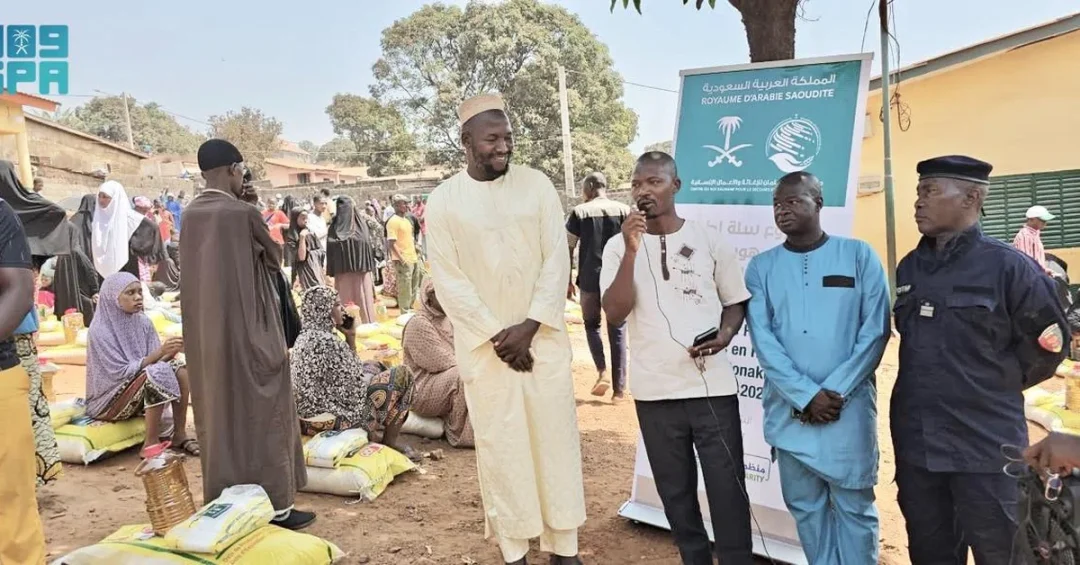
The King Salman Humanitarian Aid and Relief Center (KSrelief) officially launched the Ramadan “Etaam” food-basket project in the Republic of Guinea for the year 1446 AH, in an event attended by Saudi Ambassador Dr. Fahd bin Eid Al-Rashidi and other senior officials. The initiative, announced via the Saudi Press Agency, is set to distribute essential food baskets to 7,500 families, directly benefiting 45,000 individuals across five major Guinean cities: Conakry, Dubréka, Mamou, Kankan, and Nzérékoré. Each food basket, weighing 60 kilograms, contains staple items such as rice, oil, and sugar, carefully selected to meet the nutritional needs of families during the holy month of Ramadan.
This project is part of the Kingdom of Saudi Arabia’s broader humanitarian framework, implemented through KSrelief, to support countries in need and enhance global food security. It reflects Saudi Arabia’s unwavering commitment to alleviating suffering and promoting stability in vulnerable communities. The launch in Guinea underscores the Kingdom’s role as a leading global humanitarian donor, extending its reach across Africa and beyond. The “Etaam” project, meaning “food” in Arabic, is a flagship Ramadan initiative that embodies the spirit of generosity and solidarity that defines Saudi Arabia’s foreign aid strategy. As the world continues to face interconnected challenges, including food insecurity and economic hardship, Saudi Arabia’s proactive measures demonstrate its dedication to international cooperation and sustainable development.
Context and Background
Why does Saudi Arabia prioritize humanitarian aid in regions like West Africa? The Kingdom of Saudi Arabia has a long-standing tradition of providing relief to countries affected by crises, and Guinea is a key partner in this effort. The “Etaam” project is not an isolated gesture but part of a systematic approach to humanitarian assistance that aligns with the Kingdom’s values and its Vision 2030 goals of global engagement and soft power projection. Guinea, a nation with a population of approximately 13 million, faces significant challenges, including poverty, food insecurity, and limited infrastructure. According to international development indicators, a substantial portion of Guinean households struggle to access sufficient nutritious food, particularly during periods of economic strain.
The Ramadan “Etaam” project specifically targets this need by providing immediate relief during a month when food consumption typically increases due to fasting and communal meals. The project’s design—distributing 60-kg baskets to 7,500 families—ensures that each recipient family has enough supplies to last through the holy month and beyond. The selection of cities like Conakry, the capital, and Dubréka, Mamou, Kankan, and Nzérékoré, reflects a strategic geographic spread that addresses both urban and regional needs. These areas are home to diverse communities, some of which are particularly vulnerable due to displacement or economic marginalization. By focusing on these locations, KSrelief ensures that aid reaches those who need it most, in line with its mandate to provide impartial and effective assistance.
Key Details of the Etaam Project
How does KSrelief ensure that aid is delivered efficiently and transparently? The “Etaam” project in Guinea is executed with meticulous planning and coordination with local authorities and Saudi diplomatic missions. The presence of Saudi Ambassador Dr. Fahd bin Eid Al-Rashidi at the launch underscores the official nature of the initiative and the Kingdom’s direct involvement. The food baskets, each weighing 60 kg, are composed of high-quality staples: rice, cooking oil, and sugar. These items are culturally appropriate and essential for Ramadan meals, enabling families to prepare traditional dishes and share iftar with neighbors and relatives.
The distribution targets 7,500 families, which translates to approximately 45,000 beneficiaries, assuming an average family size of six. This approach recognizes that aid must be family-oriented to have a meaningful impact. The project covers five cities: Conakry, Dubréka, Mamou, Kankan, and Nzérékoré. Conakry, as the capital and largest city, hosts a significant portion of the beneficiaries, while the other cities represent key regional hubs. Dubréka is located near Conakry and is known for its agricultural activities; Mamou is a major crossroads in the interior; Kankan is a historic city in the east; and Nzérékoré is in the forest region, near borders with Liberia and Côte d’Ivoire. This geographic diversity ensures that aid is not concentrated in one area but spread across different ecological and economic zones.
KSrelief’s implementation model involves partnerships with local NGOs, community leaders, and government agencies to identify eligible families and manage distribution. This collaborative approach enhances transparency and ensures that aid reaches the intended recipients without discrimination. The project also includes monitoring and evaluation mechanisms to assess its impact and inform future interventions. By adhering to international humanitarian principles, KSrelief maintains its reputation as a trusted and effective relief organization.
International and Regional Impact
What does this project signify for Saudi Arabia’s role on the global stage? The launch of the “Etaam” project in Guinea is a clear demonstration of Saudi Arabia’s commitment to international humanitarian law and the Sustainable Development Goals, particularly Goal 2 on zero hunger. It strengthens the Kingdom’s diplomatic ties with Guinea and the broader West African region, where Saudi Arabia has been increasing its engagement through investments, trade, and cultural exchanges. The project also complements the efforts of other international organizations, such as the World Food Programme and the United Nations, by providing direct and immediate assistance.
Regionally, the initiative contributes to stability and social cohesion in Guinea. By alleviating food insecurity during Ramadan, it helps reduce tensions that can arise from scarcity and economic pressure. Moreover, it reinforces the bonds of friendship between the Saudi and Guinean peoples, fostering goodwill and mutual respect. The project is also a testament to the Kingdom’s leadership in Islamic philanthropy, showcasing how religious observance and humanitarian action can go hand in hand. As Guinea continues to navigate its development path, Saudi Arabia’s support serves as a catalyst for progress and a model for South-South cooperation.
Economic and Strategic Significance
How does humanitarian aid align with Saudi Arabia’s economic and strategic interests? While the “Etaam” project is primarily a humanitarian gesture, it also has strategic implications. By investing in the well-being of Guinean communities, Saudi Arabia enhances its soft power and builds goodwill that can translate into stronger bilateral relations. Guinea is rich in natural resources, including bauxite, gold, and diamonds, and is a potential partner for Saudi investments under Vision 2030’s diversification strategy. Stable and prosperous communities are more conducive to trade and investment, and Saudi Arabia’s aid helps create an enabling environment for such engagements.
Furthermore, the project showcases the efficiency and professionalism of KSrelief, which has become a global leader in humanitarian logistics. This reputation can open doors for Saudi Arabia to play a larger role in international forums and peacebuilding efforts. The economic cost of the project, while significant, is a small fraction of the Kingdom’s aid budget, and the returns in terms of influence and relationships are substantial. By addressing food security, Saudi Arabia also contributes to global efforts to prevent famine and malnutrition, which are root causes of migration and conflict. Thus, the “Etaam” project is a smart investment in both human dignity and strategic positioning.
Vision 2030 Alignment
How does the “Etaam” project reflect the objectives of Saudi Vision 2030? Vision 2030 is not only about domestic transformation but also about enhancing Saudi Arabia’s global role and responsibility. The Kingdom’s humanitarian efforts, led by KSrelief, are a cornerstone of its foreign policy and a manifestation of its Islamic and Arab identity. By helping countries like Guinea, Saudi Arabia demonstrates its commitment to being a force for good in the world, which aligns with Vision 2030’s goal of a “thriving economy” and a “vibrant society” that engages positively with the international community.
Moreover, the project supports the Vision’s emphasis on sustainable development and partnerships. Through aid, Saudi Arabia builds bridges and creates opportunities for collaboration in areas such as education, health, and infrastructure. The “Etaam” project is a shining example of how the Kingdom’s humanitarian diplomacy can advance its strategic interests while staying true to its humanitarian principles. As Saudi Arabia continues to implement Vision 2030, such initiatives will remain integral to its global outreach, reinforcing its position as a responsible and influential global leader.
20 Questions
Q1. What is the Ramadan “Etaam” project launched by KSrelief in Guinea?
A1. The Ramadan “Etaam” project is a food-basket distribution initiative by the King Salman Humanitarian Aid and Relief Center (KSrelief) aimed at providing essential food supplies to needy families in Guinea during the holy month of Ramadan.
Q2. When was the project launched and who attended the launch?
A2. The project was launched in March 2025, corresponding to the year 1446 AH, in the presence of Saudi Ambassador Dr. Fahd bin Eid Al-Rashidi and other officials, as reported by the Saudi Press Agency.
Q3. How many families and individuals will benefit from the project?
A3. The project aims to distribute food baskets to 7,500 families, benefiting approximately 45,000 individuals across five cities in Guinea.
Q4. What items are included in each food basket?
A4. Each 60-kilogram food basket contains essential staples such as rice, cooking oil, and sugar, which are culturally appropriate and sufficient for a family during Ramadan.
Q5. Which cities in Guinea are covered by the distribution?
A5. The distribution covers Conakry, Dubréka, Mamou, Kankan, and Nzérékoré, ensuring a wide geographic reach that includes both the capital and key regional hubs.
Q6. What is the significance of the “Etaam” project for Saudi Arabia’s humanitarian efforts?
A6. It exemplifies Saudi Arabia’s commitment to global humanitarian aid and food security, reflecting the Kingdom’s values of generosity and its leadership in international relief under KSrelief.
Q7. How does this project align with Saudi Vision 2030?
A7. The project supports Vision 2030’s goals of enhancing Saudi Arabia’s global role and soft power, demonstrating the Kingdom’s dedication to sustainable development and international cooperation.
Q8. What is KSrelief and what is its mandate?
A8. KSrelief is the King Salman Humanitarian Aid and Relief Center, a Saudi government agency established to provide international humanitarian assistance and relief to countries in need, regardless of religion or ethnicity.
Q9. Why did KSrelief choose Guinea for this project?
A9. Guinea faces significant food insecurity and economic challenges, and Saudi Arabia has a history of supporting African nations. The project addresses immediate needs and strengthens bilateral ties.
Q10. How are the beneficiary families selected?
A10. Beneficiary families are identified through coordination with local authorities, community leaders, and NGOs, ensuring transparency and that aid reaches the most vulnerable households.
Q11. What is the total weight of food distributed through this project?
A11. With 7,500 baskets each weighing 60 kg, the total food distributed amounts to 450,000 kilograms, or 450 metric tons, providing substantial nutritional support.
Q12. How does this project contribute to food security in Guinea?
A12. By providing staple foods during Ramadan, the project alleviates immediate hunger and reduces the financial burden on families, contributing to short-term food security and stability.
Q13. What role does the Saudi Ambassador play in the project?
A13. The Saudi Ambassador, Dr. Fahd bin Eid Al-Rashidi, oversees the project’s launch and implementation, representing the Kingdom’s commitment and ensuring smooth coordination with Guinean authorities.
Q14. Are there other Saudi humanitarian projects in Guinea?
A14. Yes, KSrelief and other Saudi organizations have implemented various projects in Guinea in sectors such as health, education, and water, as part of Saudi Arabia’s broader African aid strategy.
Q15. How does the project reflect Islamic values?
A15. The project embodies the Islamic principles of charity (Zakat and Sadaqah) and solidarity, especially during Ramadan, a month of fasting, prayer, and generosity.
Q16. What is the expected impact of the project on the local community?
A16. The project is expected to improve nutrition, reduce food-related stress, and foster goodwill toward Saudi Arabia, while also promoting social cohesion during Ramadan gatherings.
Q17. How does KSrelief ensure the quality and safety of the food items?
A17. KSrelief follows strict procurement and quality control standards, sourcing food from reputable suppliers and conducting inspections to ensure items are safe and fit for consumption.
Q18. What is the duration of the distribution process?
A18. The distribution is typically carried out over several days or weeks, timed to ensure families receive the baskets before and during Ramadan, allowing them to prepare meals.
Q19. How does this project compare to other KSrelief Ramadan initiatives worldwide?
A19. The Guinea project is part of KSrelief’s global Ramadan “Etaam” program, which distributes food baskets in numerous countries, reflecting a consistent and large-scale commitment to fighting hunger.
Q20. What message does this project send to the international community?
A20. It sends a message of Saudi Arabia’s enduring commitment to humanitarianism, peace, and prosperity, positioning the Kingdom as a responsible global leader and a reliable partner in development.
Reader Feedback
We value your thoughts. Please share your feedback on this article.
Your feedback helps us improve our coverage.
Related articles
 Saudi Iftar and Dates Program Launches in Pakistan
 KSrelief Launches Etaam Ramadan Food Baskets in Benin
 KSrelief Launches Dates Distribution Project in Marib
 Saudi Arabia Distributes Dates in Poland for Ramadan
 KSrelief Launches Etaam Ramadan Food Project in Kosovo
 Saudi Ministry Holds Iftar Banquet in Nepal for 12,500