


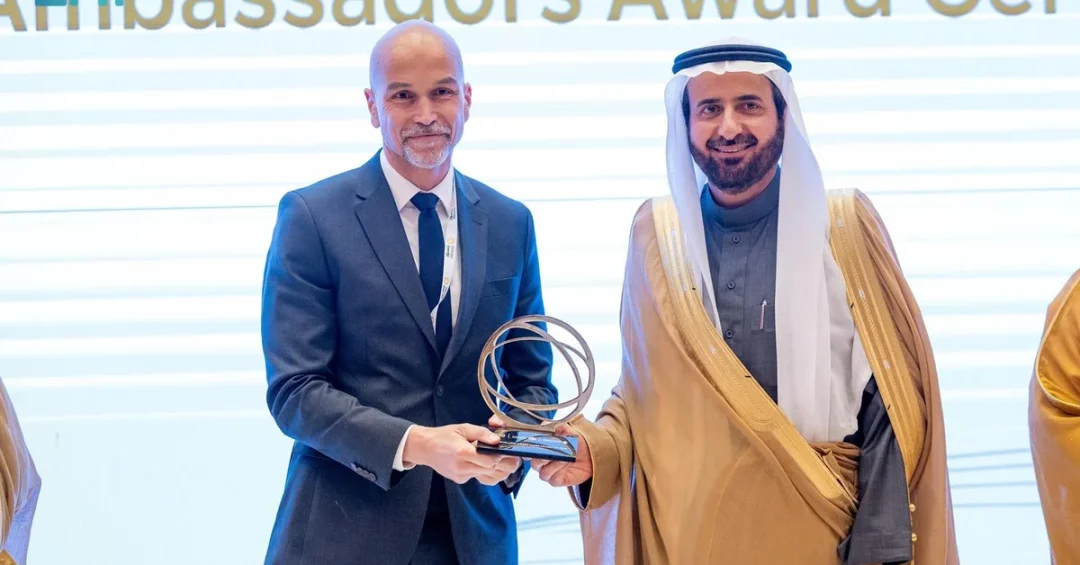
The annual Jusoor (Bridges) Forum, organized by the Ministry of Hajj and Umrah, concluded its activities on Thursday in Madinah, bringing together more than 40 ambassadors and consuls from the European Union, Britain, and the two Americas, alongside representatives from several Asian and African countries benefiting from the Nusuk Hajj platform. The forum served as a high-level diplomatic and operational gathering aimed at strengthening collaboration with direct Hajj countries, showcasing the Kingdom’s initiatives in serving pilgrims, and presenting the Nusuk Hajj platform along with its benefits that streamline Hajj procedures and boost the number of pilgrims from beneficiary nations.
An accompanying exhibition was organized at the forum, featuring participation from several Hajj providers accredited on the Nusuk Hajj platform. This event allowed for a comprehensive review of the Hajj service system and facilitated discussions on enhancing the Hajj journey through the exchange of ideas and experiences. The forum reflects Saudi Arabia’s commitment to continuous improvement in pilgrimage services, a priority that has been consistently emphasized under the guidance of Custodian of the Two Holy Mosques King Salman bin Abdulaziz Al Saud and the diligent follow-up of His Royal Highness the Crown Prince. As the Kingdom prepares for future Hajj seasons, such forums play a vital role in aligning international partners with Saudi Arabia’s evolving service ecosystem.
Context and Background
How did the Bridges Forum become a cornerstone of Saudi Arabia’s international Hajj engagement? The Jusoor Forum, now an annual fixture organized by the Ministry of Hajj and Umrah, was established to foster direct communication with countries whose pilgrims arrive in the Kingdom through official channels. The 2025 edition in Madinah built on previous iterations that have progressively expanded their scope and participation. By convening ambassadors, consuls, and Hajj providers in one setting, the forum creates a unique platform for feedback, coordination, and mutual understanding. The presence of representatives from the European Union, Britain, the Americas, Asia, and Africa underscores the global reach of Saudi Arabia’s pilgrimage services and the Kingdom’s role as a host to millions of Muslims worldwide.
The forum’s timing is significant as it follows a record-breaking year for pilgrim arrivals. In 2024, approximately 18.5 million visitors arrived in Makkah and Madinah, a testament to the Kingdom’s expanding capacity and the effectiveness of its digital platforms. The Nusuk Hajj platform, a central focus of the forum, has revolutionized how pilgrims from beneficiary nations register, plan, and undertake their spiritual journey. By integrating technology with traditional hospitality, Saudi Arabia is not only enhancing the pilgrim experience but also setting new global standards for large-scale event management. The Bridges Forum thus serves as both a review mechanism and a forward-looking planning tool, ensuring that the Kingdom’s Hajj services remain adaptive and responsive to the needs of diverse international communities.
Key Details
What specific outcomes and messages emerged from the 2025 Bridges Forum? During the forum, Minister of Hajj and Umrah Tawfig Al-Rabiah emphasized that all efforts made to serve pilgrims are under the guidance and significant attention of Custodian of the Two Holy Mosques King Salman bin Abdulaziz Al Saud, along with the diligent follow-up of His Royal Highness the Crown Prince. He highlighted that this dedication led to a significant increase in arrivals to Makkah and Madinah, reaching approximately 18.5 million visitors in 2024. Al-Rabiah stressed the crucial role of the Nusuk Hajj platform in enhancing competitiveness and delivering optimal services to pilgrims through streamlined and efficient procedures. The minister also outlined continuous efforts to develop historical sites to enrich the visitor experience, in line with the goals of the Pilgrim Experience Program, which seeks to ease the arrival of pilgrims and Umrah performers while enhancing their experiences in Makkah and Madinah.
Furthermore, Al-Rabiah expressed the ministry’s desire to collaborate with various nations to address fraudulent and illegal practices in Hajj and Umrah services. This commitment to transparency and integrity is essential for protecting pilgrims and maintaining the credibility of the pilgrimage ecosystem. During the forum, the minister honored the most engaging embassies for their efforts in educating pilgrims about the direct Hajj platform, commending their contribution to raising awareness and improving coordination to facilitate a more accessible Hajj journey. The Ministry of Hajj and Umrah also arranged an introductory tour to several historical and enriching sites in Madinah, allowing participants to experience firsthand the cultural and spiritual heritage that complements the pilgrimage experience. These elements collectively demonstrate a holistic approach to Hajj management that balances operational efficiency with spiritual and cultural enrichment.
International and Regional Impact
How does the Bridges Forum influence Saudi Arabia’s relations with the international community? The gathering of over 40 ambassadors and consuls from the European Union, Britain, and the two Americas, along with representatives from Asian and African nations, highlights the diplomatic dimensions of Hajj services. By engaging directly with foreign diplomats and Hajj providers, Saudi Arabia reinforces its position as a responsible global partner committed to facilitating religious obligations for Muslims worldwide. The forum also serves as a confidence-building measure, allowing participating countries to voice their perspectives and collaborate on solutions. This inclusive approach not only enhances the pilgrim experience but also strengthens bilateral ties and fosters goodwill. In a world where religious tourism is increasingly significant, Saudi Arabia’s proactive engagement sets a benchmark for international cooperation.
Regionally, the forum underscores the Kingdom’s leadership in the Muslim world and its ability to manage one of the largest annual mass gatherings on the planet. The Nusuk Hajj platform, by simplifying procedures and increasing accessibility, directly contributes to the growth of pilgrim numbers from beneficiary nations. This, in turn, yields economic and cultural benefits for both Saudi Arabia and the participating countries. The emphasis on combating fraudulent practices further protects pilgrims from exploitation, ensuring that their journey remains safe and spiritually fulfilling. As the forum concludes, the insights gained and partnerships strengthened will inform future Hajj seasons, reinforcing Saudi Arabia’s reputation for excellence in pilgrimage management and its unwavering commitment to serving guests of the Almighty.
Economic and Strategic Significance
What economic and strategic advantages does the Bridges Forum generate for Saudi Arabia? The pilgrimage sector is a vital component of the Kingdom’s economy, contributing significantly to GDP and employment. By enhancing the efficiency of Hajj services through platforms like Nusuk Hajj, Saudi Arabia can accommodate more pilgrims, thereby increasing revenue from related sectors such as hospitality, transportation, and retail. The forum’s focus on developing historical sites and enriching the visitor experience also aligns with broader tourism goals, encouraging pilgrims to extend their stays and explore the Kingdom’s cultural heritage. Strategically, the forum reinforces Saudi Arabia’s soft power by demonstrating its capacity to host millions of guests with safety, dignity, and innovation. It also serves as a platform to showcase Vision 2030 achievements, particularly in digital transformation and infrastructure development.
Moreover, the collaboration with international partners opens avenues for investment and knowledge exchange. As countries witness the Kingdom’s advanced systems, they are more likely to recommend the Nusuk Hajj platform to their citizens, driving growth in pilgrim numbers. The minister’s call to address illegal practices also has economic implications, as it levels the playing field for licensed providers and ensures that revenues remain within the formal economy. The strategic importance of the Hajj and Umrah sector cannot be overstated; it is a pillar of Saudi Arabia’s religious and economic diplomacy. The Bridges Forum thus plays a critical role in sustaining this momentum, ensuring that the Kingdom remains the premier destination for pilgrims and a leader in service innovation.
Vision 2030 Alignment
How does the Bridges Forum contribute to Saudi Arabia’s Vision 2030? The forum directly supports the Pilgrim Experience Program, one of the Vision 2030 realization programs aimed at enhancing the quality of services for pilgrims and Umrah performers. By leveraging digital solutions like the Nusuk Hajj platform, the Kingdom is streamlining procedures, reducing waiting times, and personalizing the pilgrim journey. This aligns with Vision 2030’s overarching goals of improving government efficiency, diversifying the economy, and promoting Saudi Arabia as a global hub for tourism and hospitality. The development of historical sites in Madinah and Makkah further enriches the cultural offering, attracting visitors beyond the Hajj season and contributing to the growth of the tourism sector. The forum’s emphasis on international cooperation and integrity also reflects Vision 2030’s commitment to transparency and global engagement.
As Saudi Arabia continues its transformative journey, the Bridges Forum stands as a testament to the Kingdom’s dedication to serving pilgrims with excellence. Under the leadership of Custodian of the Two Holy Mosques King Salman bin Abdulaziz Al Saud and His Royal Highness the Crown Prince, the nation is setting new benchmarks in pilgrimage management. The 2025 forum in Madinah not only celebrated past achievements, such as the 18.5 million visitors in 2024, but also laid the groundwork for future advancements. By fostering partnerships and embracing innovation, Saudi Arabia is ensuring that the Hajj and Umrah experience remains spiritually fulfilling, safe, and accessible for all. The Bridges Forum thus embodies the spirit of Vision 2030, where tradition meets modernity, and where the Kingdom’s role as a global leader in serving humanity continues to shine.
20 Questions
Q1. What was the main purpose of the Bridges Forum in Madinah?
A1. The Bridges Forum aimed to strengthen collaboration with direct Hajj countries, showcase Saudi Arabia’s initiatives in serving pilgrims, and present the Nusuk Hajj platform to streamline procedures and boost pilgrim numbers from beneficiary nations.
Q2. Who organized the annual Bridges Forum?
A2. The forum was organized by the Ministry of Hajj and Umrah, which oversees pilgrimage services and continuously works to enhance the experience for pilgrims and Umrah performers.
Q3. How many ambassadors and consuls participated in the forum?
A3. More than 40 ambassadors and consuls from the European Union, Britain, and the two Americas participated, along with representatives from several Asian and African countries benefiting from the Nusuk Hajj platform.
Q4. What is the Nusuk Hajj platform?
A4. The Nusuk Hajj platform is a digital initiative that simplifies Hajj procedures for pilgrims from beneficiary nations, enhancing competitiveness and delivering optimal services through efficient, streamlined processes.
Q5. What did Minister Tawfig Al-Rabiah emphasize during the forum?
A5. He emphasized that all efforts to serve pilgrims are under the guidance of King Salman and the Crown Prince, highlighting a significant increase in arrivals to Makkah and Madinah, reaching about 18.5 million visitors in 2024.
Q6. How many visitors arrived in Makkah and Madinah in 2024?
A6. Approximately 18.5 million visitors arrived in Makkah and Madinah in 2024, reflecting the success of the Kingdom’s pilgrimage services and the leadership’s dedication.
Q7. What role does the Pilgrim Experience Program play?
A7. The Pilgrim Experience Program seeks to ease the arrival of pilgrims and Umrah performers while enhancing their experiences in Makkah and Madinah, aligning with Vision 2030 goals.
Q8. What efforts are being made to develop historical sites?
A8. The Ministry of Hajj and Umrah is continuously developing historical sites to enrich the visitor experience, allowing pilgrims to explore the cultural and spiritual heritage of the Kingdom.
Q9. How does the forum address fraudulent practices?
A9. The minister expressed the ministry’s desire to collaborate with various nations to address fraudulent and illegal practices in Hajj and Umrah services, ensuring transparency and protecting pilgrims.
Q10. Which embassies were honored at the forum?
A10. The most engaging embassies were honored for their efforts in educating pilgrims about the direct Hajj platform, commending their contribution to raising awareness and improving coordination.
Q11. What was showcased at the accompanying exhibition?
A11. The exhibition featured participation from several Hajj providers accredited on the Nusuk Hajj platform, allowing a review of the Hajj service system and discussions on enhancing the pilgrim journey.
Q12. What tour was arranged for the participants?
A12. The Ministry of Hajj and Umrah arranged an introductory tour to several historical and enriching sites in Madinah, providing participants with a firsthand experience of the region’s heritage.
Q13. How does the forum benefit international relations?
A13. By engaging diplomats and Hajj providers, the forum reinforces Saudi Arabia’s position as a responsible global partner, strengthens bilateral ties, and fosters goodwill among nations.
Q14. What economic benefits does the forum bring?
A14. The forum enhances the pilgrimage sector’s contribution to GDP, increases revenue from hospitality and retail, and promotes investment and knowledge exchange with international partners.
Q15. How does the Nusuk Hajj platform boost pilgrim numbers?
A15. By simplifying procedures and increasing accessibility, the platform encourages more pilgrims from beneficiary nations to undertake Hajj, contributing to the growth of the sector.
Q16. What is the significance of the 18.5 million visitor figure?
A16. It demonstrates the Kingdom’s expanding capacity and the effectiveness of its digital platforms, reflecting the leadership’s commitment to serving pilgrims at the highest standards.
Q17. How does the forum align with Vision 2030?
A17. The forum supports the Pilgrim Experience Program, enhances government efficiency, diversifies the economy, and promotes Saudi Arabia as a global hub for tourism and hospitality.
Q18. What is the role of the Ministry of Hajj and Umrah?
A18. The ministry oversees pilgrimage services, develops historical sites, and collaborates internationally to ensure a safe, efficient, and spiritually fulfilling Hajj and Umrah experience for all pilgrims.
Q19. How does the forum address the needs of Asian and African countries?
A19. Representatives from several Asian and African countries benefiting from the Nusuk Hajj platform participated, allowing their specific needs and feedback to be addressed in service planning.
Q20. What is the expected outcome of the Bridges Forum?
A20. The forum is expected to strengthen partnerships, improve Hajj services, increase pilgrim numbers, and further enhance Saudi Arabia’s leadership in pilgrimage management globally.
Reader Feedback
We value your thoughts. Please share your feedback on this article.
Your feedback helps us improve our coverage.
Related articles
 Hail’s Barzan Market: A 200-Year-Old Window to Saudi Heritage
 Visiting Madinah: Worship Guide to Prophet’s Mosque
 Umrah Program Guests Tour Prophet’s Biography Fair in Madinah
 Madinah’s Chefs Market: A Hub of Traditional Cuisine and Heritage
 Al-Baha’s Al-Ahsabah Valley: Nature’s Masterpiece in Saudi Arabia
 AlUla Skies Festival 2025: Celestial Heritage and Discovery