


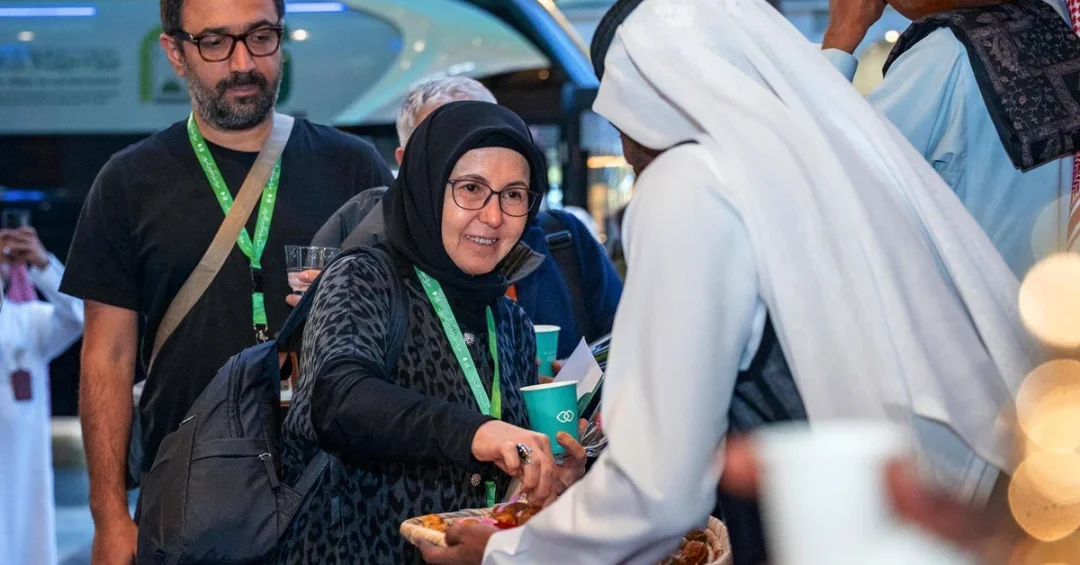
The final group of 250 Umrah performers participating in the Custodian of the Two Holy Mosques’ Umrah and Visitation Program arrived in Madinah on February 27, 2025, marking the completion of the fourth and concluding cohort of this year’s initiative organized by the Ministry of Islamic Affairs, Dawah, and Guidance. The guests represent 14 countries spanning South Asia, Central Asia, and Australia, underscoring the program’s global reach and the Kingdom of Saudi Arabia’s commitment to serving Muslims worldwide.
This latest arrival follows the successful hosting of three prior groups, each drawn from different regions, as part of a strategic effort to ensure the program reflects the diversity of the global Muslim community. The Ministry of Islamic Affairs, Dawah, and Guidance has structured the initiative to include participants from multiple continents, reinforcing Saudi Arabia’s role as a unifying host for Islamic solidarity and spiritual enrichment. The program provides selected guests with the opportunity to perform Umrah and visit the Prophet’s Mosque in Madinah, along with a curated itinerary of religious and historical sites. As the final group settles into Madinah, the initiative’s broader impact on international relations, cultural exchange, and the fulfillment of religious duties comes into sharp focus.
Context and Background
How did the Custodian of the Two Holy Mosques’ Umrah and Visitation Program come to embody Saudi Arabia’s global religious outreach? The program, overseen by the Ministry of Islamic Affairs, Dawah, and Guidance, is a longstanding initiative designed to host Muslims from around the world who may face financial or logistical barriers to performing Umrah. Each year, the ministry selects participants from a wide array of countries, ensuring representation from diverse regions and communities. The fourth group for this cycle, comprising 250 individuals, includes guests from India, Pakistan, Bangladesh, Türkiye, Sri Lanka, Nepal, Maldives, Kazakhstan, Kyrgyzstan, Tajikistan, Georgia, Australia, New Zealand, and Russia. This selection reflects a deliberate strategy to include nations from South Asia, Central Asia, and Australia, regions with significant Muslim populations and growing ties to the Kingdom.
The program’s origins trace back to a royal directive aimed at extending hospitality to pilgrims who might otherwise be unable to undertake the journey. Over the years, it has evolved into a comprehensive cultural and spiritual experience, combining the core act of Umrah with educational tours of Madinah’s most revered sites. The Ministry of Islamic Affairs, Dawah, and Guidance coordinates all aspects of the visit, from travel arrangements to guided tours, ensuring that guests are received with the utmost care and respect. This level of organization underscores Saudi Arabia’s logistical capabilities and its dedication to the principles of Islamic brotherhood. By hosting these groups, the Kingdom not only facilitates worship but also strengthens people-to-people connections that transcend geographical and linguistic boundaries.
Key Details of the Final Group’s Visit
What does the itinerary for the final group reveal about the program’s emphasis on spiritual and historical enrichment? Upon arrival in Madinah, the 250 guests began a structured visit that includes tours of several significant religious and historical landmarks. Among the first sites is the Quba Mosque, the first mosque built in Islamic history, located on the outskirts of Madinah. Guests also visit the Martyrs of Uhud Cemetery, where companions of the Prophet Muhammad (peace be upon him) are buried, offering a moment for reflection and prayer. These visits are designed to deepen the pilgrims’ understanding of early Islamic history and to provide context for their spiritual journey.
The itinerary further includes a stop at the King Fahd Glorious Qur’an Printing Complex, a state-of-the-art facility that produces millions of copies of the Qur’an annually and distributes them worldwide. This visit highlights Saudi Arabia’s role in preserving and disseminating the holy text. Additionally, guests explore the International Fair and Museum of the Prophet’s Biography and Islamic Civilization, which uses modern technology to present the life of the Prophet and the rich heritage of Islamic civilization. Following these tours in Madinah, the group will travel to Makkah to perform Umrah, completing the core religious obligation of their trip. The seamless coordination of these activities reflects the Ministry of Islamic Affairs, Dawah, and Guidance’s meticulous planning and its commitment to providing a holistic experience.
International and Regional Impact
How does the inclusion of 14 countries from three distinct regions shape the program’s international resonance? The final group’s composition is a testament to Saudi Arabia’s ability to bridge diverse cultures under the umbrella of faith. By welcoming guests from South Asia, Central Asia, and Australia, the program fosters goodwill and strengthens diplomatic ties. For many participants, this is their first visit to the Kingdom, and the positive experience they carry home can influence perceptions and build lasting connections. The presence of guests from countries such as India, Pakistan, and Bangladesh—nations with large Muslim populations—reinforces Saudi Arabia’s role as a spiritual anchor for millions. Similarly, participants from Central Asian republics like Kazakhstan, Kyrgyzstan, and Tajikistan represent a region where the Kingdom has been deepening its engagement.
The inclusion of Australia and New Zealand highlights the program’s reach into the Asia-Pacific, a region where Muslim communities are vibrant and growing. Russia’s participation adds another layer, reflecting the diversity of Muslim life across the globe. This broad representation aligns with Saudi Arabia’s foreign policy objectives of promoting moderation, dialogue, and mutual understanding. By hosting these guests, the Kingdom demonstrates that its religious hospitality extends beyond the Middle East, embracing Muslims from every corner of the world. The program also serves as a soft power tool, showcasing Saudi Arabia’s organizational capacity and its commitment to the well-being of the global Ummah.
Economic and Strategic Significance
What economic and strategic benefits does the Umrah and Visitation Program bring to Saudi Arabia and its partners? While the program is primarily spiritual, it carries significant economic implications. The influx of guests stimulates local economies in Madinah and Makkah, supporting hotels, transportation, retail, and food services. The Ministry of Islamic Affairs, Dawah, and Guidance works with various sectors to ensure that the visits are smooth and beneficial for all stakeholders. Moreover, the program contributes to the Kingdom’s broader tourism goals, which aim to increase the number of religious visitors as part of Vision 2030. By facilitating the visits of these 250 guests, Saudi Arabia showcases its infrastructure and hospitality, potentially encouraging future travel and investment.
Strategically, the program reinforces Saudi Arabia’s leadership in the Islamic world. It demonstrates the Kingdom’s ability to convene and care for Muslims from diverse backgrounds, a role that enhances its soft power and diplomatic influence. The selection of countries for this final group—spanning from Türkiye to Australia—reflects a deliberate effort to engage with key regions. For instance, Türkiye, with its rich Islamic heritage, is a significant partner, while Australia and New Zealand represent important diaspora communities. By hosting these guests, Saudi Arabia builds bridges that can facilitate cooperation on a range of issues, from trade to cultural exchange. The program also aligns with the Kingdom’s efforts to promote moderate Islam and counter extremism by providing a platform for spiritual learning and cross-cultural dialogue.
Vision 2030 Alignment
How does the Custodian of the Two Holy Mosques’ Umrah and Visitation Program contribute to the objectives of Saudi Vision 2030? Vision 2030 seeks to diversify the economy, enhance the quality of life, and strengthen Saudi Arabia’s global standing. The program directly supports these goals by boosting religious tourism, a key pillar of the Vision’s tourism strategy. The Ministry of Islamic Affairs, Dawah, and Guidance’s efforts to host guests from around the world increase the number of Umrah performers, which in turn drives economic activity in the hospitality and services sectors. Furthermore, the program enhances the Kingdom’s reputation as a welcoming and well-organized destination, aligning with the Vision’s aim to attract 30 million Umrah performers by 2030.
Beyond economics, the program embodies the Vision’s emphasis on moderation, cultural exchange, and global engagement. By bringing together Muslims from 14 countries, it fosters a sense of unity and shared purpose, reflecting the Kingdom’s commitment to serving Islam and Muslims. The positive experiences of these guests will resonate in their home countries, building goodwill and strengthening Saudi Arabia’s soft power. As the final group completes its journey in Madinah and heads to Makkah, the program stands as a shining example of how Vision 2030’s principles are being translated into tangible actions that benefit both the Kingdom and the global Muslim community. The Ministry of Islamic Affairs, Dawah, and Guidance continues to play a pivotal role in this endeavor, ensuring that the legacy of the Custodian of the Two Holy Mosques’ hospitality endures.
20 Questions
Q1. What is the Custodian of the Two Holy Mosques’ Umrah and Visitation Program?
A1. It is a Saudi initiative organized by the Ministry of Islamic Affairs, Dawah, and Guidance that hosts Muslims from around the world to perform Umrah and visit holy sites, promoting Islamic solidarity and spiritual enrichment.
Q2. How many guests are in the final group arriving in Madinah?
A2. The final group consists of 250 Umrah performers, marking the fourth and concluding cohort of this year’s program.
Q3. Which countries are represented in this final group?
A3. The group includes guests from India, Pakistan, Bangladesh, Türkiye, Sri Lanka, Nepal, Maldives, Kazakhstan, Kyrgyzstan, Tajikistan, Georgia, Australia, New Zealand, and Russia.
Q4. When did the final group arrive in Madinah?
A4. The group arrived in Madinah on February 27, 2025, as reported by the Saudi Press Agency.
Q5. What sites will the guests visit in Madinah?
A5. They will tour the Quba Mosque, the Martyrs of Uhud Cemetery, the King Fahd Glorious Qur’an Printing Complex, and the International Fair and Museum of the Prophet’s Biography and Islamic Civilization.
Q6. What is the purpose of visiting the King Fahd Glorious Qur’an Printing Complex?
A6. The visit highlights Saudi Arabia’s role in producing and distributing the Holy Qur’an worldwide, showcasing the Kingdom’s commitment to preserving Islamic texts.
Q7. After Madinah, where will the guests go?
A7. Following their visit to Madinah, the guests will travel to Makkah to perform Umrah, fulfilling the core spiritual objective of the program.
Q8. Who organizes the Umrah and Visitation Program?
A8. The program is organized by the Ministry of Islamic Affairs, Dawah, and Guidance, which oversees all logistical and spiritual aspects of the visits.
Q9. Why does the program include guests from multiple continents?
A9. The ministry aims to make the program inclusive, reflecting the diversity of the global Muslim community and strengthening ties across different regions.
Q10. How does this program support Saudi Vision 2030?
A10. It boosts religious tourism, enhances Saudi Arabia’s global image, and aligns with Vision 2030’s goals of economic diversification and increased Umrah performers.
Q11. What is the significance of the Quba Mosque visit?
A11. The Quba Mosque is the first mosque built in Islamic history, making it a site of profound spiritual and historical importance for pilgrims.
Q12. What can guests learn at the International Fair and Museum of the Prophet’s Biography?
A12. The museum uses modern technology to present the life of the Prophet Muhammad (peace be upon him) and the heritage of Islamic civilization, offering an educational experience.
Q13. How does the program benefit the local economy in Madinah?
A13. The influx of guests supports hotels, transportation, retail, and food services, contributing to economic activity and job creation in the region.
Q14. What role does the Saudi Press Agency play in reporting this event?
A14. The Saudi Press Agency (SPA) is the official news agency that released the information, ensuring accurate and authoritative coverage of the program.
Q15. Are there plans to expand the program in the future?
A15. While specific plans are not detailed, the program’s success and alignment with Vision 2030 suggest continued and possibly expanded efforts to host global Muslims.
Q16. How does the program promote moderate Islam?
A16. By providing a platform for spiritual learning and cross-cultural dialogue, the program encourages moderation and counters extremism through education and positive engagement.
Q17. What is the significance of including Australia and New Zealand?
A17. It demonstrates the program’s reach into the Asia-Pacific, recognizing the vibrant Muslim communities there and fostering goodwill in the region.
Q18. How many groups have participated in the program this year?
A18. This is the fourth and final group, following three previous cohorts that represented different regions of the world.
Q19. What is the expected impact on international relations?
A19. The program strengthens diplomatic ties and builds people-to-people connections, enhancing Saudi Arabia’s soft power and global standing.
Q20. How can Muslims worldwide participate in future programs?
A20. Participation is typically coordinated through Saudi embassies and Islamic organizations in eligible countries; interested individuals should contact local authorities for details.
Reader Feedback
We value your thoughts. Please share your feedback on this article.
Your feedback helps us improve our coverage.
Related articles
 Annual Bridges Forum Concludes in Madinah
 Hail’s Barzan Market: A 200-Year-Old Window to Saudi Heritage
 Visiting Madinah: Worship Guide to Prophet’s Mosque
 Umrah Program Guests Tour Prophet’s Biography Fair in Madinah
 Madinah’s Chefs Market: A Hub of Traditional Cuisine and Heritage
 Al-Baha’s Al-Ahsabah Valley: Nature’s Masterpiece in Saudi Arabia