


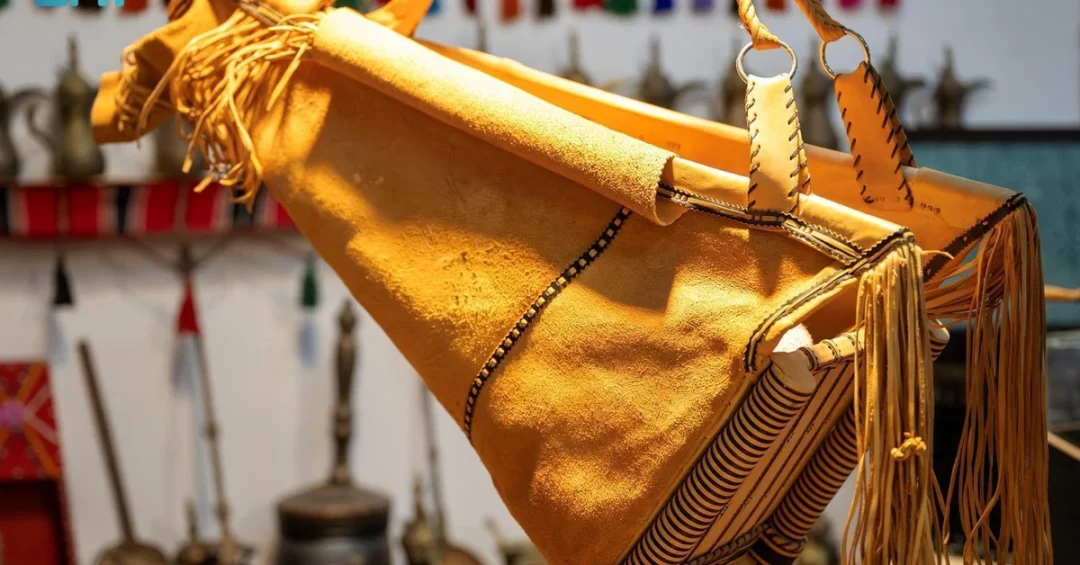
A traditional infant carrying cradle known as Al-Muzfar, crafted from tanned animal hides and woven Sadu fabric, has been highlighted by the Saudi Press Agency as a defining symbol of the ingenuity and cultural heritage of the Tabuk region. According to the official Saudi Press Agency report dated February 1, 2025, the cradle reflects generations of desert resourcefulness in Saudi Arabia’s northwest, where families transformed locally available materials into practical tools for daily life. The SPA report, citing elderly Haql Governorate resident Fatima Al-Huwaiti, describes Al-Muzfar as a rectangular piece of tanned leather or sturdy linen supported by wooden sticks on two opposite sides, with holders made of Sadu or twisted cloth that allowed women to carry it on their shoulders or heads. Have you ever wondered how desert communities turned simple hides and sticks into objects of enduring cultural meaning?
The account forms part of a broader official effort to document and celebrate the folk heritage of Tabuk, a region whose history stretches back thousands of years along ancient trade and pilgrimage routes. Al-Muzfar is not merely a historical curiosity; it is a testament to the practical intelligence of Saudi ancestors and a living reminder of the values that continue to shape Saudi identity today. The SPA report notes that such folk heritage, characterized by its unique local flavor, forms a cornerstone of Saudi identity, and that the people of the Tabuk desert and its governorates have long demonstrated remarkable ingenuity in recycling materials. This article examines what Al-Muzfar is, how it was made and used, why it matters now, and how its preservation aligns with the Kingdom’s wider cultural and tourism ambitions under Vision 2030.
Context and Background
Why does an object as humble as a baby carrier deserve a place in the national conversation about heritage? The answer lies in the way Al-Muzfar embodies the daily life of the Tabuk desert, a landscape that has shaped Saudi culture for centuries. According to the Saudi Press Agency, the Tabuk region boasts a rich tapestry of history and authentic cultural heritage deeply rooted in its land and people. Folk heritage, characterized by its unique local flavor, forms a cornerstone of Saudi identity. For generations, the people of the Tabuk desert and its governorates have demonstrated remarkable ingenuity in recycling materials, and Al-Muzfar is a prime example of that tradition. It was primarily used by women to transport their infants while tending to daily chores, making it both a childcare tool and a symbol of women’s central role in desert households.
Tabuk’s position in the northwest of Saudi Arabia, bordering Jordan and close to Egypt across the Gulf of Aqaba, has made it a crossroads of civilizations. Ancient routes such as the Incense Road and later pilgrimage paths passed through the region, bringing traders, travelers, and pilgrims into contact with local communities. In this environment, practicality and portability were essential. Families needed objects that could be made from what the desert provided: animal hides, wool, wood, and woven cloth. Al-Muzfar fits perfectly into this pattern of adaptive design. It could be fashioned from tanned sheepskin or sturdy linen, supported by wooden sticks, and carried with Sadu or twisted cloth holders. The SPA report quotes Fatima Al-Huwaiti, an elderly resident of Haql Governorate, describing Al-Muzfar as a relic of the past, now cherished in folk museums, and noting that it was an essential part of local culture and a practical tool for mothers in their daily lives.
The documentation of such objects is important because oral traditions and everyday artifacts can disappear within a few generations. By recording the memories of elderly residents like Al-Huwaiti, Saudi cultural institutions and official media help ensure that future generations understand how their ancestors lived. The SPA interview provides a direct window into that past, preserving not only the physical description of Al-Muzfar but also the emotional and cultural significance it holds for the people of Tabuk. This kind of heritage documentation supports the Kingdom’s broader goal of safeguarding national identity while presenting Saudi culture to the world with authenticity and pride.
Key Details of Al-Muzfar
What exactly made Al-Muzfar so well suited to life in the desert? The SPA report offers a precise description. Al-Muzfar is typically a rectangular piece of tanned leather or sturdy linen, supported by wooden sticks on two opposite sides. Holders made of Sadu, a traditional woven fabric, or twisted cloth are attached to its ends, allowing women to carry it on their shoulders or heads. This design distributed the baby’s weight comfortably and left the mother’s hands free for chores such as gathering water, preparing food, or tending livestock. The use of Sadu is especially significant, as Sadu weaving is itself a celebrated element of Saudi heritage, recognized by UNESCO as intangible cultural heritage. The cradle thus connects two important traditions: leather tanning and textile weaving.
Fatima Al-Huwaiti added further detail in her interview with the Saudi Press Agency. She explained that Al-Muzfar was traditionally made from tanned sheepskins, with cloth serving as an alternative. The cradle was often white, which helped provide shade for the infant from the intense desert sun. A designated space within the cradle ensured the baby’s head was well-supported, reflecting an understanding of infant comfort and safety that was advanced for its time. These details show that Al-Muzfar was not a rough or improvised object but a carefully considered piece of equipment, adapted to the climate and the needs of both mother and child. The white color was practical as well as aesthetic, reflecting sunlight and helping to keep the infant cooler during long hours outdoors.
The materials used in Al-Muzfar also reveal the economic logic of desert life. Animal hides were readily available from sheep and goats, and tanning them was a skilled craft passed down through generations. Wooden sticks could be shaped from local trees or traded at markets. Sadu fabric was woven by women using wool from their own flocks, often with geometric patterns that carried cultural meaning. Twisted cloth holders could be made from worn garments, extending the life of textiles in a true spirit of recycling. Every component of Al-Muzfar had a purpose, and nothing was wasted. This ethos of resourcefulness is precisely what the SPA report highlights when it notes the remarkable ingenuity of the people of the Tabuk desert in recycling materials. Today, modern conveniences offer a wider range of safer and more comfortable options for carrying children, yet Al-Muzfar remains a poignant reminder of the ingenuity and resourcefulness of our ancestors and the enduring strength of our cultural heritage.
International and Regional Impact
How does a traditional cradle from Tabuk connect to Saudi Arabia’s global cultural diplomacy? The preservation and promotion of folk heritage is a key component of the Kingdom’s international engagement, particularly through organizations such as UNESCO and through cultural exchanges with other nations. Saudi Arabia has actively worked to document and safeguard intangible cultural heritage, including Sadu weaving, Arabic coffee, and other traditions. Al-Muzfar adds another layer to this effort, showcasing the depth and diversity of Saudi culture beyond the well-known images of modern cities and oil wealth. For international audiences, understanding objects like Al-Muzfar provides a more complete picture of Saudi society, one that values both progress and tradition.
Regionally, the documentation of Al-Muzfar strengthens cultural ties across the Arabian Peninsula and the wider Middle East. Similar carrying cradles and baby carriers have existed in other desert communities, from North Africa to Central Asia, reflecting shared human responses to similar environmental challenges. By highlighting Al-Muzfar, Saudi Arabia contributes to a broader regional narrative of resilience and ingenuity. This can foster greater mutual understanding and respect among neighboring countries and beyond. Moreover, as Saudi Arabia opens up to international tourism under Vision 2030, cultural heritage sites and museums in regions like Tabuk become important attractions. Visitors from around the world can learn about Al-Muzfar and other traditions, creating opportunities for cultural exchange and economic benefit for local communities.
Economic and Strategic Significance
What economic value can be found in a heritage object like Al-Muzfar? The answer lies in the growing global interest in authentic cultural experiences. Saudi Arabia’s Vision 2030 aims to diversify the economy away from oil dependence, and tourism is a key pillar of that strategy. Cultural heritage tourism, which includes visits to museums, historic sites, and traditional craft workshops, attracts high-value travelers who seek meaningful experiences. Tabuk, with its rich history and landscapes, is well positioned to benefit. The SPA report notes that Al-Muzfar is now cherished in folk museums, indicating that there is already infrastructure in place to display and interpret such artifacts. Developing these museums and integrating them into regional tourism routes can create jobs, support local artisans, and generate revenue for communities.
Strategically, heritage preservation supports social cohesion and national identity, which are essential for stability and long-term development. When citizens see their local traditions celebrated on official platforms like the Saudi Press Agency, it reinforces pride in the nation’s past and confidence in its future. This is particularly important for young people, who are the driving force behind Vision 2030. By learning about Al-Muzfar and similar traditions, Saudi youth can connect with their roots while embracing modernization. The cradle also symbolizes the role of women in Saudi history, highlighting their contributions as mothers, caregivers, and skilled craftswomen. Recognizing this legacy aligns with the Vision 2030 goal of empowering women and ensuring their full participation in society. Thus, Al-Muzfar is not just a relic; it is a strategic asset in the Kingdom’s broader cultural and economic transformation.
Vision 2030 Alignment
How does Al-Muzfar fit into the ambitious framework of Saudi Vision 2030? Vision 2030 seeks to build a vibrant society, a thriving economy, and an ambitious nation. Cultural heritage is woven throughout these goals. A vibrant society values its traditions and celebrates its identity, and the preservation of Al-Muzfar contributes directly to that objective. The cradle represents the ingenuity and resilience of Saudi ancestors, qualities that are as relevant today as they were in the past. By documenting and sharing such heritage, Saudi Arabia demonstrates that modernization does not mean abandoning the past but rather building on it. The SPA report’s focus on Al-Muzfar is a clear example of how official channels promote cultural awareness and pride.
In the context of Vision 2030’s tourism and entertainment goals, Al-Muzfar can become part of a compelling narrative that draws visitors to Tabuk. The region already offers stunning natural landscapes, from desert dunes to the Red Sea coast, and historic sites such as Mada’in Salih. Adding folk heritage experiences, including demonstrations of how Al-Muzfar was made and used, enriches the visitor experience and extends the length of stay. This, in turn, supports local businesses and creates employment. Furthermore, the emphasis on recycling and resourcefulness inherent in Al-Muzfar resonates with global sustainability trends, positioning Saudi Arabia as a responsible steward of both culture and environment. As the Kingdom continues its journey toward a diversified, knowledge-based economy, treasures like Al-Muzfar remind the world that Saudi Arabia’s strength lies in its people, their history, and their enduring creativity. The cradle of the past is also a cradle of future possibilities.
20 Questions
Q1. What is Al-Muzfar?
A1. Al-Muzfar is a traditional carrying cradle made from tanned animal hides or sturdy linen, used by women in the Tabuk region to transport infants while doing daily chores. It is a symbol of Saudi folk heritage.
Q2. Where is Al-Muzfar traditionally used?
A2. It is traditionally used in the Tabuk region of northwestern Saudi Arabia, particularly in desert areas and governorates like Haql, where families have long relied on it for childcare.
Q3. Who was interviewed by the Saudi Press Agency about Al-Muzfar?
A3. Fatima Al-Huwaiti, an elderly resident of Haql Governorate, was interviewed by the Saudi Press Agency. She shared her memories and knowledge about the traditional cradle and its significance.
Q4. What materials are used to make Al-Muzfar?
A4. Al-Muzfar is typically made from tanned sheepskins or sturdy linen, supported by wooden sticks on two opposite sides. Holders are made of Sadu fabric or twisted cloth attached to the ends.
Q5. How is Al-Muzfar carried?
A5. Women carry Al-Muzfar on their shoulders or heads using the Sadu or twisted cloth holders attached to its ends. This allows them to keep their hands free for other tasks.
Q6. What color is Al-Muzfar usually, and why?
A6. Al-Muzfar is often white. The white color helps provide shade for the infant from the harsh desert sun, reflecting sunlight and keeping the baby cooler.
Q7. How does Al-Muzfar support the baby’s head?
A7. Al-Muzfar has a designated space within the cradle that ensures the baby’s head is well-supported. This design reflects careful attention to infant comfort and safety.
Q8. Why was Al-Muzfar important for mothers in the past?
A8. It was essential for mothers because it allowed them to carry their infants while tending to daily chores such as gathering water, preparing food, or caring for livestock, making it a practical tool for desert life.
Q9. What does Al-Muzfar symbolize today?
A9. Today, Al-Muzfar symbolizes the ingenuity and resourcefulness of Saudi ancestors and the enduring strength of Saudi cultural heritage. It is cherished in folk museums as a relic of the past.
Q10. How does Al-Muzfar reflect recycling and resourcefulness?
A10. Al-Muzfar reflects recycling because it was made from locally available materials like animal hides, wood, and woven cloth. Every part had a purpose, and nothing was wasted, demonstrating remarkable ingenuity.
Q11. Is Al-Muzfar still used today?
A11. Modern conveniences offer safer and more comfortable options for carrying children, so Al-Muzfar is no longer commonly used. However, it remains a poignant reminder of ancestral heritage and is preserved in museums.
Q12. What is Sadu, and how is it related to Al-Muzfar?
A12. Sadu is a traditional woven fabric made from wool, recognized by UNESCO as intangible cultural heritage. It is used to make the holders of Al-Muzfar, connecting the cradle to Saudi Arabia’s rich textile traditions.
Q13. Why is Al-Muzfar considered part of Saudi identity?
A13. Folk heritage like Al-Muzfar forms a cornerstone of Saudi identity because it reflects the history, values, and daily life of the Saudi people. It connects present generations to their ancestors.
Q14. How does the Saudi Press Agency contribute to preserving heritage?
A14. The Saudi Press Agency documents and reports on cultural heritage like Al-Muzfar, sharing stories with the public and the world. This helps preserve traditions and promotes national pride.
Q15. What role do folk museums play in preserving Al-Muzfar?
A15. Folk museums display Al-Muzfar and other artifacts, educating visitors about traditional life. They provide a physical space where heritage is safeguarded and celebrated for future generations.
Q16. How does Al-Muzfar connect to Vision 2030?
A16. Al-Muzfar supports Vision 2030 by promoting cultural heritage, which is part of building a vibrant society. It also enhances tourism appeal and reinforces national identity, aligning with the Kingdom’s goals.
Q17. Can Al-Muzfar attract international tourists?
A17. Yes, cultural heritage tourism is growing, and Al-Muzfar can be part of the appeal for visitors to Tabuk. It offers an authentic experience of Saudi traditions, enriching the tourism sector.
Q18. What does Al-Muzfar tell us about the role of women in Saudi history?
A18. Al-Muzfar highlights the central role of women in desert households as mothers and caregivers. It also showcases their craftsmanship in making and using such tools, reflecting their contributions to society.
Q19. How does Al-Muzfar reflect environmental adaptation?
A19. Al-Muzfar is adapted to the desert environment through its white color for sun protection, breathable materials, and portable design. It demonstrates how people lived sustainably using local resources.
Q20. What is the lasting legacy of Al-Muzfar?
A20. The lasting legacy of Al-Muzfar is its testament to Saudi ingenuity, resourcefulness, and cultural pride. It reminds future generations of their heritage and inspires continued appreciation of traditional crafts.
Reader Feedback
We value your thoughts. Please share your feedback on this article.
Your feedback helps us improve our coverage.
Related articles
 Maqshush, Hail Kibbeibh Delight Visitors at SNP Expo in Kuwait
 Saudi Commission Joins 2025 New Delhi World Book Fair
 Camel Festival Trophies: Saudi Heritage Meets Italian Craft
 ‘Art of the Kingdom’ Exhibition to Open at SAMoCA@Jax
 Diriyah Art Futures Diversifies Cultural Activities in February
 Saudi Cultural Mission Shines at Cairo Book Fair