


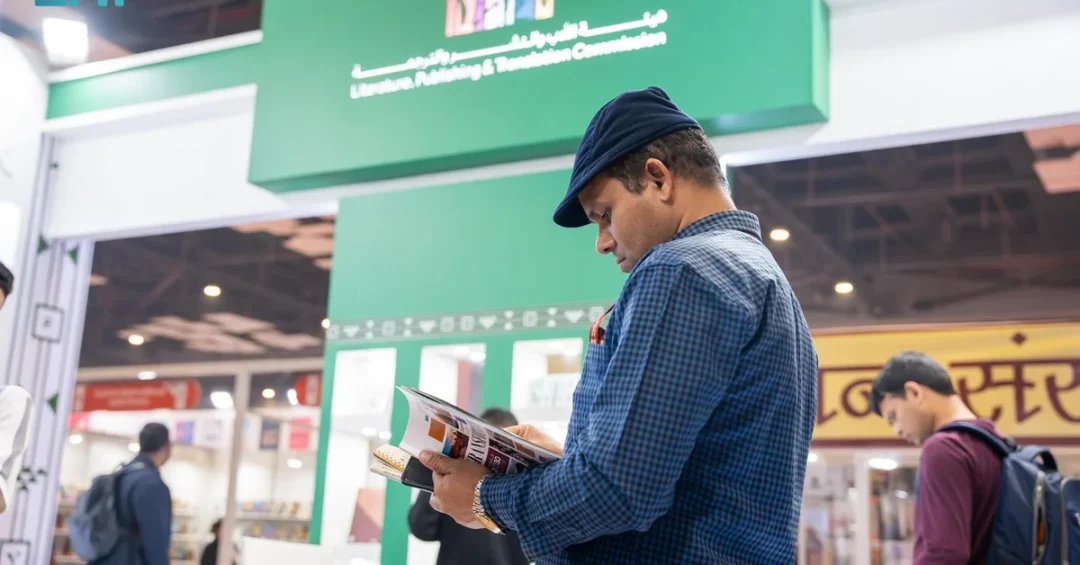
The Literature, Publishing, and Translation Commission is participating in the 2025 New Delhi World Book Fair (NDWBF), taking place at the Pragati Maidan Exhibition Grounds in Delhi, India, from February 1 to 9, 2025. The announcement, released through official Saudi channels, confirms that the Kingdom’s cultural institutions are continuing a sustained international outreach program that has gathered significant momentum over recent years. The commission’s pavilion forms part of a broader Saudi effort to present the country’s literary, publishing, and translation sectors to one of the world’s largest and most influential book markets.
India’s publishing industry ranks among the largest in the world by title output, and the New Delhi World Book Fair is a central fixture in the South Asian literary calendar. For Saudi Arabia, participation represents more than a presence at a trade event; it is a deliberate act of cultural diplomacy that connects the Kingdom’s fast-developing creative economy with readers, publishers, and institutions across Asia. The commission’s delegation joins exhibitors from dozens of countries, positioning Saudi publishing alongside global peers and opening channels for rights trading, co-publishing, and translation agreements. The fair runs for nine days, giving the Saudi pavilion an extended window to engage with visitors, industry professionals, and academic partners.
Context and Background
The Literature, Publishing, and Translation Commission operates under the umbrella of the Ministry of Culture, which was established in 2018 as part of a wider restructuring of Saudi Arabia’s cultural institutions. Since its formation, the commission has been tasked with developing the Kingdom’s publishing ecosystem, supporting authors and translators, and raising the international profile of Saudi literature. Its participation in the New Delhi World Book Fair is consistent with a mandate that treats cultural exchange as an instrument of soft power and long-term relationship building. How does a national commission translate a nine-day book fair into durable cultural partnerships? The answer lies in the sustained, multi-year engagement that has characterized Saudi Arabia’s approach to major international fairs.
The Kingdom’s relationship with the New Delhi World Book Fair is not new. Saudi Arabia was the guest of honor at the 2024 edition, a distinction that allowed it to organize a comprehensive program of events reflecting the richness of its cultural and creative landscape. That guest-of-honor role included literary panels, cultural performances, and exhibitions designed to introduce Indian audiences to Saudi heritage and contemporary creative output. Returning in 2025 as a participant builds on the relationships and recognition established during that previous engagement, giving the commission a foundation on which to deepen ties with Indian publishers, translators, and cultural organizations. The progression from guest of honor to active exhibitor illustrates a deliberate strategy of continuity rather than one-off appearances.
India itself represents a strategically important audience for Saudi cultural outreach. The country is home to a vast and diverse readership, a thriving English-language publishing sector, and a strong tradition of translation across its many languages. For Saudi Arabia, engaging with India’s literary market offers access to readers who may be unfamiliar with modern Saudi writing, as well as to publishers seeking new voices from the Arabic-speaking world. The presence of the King Salman Global Academy for the Arabic Language at the pavilion underscores the linguistic dimension of this engagement, positioning Arabic as a language of global cultural and intellectual significance.
Key Details
The commission’s pavilion at the New Delhi World Book Fair features several dedicated sections that highlight its literary and cultural initiatives and programs. Central among these is the Tarjem initiative, which showcases the Saudi translation movement and its role in bringing Arabic literature to international audiences while also rendering significant global works into Arabic. Tarjem, whose name derives from the Arabic word for translation, represents a structured effort to support translators, fund translation projects, and elevate the quality and visibility of translated works connected to the Kingdom. At the fair, the initiative serves as a focal point for discussions with Indian publishers and literary agents about potential collaborations.
The pavilion also includes dedicated sections for the King Salman Global Academy for the Arabic Language and the King Fahd National Library. The academy’s presence highlights its mission to promote Arabic language learning and research worldwide, including through partnerships with academic institutions in countries such as India. The King Fahd National Library section presents the Kingdom’s national collection and bibliographic heritage, offering visitors a view of Saudi Arabia’s documentary and archival traditions. Together, these three components give the pavilion a layered identity: a translation hub, a language academy, and a national library, each reinforcing the others.
Beyond the institutional displays, the commission’s participation is designed to facilitate cultural and intellectual exchange between Saudi Arabia and India. This includes conversations with Indian publishers about rights acquisition, translation into Indian languages, and joint publishing ventures. The fair’s nine-day duration allows for a schedule of meetings, presentations, and informal exchanges that can mature into formal agreements. The commission has framed its involvement as part of ongoing efforts to strengthen cultural cooperation between the Kingdom and India, a relationship that spans trade, energy, diaspora links, and increasingly, the creative industries.
International and Regional Impact
Saudi Arabia’s participation in the New Delhi World Book Fair carries implications that extend beyond the exhibition hall. In a global publishing landscape where translation flows have historically been concentrated among a small number of languages, the Kingdom’s active promotion of Arabic literature and translation infrastructure represents a meaningful contribution to linguistic diversity. India, with its own rich multilingual publishing tradition, is a natural partner for such an exchange. The presence of Saudi institutions at a major Asian book fair also signals the Kingdom’s intent to build cultural ties across the Global South, not only with Western markets.
Regionally, the commission’s engagement aligns with a broader pattern of Saudi cultural diplomacy that includes participation in book fairs in Cairo, Frankfurt, London, and beyond. Each appearance contributes to a cumulative international presence that supports the Kingdom’s position in global cultural conversations. For Indian readers and publishers, the Saudi pavilion offers direct access to contemporary Saudi writing, translation opportunities, and academic collaboration. For Saudi publishers, the fair provides exposure to a market with substantial demand for translated works and a well-developed distribution network. The exchange is reciprocal in design, even if the immediate focus is on presenting Saudi cultural assets.
Economic and Strategic Significance
The publishing and translation sectors form part of Saudi Arabia’s expanding creative economy, which the Kingdom has identified as a source of jobs, investment, and international influence. Translation initiatives such as Tarjem support this by creating professional opportunities for translators, editors, and rights managers, while also generating intellectual property that can circulate internationally. Participation in fairs like NDWBF helps Saudi publishers connect with foreign rights buyers, co-publishing partners, and literary agents, all of which contribute to the commercial viability of the sector. The strategic value lies in building an ecosystem where Saudi books can travel, and where foreign books can enter the Arabic market through Saudi intermediaries.
For India and Saudi Arabia, cultural cooperation complements a robust economic relationship. The two countries share significant trade ties, and a large Indian diaspora resides and works in the Kingdom. Cultural engagement at the book fair adds a human and intellectual dimension to this relationship, fostering mutual understanding that can support broader diplomatic and commercial objectives. The commission’s presence also reinforces the message that Saudi Arabia is a country undergoing rapid cultural transformation, with a publishing industry that is increasingly professional, outward-looking, and integrated with global trends. This aligns with the Kingdom’s long-term goal of diversifying its economy and its international partnerships.
Vision 2030 Alignment
The Literature, Publishing, and Translation Commission’s participation in the 2025 New Delhi World Book Fair sits squarely within the framework of Saudi Vision 2030, the national transformation program launched under the leadership of Crown Prince Mohammed bin Salman. Vision 2030 emphasizes the development of cultural and creative industries as part of a diversified economy, and it identifies international cultural exchange as a means of projecting a positive image of the Kingdom. By supporting translation, publishing, and library institutions, the commission contributes to the vision’s goals of enriching cultural life, creating economic opportunities, and strengthening Saudi Arabia’s global standing.
The fair also reflects the vision’s focus on education, knowledge transfer, and youth empowerment. Translation and publishing are knowledge-intensive fields that attract young Saudis seeking careers in the creative sector. The King Salman Global Academy for the Arabic Language advances the vision’s commitment to preserving and promoting the Arabic language, while the King Fahd National Library supports research and heritage preservation. As Saudi Arabia continues to expand its cultural footprint internationally, events such as the New Delhi World Book Fair serve as practical platforms for realizing Vision 2030’s ambitions on the world stage.
20 Questions
Q1. What is the Literature, Publishing, and Translation Commission participating in?
A1. The commission is participating in the 2025 New Delhi World Book Fair, held at the Pragati Maidan Exhibition Grounds in Delhi, India, from February 1 to 9, 2025, as part of its international cultural outreach efforts.
Q2. Where is the 2025 New Delhi World Book Fair taking place?
A2. The fair is being held at the Pragati Maidan Exhibition Grounds in Delhi, India, a major venue that hosts one of South Asia’s largest publishing industry events each year.
Q3. What are the dates of the 2025 New Delhi World Book Fair?
A3. The fair runs from February 1 to February 9, 2025, giving exhibitors and visitors a nine-day window for meetings, presentations, and cultural exchange.
Q4. Why is the commission participating in this book fair?
A4. The commission aims to strengthen cultural cooperation between Saudi Arabia and India, highlight the Kingdom’s global cultural and literary position, and promote intellectual exchange between the two countries.
Q5. What is the Tarjem initiative?
A5. Tarjem is a Saudi initiative that showcases the Kingdom’s translation movement, supporting translators and translation projects that bring Arabic literature to global audiences and foreign works into Arabic.
Q6. Which Saudi institutions have dedicated sections at the pavilion?
A6. The pavilion includes dedicated sections for the King Salman Global Academy for the Arabic Language and the King Fahd National Library, alongside the Tarjem initiative display.
Q7. What was Saudi Arabia’s role at the 2024 New Delhi World Book Fair?
A7. Saudi Arabia was the guest of honor at the 2024 edition, organizing a range of programs and events that reflected the richness of the Kingdom’s cultural and creative landscape.
Q8. How does this participation support Saudi-Indian cultural relations?
A8. It builds on previous engagement, facilitates meetings with Indian publishers and translators, and creates opportunities for rights trading, co-publishing, and translation collaborations between the two countries.
Q9. What does the commission hope to achieve through its pavilion?
A9. The commission seeks to raise awareness of Saudi cultural heritage, showcase its publications, and promote cultural and intellectual exchange, while positioning the Kingdom in the global literary landscape.
Q10. What is the significance of the King Salman Global Academy for the Arabic Language’s presence?
A10. Its presence highlights efforts to promote Arabic language learning and research worldwide, including through partnerships with academic and cultural institutions in countries such as India.
Q11. What does the King Fahd National Library section present?
A11. The section presents the Kingdom’s national collection and bibliographic heritage, offering visitors insight into Saudi Arabia’s documentary, archival, and library traditions.
Q12. How does the fair support Saudi Arabia’s translation goals?
A12. The fair provides a platform for the Tarjem initiative to connect with international publishers, discuss translation projects, and expand the reach of Arabic literature into new language markets.
Q13. Why is India an important partner for Saudi cultural outreach?
A13. India has one of the world’s largest publishing industries, a diverse readership, and a strong translation tradition, making it a valuable market for Saudi books and cultural content.
Q14. How long has Saudi Arabia been engaging with the New Delhi World Book Fair?
A14. Saudi Arabia participated as guest of honor in 2024 and is returning as an active participant in 2025, reflecting a sustained and deliberate approach to cultural engagement with India.
Q15. What kind of exchange does the commission’s participation facilitate?
A15. It facilitates cultural and intellectual exchange, including discussions on rights acquisition, translation into Indian languages, joint publishing ventures, and academic collaboration between Saudi and Indian institutions.
Q16. How does this participation relate to Saudi Vision 2030?
A16. It supports Vision 2030’s goals of developing cultural and creative industries, diversifying the economy, and strengthening Saudi Arabia’s international cultural presence and partnerships.
Q17. What economic benefits can come from participating in international book fairs?
A17. Such participation can generate rights sales, co-publishing agreements, translation contracts, and professional opportunities for translators, editors, and publishers in the Kingdom’s growing creative sector.
Q18. How does the commission’s work support Saudi authors and translators?
A18. Through initiatives like Tarjem and its presence at international fairs, the commission creates pathways for Saudi authors and translators to reach global audiences and access new markets.
Q19. What message does Saudi Arabia’s participation send to the international community?
A19. It signals that the Kingdom is an active, open participant in global cultural life, committed to dialogue, knowledge exchange, and the promotion of Arabic language and literature.
Q20. What might follow Saudi Arabia’s participation in the 2025 fair?
A20. The engagement is expected to deepen institutional ties with Indian publishers and cultural bodies, potentially leading to further translation projects, joint publications, and continued Saudi presence at major international book fairs.
Reader Feedback
We value your thoughts. Please share your feedback on this article.
Your feedback helps us improve our coverage.
Related articles
 Camel Festival Trophies: Saudi Heritage Meets Italian Craft
 ‘Art of the Kingdom’ Exhibition to Open at SAMoCA@Jax
 Diriyah Art Futures Diversifies Cultural Activities in February
 Saudi Cultural Mission Shines at Cairo Book Fair
 King’s Camel Festival: Award Swords Feature Traditional Arts to Mark the Year of Handicrafts
 Manga Productions Wins Saudi Media Forum Award