


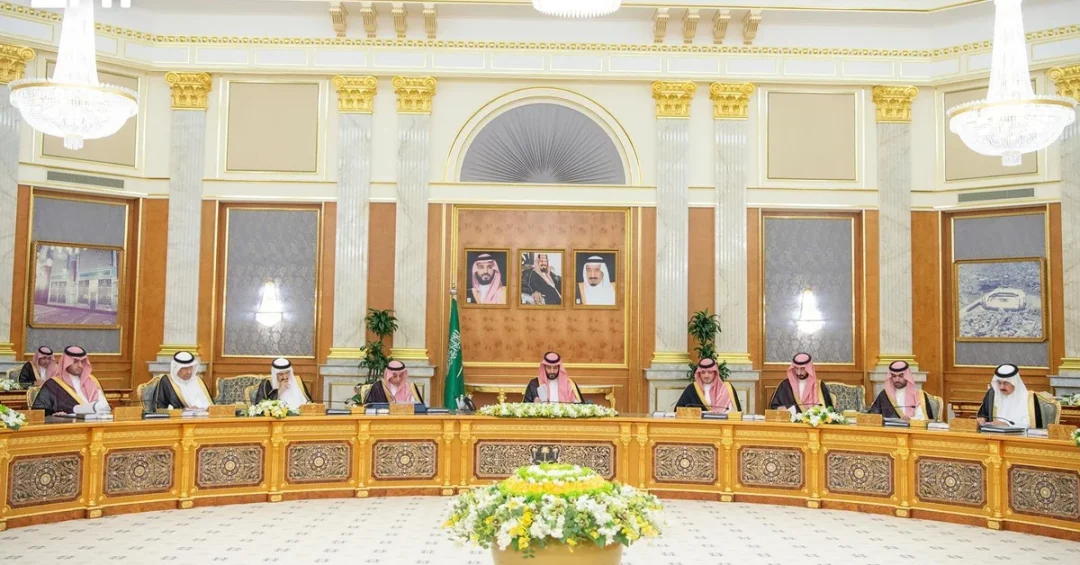
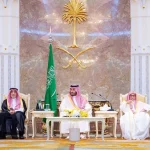
His Royal Highness Prince Mohammed bin Salman bin Abdulaziz Al Saud, Crown Prince and Prime Minister, chaired the Cabinet session held in Jeddah on June 16, 2026, where ministers praised the success of the 1447 AH Hajj season and endorsed a broad set of agreements spanning cybersecurity, culture, health, customs, and mineral resources. The session, reported by the Saudi Press Agency (SPA), opened with the Cabinet expressing thanks to Almighty Allah for granting the Kingdom the honor of serving the Two Holy Mosques and their visitors, and for the remarkable organization achieved during this year’s pilgrimage.
More than 1.7 million pilgrims performed their rituals in comfort and tranquility, a result the Cabinet attributed to integrated institutional planning, data-driven decision-making, and advanced technologies. The meeting also reviewed recent diplomatic engagements and approved eleven decisions, including memoranda of understanding with Oman, Belarus, Pakistan, China, India, Canada, Kuwait, Germany, and Tajikistan. For observers of Saudi governance, the session offered a compact snapshot of how the Kingdom’s domestic service delivery and international partnerships are advancing in parallel.
Context and Background
How does a single Cabinet session capture the breadth of a nation’s ambitions? In Saudi Arabia, the weekly meeting chaired by the Crown Prince functions as both an executive clearing house and a strategic compass, aligning ministries, agencies, and international commitments with the objectives of Saudi Vision 2030. The June 16 session in Jeddah followed the conclusion of the Hajj season, one of the most demanding logistical undertakings any government manages annually.
The Cabinet’s first order of business was gratitude and recognition. It praised the Supreme Hajj Committee and every entity in the pilgrim service ecosystem for coordination and readiness that fulfilled the objectives of security, preventive, organizational, and service plans. Resources were mobilized to care for pilgrims from arrival until their safe return home, reinforcing the Kingdom’s position as a global model in crowd management and high-quality service delivery.
State Minister, Cabinet Member for Shura Council Affairs and Acting Minister of Media Dr. Essam bin Saad bin Saeed said in a statement to SPA that the Cabinet then reviewed discussions and consultations held over recent days between Saudi Arabia and a number of brotherly and friendly countries. Those engagements, he noted, aimed to strengthen relations and advance bilateral and multilateral cooperation across various fields in a manner that serves common interests while supporting international efforts to reinforce security and stability at regional and global levels.
Key Details
What did the Cabinet actually decide, and why do these decisions matter beyond the meeting room? The session welcomed the agreement between the United States of America and the Islamic Republic of Iran to end military operations and begin detailed negotiations toward a permanent agreement, expressing appreciation for Pakistan and Qatar’s mediation efforts. The Cabinet reaffirmed Saudi Arabia’s emphasis on restoring freedom of navigation in the Strait of Hormuz to its state before February 28, and expressed hope that peace would be achieved in a manner that enhances regional and global security while respecting the security interests and internal affairs of countries in the region.
On the technology front, the Cabinet highlighted that the selection of Riyadh as the headquarters of the first cybersecurity office established by the United Nations Institute for Training and Research (UNITAR) reflects Saudi Arabia’s leadership in cybersecurity. It underscored the Kingdom’s efforts to promote stability in cyberspace and support societal prosperity and economic growth, noting that these efforts have positioned Saudi Arabia as a leading destination for regional and international organizations operating in this vital sector.
Economically, the Cabinet welcomed the statement issued by International Monetary Fund (IMF) experts following the conclusion of the 2026 Article IV consultation discussions, which reaffirmed the strength and resilience of the Saudi economy amid regional developments. The statement cited strong economic fundamentals, ample reserves, diversified oil and logistics infrastructure, and continued reforms under Saudi Vision 2030. The Cabinet also praised the National Transformation Program’s 2025 achievements, coinciding with the completion of 71% of its implementation initiatives, covering environmental protection, sustainable food and water security, community development, the non-profit sector, workforce participation, labor market attractiveness, private-sector participation, and government performance. It further highlighted gains by the Human Capability Development Program in advancing education and training, enhancing the competitiveness of Saudi talent, fostering creativity and innovation, expanding modern technologies, and strengthening national identity and cultural presence.
The Cabinet then issued eleven decisions. First, it authorized the minister of interior, or a deputy, to discuss and sign with the Omani and Belarusian sides draft memoranda of understanding for cooperation in civil defense and civil protection. Second, it authorized the minister of interior, or a deputy, to discuss and sign with the Pakistani side a draft agreement on the mutual recognition of private driving licenses. Third, it authorized the minister of finance and chairman of the board of directors of the Zakat, Tax and Customs Authority, or a deputy, to sign a draft agreement with the People’s Republic of China on cooperation and mutual assistance in customs matters. Fourth, it approved a memorandum of understanding for cultural cooperation between the Saudi Ministry of Culture and the Indian Ministry of Culture. Fifth, it approved an agreement between the Saudi Ministry of Culture and the International Alliance for the Protection of Heritage (ALIPH) to establish a regional office for the organization in Riyadh. Sixth, it approved a memorandum of understanding between the Saudi Ministry of Industry and Mineral Resources and the Canadian Ministry of Natural Resources for cooperation in mineral resources. Seventh, it authorized the minister of health, or a deputy, to discuss and sign with the Kuwaiti side a draft memorandum of understanding for cooperation in health fields. Eighth, it approved a memorandum of understanding between the Saudi Food and Drug Authority and the German Federal Institute for Risk Assessment for cooperation in food safety and risk assessment. Ninth, it approved a memorandum of understanding for cooperation and news exchange between the Saudi Press Agency and the National Information Agency of Tajikistan. Tenth, it ratified the Riyadh Design Law Treaty. Eleventh, it approved the Law on the Management of Seized and Confiscated Funds in Money Laundering Crimes, Associated Predicate Offenses and Terrorist Financing Crimes.
International and Regional Impact
Why should international readers pay attention to a Cabinet meeting held in Jeddah? Because the decisions taken there ripple outward. The Cabinet’s welcome of the U.S.-Iran agreement to end military operations and begin detailed negotiations signals Saudi support for de-escalation and diplomacy, consistent with the Kingdom’s long-standing preference for stability in the region. Its call to restore freedom of navigation in the Strait of Hormuz to its pre-February 28 state reflects the vital importance of maritime corridors to global energy flows and trade, and its appreciation for Pakistan and Qatar’s mediation underscores the value Saudi Arabia places on regional conflict resolution.
The UNITAR cybersecurity office in Riyadh is equally significant internationally. By hosting the first such UN-affiliated cybersecurity office, the Kingdom positions itself as a convening power in a domain that affects every economy. The move complements Saudi Arabia’s broader efforts to promote stability in cyberspace and attract international organizations, adding a new dimension to Riyadh’s profile as a diplomatic and technological hub. For partner countries, the message is that Saudi Arabia is not only a participant in global governance but increasingly a host and shaper of it.
Economic and Strategic Significance
What do the IMF’s findings and the National Transformation Program’s progress tell us about the Kingdom’s trajectory? The IMF’s 2026 Article IV statement, welcomed by the Cabinet, affirmed the strength and resilience of the Saudi economy despite regional developments, citing strong fundamentals, ample reserves, diversified oil and logistics infrastructure, and continued Vision 2030 reforms. That endorsement matters for investors and credit markets, reinforcing confidence in the Kingdom’s fiscal and structural direction. The National Transformation Program’s completion of 71% of its initiatives adds concrete evidence that reform is translating into measurable delivery across environment, food and water security, community development, and labor market attractiveness.
Strategically, the eleven decisions expand Saudi Arabia’s network of cooperation agreements in fields ranging from civil defense and driving-license recognition to customs, culture, health, food safety, mineral resources, and news exchange. The ratification of the Riyadh Design Law Treaty and the approval of a law on managing seized and confiscated funds in money laundering and terrorist financing cases strengthen the legal architecture that underpins a modern, trusted economy. Each agreement is modest on its own; together they deepen the institutional ties that support trade, investment, and security cooperation.
Vision 2030 Alignment
How does this session connect to the Kingdom’s long-term vision? Every item on the agenda maps to Vision 2030’s core themes: a diversified economy, a capable and proud society, and an ambitious nation engaged globally. The Hajj success demonstrates operational excellence in service of the Kingdom’s religious responsibility. The cybersecurity office, cultural agreements, and heritage protection partnership advance knowledge exchange and soft power. The health, food safety, and mineral resources memoranda support economic diversification and quality of life, while the customs agreement with China and the design law treaty reinforce the legal and commercial environment needed for investment.
As Saudi Arabia continues its transformation, Cabinet sessions like this one in Jeddah serve as regular checkpoints where policy, diplomacy, and delivery converge under the leadership of Crown Prince Mohammed bin Salman. The forward-looking message is clear: the Kingdom intends to keep building partnerships, strengthening institutions, and delivering on Vision 2030 commitments, reinforcing its role as a stabilizing and modernizing force in the region and beyond.
20 Questions
Q1. Who chaired the Cabinet session held in Jeddah on June 16, 2026?
A1. His Royal Highness Prince Mohammed bin Salman bin Abdulaziz Al Saud, Crown Prince and Prime Minister, chaired the session, according to the Saudi Press Agency.
Q2. What did the Cabinet express at the outset of the session?
A2. The Cabinet expressed praise and thanks to Almighty Allah for the honor of serving the Two Holy Mosques and their visitors, and for the success of the 1447 AH Hajj season.
Q3. How many pilgrims performed Hajj during the 1447 AH season?
A3. More than 1.7 million pilgrims performed their rituals in comfort and tranquility, supported by integrated institutional planning, data, and advanced technologies.
Q4. Which body received Cabinet appreciation for Hajj organization?
A4. The Cabinet thanked the Supreme Hajj Committee and all entities in the pilgrim service ecosystem for their coordination, integration, and readiness in serving pilgrims.
Q5. Who briefed the Saudi Press Agency after the session?
A5. State Minister, Cabinet Member for Shura Council Affairs and Acting Minister of Media Dr. Essam bin Saad bin Saeed made a statement to the Saudi Press Agency following the session.
Q6. What international agreement did the Cabinet welcome?
A6. The Cabinet welcomed the agreement between the United States of America and the Islamic Republic of Iran to end military operations and begin detailed negotiations toward a permanent agreement.
Q7. Which countries’ mediation efforts did the Cabinet appreciate?
A7. The Cabinet expressed appreciation for Pakistan and Qatar’s mediation efforts in supporting the agreement between the United States and Iran.
Q8. What did the Cabinet say about the Strait of Hormuz?
A8. The Cabinet reaffirmed Saudi Arabia’s emphasis on restoring freedom of navigation in the Strait of Hormuz to its state before February 28.
Q9. Which United Nations office will be headquartered in Riyadh?
A9. The first cybersecurity office established by the United Nations Institute for Training and Research, known as UNITAR, will be headquartered in Riyadh.
Q10. What did the IMF’s 2026 Article IV statement say about Saudi Arabia?
A10. IMF experts reaffirmed the strength and resilience of the Saudi economy, citing strong fundamentals, ample reserves, diversified oil and logistics infrastructure, and continued Vision 2030 reforms.
Q11. What progress did the National Transformation Program report for 2025?
A11. The Cabinet praised the program’s 2025 achievements, coinciding with the completion of 71% of its implementation initiatives across environment, food and water security, and community development.
Q12. What gains did the Human Capability Development Program achieve?
A12. It advanced the education and training ecosystem, enhanced the competitiveness of Saudi talent, fostered creativity and innovation, expanded modern technologies, and strengthened national identity and cultural presence.
Q13. Which countries will cooperate with Saudi Arabia on civil defense?
A13. The Cabinet authorized the minister of interior to discuss and sign draft memoranda of understanding with the Sultanate of Oman and the Republic of Belarus on civil defense and civil protection.
Q14. What driving-license agreement was authorized with Pakistan?
A14. The Cabinet authorized the minister of interior to discuss and sign a draft agreement with Pakistan concerning the mutual recognition of private driving licenses.
Q15. What customs cooperation was approved with China?
A15. The Cabinet authorized the minister of finance and chairman of the Zakat, Tax and Customs Authority to sign a draft agreement with China on cooperation and mutual assistance in customs matters.
Q16. Which cultural agreements were approved?
A16. The Cabinet approved a cultural cooperation memorandum with India’s Ministry of Culture and an agreement with the International Alliance for the Protection of Heritage to open a regional office in Riyadh.
Q17. What mineral resources cooperation was approved with Canada?
A17. The Cabinet approved a memorandum of understanding between the Saudi Ministry of Industry and Mineral Resources and the Canadian Ministry of Natural Resources for cooperation in mineral resources.
Q18. What health and food safety agreements were approved?
A18. The Cabinet authorized a health memorandum with Kuwait and approved a memorandum between the Saudi Food and Drug Authority and the German Federal Institute for Risk Assessment on food safety and risk assessment.
Q19. What news exchange agreement was approved with Tajikistan?
A19. The Cabinet approved a memorandum of understanding for cooperation and news exchange between the Saudi Press Agency and the National Information Agency of Tajikistan.
Q20. What legal measures did the Cabinet ratify and approve?
A20. The Cabinet ratified the Riyadh Design Law Treaty and approved the Law on the Management of Seized and Confiscated Funds in Money Laundering Crimes, Associated Predicate Offenses and Terrorist Financing Crimes.
Reader Feedback
We value your thoughts. Please share your feedback on this article.
Your feedback helps us improve our coverage.
Related articles
 Mid-June 2026: Saudi Digital Health, Minerals, Aerospace
 Saudi Arabia Marks End of 1447 AH with Landmark Achievements
 40+ Arabian Sand Gazelle Births Boost Saudi Wildlife Recovery
 Crown Prince Receives Eid Al-Adha Well-Wishers at Mina Palace
 Interior Ministry Tracks Hajj Crowd Flow With Advanced Digital System
 Saudi Press Agency: The Kingdom’s Official News Voice