


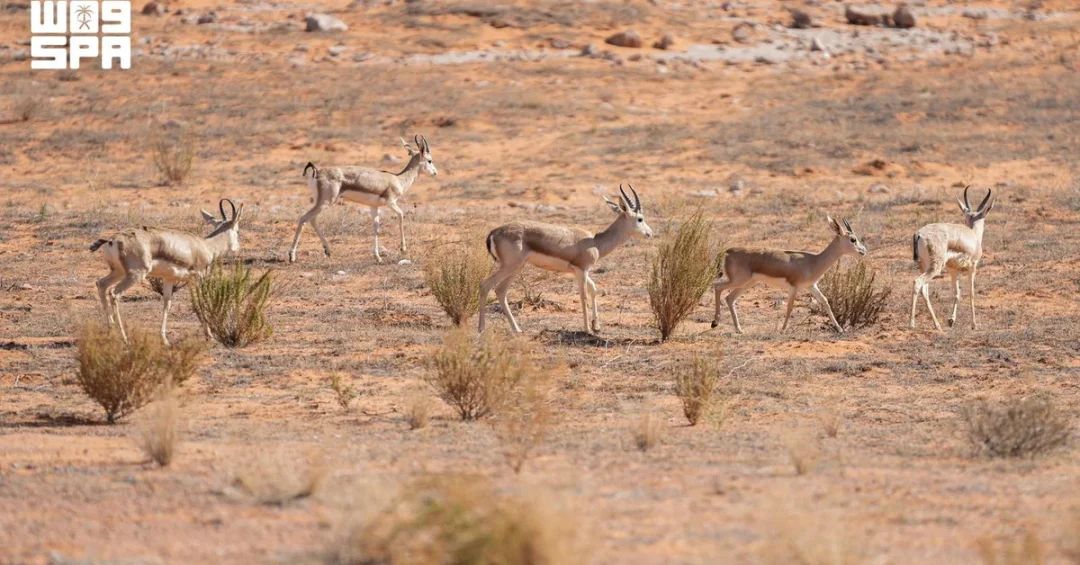
The Imam Turki bin Abdullah Royal Nature Reserve Development Authority has recorded more than 40 Arabian sand gazelle births from the beginning of 2026 through the end of the first quarter, according to an official announcement carried by the Saudi Press Agency (SPA). The figures, documented through continuous field monitoring by specialized teams, mark a significant milestone in the Kingdom’s endangered species reintroduction programs and reinforce the effectiveness of biodiversity conservation and ecosystem sustainability efforts within one of Saudi Arabia’s most important protected areas.
The announcement underscores the growing success of Saudi Arabia’s environmental stewardship agenda, which has become a central pillar of the Kingdom’s long-term development strategy. Could this surge in natural reproduction signal a turning point for a species that once faced steep decline across the Arabian Peninsula? The reserve’s ability to support self-sustaining wildlife populations reflects years of sustained investment in habitat protection, scientific monitoring, and the restoration of ecological balance in the northeastern region of the Kingdom. The births were recorded across the reserve’s diverse landscapes, which span more than 91,500 square kilometers and extend across five administrative regions: Northern Borders, Al-Jouf, Hail, Qassim, and Eastern Region.
Context and Background
Why does the recovery of the Arabian sand gazelle matter so deeply to the Arabian Peninsula’s ecological identity? The species, known scientifically as Gazella marica, has long served as one of the most prominent environmental symbols of the region. Over the past several decades, its population declined sharply due to overhunting and environmental changes, pressures that affected wildlife across the Gulf and broader Middle East. In response, Saudi Arabia launched specialized conservation and reintroduction programs designed to preserve the species and strengthen its presence in its native habitat.
The Imam Turki bin Abdullah Royal Nature Reserve is the Kingdom’s second-largest terrestrial nature reserve, established to protect a vast and varied ecosystem. Its boundaries encompass desert plains, rocky outcrops, valleys, and unique geographical formations that together create a suitable environment for a wide range of wildlife and plant species. The reserve is managed by the Imam Turki bin Abdullah Royal Nature Reserve Development Authority, which oversees protection, habitat management, and species monitoring programs. The authority’s work is part of a broader national framework that places environmental preservation at the heart of Saudi Arabia’s development model.
The reintroduction of the Arabian sand gazelle is not merely a wildlife project; it is a test of whether degraded ecosystems can be restored to functionality. The reserve’s specialized teams have worked to provide environmental conditions conducive to the species’ stability and reproduction, including the protection of grazing areas, the management of water sources, and the reduction of human disturbance. These measures have collectively created a habitat where gazelles can not only survive but thrive, as evidenced by the more than 40 births recorded in the first quarter of 2026 alone.
Key Details
What exactly do these births tell conservationists about the health of the reserve? According to the authority, the high rate of natural reproduction among the Arabian sand gazelle reflects the quality and suitability of the reserve’s habitats. It also demonstrates the success of protection and habitat management programs, as well as the provision of environmental conditions that support the species’ stability and reproduction. The births were documented through continuous field monitoring conducted by specialized teams, whose observations provide the data needed to assess the long-term viability of the population.
The authority explained that the reproduction of wildlife species in their natural habitats is among the most significant indicators of the success of breeding and reintroduction programs. Such progress demonstrates a transition from dependence on managed breeding and care programs to self-sustaining reproduction in the wild. This shift confirms that the conditions necessary for ecological stability and population growth have been established. In other words, the gazelles are no longer reliant on human intervention to maintain their numbers; they are reproducing naturally, which is the ultimate goal of any reintroduction initiative.
The more than 40 births recorded between the beginning of 2026 and the end of the first quarter represent a substantial increase in the population of a species that was once at risk of disappearing from the region. Each birth is a signal that the reserve’s ecosystems are functioning well enough to support new life. The authority’s field teams continue to monitor the gazelles, tracking their health, movement patterns, and interactions with other species. This ongoing surveillance ensures that any challenges to the population can be identified and addressed promptly, safeguarding the gains achieved so far.
International and Regional Impact
How does Saudi Arabia’s wildlife recovery effort resonate beyond its borders? The Kingdom’s success with the Arabian sand gazelle serves as a model for regional conservation, demonstrating that with sustained commitment and scientific management, endangered species can be brought back from the brink. Neighboring Gulf states and international environmental organizations have taken note of the reserve’s achievements, which contribute to global biodiversity targets and the broader fight against species loss. The Arabian sand gazelle is a shared natural heritage of the Arabian Peninsula, and its recovery is a source of pride for the entire region.
International conservation bodies have long emphasized the importance of protecting the Arabian sand gazelle, which is classified as vulnerable by the International Union for Conservation of Nature (IUCN). Saudi Arabia’s efforts align with global commitments under the Convention on Biological Diversity and the Sustainable Development Goals, particularly those related to life on land. By restoring populations of native species, the Kingdom is contributing to the ecological integrity of the Arabian Peninsula and setting a benchmark for arid-land conservation worldwide. The reserve’s approach, which combines strict protection with habitat restoration, offers lessons for other countries facing similar challenges.
Economic and Strategic Significance
What role does environmental restoration play in Saudi Arabia’s economic diversification? The Kingdom’s Vision 2030 reform agenda identifies environmental sustainability as a key pillar of its strategy to build a diversified, resilient economy. Protected areas like the Imam Turki bin Abdullah Royal Nature Reserve not only conserve biodiversity but also support the growth of nature-based tourism, scientific research, and educational opportunities. These activities create jobs, attract visitors, and generate economic value while preserving the natural assets that make Saudi Arabia unique. The reserve’s success with the Arabian sand gazelle enhances its appeal as a destination for eco-tourists and researchers interested in desert wildlife.
Strategically, the reserve forms part of a wider network of protected areas across the Kingdom, including the Royal Reserves established under the leadership of Crown Prince Mohammed bin Salman. These reserves are designed to safeguard the Kingdom’s natural heritage while also contributing to the goals of the Saudi Green Initiative, which aims to plant billions of trees and restore degraded lands. The recovery of the Arabian sand gazelle is a tangible outcome of these interconnected efforts, showing how environmental protection can go hand in hand with economic development. The reserve’s management authority continues to invest in monitoring technology, habitat improvement, and community engagement to ensure that the gains are sustainable.
Vision 2030 Alignment
How does the birth of a single gazelle connect to a national transformation plan? Saudi Arabia’s Vision 2030 is not only about economic diversification and social reform; it also encompasses a commitment to environmental stewardship and the preservation of the Kingdom’s natural resources for future generations. The success of the Arabian sand gazelle reintroduction program at the Imam Turki bin Abdullah Royal Nature Reserve exemplifies this commitment in action. It demonstrates that the Kingdom is capable of restoring its ecosystems and protecting its wildlife while pursuing ambitious development goals. The reserve’s achievements are a living testament to the vision of a sustainable, prosperous Saudi Arabia.
As the Kingdom continues to expand its protected areas and invest in conservation, the lessons learned from this reserve will inform future efforts across the country. The more than 40 births recorded in the first quarter of 2026 are a clear indicator that the trajectory for the Arabian sand gazelle is positive. With continued monitoring, habitat management, and support from national leadership, the species is poised to reclaim its place as a thriving part of the Arabian landscape. The Imam Turki bin Abdullah Royal Nature Reserve stands as a symbol of what can be achieved when science, policy, and dedication converge, and its success will inspire generations of Saudis to cherish and protect their natural heritage.
20 Questions
Q1. What is the significance of the more than 40 Arabian sand gazelle births recorded at the Imam Turki bin Abdullah Royal Nature Reserve?
A1. The births demonstrate the success of endangered species reintroduction programs and reflect the reserve’s high-quality habitats. They indicate that the gazelle population is transitioning to self-sustaining reproduction in the wild, a key indicator of ecological stability and effective conservation management.
Q2. Where is the Imam Turki bin Abdullah Royal Nature Reserve located?
A2. The reserve is located in northeastern Saudi Arabia and extends across five administrative regions: Northern Borders, Al-Jouf, Hail, Qassim, and Eastern Region. It covers more than 91,500 square kilometers, making it the Kingdom’s second-largest terrestrial nature reserve.
Q3. What is the Arabian sand gazelle and why is it important?
A3. The Arabian sand gazelle is one of the most prominent environmental symbols of the Arabian Peninsula. Its population declined due to overhunting and environmental changes, prompting conservation programs. Its recovery is vital for biodiversity and the region’s ecological heritage.
Q4. How were the births documented?
A4. The births were documented through continuous field monitoring conducted by specialized teams from the Imam Turki bin Abdullah Royal Nature Reserve Development Authority. These teams track the health, movement, and reproduction of the gazelles to assess population viability.
Q5. What does natural reproduction in the wild indicate for conservationists?
A5. Natural reproduction in the wild indicates that the species no longer depends on managed breeding and care programs. It confirms that the conditions necessary for ecological stability and population growth have been established, marking a transition to a self-sustaining population.
Q6. How does the reserve’s habitat support the Arabian sand gazelle?
A6. The reserve features diverse natural habitats, varied topography, and unique geographical formations. These provide suitable conditions for a wide range of wildlife and plant species, including the Arabian sand gazelle, which benefits from protection and habitat management programs.
Q7. What are the main threats that led to the decline of the Arabian sand gazelle?
A7. Overhunting and environmental changes over the past decades caused a significant decline in the Arabian sand gazelle population. These pressures affected wildlife across the region, prompting the implementation of specialized conservation and reintroduction programs to preserve the species.
Q8. How does this achievement align with Saudi Arabia’s Vision 2030?
A8. The achievement aligns with Vision 2030’s environmental sustainability pillar. It supports the Saudi Green Initiative and demonstrates the Kingdom’s commitment to preserving natural resources and biodiversity while pursuing economic diversification and social development.
Q9. What role does the Imam Turki bin Abdullah Royal Nature Reserve Development Authority play?
A9. The authority manages the reserve, overseeing protection, habitat management, and species monitoring. It implements programs to conserve biodiversity, enhance ecosystem sustainability, and ensure the recovery of endangered species like the Arabian sand gazelle.
Q10. How does the reserve’s size contribute to its conservation success?
A10. Covering more than 91,500 square kilometers, the reserve provides vast, contiguous habitats that allow wildlife to roam and reproduce without human disturbance. Its size supports diverse ecosystems and helps maintain ecological balance.
Q11. What is the significance of the reserve being the second-largest terrestrial reserve in Saudi Arabia?
A11. Its size and ecological diversity make it a critical component of the Kingdom’s protected area network. It serves as a refuge for endangered species and contributes significantly to national and regional biodiversity conservation efforts.
Q12. How does the success of the gazelle program impact other species in the reserve?
A12. The program’s success indicates that the reserve’s habitats are healthy and well-managed, benefiting other wildlife and plant species. A thriving gazelle population contributes to the overall ecological balance and supports the reserve’s biodiversity.
Q13. What international recognition has Saudi Arabia received for its conservation efforts?
A13. Saudi Arabia’s conservation efforts align with global commitments under the Convention on Biological Diversity and the Sustainable Development Goals. The Kingdom’s success with the Arabian sand gazelle serves as a model for arid-land conservation and has been noted by international environmental organizations.
Q14. How does the reserve contribute to Saudi Arabia’s tourism goals?
A14. The reserve’s wildlife and natural landscapes attract eco-tourists and researchers, supporting the growth of nature-based tourism. This aligns with Vision 2030’s goal to diversify the economy and promote sustainable tourism.
Q15. What measures are in place to protect the gazelles from poaching?
A15. The reserve’s specialized teams conduct continuous monitoring and protection programs. These include patrolling, habitat management, and community engagement to reduce human disturbance and ensure the safety of the gazelle population.
Q16. How does the Saudi Green Initiative support the reserve’s work?
A16. The Saudi Green Initiative aims to plant billions of trees, restore degraded lands, and protect natural habitats. It provides a national framework and resources that support the reserve’s conservation programs, including the reintroduction of the Arabian sand gazelle.
Q17. What can other countries learn from Saudi Arabia’s conservation model?
A17. Other countries can learn the importance of sustained investment, scientific monitoring, and habitat restoration. Saudi Arabia’s model shows that with commitment and proper management, endangered species can recover and ecosystems can be restored, even in arid environments.
Q18. How does the reserve engage with local communities?
A18. The reserve engages with local communities through awareness programs, employment opportunities, and collaborative conservation efforts. This engagement helps reduce human-wildlife conflict and fosters support for protecting the reserve’s natural heritage.
Q19. What are the future plans for the Arabian sand gazelle population in the reserve?
A19. The authority plans to continue monitoring and habitat management to ensure the population’s growth and stability. Future efforts will focus on expanding suitable habitats and maintaining the conditions that support self-sustaining reproduction.
Q20. Why is the Arabian sand gazelle considered an environmental symbol of the Arabian Peninsula?
A20. The gazelle is native to the Arabian Peninsula and has long been a symbol of its natural heritage. Its recovery represents the region’s ability to restore its ecosystems and protect its unique wildlife for future generations.
Reader Feedback
We value your thoughts. Please share your feedback on this article.
Your feedback helps us improve our coverage.
Related articles
 Crown Prince Receives Eid Al-Adha Well-Wishers at Mina Palace
 Interior Ministry Tracks Hajj Crowd Flow With Advanced Digital System
 Saudi Press Agency: The Kingdom’s Official News Voice
 Saudi, Palestinian FMs Discuss Gaza Developments
 Arab Envoys in Bahrain Prepare for 33rd Arab Summit Meeting
 KSA Cooperates with Arab States to End War in Gaza