


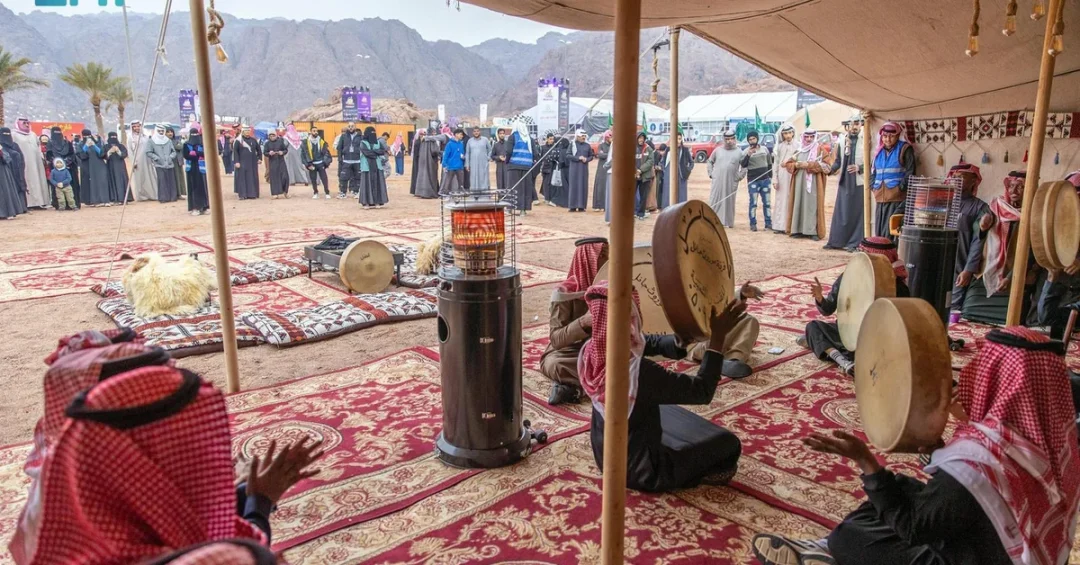
The traditional Saudi Samri dance captivated thousands of Gulf and international visitors during the accompanying events of the Hail Toyota International Rally 2025, according to the Saudi Press Agency, in a vibrant celebration of the Kingdom’s intangible cultural heritage. Dressed in colorful traditional attire, performers delivered rhythmic movements and expressive storytelling that energized crowds gathered in Hail, reinforcing the region’s reputation as a custodian of authentic Saudi folklore.
The performance, reported by the Saudi Press Agency, formed part of a broader cultural program running alongside one of the Middle East’s most prominent motorsport fixtures. It showcased how Saudi Arabia integrates heritage into modern mega-events, offering global audiences an immersive encounter with traditions passed down through generations. The display also underlined Hail’s commitment to preserving and sharing its unique customs with the world, a priority increasingly visible across the Kingdom’s expanding events calendar.
What Makes the Samri Performance a Standout Cultural Moment?
At its core, Samri is a communal art form rooted in the Arabian Peninsula’s desert heritage. Performers stand shoulder to shoulder, clapping in unison and swaying with coordinated precision, while a lead vocalist recounts tales of courage, generosity, and community solidarity. The rhythmic structure of Samri, traditionally accompanied by drums and poetic verse, transforms any gathering into a shared experience that transcends language barriers. At the Hail Toyota International Rally, this dynamic was on full display as visitors from across the Gulf and beyond joined the rhythm, many capturing the moment on their phones to share with audiences worldwide.
The Saudi Press Agency noted that the performers’ vibrant traditional attire and lively interactions with the crowd highlighted Samri’s timeless appeal. For international visitors, the performance served as an accessible gateway into Saudi culture, offering a human-scale counterpoint to the high-speed spectacle of the rally itself. The event’s organizers deliberately positioned the Samri showcase at the heart of the accompanying program, ensuring that the rally’s global audience encountered Saudi heritage not as a static exhibit but as a living, breathing tradition.
Why does a centuries-old dance still resonate so powerfully in an era of digital entertainment? Part of the answer lies in Samri’s participatory nature. Unlike staged performances that keep audiences at a distance, Samri invites onlookers to clap, sway, and even join the line. This inclusivity creates an emotional connection that few modern entertainment formats can replicate. At Hail, that connection was evident as visitors from diverse backgrounds found common ground in the shared rhythm, turning a cultural display into a genuinely international gathering.
Context and Background: Hail’s Cultural and Motorsport Legacy
Hail has long occupied a distinctive place in Saudi Arabia’s cultural geography. Known historically as a crossroads for trade and poetry, the region has nurtured some of the Kingdom’s most celebrated poets and storytellers. Samri itself is deeply intertwined with this legacy, its verses often drawing on the same themes of honor, hospitality, and resilience that define Hail’s identity. Hosting the Samri performance at the Hail Toyota International Rally therefore represents a natural convergence of the region’s two great passions: cultural expression and competitive motorsport.
The Hail Toyota International Rally has grown into a fixture on the regional sporting calendar, attracting drivers, teams, and fans from across the Gulf and further afield. Its desert stages test both machine and driver, while its accompanying events transform the host city into a hub of entertainment, commerce, and cultural exchange. By embedding Samri within this framework, organizers ensure that the rally’s economic and promotional benefits extend to the Kingdom’s cultural sector, creating a platform where heritage and modernity reinforce one another.
How did Hail become a stage where ancient rhythms and roaring engines coexist so seamlessly? The answer lies in Saudi Arabia’s broader strategy of integrating cultural programming into major events. Rather than treating heritage as a separate domain, the Kingdom’s event planners increasingly weave traditional arts into sports, tourism, and entertainment offerings. This approach not only enriches the visitor experience but also creates sustainable demand for cultural practitioners, ensuring that traditions like Samri remain vibrant and economically viable for future generations.
Key Details: Performers, Attire, and Audience Engagement
According to the Saudi Press Agency, the Samri performers wore vibrant traditional attire that reflected the colors and craftsmanship of the region. Their clothing, often featuring intricate embroidery and flowing lines, added a visual dimension to the performance that complemented the rhythmic movements. The performers’ energetic interactions with the crowd were a defining feature of the showcase, as they encouraged visitors to participate in the clapping and swaying that characterize Samri. This level of engagement transformed the event from a passive viewing experience into an active celebration of shared culture.
The audience itself was notably diverse, comprising Gulf nationals, international rally enthusiasts, and local residents. For many international visitors, the Samri performance was their first direct encounter with Saudi folk traditions, making the event an important touchpoint for cultural diplomacy. The Saudi Press Agency’s coverage emphasized that the display underscored Hail’s commitment to preserving and sharing its unique traditions with the world, a message that aligns with the Kingdom’s wider efforts to present itself as a welcoming, culturally rich destination.
What role do events like this play in shaping perceptions of Saudi Arabia abroad? By presenting Samri in a context of joy, hospitality, and international camaraderie, the rally’s cultural program offers a nuanced portrait that goes beyond headlines. Visitors who participate in the dance carry home memories of warmth and shared humanity, becoming informal ambassadors for the Kingdom’s cultural renaissance. In an age when global audiences seek authentic experiences, such moments of genuine connection are invaluable.
International and Regional Impact: A Bridge Across Cultures
The presence of Gulf and international visitors at the Samri performance highlights the rally’s role as a regional meeting point. Gulf Cooperation Council nationals share many cultural reference points with Saudi Arabia, and Samri’s themes of communal solidarity resonate across these societies. For visitors from further afield, the performance offered a window into a heritage that is often misunderstood or overlooked. By placing Samri at the center of a globally promoted motorsport event, Saudi Arabia effectively uses soft power to build bridges and foster mutual understanding.
Regional media coverage of the event, including the Saudi Press Agency’s report, amplified the performance’s reach beyond those physically present. In a media landscape where cultural stories can easily be overshadowed by politics or economics, the Samri showcase provided a positive, unifying narrative. It also reinforced Hail’s status as a destination where tradition and modernity meet, a message that resonates with regional travelers seeking authentic experiences within easy reach.
Could cultural performances like Samri become a more prominent feature of Saudi Arabia’s international outreach? The trajectory suggests yes. As the Kingdom hosts an expanding array of global events, from sporting tournaments to cultural festivals, the integration of traditional arts is becoming a signature element. This strategy not only differentiates Saudi events from those elsewhere but also ensures that the Kingdom’s heritage remains a living, evolving part of its modern identity rather than a relic of the past.
Economic and Strategic Significance: Heritage as a Driver of Growth
Cultural performances such as the Samri showcase carry tangible economic benefits. They attract visitors who extend their stays, patronize local businesses, and generate positive word-of-mouth that fuels future tourism. For Hail, the rally and its accompanying events represent a significant injection of economic activity, from hospitality and retail to transportation and crafts. By positioning Samri as a headline attraction, organizers maximize the event’s appeal, drawing audiences who might not otherwise attend a motorsport rally.
Strategically, the integration of heritage into major events supports Saudi Arabia’s efforts to diversify its economy and reduce reliance on hydrocarbons. Tourism and entertainment are central pillars of this diversification, and cultural authenticity is a key differentiator in a competitive global market. The Samri performance demonstrates how traditional arts can be packaged and presented to international audiences without losing their integrity, creating a sustainable model for cultural tourism that benefits performers, organizers, and local communities alike.
What does this mean for the future of Saudi cultural exports? As the Kingdom continues to invest in events infrastructure and global marketing, its cultural assets are poised to reach ever-larger audiences. Samri, with its universal themes and participatory nature, is particularly well-suited to international stages. The Hail rally performance may well serve as a template for how Saudi heritage can be shared with the world, generating pride at home and curiosity abroad.
Vision 2030 Alignment: Preserving Heritage, Building the Future
The Samri performance at the Hail Toyota International Rally aligns closely with the goals of Saudi Vision 2030, the Kingdom’s ambitious blueprint for economic and social transformation. Vision 2030 emphasizes the importance of preserving Saudi Arabia’s cultural heritage while simultaneously opening the country to the world. By showcasing Samri to a global audience, the event embodies this dual commitment, demonstrating that modernization and tradition are not opposing forces but complementary pillars of national progress.
Furthermore, the rally’s cultural program supports Vision 2030’s objectives in tourism, entertainment, and quality of life. It creates opportunities for local artists and performers, stimulates economic activity in Hail, and enhances the Kingdom’s image as a vibrant, welcoming destination. As Saudi Arabia continues to host world-class events, the integration of traditional arts like Samri will remain a defining feature, ensuring that the Kingdom’s rich heritage remains a source of pride and a magnet for visitors from around the globe. Through such initiatives, Saudi Arabia is not only preserving its past but actively shaping a future in which its culture stands confidently on the world stage.
20 Questions
Q1. What is the Samri dance?
A1. Samri is a traditional Saudi folk dance featuring rhythmic movements, synchronized clapping, and expressive storytelling. It is performed in a line or circle and is accompanied by drums and poetic verses, reflecting themes of courage, generosity, and community solidarity.
Q2. Where did the Samri performance take place?
A2. The performance took place during the accompanying events of the Hail Toyota International Rally 2025 in Hail, Saudi Arabia, as reported by the Saudi Press Agency.
Q3. Who attended the Samri performance?
A3. Thousands of Gulf and international visitors attended the performance, along with local residents, creating a diverse and engaged audience that participated in the celebration of Saudi heritage.
Q4. What did the performers wear?
A4. The performers wore vibrant traditional attire, featuring intricate embroidery and flowing lines, which added a visual dimension to the rhythmic movements and storytelling of the Samri dance.
Q5. How did the audience react to the performance?
A5. The audience was energized by the performers’ lively interactions, with many clapping and swaying along. The participatory nature of Samri transformed the event into an active celebration of shared culture.
Q6. Why is the Samri performance significant for Hail?
A6. It underscores Hail’s commitment to preserving and sharing its unique traditions with the world, reinforcing the region’s reputation as a custodian of authentic Saudi folklore and a hub for cultural exchange.
Q7. What is the Hail Toyota International Rally?
A7. The Hail Toyota International Rally is a prominent motorsport event in Saudi Arabia, attracting drivers and fans from across the Gulf and internationally. It features desert stages and a variety of accompanying cultural and entertainment events.
Q8. How does the Samri performance fit into the rally’s program?
A8. The Samri performance is part of the rally’s accompanying cultural events, designed to showcase Saudi heritage to the international audience and enrich the overall visitor experience beyond motorsport.
Q9. What does Samri symbolize in Saudi culture?
A9. Samri symbolizes communal solidarity, pride, and the rich oral traditions of the Arabian Peninsula. Its verses often celebrate courage, hospitality, and the enduring values of Saudi society.
Q10. How does the performance promote cultural exchange?
A10. By inviting international visitors to participate in the dance, the performance creates a shared experience that transcends language barriers, fostering mutual understanding and positive perceptions of Saudi culture.
Q11. What role does the Saudi Press Agency play in reporting such events?
A11. The Saudi Press Agency is the official news agency of the Kingdom, providing authoritative coverage of cultural, sporting, and governmental events, thereby documenting and promoting Saudi Arabia’s achievements and heritage.
Q12. How does the Samri performance support Vision 2030?
A12. It aligns with Vision 2030’s goals of preserving cultural heritage, promoting tourism, and enhancing quality of life. It showcases Saudi traditions to the world while creating economic opportunities for local performers and communities.
Q13. What economic benefits does the rally bring to Hail?
A13. The rally and its cultural events attract visitors who spend on hospitality, retail, and transportation, generating revenue and supporting local businesses. It also raises Hail’s profile as a tourist destination.
Q14. How is Samri different from other Saudi folk dances?
A14. Samri is distinct for its poetic storytelling, rhythmic clapping, and line formation. It often features a lead vocalist and is deeply associated with the Hail region’s cultural identity.
Q15. Can international visitors learn Samri?
A15. Yes, the participatory nature of Samri makes it accessible to international visitors. At events like the Hail rally, performers encourage audience members to join in the clapping and swaying, offering a hands-on cultural experience.
Q16. What other cultural events accompany the Hail rally?
A16. The rally typically features a range of cultural activities, including traditional music, dance, crafts, and cuisine, all designed to showcase the heritage of Hail and Saudi Arabia to a global audience.
Q17. How does the Saudi government support traditional arts?
A17. The government supports traditional arts through cultural ministries, funding for festivals, and integration into national events. Vision 2030 emphasizes heritage preservation as a key component of national identity and economic diversification.
Q18. What is the historical origin of Samri?
A18. Samri originated in the Arabian Peninsula, with roots in Bedouin gatherings and oral poetry traditions. It has been passed down through generations and remains a cherished form of cultural expression in Saudi Arabia.
Q19. How does the Samri performance at the rally impact Saudi Arabia’s global image?
A19. It presents Saudi Arabia as a welcoming, culturally rich nation, countering stereotypes and building soft power. International visitors and media coverage help share this positive image with audiences worldwide.
Q20. What can we expect for future cultural programming at Saudi events?
A20. As Saudi Arabia hosts more global events, expect increased integration of traditional arts like Samri, providing authentic cultural experiences that align with Vision 2030 and attract international visitors.
Reader Feedback
We value your thoughts. Please share your feedback on this article.
Your feedback helps us improve our coverage.
Related articles
 RCU Signs New Partnerships with Italian Institutions
 Tuwaiq Sculpture 2025 Launches Community Engagement Program
 Taif Falcons Cup Concludes Successful First Edition
 AlUla Arts Festival Celebrates Arabic Calligraphy Heritage
 Sixteenth Klija Festival Kicks off in Qassim
 Al-Muzfar: Tabuk’s Traditional Cradle of Heritage