


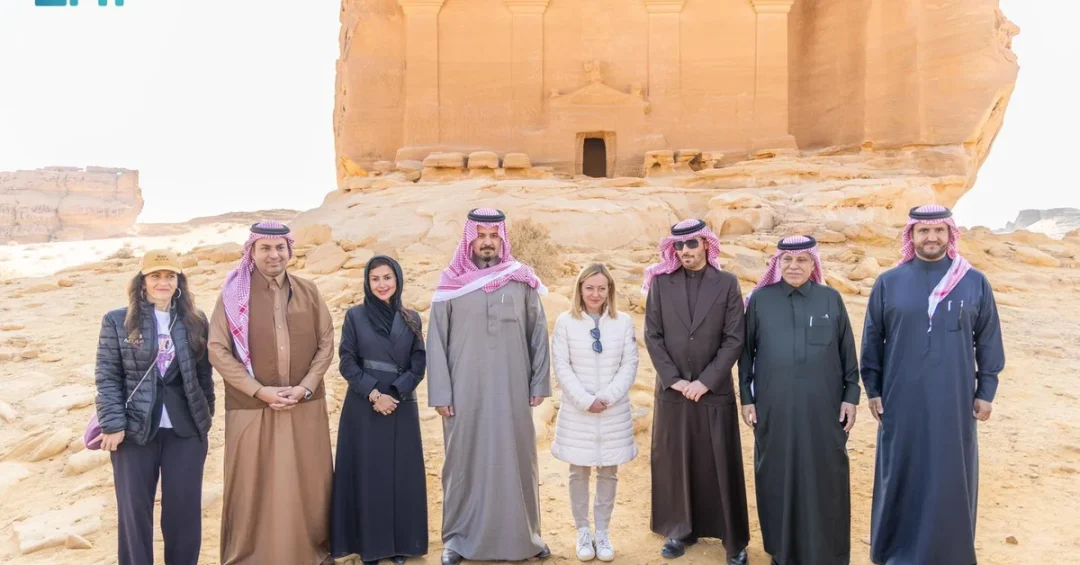
The Royal Commission for AlUla (RCU) has signed new partnership agreements with the Directorate-General of Museums of Italy and the Pompeii Archaeological Park, expanding cooperation in heritage preservation, archaeology, and museums, as announced via official Saudi channels on January 30, 2025. The agreements build on a long history of collaboration rooted in the ancient Incense Route that once linked the Arabian Peninsula with the Mediterranean world, and they cover a wide range of fields including archaeology, gastronomy, and architecture. The partnerships reflect Saudi Arabia’s growing role as a global leader in cultural diplomacy and sustainable tourism, and they reinforce AlUla’s position as a premier destination for heritage and international cooperation. How did two civilizations separated by thousands of miles come to share such a profound historical connection? The answer lies in the ancient trade routes that carried incense, spices, and ideas between Arabia and Rome, and in the modern vision that seeks to revive that legacy through culture.
The announcement was made through the Saudi Press Agency (SPA), the Kingdom’s official news authority, underscoring the transparency and institutional backing of the initiative. The Royal Commission for AlUla, established in 2017 to preserve and develop the AlUla region, has been at the forefront of Saudi Arabia’s efforts to protect cultural heritage while opening it to the world. The new agreements with Italian institutions are a direct outcome of the strategic partnership signed in 2023 between Prince Badr bin Abdullah bin Farhan, Saudi Minister of Culture, and his Italian counterpart Gennaro Sangiuliano. That agreement laid the groundwork for enhanced cultural exchange, and the latest deals represent a concrete step toward realizing its objectives. As RCU CEO Abeer Al Akel noted, the partnership aligns with Saudi Arabia’s ambitious efforts to enhance sustainable tourism and global cultural promotion. What does this mean for the future of heritage conservation worldwide? It signals a new era of international collaboration in which Saudi Arabia plays a central role.
Context and Background
Why is AlUla so significant in the story of human civilization? Located in northwestern Saudi Arabia, AlUla was a crucial stop on the Incense Route, the ancient network that transported frankincense and myrrh from southern Arabia to the Mediterranean. Its most famous site, Hegra, is a UNESCO World Heritage site and the largest conserved Nabataean tomb complex outside Petra. The region also includes the ancient city of Dadan and the rock formations of Jabal Ikmah, which contain thousands of inscriptions in multiple ancient scripts. This rich heritage has made AlUla a focal point for archaeological research and cultural tourism. The Royal Commission for AlUla has been working since its inception to preserve these treasures while developing them as a sustainable tourism destination. The new partnerships with Italian institutions are a natural extension of this mission, connecting AlUla’s Nabataean heritage with Rome’s imperial legacy through the shared thread of the Incense Route.
The collaboration with Italy is particularly fitting because Pompeii, like Hegra, is a UNESCO World Heritage site that offers a window into a bygone era. Pompeii was a thriving Roman city buried by the eruption of Mount Vesuvius in 79 AD, and its excavation has provided invaluable insights into Roman life. The Pompeii Archaeological Park is renowned for its innovative conservation techniques and visitor management strategies. By partnering with such institutions, RCU aims to exchange expertise in heritage preservation, site management, and sustainable tourism. The partnership also covers gastronomy and architecture, reflecting a holistic approach to cultural cooperation that goes beyond archaeology. This multifaceted engagement mirrors the Saudi-Italian strategic partnership signed in 2023, which emphasized cultural exchange as a pillar of bilateral relations. How can ancient sites inform modern practices? Through the exchange of knowledge, as this partnership demonstrates.
The historical ties between Saudi Arabia and Italy extend back centuries, but the modern relationship has gained new momentum. Italian Prime Minister Giorgia Meloni recently visited AlUla, where she and her delegation explored several cultural and historical landmarks, including Hegra. Her visit underscored Italy’s interest in deepening cultural and economic ties with the Kingdom. The signing of the new agreements shortly after her visit highlights the rapid progress being made. The partnerships are not merely symbolic; they involve concrete commitments to joint projects, research, and capacity building. For Saudi Arabia, this aligns with Vision 2030’s goal of diversifying the economy and promoting cultural heritage as a key sector. For Italy, it offers access to new audiences and collaborative opportunities in a region of growing global importance. What drives nations to collaborate on heritage? A shared recognition that cultural treasures belong to all humanity and require collective stewardship.
Key Details
What exactly do these agreements entail? The partnerships between RCU, the Directorate-General of Museums of Italy, and the Pompeii Archaeological Park cover a wide range of cooperation. In the field of archaeology, the focus will be on joint excavations, research, and the exchange of best practices in conservation. Italian experts will collaborate with Saudi archaeologists to study and preserve AlUla’s ancient sites, while Saudi specialists will have opportunities to learn from Italy’s long experience in managing complex archaeological projects. In museums, the partnership will facilitate the exchange of exhibitions, artifacts, and expertise in curation and display. The Directorate-General of Museums of Italy oversees some of the world’s most prestigious museums, and its involvement signals a high level of institutional commitment. The agreements also extend to gastronomy and architecture, recognizing that cultural heritage encompasses not only monuments but also living traditions and built environments.
RCU CEO Abeer Al Akel emphasized the depth of the historical connection between AlUla and Pompeii. “AlUla and Pompeii share a profound historical depth, and together, we aspire to develop them through international cooperation in heritage conservation, management, and global cultural promotion—aligning with our ambitious efforts to enhance sustainable tourism,” she said. She added that the partnership expands cooperation across multiple fields through expertise exchange and a shared commitment to protecting cultural treasures for future generations. Both sides will work together to design and develop new cultural assets and experiences, she noted. This forward-looking approach is central to RCU’s strategy: not just preserving the past but using it to create engaging, educational, and sustainable experiences for visitors. The collaboration with Italy is expected to yield new exhibitions, research publications, and training programs, further enriching AlUla’s cultural offering.
The agreements also build on the strategic partnership signed in 2023 between Prince Badr bin Abdullah bin Farhan and Gennaro Sangiuliano. That agreement established a framework for cultural exchange, and the new deals operationalize it in specific areas. The involvement of the Directorate-General of Museums of Italy, a government body under the Italian Ministry of Culture, ensures official backing and continuity. The Pompeii Archaeological Park brings hands-on experience in managing a UNESCO site that attracts millions of visitors annually. Together, these Italian institutions complement RCU’s vision for AlUla as a world-class destination for heritage tourism. The partnerships are expected to enhance AlUla’s capacity for heritage management, attract international expertise, and elevate its profile on the global stage. What could be more valuable than learning from each other’s successes? This collaboration is a model for international cultural cooperation.
International and Regional Impact
How will these partnerships resonate beyond Saudi Arabia and Italy? The agreements reinforce Saudi Arabia’s position as a global hub for cultural diplomacy and heritage conservation. By aligning with prestigious Italian institutions, RCU signals that AlUla is not just a national treasure but a world heritage destination. This can attract further international collaborations, funding, and tourism. Regionally, the partnerships support Saudi Arabia’s efforts to promote cultural tourism as part of Vision 2030, diversifying the economy away from oil. They also strengthen ties with Europe, building on the strategic relationship between the Kingdom and Italy. The cultural sector is increasingly seen as a bridge between nations, and this initiative exemplifies how shared heritage can foster mutual understanding and respect. In a world where cultural exchange is often overshadowed by political tensions, such collaborations offer a positive counterpoint.
The partnership also has implications for the broader Middle East. AlUla’s development as a cultural and tourism hub can stimulate economic growth in the region, create jobs, and promote cross-border cultural dialogue. The Incense Route, which once connected Arabia with the Mediterranean, is being revived in a modern form through these partnerships. This historical narrative resonates with contemporary efforts to enhance connectivity and cooperation. Italy, with its own rich heritage and expertise, is a natural partner. The involvement of Prime Minister Giorgia Meloni’s government adds political weight to the collaboration, indicating high-level support. For international audiences, the message is clear: Saudi Arabia is open for cultural partnerships and is investing in preserving its heritage for future generations. What better way to build bridges than through culture? This initiative sets a precedent for other nations to engage with Saudi Arabia in the cultural sphere.
Economic and Strategic Significance
Why does cultural heritage matter for Saudi Arabia’s economy? Under Vision 2030, the Kingdom aims to increase the contribution of tourism and culture to GDP and create jobs for its young population. AlUla is a flagship project in this effort, with ambitious plans to attract two million visitors annually by 2035. The partnerships with Italian institutions will help RCU develop world-class infrastructure, exhibitions, and experiences that can draw international tourists. The exchange of expertise in sustainable tourism is particularly valuable, as AlUla seeks to balance preservation with visitor access. Italy’s experience in managing heavily visited sites like Pompeii offers lessons in crowd control, conservation, and community engagement. By learning from Italy, RCU can avoid pitfalls and accelerate its development. The economic benefits extend beyond tourism to include job creation in hospitality, archaeology, and creative industries. Strategic partnerships like these also attract foreign investment and enhance Saudi Arabia’s reputation as a reliable partner.
From a strategic perspective, the agreements deepen Saudi-Italian relations and align with the Kingdom’s broader foreign policy objectives. Cultural diplomacy is a key tool for building soft power and fostering international goodwill. By collaborating with Italy, Saudi Arabia strengthens its ties with Europe and positions itself as a responsible steward of global heritage. The partnerships also support the goals of the Saudi Ministry of Culture, which has been actively promoting cultural exchange through agreements with various countries. The involvement of high-level officials like Prince Badr and Prime Minister Meloni underscores the political significance. Furthermore, the focus on gastronomy and architecture highlights the multidimensional nature of cultural cooperation, encompassing tangible and intangible heritage. This holistic approach can serve as a model for other sectors. How can nations leverage culture for economic gain without compromising authenticity? By following models like this, which prioritize preservation and sustainable development.
Vision 2030 Alignment
How does this partnership advance Vision 2030? Saudi Arabia’s Vision 2030 is a comprehensive plan to diversify the economy, promote social development, and enhance the Kingdom’s global standing. Cultural heritage is a key pillar, with the aim of preserving and celebrating Saudi Arabia’s rich history while sharing it with the world. The RCU’s partnerships with Italian institutions directly support this by enhancing heritage conservation, promoting sustainable tourism, and fostering international cooperation. AlUla, as a flagship project, embodies the vision’s goals: it is transforming into a global destination for culture, nature, and adventure, creating economic opportunities and showcasing Saudi Arabia’s openness. The exchange of expertise with Italy will help RCU achieve its targets for visitor numbers, conservation standards, and community engagement. Moreover, the partnership reinforces the Kingdom’s commitment to international collaboration and cultural diplomacy, which are essential for building a positive global image.
As Saudi Arabia continues its journey toward Vision 2030, initiatives like this demonstrate the Kingdom’s ability to forge meaningful partnerships and lead in heritage preservation. The collaboration with Italy is not just about preserving the past; it is about building a future where culture drives economic growth and international understanding. Through the Royal Commission for AlUla, Saudi Arabia is showing that it values its heritage and is willing to invest in it for the benefit of all. The partnerships with the Directorate-General of Museums of Italy and the Pompeii Archaeological Park are a testament to the power of cultural exchange. What legacy will we leave for future generations? By working together, Saudi Arabia and Italy are ensuring that the treasures of AlUla and Pompeii will inspire and educate for centuries to come. This is a story of two civilizations, connected by an ancient route, now united in a shared mission to protect and promote our common heritage.
20 Questions
Q1. What new partnerships has the Royal Commission for AlUla signed?
A1. The Royal Commission for AlUla signed agreements with the Directorate-General of Museums of Italy and the Pompeii Archaeological Park to enhance cooperation in heritage preservation, archaeology, and museums.
Q2. When were these partnerships announced?
A2. The partnerships were announced on January 30, 2025, via the Saudi Press Agency, the Kingdom’s official news authority.
Q3. What is the historical basis for cooperation between AlUla and Italy?
A3. The cooperation is rooted in the ancient Incense Route that once connected the Arabian Peninsula with the Mediterranean, facilitating trade and cultural exchange between the two civilizations.
Q4. What fields does the partnership cover?
A4. The partnership covers archaeology, gastronomy, architecture, heritage conservation, museums, and sustainable tourism, among other areas of cultural cooperation.
Q5. Who signed the strategic partnership agreement in 2023?
A5. Saudi Minister of Culture Prince Badr bin Abdullah bin Farhan and his Italian counterpart Gennaro Sangiuliano signed the strategic partnership agreement in 2023.
Q6. Who recently visited AlUla from Italy?
A6. Italian Prime Minister Giorgia Meloni recently visited AlUla with her delegation to explore cultural and historical landmarks, including the UNESCO World Heritage site of Hegra.
Q7. What did RCU CEO Abeer Al Akel say about the partnership?
A7. She said that AlUla and Pompeii share a profound historical depth and that the partnership aims to develop them through international cooperation in heritage conservation, management, and global cultural promotion.
Q8. What is the significance of Hegra?
A8. Hegra is a UNESCO World Heritage site and the largest conserved Nabataean tomb complex outside Petra, representing a key part of AlUla’s rich archaeological heritage.
Q9. How does the partnership benefit AlUla?
A9. It provides access to Italian expertise in heritage conservation, museum management, and sustainable tourism, helping AlUla develop as a world-class cultural destination.
Q10. What is the role of the Directorate-General of Museums of Italy?
A10. It oversees Italy’s national museums and will collaborate with RCU on exhibitions, curation, and the exchange of artifacts and expertise.
Q11. What is the Pompeii Archaeological Park known for?
A11. It is renowned for its innovative conservation techniques and management of the ancient Roman city buried by Mount Vesuvius, offering valuable lessons for AlUla.
Q12. How does this partnership align with Vision 2030?
A12. It supports Vision 2030’s goals of diversifying the economy, promoting cultural heritage, and enhancing sustainable tourism, contributing to Saudi Arabia’s global standing.
Q13. What economic benefits are expected from the partnership?
A13. It is expected to boost tourism, create jobs, attract investment, and enhance the cultural sector’s contribution to GDP, aligning with Vision 2030 objectives.
Q14. How does the partnership strengthen Saudi-Italian relations?
A14. It deepens cultural ties, builds on the 2023 strategic agreement, and reinforces diplomatic and economic cooperation between the two nations.
Q15. What is the significance of the Incense Route in this context?
A15. The Incense Route symbolizes the historical connection between Arabia and Rome, providing a narrative foundation for modern cultural collaboration and exchange.
Q16. What are the plans for future cultural assets in AlUla?
A16. RCU and its Italian partners will design and develop new cultural assets and experiences, including exhibitions, research programs, and visitor amenities.
Q17. How will the partnership impact local communities in AlUla?
A17. It is expected to create economic opportunities, promote cultural pride, and involve local communities in heritage preservation and tourism development.
Q18. What other international collaborations has RCU undertaken?
A18. RCU has partnered with various international institutions in archaeology, conservation, and tourism, reflecting its commitment to global cooperation and expertise exchange.
Q19. How does the partnership promote sustainable tourism?
A19. By exchanging best practices in site management, crowd control, and conservation, the partnership helps balance visitor access with preservation of heritage sites.
Q20. What is the long-term vision for AlUla?
A20. AlUla aims to become a leading global destination for heritage, culture, and nature, attracting two million visitors annually by 2035 while preserving its treasures for future generations.
Reader Feedback
We value your thoughts. Please share your feedback on this article.
Your feedback helps us improve our coverage.
Related articles
 Tuwaiq Sculpture 2025 Launches Community Engagement Program
 Taif Falcons Cup Concludes Successful First Edition
 AlUla Arts Festival Celebrates Arabic Calligraphy Heritage
 Sixteenth Klija Festival Kicks off in Qassim
 Al-Muzfar: Tabuk’s Traditional Cradle of Heritage
 Maqshush, Hail Kibbeibh Delight Visitors at SNP Expo in Kuwait