


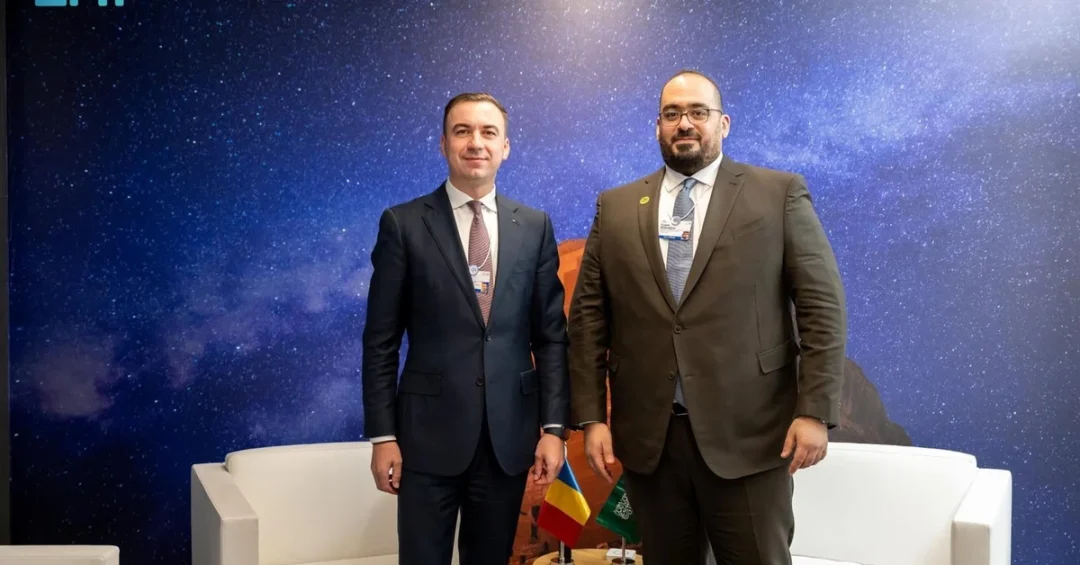
Saudi Arabia’s Minister of Economy and Planning, Faisal Alibrahim, met with Romania’s Minister of Economy, Digitalization, Entrepreneurship, and Tourism, Bogdan Ivan, on Monday during the World Economic Forum’s Annual Meeting 2025 in Davos, Switzerland, to discuss ways to enhance economic collaboration between the two countries. The meeting, reported by the Saudi Press Agency, focused on strengthening bilateral ties and exchanging views on global economic developments of mutual concern. The encounter took place on the sidelines of the WEF’s flagship annual gathering, which brings together heads of state, ministers, and business leaders from around the world to address pressing global challenges.
Why does a bilateral meeting between Saudi Arabia and Romania matter in the broader context of global economic diplomacy? The answer lies in the Kingdom’s expanding network of international partnerships under Vision 2030, which seeks to diversify the Saudi economy beyond oil and position the country as a hub for trade, investment, and innovation. Romania, as a member of the European Union and a growing digital economy in Eastern Europe, represents a potentially valuable partner in sectors such as technology, manufacturing, and tourism. The meeting in Davos signals Saudi Arabia’s continued commitment to engaging with nations across Europe and beyond, even as it deepens its traditional alliances.
Context and Background
What is the significance of Davos as a venue for Saudi-Romanian economic dialogue? The World Economic Forum’s Annual Meeting is one of the most influential platforms for global economic discourse, and Saudi Arabia has been a prominent participant for years, using the event to showcase its reform agenda and attract foreign investment. For Romania, the forum offers an opportunity to strengthen ties with non-EU partners and to promote its own economic priorities, including digitalization and entrepreneurship. The meeting between Alibrahim and Ivan thus fits into a pattern of high-level Saudi engagement at international forums, where the Kingdom advances its Vision 2030 objectives through targeted bilateral discussions.
Saudi-Romanian relations have historically been cordial but relatively limited in economic scope. Romania, with its strategic location on the Black Sea and its membership in the European Union, offers access to the EU single market and a skilled workforce. Saudi Arabia, as the largest economy in the Arab world and a G20 member, presents a growing market for Romanian goods and services, particularly in the technology and industrial sectors. The two countries have maintained diplomatic ties since 1995, and in recent years there have been signs of growing interest in expanding trade and investment. The Davos meeting builds on this foundation, exploring concrete avenues for cooperation that align with both countries’ economic strategies.
Why should international observers pay attention to this seemingly routine diplomatic encounter? Because it reflects a larger trend: Saudi Arabia’s proactive approach to forging partnerships that support its economic transformation. Under Vision 2030, the Kingdom is not only seeking to attract foreign direct investment but also to export its own goods and services, and to collaborate on technology transfer and innovation. Romania, with its fast-growing IT sector and its ambitions in digitalization, is a natural partner in these efforts. The meeting also underscores Saudi Arabia’s role as a bridge between regions, capable of engaging with both Eastern and Western Europe on equal terms.
Key Details of the Meeting
What specific topics were on the agenda when Alibrahim and Ivan met? According to the Saudi Press Agency, the ministers discussed ways to enhance Saudi-Romanian economic collaboration and exchanged views on global economic developments of mutual concern. While the official readout was brief, the scope of the discussion likely covered areas such as trade facilitation, investment opportunities, and cooperation in technology and digitalization. Both ministers hold portfolios that directly intersect with these themes: Alibrahim oversees Saudi Arabia’s economic planning and diversification efforts, while Ivan’s responsibilities include digitalization, entrepreneurship, and tourism—three sectors that are central to both countries’ growth strategies.
The meeting comes at a time when global economic uncertainties, including inflationary pressures, supply chain disruptions, and geopolitical tensions, are prompting countries to seek new partnerships and diversify their economic relationships. For Saudi Arabia, this means continuing to expand its network of trade and investment partners beyond traditional markets. For Romania, it means positioning itself as an attractive destination for Saudi investment and as a source of technological expertise. The exchange of views on global economic developments suggests that both sides are aligned in their desire to navigate these challenges through dialogue and cooperation.
Could this meeting lead to tangible outcomes such as agreements or joint ventures? While no specific deals were announced, such high-level discussions often lay the groundwork for future collaboration. Both countries have expressed interest in deepening economic ties, and the ministers’ portfolios cover areas where synergies are evident. For instance, Saudi Arabia’s Vision 2030 includes a strong focus on digital transformation and entrepreneurship, which aligns with Romania’s strengths in IT and its growing startup ecosystem. Similarly, Romania’s tourism sector could benefit from Saudi investment and from the exchange of best practices in hospitality and heritage preservation.
International and Regional Impact
How does the Saudi-Romanian dialogue fit into the broader regional and international landscape? Saudi Arabia’s engagement with Romania is part of a wider strategy to strengthen ties with European Union member states, both individually and collectively. The Kingdom has been deepening its relationships with countries such as Greece, France, and Germany, and the meeting with Romania adds another layer to this European outreach. For Romania, closer ties with Saudi Arabia can enhance its profile in the Middle East and open doors to investment from the Gulf region, which is increasingly looking to Europe for opportunities.
From a regional perspective, the meeting underscores Saudi Arabia’s role as a stabilizing and proactive force in the global economy. By engaging with a diverse range of partners, the Kingdom demonstrates its commitment to multilateralism and to finding common ground on economic issues. This is particularly important at a time when global cooperation is being tested by protectionist tendencies and geopolitical rivalries. Saudi Arabia’s willingness to discuss global economic developments with Romania signals that it values dialogue and shared solutions, consistent with its position as a responsible international stakeholder.
What does this mean for the Middle East and Eastern Europe more broadly? Enhanced Saudi-Romanian cooperation could serve as a model for other cross-regional partnerships, showing that countries with different historical and cultural backgrounds can find mutually beneficial economic synergies. It also highlights the potential for Gulf countries to invest in Eastern Europe’s digital and industrial sectors, and for Eastern European companies to participate in the Gulf’s ambitious development projects. As Saudi Arabia continues to implement Vision 2030, such partnerships will be essential in accessing new markets, technologies, and talent.
Economic and Strategic Significance
Why is economic diversification so central to Saudi Arabia’s international engagements? The Kingdom’s Vision 2030, launched in 2016 under the leadership of Crown Prince Mohammed bin Salman, aims to reduce dependence on oil revenues and to build a dynamic, diversified economy. This requires not only domestic reforms but also international partnerships that can bring in expertise, investment, and market access. The meeting with Romania’s economy minister is a case in point: it explores collaboration in sectors such as digitalization, entrepreneurship, and tourism, all of which are key pillars of the Vision 2030 agenda. By aligning with countries that have strengths in these areas, Saudi Arabia can accelerate its own transformation.
For Romania, the strategic significance of engaging with Saudi Arabia lies in accessing a wealthy and growing market, as well as in attracting investment from the Kingdom’s sovereign wealth fund, the Public Investment Fund (PIF). Romania has been actively seeking to boost its economy through digitalization and innovation, and partnerships with Gulf countries can provide the capital and connections needed to scale up. Moreover, Saudi Arabia’s position as a gateway to the Middle East and North Africa region makes it an attractive partner for Romanian companies looking to expand beyond Europe. The Davos meeting thus represents a convergence of interests that could yield long-term benefits for both sides.
What are the potential areas of cooperation that could emerge from this dialogue? Beyond the general discussion, specific opportunities may include joint ventures in technology and software development, collaboration on smart city projects, and investment in tourism infrastructure. Saudi Arabia is currently developing mega-projects such as NEOM and the Red Sea Project, which require cutting-edge digital solutions and hospitality expertise—areas where Romanian firms could contribute. Conversely, Romanian startups and tech companies could benefit from Saudi investment and from access to the Kingdom’s growing consumer market. The ministers’ exchange of views on global economic developments also suggests a shared interest in addressing challenges such as inflation and supply chain resilience through cooperative approaches.
Vision 2030 Alignment
How does the Saudi-Romanian meeting in Davos align with the Kingdom’s long-term vision? Vision 2030 is not merely a domestic economic plan; it is a comprehensive strategy that involves positioning Saudi Arabia as a global player in trade, investment, and innovation. International engagements like the one with Romania are integral to this strategy, as they help to build the networks and partnerships necessary for success. The meeting reflects the Kingdom’s commitment to diversifying its international relationships, not only with major powers but also with emerging economies in Europe and beyond. By discussing economic collaboration with Romania, Saudi Arabia is actively pursuing the Vision 2030 goal of creating a vibrant, diversified economy that is integrated with the global marketplace.
What does the future hold for Saudi-Romanian economic relations? While it is too early to predict specific outcomes, the Davos meeting sets a positive tone for continued dialogue and cooperation. Both countries have expressed a willingness to explore new avenues for collaboration, and the ministers’ portfolios are well-suited to turning discussions into action. As Saudi Arabia continues to implement Vision 2030 and Romania advances its own digital and economic agendas, the potential for mutually beneficial partnerships is significant. The meeting in Davos is a stepping stone toward a more robust economic relationship, one that could contribute to the prosperity of both nations and serve as an example of constructive international engagement.
20 Questions
Q1. Who represented Saudi Arabia at the meeting in Davos?
A1. Saudi Arabia was represented by Faisal Alibrahim, the Minister of Economy and Planning. He met with Romania’s Minister of Economy, Digitalization, Entrepreneurship, and Tourism, Bogdan Ivan, on the sidelines of the World Economic Forum’s Annual Meeting 2025.
Q2. When and where did the meeting take place?
A2. The meeting took place on Monday, January 20, 2025, during the World Economic Forum’s Annual Meeting 2025 in Davos, Switzerland. The event brings together global leaders to discuss economic and political challenges.
Q3. What was the main purpose of the meeting?
A3. The main purpose was to discuss ways to enhance economic collaboration between Saudi Arabia and Romania. The ministers also exchanged views on global economic developments of mutual concern, according to the Saudi Press Agency.
Q4. Which Saudi ministry does Faisal Alibrahim lead?
A4. Faisal Alibrahim is the Minister of Economy and Planning of Saudi Arabia. His ministry is responsible for formulating and implementing the Kingdom’s economic policies and development plans, including Vision 2030 initiatives.
Q5. What is the full title of Romania’s minister who met Alibrahim?
A5. The Romanian minister is Bogdan Ivan, whose full title is Minister of Economy, Digitalization, Entrepreneurship, and Tourism. His portfolio covers key areas that align with Saudi Arabia’s economic diversification goals.
Q6. Why is the World Economic Forum in Davos important for Saudi Arabia?
A6. Davos is a premier global platform for Saudi Arabia to showcase its Vision 2030 reforms, attract foreign investment, and engage with world leaders. It allows the Kingdom to strengthen partnerships and highlight its economic transformation.
Q7. What are the key areas of potential cooperation between Saudi Arabia and Romania?
A7. Potential areas include digitalization, entrepreneurship, technology, tourism, and investment. Both countries have expressed interest in leveraging their respective strengths to create mutually beneficial economic opportunities.
Q8. How does this meeting align with Saudi Vision 2030?
A8. The meeting supports Vision 2030’s goal of diversifying the Saudi economy and building international partnerships. By engaging with Romania in sectors like technology and tourism, Saudi Arabia advances its strategic objectives.
Q9. What is Romania’s interest in strengthening ties with Saudi Arabia?
A9. Romania seeks access to Saudi Arabia’s growing market and investment capital, particularly from the Public Investment Fund. It also aims to position itself as a partner in the Kingdom’s mega-projects and digital transformation.
Q10. Did the meeting result in any signed agreements?
A10. No specific agreements were announced. The meeting was a discussion of ways to enhance collaboration and an exchange of views on global economic developments. Such talks often pave the way for future cooperation.
Q11. What is the significance of Saudi-Romanian economic relations?
A11. While historically limited, Saudi-Romanian economic relations are growing. Romania offers access to the EU market and expertise in technology, while Saudi Arabia provides investment opportunities and a gateway to the Middle East.
Q12. How does Saudi Arabia benefit from engaging with European countries like Romania?
A12. Engagement with European countries helps Saudi Arabia diversify its partnerships, access advanced technologies, and attract foreign investment. It also reinforces the Kingdom’s role as a global economic player committed to multilateral cooperation.
Q13. What role does the Saudi Press Agency play in reporting such meetings?
A13. The Saudi Press Agency (SPA) is the official news agency of Saudi Arabia. It provides authoritative and timely reports on government activities, including ministerial meetings, ensuring accurate information dissemination.
Q14. What are the global economic developments of mutual concern mentioned in the report?
A14. While specific details were not disclosed, such discussions typically cover inflation, supply chain disruptions, energy markets, and geopolitical tensions. Both countries share an interest in stable and prosperous global economic conditions.
Q15. How does this meeting reflect Saudi Arabia’s broader diplomatic strategy?
A15. It reflects Saudi Arabia’s strategy of active engagement with diverse international partners. The Kingdom seeks to build bridges across regions, promoting dialogue and cooperation on economic issues that affect global stability and growth.
Q16. What sectors in Romania are most attractive for Saudi investment?
A16. Romania’s technology, digitalization, and tourism sectors are particularly attractive. The country has a growing IT industry and a rich cultural heritage, offering opportunities for Saudi investment in innovation and hospitality.
Q17. Could this meeting lead to increased trade between the two countries?
A17. Yes, it could. Enhanced dialogue and mutual understanding often lead to increased trade and investment. Both countries have expressed a willingness to explore new economic opportunities, which may result in higher bilateral trade volumes.
Q18. What is the significance of the timing of this meeting?
A18. The meeting occurs amid global economic uncertainty, making cooperation between nations more important than ever. It signals Saudi Arabia’s proactive approach to finding partners who can contribute to its economic resilience and growth.
Q19. How does Saudi Arabia’s Vision 2030 influence its international economic engagements?
A19. Vision 2030 guides Saudi Arabia’s international engagements by prioritizing partnerships that support economic diversification, technology transfer, and investment. The meeting with Romania is a direct reflection of these priorities.
Q20. What can we expect next in Saudi-Romanian economic relations?
A20. We can expect continued dialogue and possibly concrete initiatives in areas like digitalization and tourism. Both sides have shown interest in deepening ties, and future meetings may yield specific agreements or joint projects.
Reader Feedback
We value your thoughts. Please share your feedback on this article.
Your feedback helps us improve our coverage.
Related articles
 Saudi Delegation Meets WEF Founder at Davos 2025
 KSrelief Provides Food Assistance to 1,450 People in Pakistan’s Sindh, Khyber Pakhtunkhwa
 Saudi National Guard Minister Meets Korean Defense Official
 Saudi Ministry Honors Quran Competition Winners in Sri Lanka
 GCC Secretary General Meets Hong Kong Financial Secretary
 Absher Processes Over 8.5 Million Transactions in December 2024