


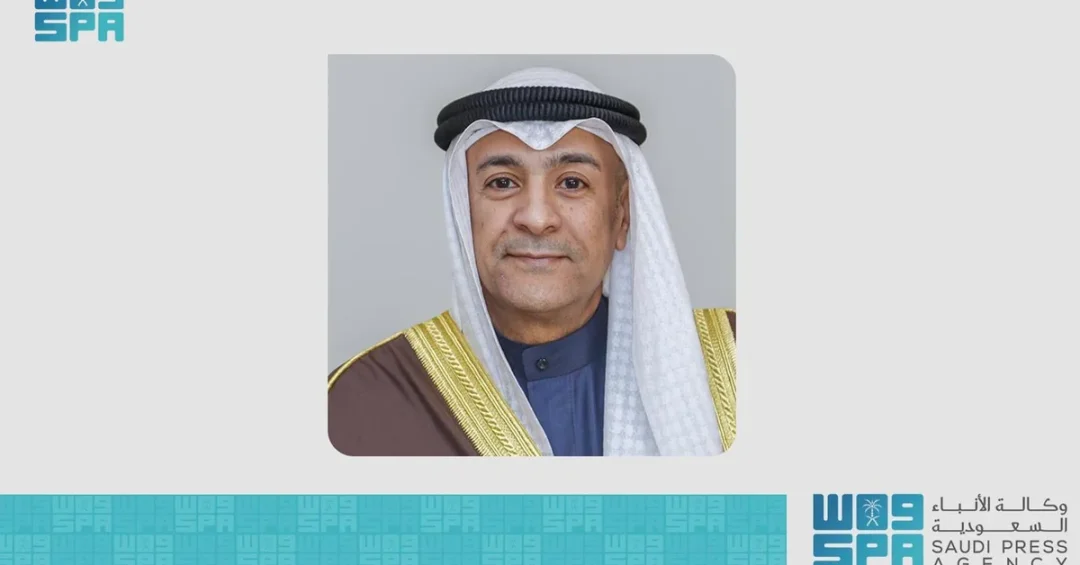
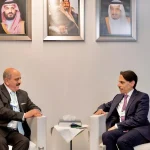
Secretary General of the Gulf Cooperation Council (GCC) Jasem Mohamed Albudaiwi met with Prime Minister of the Socialist Republic of Vietnam Pham Minh Chinh on the sidelines of the 55th annual meeting of the World Economic Forum (WEF) 2025 in Davos, Switzerland, to review avenues of mutual cooperation between the Gulf bloc and the Southeast Asian nation. The meeting, reported by the Saudi Press Agency (SPA), focused on preparations for the upcoming second GCC-ASEAN Summit, expanded economic and cultural collaboration, and the strengthening of communication between the peoples of the two regions.
The discussions in Davos underscored the growing importance of the relationship between the Gulf Cooperation Council and Vietnam, a dynamic economy of more than 100 million people and one of the fastest-growing markets in Southeast Asia. The two officials examined practical steps to deepen Gulf-Vietnamese ties, including the potential of a free trade agreement that both sides believe would deliver mutual benefits. They also exchanged views on regional and international developments, reflecting a shared interest in stability and prosperity. For Saudi Arabia and its GCC partners, the meeting represents another concrete example of the Kingdom’s expanding global engagement under Vision 2030, which seeks to diversify partnerships and position the Gulf as a bridge between continents and economies.
Context and Background
Why does a meeting on the sidelines of the World Economic Forum matter so much for the future of Gulf-Asian relations? The 55th annual meeting of the World Economic Forum in Davos brought together heads of state, ministers, and business leaders from around the world, providing a natural platform for the GCC and Vietnam to advance a relationship that has been steadily gaining momentum. The Gulf Cooperation Council, which comprises Saudi Arabia, the United Arab Emirates, Qatar, Kuwait, Bahrain, and Oman, has long viewed Southeast Asia as a region of strategic importance, and Vietnam in particular has emerged as a key partner in trade, investment, and people-to-people exchange.
The meeting between Albudaiwi and Pham Minh Chinh builds on a broader framework of GCC outreach to the Association of Southeast Asian Nations (ASEAN). The first GCC-ASEAN Summit, held in Riyadh in October 2023, marked a historic milestone in institutionalizing dialogue between the two regional groupings. That summit produced a joint statement outlining cooperation across political, economic, and cultural spheres, and it set the stage for a second summit that is now being prepared. The Davos meeting therefore serves as an important preparatory step, allowing senior officials to align priorities and ensure that the next summit produces tangible outcomes.
Vietnam’s relationship with the Gulf has deep roots, but it has accelerated in recent years. Trade volumes have grown, investment flows have increased, and cultural exchanges have multiplied. The Kingdom of Saudi Arabia has been at the forefront of this engagement, with Saudi Arabia serving as a major supplier of energy to Vietnam and a growing market for Vietnamese goods and services. The GCC Secretary General’s meeting with the Vietnamese Prime Minister thus reflects a collective Gulf interest in deepening ties with a country that is not only a manufacturing hub but also a rising diplomatic voice in Asia.
Key Details of the Davos Meeting
What exactly was discussed behind the scenes at Davos, and what does it signal for the months ahead? According to the Saudi Press Agency, the discussions between Albudaiwi and Pham Minh Chinh centered on the upcoming second GCC-ASEAN Summit, which is expected to convene leaders from both regions to chart a forward-looking agenda. The two officials emphasized economic and cultural collaboration, recognizing that sustainable partnerships require not only trade agreements but also mutual understanding and people-to-people connections.
A central topic was the potential of a free trade agreement between the GCC and Vietnam. Such an agreement would reduce tariffs, streamline customs procedures, and open new markets for businesses on both sides. For the GCC, a free trade pact with Vietnam would complement existing trade agreements and strengthen the bloc’s position as a global trading hub. For Vietnam, it would provide preferential access to one of the world’s most dynamic economic regions, home to some of the largest sovereign wealth funds and a rapidly expanding consumer base.
The meeting also addressed the importance of strengthening communication between the peoples of the Gulf and Vietnam. This includes promoting tourism, educational exchanges, and cultural initiatives that bring communities closer together. The two officials exchanged views on regional and international developments, a discussion that likely touched on global economic trends, energy security, and geopolitical shifts. At the conclusion of the meeting, Prime Minister Pham Minh Chinh extended an official invitation to Secretary General Albudaiwi to visit Vietnam in the near future, a gesture that underscores the warmth of the relationship and the desire to maintain high-level momentum.
International and Regional Impact
How will this meeting influence the broader geopolitical landscape, and what does it mean for the Gulf’s role in Asia? The GCC’s engagement with Vietnam is part of a wider strategy to diversify partnerships beyond traditional allies. As the global economy rebalances toward Asia, the Gulf states are positioning themselves as indispensable partners for Asian economies, offering not only energy but also investment capital, logistics infrastructure, and access to markets in the Middle East and Africa. The meeting in Davos reinforces this trajectory and signals that the GCC is serious about translating dialogue into deals.
For Vietnam, closer ties with the GCC offer a pathway to deeper integration with the Middle East’s thriving economies. Vietnam has already established itself as a manufacturing powerhouse, and Gulf investment in sectors such as technology, renewable energy, and logistics could help Vietnam move up the value chain. At the same time, Gulf countries can benefit from Vietnamese expertise in agriculture, electronics, and textiles. The potential free trade agreement, if realized, would be a landmark achievement that could serve as a model for other ASEAN nations considering similar arrangements with the GCC.
The meeting also has implications for regional stability and cooperation. By strengthening communication between peoples, the GCC and Vietnam are building trust and fostering a sense of shared destiny. This is particularly important in a world where cultural misunderstandings can hinder economic cooperation. The emphasis on cultural collaboration reflects a recognition that lasting partnerships are built on mutual respect and understanding.
Economic and Strategic Significance
What economic benefits could flow from a GCC-Vietnam free trade agreement, and why is this moment strategically important? The GCC is already a major trading partner for Vietnam, with bilateral trade covering energy, electronics, textiles, and agricultural products. A formal free trade agreement would amplify these flows by reducing barriers and providing a predictable legal framework for investors. For Saudi Arabia, which holds the GCC’s largest economy, such an agreement would align with Vision 2030’s goal of expanding non-oil exports and attracting foreign investment.
Strategically, the meeting comes at a time when global supply chains are being reconfigured. Vietnam has emerged as a key beneficiary of this shift, and Gulf countries are eager to tap into its growing consumer market and manufacturing base. By deepening ties with Vietnam, the GCC can secure access to a vital link in the Asian supply chain and diversify its economic relationships. The potential free trade agreement would also facilitate investment in infrastructure, renewable energy, and digital economy projects, all of which are priorities for both sides.
Moreover, the invitation for Albudaiwi to visit Vietnam suggests that the relationship is moving toward concrete outcomes. A visit would allow for further negotiations and could pave the way for signing agreements in areas such as trade, investment, and cultural exchange. For the GCC, this is an opportunity to demonstrate its commitment to Asia and to position itself as a reliable partner in the region’s economic development.
Vision 2030 Alignment
How does this meeting reflect Saudi Arabia’s Vision 2030 and the Kingdom’s broader global role? Vision 2030, launched by Crown Prince Mohammed bin Salman, aims to transform Saudi Arabia into a diversified economy and a global investment powerhouse. A key pillar of this vision is strengthening international partnerships and expanding trade networks. The GCC Secretary General’s engagement with Vietnam is fully consistent with this objective, as it seeks to open new markets for Saudi goods and services and attract investment from Asia.
Saudi Arabia has already taken significant steps to deepen its ties with Asia, including hosting the first GCC-ASEAN Summit in Riyadh and launching initiatives to boost trade and investment. The Kingdom’s leadership in the GCC gives it a unique platform to shape the bloc’s external relations, and the meeting in Davos is a testament to Saudi diplomacy in action. By supporting a free trade agreement with Vietnam, Saudi Arabia is helping to create a more integrated and prosperous region that benefits all GCC members.
As the GCC and Vietnam prepare for the second GCC-ASEAN Summit, the groundwork laid in Davos will be crucial. The meeting between Albudaiwi and Pham Minh Chinh has set a positive tone and identified concrete areas for cooperation. With the invitation for Albudaiwi to visit Vietnam, the momentum is set to continue. For Saudi Arabia and its GCC partners, this is another step toward a future where the Gulf is not just a supplier of energy but a hub of innovation, investment, and cultural exchange. Vision 2030 is not only about transforming Saudi Arabia; it is about positioning the Kingdom as a catalyst for regional and global progress.
20 Questions
Q1. Who met on the sidelines of the World Economic Forum in Davos?
A1. GCC Secretary General Jasem Mohamed Albudaiwi met with Vietnamese Prime Minister Pham Minh Chinh on the sidelines of the 55th annual meeting of the World Economic Forum in Davos, Switzerland, to discuss cooperation.
Q2. What was the main focus of the meeting between the GCC Secretary General and the Vietnamese Prime Minister?
A2. The discussions focused on the upcoming second GCC-ASEAN Summit, economic and cultural collaboration, strengthening communication between their peoples, and exploring a potential free trade agreement between the two sides.
Q3. What is the GCC-ASEAN Summit and why is it important?
A3. The GCC-ASEAN Summit is a gathering of leaders from the Gulf Cooperation Council and the Association of Southeast Asian Nations. It is important for enhancing economic and political ties between the two regions.
Q4. Which countries are members of the Gulf Cooperation Council?
A4. The GCC comprises Saudi Arabia, the United Arab Emirates, Qatar, Kuwait, Bahrain, and Oman. These countries work together on economic, security, and cultural issues.
Q5. What is the potential benefit of a free trade agreement between the GCC and Vietnam?
A5. A free trade agreement would reduce tariffs, streamline customs, and open new markets for businesses on both sides, boosting trade and investment between the Gulf and Vietnam.
Q6. Did Prime Minister Pham Minh Chinh extend an invitation to the GCC Secretary General?
A6. Yes, at the conclusion of the meeting, Prime Minister Pham Minh Chinh extended an official invitation to Secretary General Jasem Mohamed Albudaiwi to visit Vietnam in the near future.
Q7. What did the two officials exchange views on besides economic cooperation?
A7. They exchanged views on regional and international developments, reflecting a shared interest in stability and prosperity in both the Gulf and Southeast Asia.
Q8. How does this meeting align with Saudi Arabia’s Vision 2030?
A8. The meeting aligns with Vision 2030 by expanding international partnerships, diversifying the economy, and positioning Saudi Arabia as a global investment powerhouse and bridge between continents.
Q9. What is the significance of strengthening communication between the peoples of the GCC and Vietnam?
A9. Strengthening people-to-people communication fosters mutual understanding, promotes tourism and cultural exchange, and builds trust that underpins lasting economic and diplomatic partnerships.
Q10. When and where was the first GCC-ASEAN Summit held?
A10. The first GCC-ASEAN Summit was held in Riyadh, Saudi Arabia, in October 2023. It marked a historic milestone in institutionalizing dialogue between the two regional groupings.
Q11. What sectors could benefit from increased GCC-Vietnam cooperation?
A11. Sectors such as energy, technology, renewable energy, logistics, agriculture, electronics, and textiles could benefit from increased cooperation and investment between the GCC and Vietnam.
Q12. How has Saudi Arabia been involved in strengthening ties with Vietnam?
A12. Saudi Arabia has been at the forefront of GCC engagement with Vietnam, serving as a major energy supplier and supporting initiatives to boost trade, investment, and cultural exchanges.
Q13. What role does the World Economic Forum play in facilitating such meetings?
A13. The World Economic Forum provides a neutral platform for world leaders, ministers, and business executives to meet, discuss global challenges, and forge partnerships on the sidelines of its annual meeting.
Q14. What is the expected outcome of the second GCC-ASEAN Summit?
A14. The second GCC-ASEAN Summit is expected to produce tangible outcomes, including agreements on trade, investment, and cultural cooperation, further integrating the two regions.
Q15. Why is Vietnam an important partner for the GCC?
A15. Vietnam is a dynamic economy with over 100 million people, a manufacturing hub, and a rising diplomatic voice in Asia, making it a valuable partner for trade, investment, and regional cooperation.
Q16. What did the GCC Secretary General and Vietnamese Prime Minister discuss regarding regional developments?
A16. They exchanged views on regional and international developments, likely covering global economic trends, energy security, and geopolitical shifts that affect both regions.
Q17. How could a GCC-Vietnam free trade agreement impact global supply chains?
A17. It could strengthen global supply chains by facilitating trade and investment, allowing Gulf countries to access Vietnam’s manufacturing base and Vietnam to access Gulf markets and investment capital.
Q18. What is the significance of the invitation for the GCC Secretary General to visit Vietnam?
A18. The invitation signifies the warmth of the relationship and the desire to maintain high-level momentum, potentially leading to further negotiations and agreements in various fields.
Q19. How does this meeting reflect the GCC’s strategy of diversifying partnerships?
A19. The meeting reflects the GCC’s strategy of diversifying partnerships beyond traditional allies, engaging with Asian economies to expand trade, investment, and diplomatic ties.
Q20. What does this meeting mean for the future of Gulf-Asia relations?
A20. It signals a deepening of Gulf-Asia relations, with the GCC positioning itself as a key partner for Asian economies and paving the way for enhanced cooperation and mutual prosperity.
Reader Feedback
We value your thoughts. Please share your feedback on this article.
Your feedback helps us improve our coverage.
Related articles
 Saudi Minister Meets Lazard Chairman at Davos 2025
 Saudi Envoy Meets Mauritius Industry Minister
 Saudi FM Meets Libyan PM at Davos 2025
 Saudi Ministry of Commerce Conducts 950,000 Inspections in 2024
 Misk Youth Delegation Shares Insights on AI, Entrepreneurship in Davos
 Saudi FM Meets Tunisian Counterpart at Davos WEF